
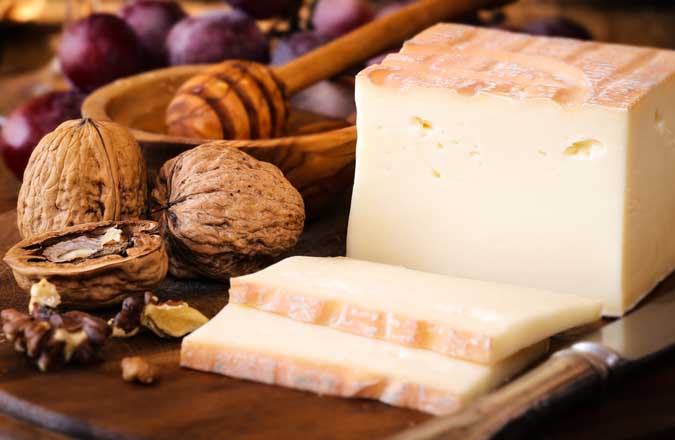
Il Taleggio DOP It is one of the most important washed-rind cheeses in the European dairy heritage, with an export share that structurally accounts for over a third of total production. The identity of this raw-curd cheese is defined by a microbiological ecosystem specific, whose evolution is guaranteed by strict production regulations.
The combination of the use of natural matrices (wood), manual sponging techniques and rigorous biochemical parameters — such as furosine limits and rind colorimetric ratios — ensures consistent safety and quality standards, meeting the transparency needs of international markets and nutrition professionals.
Economic Analysis: Exports as a Driver of the PDO Economy
La overall production Taleggio PDO production reached 8850 tons in 2024, +0,7% compared to 2023, with a stable value of 55 million euros. Consumer value also remained stable at 106 million euros, with a growth of the 13,6% in export – from 35 million in 2023 to 39 million euros in 2024 (ISMEA-Qualivita, XXIII Report on the DOP Economy, 2025).
Exports therefore represent the 36,8% of production Total. The European market accounts for approximately 67,2% of exports, driven by France, Germany, and Belgium. Leading the way among third-party countries are the United States and the United Kingdom. The outlook for 2025–2026 is positive, with consolidation in EU markets and growing interest in Italian DOP cheeses in non-EU markets.
Historical evolution: from ‘square stracchino’ to European protection
The origins of Taleggio date back to the early Middle Ages, in Val Taleggio, in the province of Bergamo, from which the cheese takes its name. Originally from the Taleggio Valley, this cheese was already traded in the Thirteenth century, as attested by several documents of the time.
Its production, initially arising from the need to conserve milk in excess of the self-consumption requirement, was made with the milk of cows returning from summer pastures, called ‘tired’ — that is, tired from the long journey. The original name ‘ derives from this characteristic.Milanese square stracchino’, used until the early 20th century.
Over the centuries, production has spread to the Po Valley, maintaining traditional techniques, including dry salting and the periodical sponge the crust with water and salt. Recognition as a protected designation of origin was achieved by Commission Regulation (EC) No. 1107/1996.
Production regulations
Il disciplinary of production of Taleggio PDO has been lastly updated with the amendment approved by Regulation (EU) 2022/955 of the European Commission (MASAF, 2023). name DOP ‘Taleggio’ is assigned exclusively to a soft table cheese, raw pasta, produced with raw or pasteurised whole cow’s milk, which meets the conditions and requirements of the specification (article 1 – Denomination).
La production area, maturing, portioning and packaging is limited to the territories of the provinces of Bergamo, Brescia, Como, Lecco, Cremona, Milan, Lodi, Monza and Brianza, Pavia (Lombardy); Novara and Verbano-Cusio-Ossola (Piedmont); Treviso (Veneto. Regulations, article 3 – Area of production).
Product features
‘The cheese that benefits from the “Taleggio” PDO must have the following characteristics:
crafts: quadrangular parallelepiped with flat faces and a straight base;
dimensions: side of the faces from 18 to 20 cm, height of the heel from 4 to 7 cm with slight variations in relation to the technical production conditions;
weight: variable from 1,5 kg to 2,5 kg detectable at the end of the minimum maturing period of 35 days;
crust: thin thickness, soft consistency, natural pink color (L
≤ 77 a/b ≥ 0,2 at the tristimulus colorimeter), with presence of microflora characteristic. No treatment of the crust other than that with water and salt is permitted;
pasta: solid structure, no eyes with some very small eyes distributed irregularly; consistency tends to be
compact and softer in the part immediately under the crust;
pasta color: from white to straw yellow;
flavor: characteristic, sweet, aromatic with a balanced flavour, lactic notes and a truffle aftertaste are perceived on the palate;
chemical characteristics: minimum fat on dry matter 48%; minimum dry extract 46%; maximum water content 54%, furosine max 14mg/100g protein.
The product cannot be placed on the market if frozen or previously frozen (art. 2 – Product features).
Method of obtaining
The ‘Taleggio’ DOP cheese is produced exclusively from milk of cows raised in the area of origin. The cows’ diet consists of cereals, dry and green forage, and silage—with possible additions of concentrated feed and/or protein nuclei, mineral and vitamin supplements—for at least 50% of the dry matter coming from the area of origin.This contribution allows to preserve the rumen microflora of cattle with high genetic characteristics, with
consequent impact on the quality of the raw material’.
Cheese production is divided into the following phases:
preparation of the milk starter or selected ferment. The milk used can be raw or pasteurizedThe starter culture must consist of Lactobacillus delbrueckii bulgaricus e Streptococcus thermophilus in association. A natural starter culture, obtained on the farm, or one obtained from selected crops, can be used;
coagulation of milk. ‘Coagulation must be performed exclusively with rennet from animal, liquid, obtained from veal or young bullocks, even in non-proportional parts. The use of rennet obtained from genetically modified microorganisms is not permitted.’;
cutting the curd. ‘The curd is cut several times. The first cut is followed by a pause so that the curd, beginning the purging phase, acquires a firmer consistency. The subsequent cuts produce curd glomeruli the size of hazelnuts.’;
placing in molds and branding. ‘The curd is distributed into the moulds and during the shaping phase the origin marking takes place on a flat face.’;
stewing and turnings in the molds.’The stewing can last from a minimum of 8 hours to a maximum of 16. The temperature is maintained between 20 and 28°C approximately and the humidity over 80%.’;
salting, dry or in brine, and subsequent turning;
seasoning, in environments with natural or controlled humidity above 80% and a temperature between +1 and +6 °C, for no less than 35 days. At this stage, the shape must be ‘frequently turned and treated on the rind with a solution of water and salt in order to keep it moist and soft and remove the hyphae obtaining that characteristic colour that distinguishes Taleggio cheese’ (disciplinary code, article 5 – Method of obtaining).
Biochemistry of ripening: microflora and enzymatic activity
La milk quality is ‘closely linked to the territory of origin, where the production of forage (hay, cereals, protein-oil crops, etc.) is abundant thanks to the widespread irrigation system.
The cheese is still produced today only and exclusively with milk, rennet and salt and no crust treatments or additions of additives or coadjuvants of any kind are permitted in any way, in compliance with traditional processing technologies.
Even today, the Wood, both for transporting Taleggio cheese (crates) and for maturing it (wooden planks). This material allows Taleggio cheese to breathe, as it did over 1000 years ago, and release excess whey, allowing it to mature evenly.
On the surface of the Taleggio cheese forms there is a mixed natural microflora consisting of a constant association of Schizomycetes belonging to the Micrococcaceae and Eumycetes families, among which the Geotrichum
candidum, Mucor racemosus, Penicillium frequentans and yeasts attributable to the Torulospora and Saccharomyces genera.
The phenomenon of maturity The cheese’s quality is therefore the work of microflora that comes from the environment, both during production (dairy) and maturation (cave or cellar), and gives it the physical, chemical, and organoleptic characteristics typical of ‘Taleggio’. In particular:
il pinkish color of the crust, thanks to micrococci;
la consistency generally compact crust, softer in the part immediately underneath;
il flavor characteristically sweet, aromatic with a balanced flavour and, on the palate, lactic notes and a truffle aftertaste (article 6 – Connection with the geographical area).
The microflora that develops in the maturing environment on the surface of the cheese also promotes a complex enzymatic activity which includes:
la proteolysis, that is, the transformation of proteins into simpler molecules (peptides and amino acids), thus increasing their bioavailability and improving their digestibility;
la lipolysis, that is, the degradation of fats (lipids) into glycerol and free fatty acids, useful for metabolism and the absorption of fat-soluble nutrients. This is how, among other things, the distinctive aromas and flavors develop.
Labelling and packaging
Upon release for consumption, each package of Taleggio DOP cheese, whether whole or in portions, must display:
The Taleggio Protection Consortium logo, with a red inner border, a white middle border, and a green outer border, i.e., a single color. The acronym CTT appears in black in the center, beneath which the number assigned by the Protection Consortium to the company owning the trademark may be inserted. The logo must be followed by the details of Regulation (EC) 1107/96, under which the Taleggio PDO was registered (specifications, Article 8 – Packaging and labelling).
Proof of origin
The operators are registered in special lists managed by thesupervisory body and ensure, through self-monitoring, ‘la test
of the origin for food, raw materials, and products originating in the area of origin, documenting incoming and outgoing batches and the correlation between them for each phase.
Il logo. of the Taleggio DOP is impressed on a flat face of the cheese after the second turning, before salting so that the relative imprint is also evident in the mature cheese and therefore at the time of
its release for consumption. The matrix is made of food-grade plastic and consists of four circles arranged in a square, each of which contains the following letters and numbers:
in the 1st circle at the top left the letter T;
in the 2nd circle at the top right the letter T;
in the 3rd circle at the bottom right the letter T;
in the 4th circle at the bottom left the identification number of the dairy producing “Taleggio” for each batch from the raw material to the finished product’ (disciplinary code, article 4 – Proof of origin).
‘Verification of compliance with the specification is carried out before the product is placed on the market byBody of
Control licensed’. The control of the conformity of the Taleggio PDO with the specifications is carried out by Certiprodop Srl with headquarters in Crema (specifications, article 7 – Controls).
Nutritional profile: micronutrient density and bioavailability
According to the official tables of CREA – Food and Nutrition Research Centre (updated 2019), 100 grams of Taleggio provide on average:
As regards the micronutrients, Taleggio is characterised by:
wealth in football: 433 mg per 100 g of product, equal to 54% of the Nutritional Reference Value (800 mg) indicated in Annex XIII to Regulation (EU) No. 1169/11;
rich in phosphorus: 328 mg, equal to 47% of the VNR (700 mg);
rich in vitamin A: 482 μg, equal to 60% on the VNR (800 μg).
Food pairings
Taleggio DOP is extremely versatile in the kitchen. Classic pairings include polenta, risotto (a classic is the Taleggio and pear risotto), grilled vegetables and melting preparations in general, where the creaminess of the cheese is best expressed.
For the wine pairings, experts suggest young, fragrant reds with low-medium tannins, such as Bonarda (Oltrepò), Dry Lambrusco, Schiava (Alto Adige); aromatic whites, such as Gewürztraminer; sparkling wines – from Franciacorta DOCG al Prosecco.
Guidance for international buyers and buyers
For consumers and professional buyers, the verification of DOP mark on the outer packaging and the consortium logo imprinted on the wheel are the first elements of authenticity to be checked. The certification , although still a niche, identifies premium products from supply chains that are most attentive to animal welfare.
La storage It is best served at 2–6°C in its original packaging or wrapped in a damp cloth; the use of plastic film is not recommended, as it prevents the cheese from aerating and can alter its organoleptic qualities.
For international buyers, the team of GIFT – Great Italian Food Trade offers specific expertise in evaluating and selecting producers, verifying regulatory compliance, and developing secure business relationships.
Conclusions
The evolution of Taleggio PDO demonstrates how rigorous application of the traditional method guarantees measurable and consistent quality standards. Growth in non-EU markets and potential in the organic segment confirm the competitiveness of a production model based on complete traceability and high nutritional value. For professional buyers, the PDO mark remains the objective benchmark for validating a product that integrates microbial biodiversity and economic resilience.
References
Commission Regulation (EC) No 1107/96 of 12 June 1996 on the registration of geographical indications and designations of origin under the procedure laid down in Article 17 of Council Regulation (EEC) No 2081/92. http://data.europa.eu/eli/reg/1996/1107/oj
Commission Implementing Regulation (EU) 2022/955 of 14 June 2022 approving non-minor amendments to the product specification for a name entered in the register of protected designations of origin and protected geographical indications ‘Taleggio’ (PDO). http://data.europa.eu/eli/reg_impl/2022/955/oj
Regulation (EU) 2024/1143 of the European Parliament and of the Council of 11 April 2024 on geographical indications for wine, spirit drinks and agricultural products, as well as traditional specialties guaranteed and optional quality terms for agricultural products. http://data.europa.eu/eli/reg/2024/1143/oj

Dario Dongo, lawyer and journalist, PhD in international food law, founder of WIISE (FARE – GIFT – Food Times) and Égalité.
Dining and Cooking