
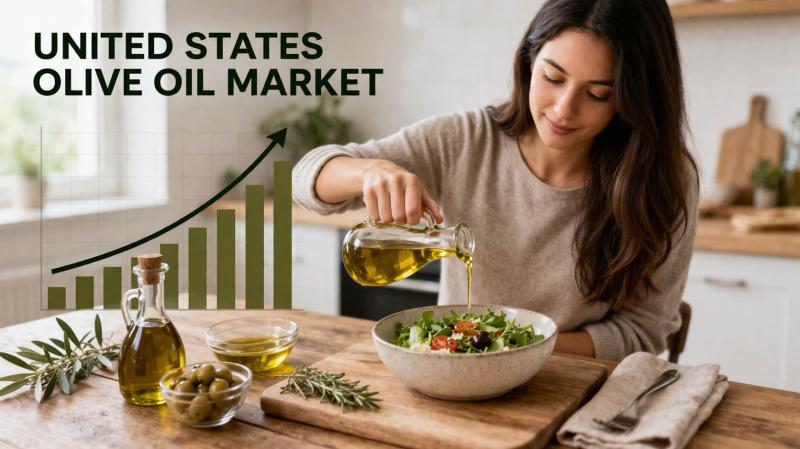
 According to insights from IMARC Group, the United States olive oil market is witnessing strong growth as consumers increasingly shift toward healthier dietary choices and natural food ingredients. Olive oil has become a staple in modern kitchens due to its nutritional profile, including high levels of monounsaturated fats, antioxidants, and anti-inflammatory compounds.
In addition to its culinary applications, olive oil is gaining importance in pharmaceuticals and cosmetics because of its beneficial properties for health and skincare.
The United States olive oil market size reached USD 3.5 Billion in 2025 and is projected to reach USD 6.8 Billion by 2034, exhibiting a compound annual growth rate (CAGR) of 7.42% during 2026-2034. Market growth is primarily driven by increasing consumer awareness of healthy eating habits, rising demand for organic and non-GMO food products, expanding e-commerce platforms, and continuous research and development in olive oil production and processing technologies.
United States Olive Oil Market In a Glance
• Market Size (2025): USD 3.5 Billion
• Forecast Market Value (2034): USD 6.8 Billion
• CAGR (2026-2034): 7.42%
• Base Year: 2025
• Historical Years: 2020-2025
• Forecast Years: 2026-2034
Analyze the United States Olive Oil Market – Download the IMARC Sample Report for Insights: https://www.imarcgroup.com/united-states-olive-oil-market/requestsample
United States Olive Oil Market Opportunities
• Growing Demand for Organic and Premium Olive Oil
Increasing consumer preference for organic, cold-pressed, and premium extra virgin olive oils is creating strong opportunities for producers to expand high-value product lines.
• Expansion of E-commerce and Online Grocery Platforms
Online retail channels allow brands to reach a wider consumer base, offer imported specialty olive oils, and improve product accessibility across the United States.
• Rising Popularity of Mediterranean and Healthy Diets
The increasing adoption of Mediterranean and plant-based diets continues to boost olive oil consumption as a primary healthy cooking fat.
• Product Innovation and Flavored Olive Oils
Manufacturers are introducing infused and flavored olive oils such as garlic, chili, lemon, and herb varieties, creating new opportunities for differentiation and premium pricing.
• Growing Applications in Cosmetics and Personal Care
Olive oil’s moisturizing and antioxidant properties are expanding its use in skincare, haircare, and natural cosmetic products.
• Sustainable and Eco-Friendly Packaging Innovations
Brands adopting recyclable packaging and environmentally friendly materials can attract environmentally conscious consumers and strengthen brand reputation.
United States Olive Oil Market Challenges
• Price Volatility of Raw Olives: Climate conditions, droughts, and crop yield fluctuations in olive-producing countries can affect olive oil supply and lead to price instability.
• High Dependence on Imports: The United States relies heavily on olive oil imports from countries such as Spain, Italy, and Greece, making the market vulnerable to international trade disruptions.
• Adulteration and Quality Concerns: Issues related to adulterated or mislabeled olive oil products can reduce consumer trust and create regulatory challenges for market participants.
• Competition from Alternative Cooking Oils: Other vegetable oils such as avocado oil, sunflower oil, and canola oil compete with olive oil in terms of price and cooking versatility.
• Supply Chain Disruptions: Logistics challenges, transportation costs, and global trade uncertainties can affect the availability and pricing of olive oil products.
• Limited Domestic Production: Although regions like California produce olive oil, domestic production remains relatively small compared to overall consumption demand.
United States Olive Oil Market Growth Drivers 2026: Rising Consumer Health Awareness
One of the major drivers of the United States olive oil market is the growing awareness of the health benefits associated with olive oil consumption. Consumers are increasingly choosing healthier alternatives to traditional cooking oils, with olive oil emerging as one of the most preferred options due to its nutritional advantages.
Olive oil contains beneficial compounds such as monounsaturated fatty acids, antioxidants, and anti-inflammatory components, which support cardiovascular health and overall well-being. These nutritional benefits have encouraged many consumers to incorporate olive oil into their daily diets for cooking, salad dressings, and food preparation.
Research findings further reinforce the growing demand for olive oil. A 2022 study involving 92,383 Americans found that individuals who regularly consumed olive oil experienced:
• 17% lower risk of cancer-related mortality
• 29% lower risk of neurodegenerative disease mortality
• 18% lower risk of respiratory disease mortality
Such findings are increasing consumer confidence in olive oil as a healthy dietary choice and are significantly contributing to market growth.
United States Olive Oil Market Trends 2026: Growing Popularity of Mediterranean Diet
The increasing popularity of the Mediterranean diet across the United States has significantly influenced olive oil consumption patterns. The Mediterranean diet emphasizes the use of olive oil as a primary source of dietary fat, along with fruits, vegetables, whole grains, and lean proteins.
According to the latest Harris Poll conducted in collaboration with U.S. News & World Report, the Mediterranean diet remained the most popular health plan in 2024, achieving 85.1% popularity and maintaining its top position for the seventh consecutive year.
The growing popularity of this diet has encouraged American households and restaurants to adopt olive oil as a key cooking ingredient.
Restaurants and food service establishments are increasingly incorporating olive oil into menus for:
• Salad dressings
• Sautéing
• Grilling
• Finishing dishes
This shift toward healthier cooking methods is playing an important role in strengthening the demand for olive oil products across the United States.
United States Olive Oil Market Trends 2026: Product Innovations and Sustainable Packaging
Product innovation is another major factor shaping the growth of the United States olive oil market. Manufacturers are continuously introducing new product varieties such as:
• Flavored olive oils
• Premium extra virgin olive oils
• Organic variants
• Specialty blends
These innovations are designed to meet evolving consumer preferences.
Innovative packaging solutions are also gaining popularity as brands focus on maintaining product quality and extending shelf life.
For instance, in May 2024, Neolea launched its extra virgin olive oil in sustainable aluminum can packaging in the United States. The packaging features a reusable Fresh Cap designed to preserve the oil’s freshness, flavor, and purity while supporting environmentally sustainable packaging practices.
Unlock Expert Guidance on the United States Olive Oil Market – Connect with an IMARC Analyst Today: https://www.imarcgroup.com/request?type=report&id=19092&flag=C
United States Olive Oil Market Segmentation Insights (2026-2034)
Detailed Market Segmentation by Type, Distribution Channel, Application, and Region
By Type
• Virgin Olive Oil: A commonly used category of olive oil that is produced from olives through natural processing methods and offers a balanced flavor suitable for everyday cooking.
• Refined Olive Oil: This type of olive oil is processed to improve stability and remove impurities, making it suitable for various cooking applications.
• Extra Virgin Olive Oil: Known as the highest quality olive oil, it is widely used for cooking, salad preparation, and food finishing due to its natural taste and nutritional value.
• Olive Pomace Oil: Produced from the remaining olive pulp after the initial extraction process, this oil is often used in large-scale cooking and food service operations.
• Others: This category includes specialty and blended olive oils that are available in different flavors and varieties to meet diverse consumer preferences.
By Distribution Channel
• Supermarkets and Hypermarkets: Large retail outlets that provide consumers with a wide range of olive oil brands and product types.
• Convenience Stores: Smaller retail stores that offer basic olive oil options for quick and easy purchases.
• Online Stores: Digital platforms that allow consumers to explore and purchase various olive oil products from different brands.
• Others: Other distribution channels include specialty food shops and premium grocery stores offering selected olive oil products.
By Application
• Food and Beverage: Olive oil is widely used in cooking, food preparation, and various culinary applications.
• Pharmaceuticals: The oil is also used in certain pharmaceutical products and health-related formulations.
• Cosmetics: Olive oil is commonly included in skincare and cosmetic products due to its natural properties.
• Others: Additional applications include personal care and other wellness-related products.
By Region
• Northeast: The region represents a significant consumer base for olive oil due to diverse culinary preferences.
• Midwest: Demand in this region is influenced by changing food habits and increasing interest in healthier cooking options.
• South: The region is witnessing growing adoption of olive oil as consumers shift toward healthier diets.
• West: This region is an important market due to strong consumer awareness and the presence of olive oil production activities.
Competitive Landscape:
The market research report offers an in-depth evaluation of the competitive environment, highlighting key aspects such as market structure, positioning of leading players, and their core growth strategies. It also includes insights through a competitive dashboard and a company evaluation framework, providing a clear understanding of how companies compare within the industry. In addition, the report features detailed profiles of major market participants, outlining their business performance, product portfolios, and strategic initiatives.
Some of the prominent players in the market include:
• Cargill Incorporated
• Deoleo S.A.
• Gallo Worldwide
• Grupo Ybarra Alimentación S.L.
• Sovena
United States Olive Oil Market News:
June 2025: O Olive Oil & Vinegar introduced the first USDA-certified organic California extra virgin olive oil packaged in a chef-grade, BPA-free squeeze bottle. This innovative product combines ease of use with sustainability, offering premium EVOO produced through regenerative agriculture practices. It is now available online and in select retail stores across the United States.
February 2025: Graza launched Frizzle, a high-heat cooking oil blend made from extra virgin olive oil and olive pomace oil. Designed for frying, grilling, and crisping, the product is offered in multiple formats including squeeze bottles, sprays, and 2-liter containers. Frizzle focuses on eco-friendly packaging and professional-grade performance, and is available online as well as through select U.S. retailers such as Whole Foods.
February 2025: Laconiko expanded its presence in the U.S. market with a new range of extra virgin olive oils featuring high polyphenol content and distinctive flavor characteristics. Key offerings, including Estate Olive Oil and Olio Nuovo, highlight the brand’s commitment to freshness, nutritional value, and premium-quality production standards.
Frequently Asked Questions (FAQs)
Q1. What is the size of the United States olive oil market?
The market reached USD 3.5 Billion in 2025.
Q2. What is the forecast market value by 2034?
The market is projected to reach USD 6.8 Billion by 2034.
Q3. What is the growth rate of the United States olive oil market?
The market is expected to grow at a CAGR of 7.42% during 2026-2034.
Q4. What factors are driving the olive oil market in the United States?
Key drivers include rising health awareness, increasing demand for organic food products, and growing adoption of Mediterranean diets.
Q5. Which industries use olive oil besides food applications?
Olive oil is also used in pharmaceuticals, cosmetics, and nutraceutical products.
Author IMARC Group
IMARC Group is a global management consulting firm dedicated to helping the world’s most ambitious changemakers create a lasting impact. We offer a comprehensive suite of market entry and expansion services, including market assessment, feasibility studies, regulatory navigation, and strategic marketing. Our actionable insights empower clients to make informed decisions and achieve sustainable growth.
Contact Us
IMARC Group
Email: sales@imarcgroup.com
United States: +1-201-971-6302
This release was published on openPR.
Dining and Cooking