
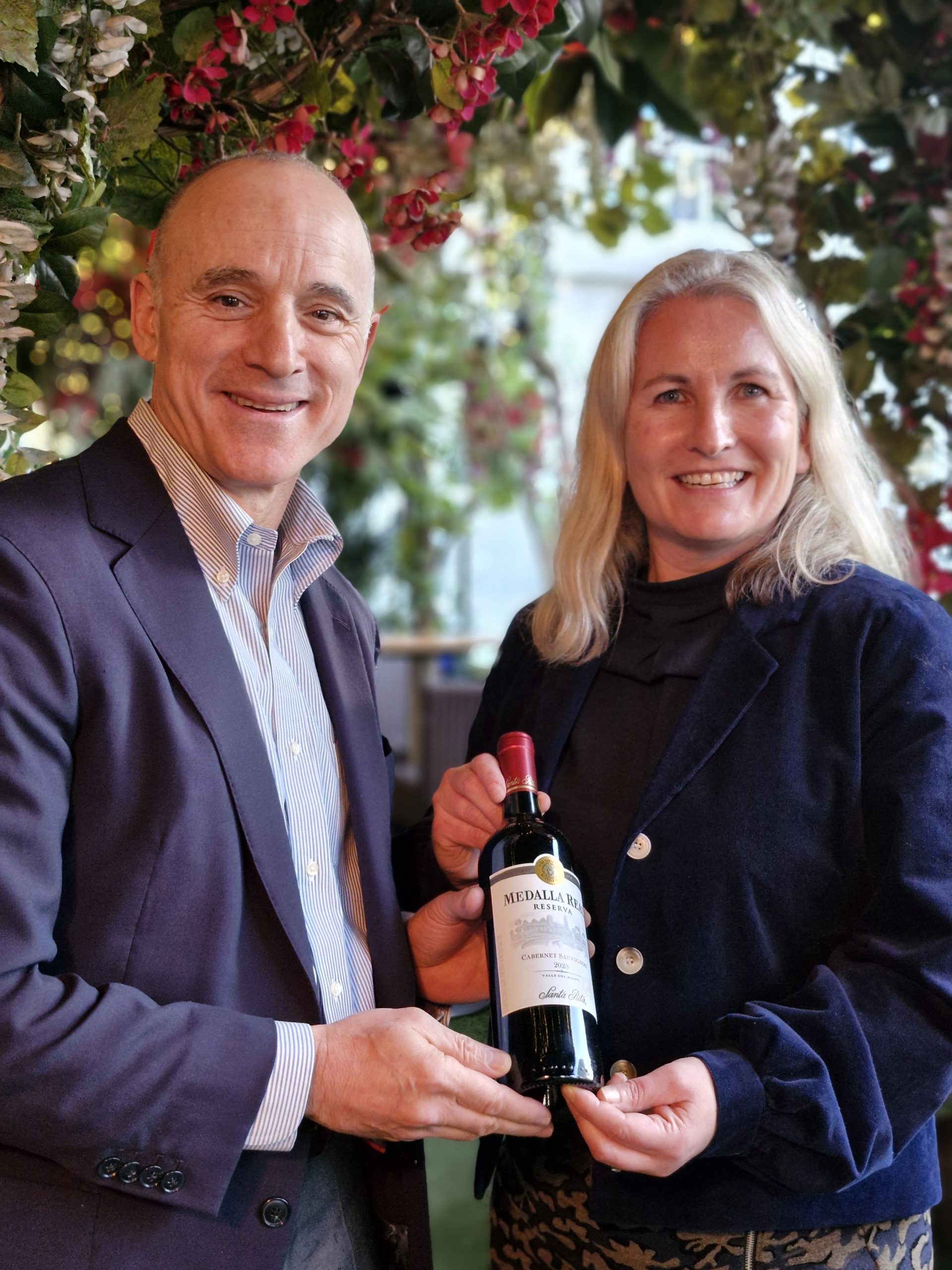
Chilean wine producer Santa Rita has changed its UK off-trade distributor to Schenk Family, following in the footsteps of its sister estate Viña Carmen, and with an eye on “long-term brand building” in the market.
Last October, Chile’s Viña Carmen switched its long term UK distributor from Bibendum to Schenk Family in order to “accelerate growth” and “strengthen its position in one of the world’s most competitive wine markets.”
At the time, Carmen’s UK export director, Terry Pennington, said that “Schenk’s premium offering, strong multi-channel presence, and outstanding reputation” made it the ideal partner “to take Carmen to the next level in the UK”.
Less than six months later, Carmen’s fellow producer under the Santa Rita Estates banner has made the same move. However, while Schenk Family is looking after Carmen’s wines across both the off-trade and on-trade channels, Schenk’s focus for Santa Rita will be purely on the off-trade.
Long-term brand building
According to Santa Rita, one of Chile’s oldest wineries, Schenk Family will focus on developing the producer’s business in “a meaningful and sustainable way”. Indeed, sustainable growth seems to top of the bill, and one of the key goals of the alliance, with an eye on “long-term brand building”.
“We are very much looking forward to building on our relationship with Schenk Family in Great Britain. Their deep understanding of the GB off-trade and their proven track record in building brands make them an ideal partner for Santa Rita,” said Lucy Ward, head of GB off-trade for Viña Santa Rita. “We share a common vision for long-term, sustainable growth, and we are excited about the opportunities ahead as we work together to further strengthen Santa Rita brands’ presence in Great Britain.”
Bringing the distributor’s perspective, Helena Martin, MD of Schenk Family UK called Santa Rita, “a producer with an outstanding reputation and a portfolio that resonates strongly with today’s UK consumers”.
Continuing, Martin said: “There is a clear alignment between our two companies in terms of values, ambition and approach to the market, and we look forward to working closely together to unlock the full potential of the Santa Rita ranges in the Great Britain off-trade.”
The new partnership takes effect immediately.
Heritage and fresh talent
Viña Santa Rita is one of Chile’s oldest wineries, founded in 1880 in the Maipo Valley and offering a diverse portfolio of wines that express Chile’s most prestigious terroirs. The producer owns more than 3,700 hectares of vineyards, all certified under the Wines of Chile Sustainability Code, reflecting its long-standing commitment to sustainable viticulture.
The producer has been tooling up for a fresh sales push with a raft of recent appointments of personnel who will help drive its continued success. In February 2025, Marie-Charlotte Fraysse was hired as the commercial director of Casa Real, the flagship wine of Santa Rita, with a clear mandate to “strengthen Casa Real’s standing in the global fine wine market and drive its next stage of growth”. In August 2025, db revealed that Fraysse was eyeing up Southeast Asian markets in order to achieve this growth, with Singapore and Thailand targeted as having most potential for Casa Real.
Talking about the evolution of the wine style itself, Sebastián Labbé’, the winemaker of Casa Real, told db last year that “we are fine-tuning things. The wines are made pretty much as they were 20 years ago, but we have got much more technology, more experience in terms of how to separate different things. So a block that used to be picked all at once in 2005 might now be picked three or four times, and we have smaller tanks to make that possible.”
Following Fraysse’s appointment, José Jerez Fuentes was bought on board as corporate marketing director in December 2025, having previously worked for South American wine giant VSPT as its global marketing manager.
Related news
Cono Sur: ‘We aim to put Chilean Pinot Noir at the highest level’
Foreign investors turn to Chilean Pisco as premium spirits interest grows
Why Chile’s ‘forgotten’ ancestral grape is due a second renaissance
Dining and Cooking