
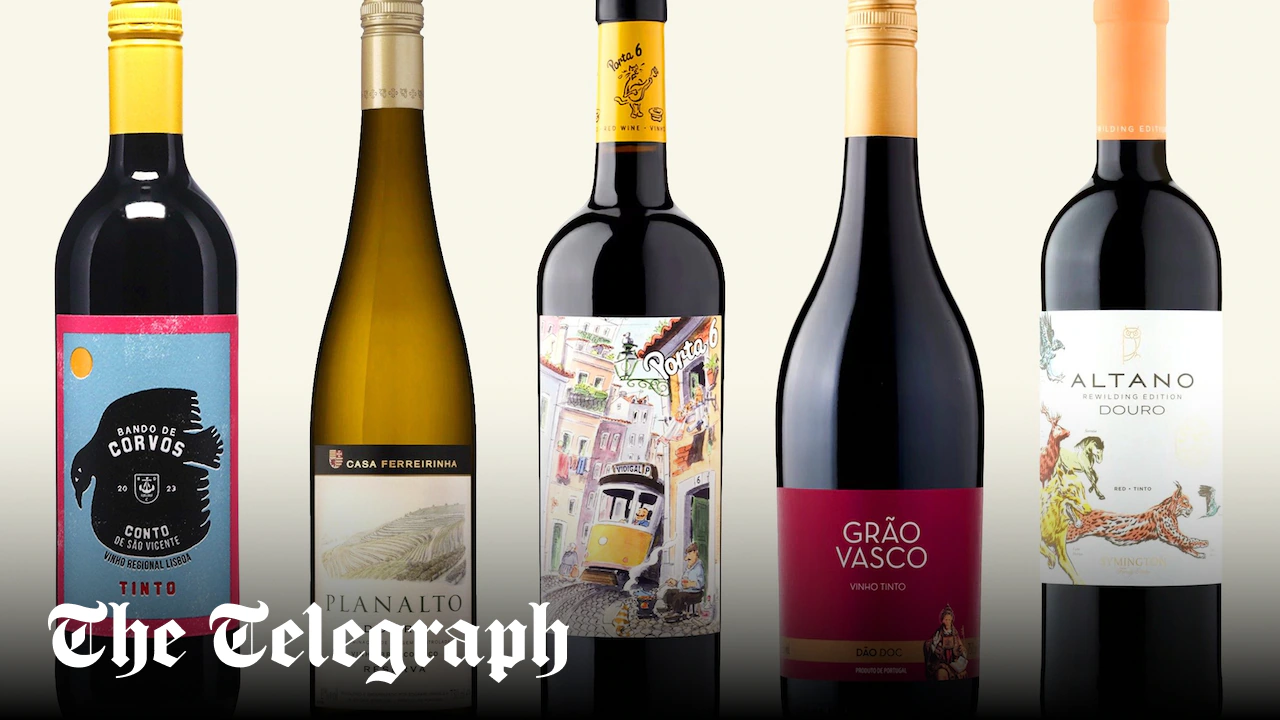
Porta 6 2023, Lisbon, 13%, Majestic Wines
Behind the trend is a country with a portfolio of characterful indigenous grapes, such as castelão, touriga nacional and trincadeira for reds, and gouveio (godello in Spain) and encruzado for whites, many of which are barely found elsewhere. Sugar is also a factor: it rounds, smooths and amplifies the sense of fruitiness, just as it does when you sprinkle it on a strawberry. Many of the successful cheaper Portuguese wines are not dry. Wines from the Lisboa wine region (around Lisbon, hence the name) are often particularly high in the residual sugar department. Porta 6, for instance, rolls in at about 9g (more than two teaspoons) of sugar per bottle, which is just slightly below the sweetness level of the Guv’nor merlot. So if you like The Guv’nor, Porta 6 could be for you.
That said, not all sub-£10 Portuguese wines are quite so sweet, and a few are completely dry. I find that it’s not just the amount of sugar in the bottle that determines the perception of sweetness, but also the balance of the wine. Sometimes sweetness reads as fruitiness; at other times, particularly when resinous-tasting oak is involved, the sugar clashes nastily with the oiliness of the wood. Trial and error is the best way forward.
Dining and Cooking