
The longevity space was once dominated by tech bros with money to burn on bizarre biohacking routines – from hyperbaric oxygen tanks and cryotherapy chambers to ozone therapy and red light gadgets, by which they sleep, train and work.
But now everyone is focused on extending their healthspan – from clean living Gen Z to sober curious millennials and mid-lifers determined to age well. Who doesn’t want to live a longer life, free from chronic disease for as long as possible?
The truth is, you can’t beat the basics, as neuroscientist Dr Sarah McKay advised me on living a happy and fulfilled life. “Your brain thrives on sleep, sweat, somebody else wiping away your tears and a swim in the sea,” she says. And recent research suggests tiny tweaks to your daily routine do add up.
New FeatureIn ShortQuick Stories. Same trusted journalism.
A population-level analysis from the University of Sydney, which drew on UK Biobank data of around 60,000 adults, found relatively tiny changes to daily habits can have a significant impact on health and overall lifespan. Getting an additional five minutes of sleep, two minutes of moderate to vigorous physical activity (like brisk walking or taking the stairs) and an additional half-serving of vegetables per day could lead to an extra year of life for those who currently had poor sleep, physical activity and dietary habits, their analysis suggests.
Meanwhile, getting seven to eight hours of sleep each night, more than 40 minutes of moderate to vigorous exercise each day and following a healthy diet, were traits associated with almost a decade of additional lifespan and years spent in good health, compared to those with the worst sleep, physical activity and dietary habits.
The message is clear, you don’t need to completely overhaul your lifestyle or make huge, expensive changes to make a noticeable difference to your healthspan, notes lead researcher Dr Nicholas Koemel. “You don’t need a million-dollar sleep laboratory or state-of-the-art gym facilities to make micro-tweaks like taking the stairs instead of the lift,” he told The i Paper. That said, he adds: “We don’t necessarily want people to stop at the micro. These [can be] the first steps forward in a marathon of behaviour change.”
With healthspan in mind, I sought out some achievable life hacks to boost my longevity.
A daily spoonful of beans
At the risk of sounding repetitive (by banging on about beans again), forget expensive probiotic supplements, a new-found focus on fibre has probably made the single biggest difference to my digestion and gut health.
“There’s a tendency to instantly think of expensive IV drips and elite supplements when longevity is mentioned, but fibre is actually proven to balance blood sugar, help manage cholesterol, support healthy weight and even reduce the risk of diseases like type 2 diabetes, heart disease and certain cancers,” says nutritionist and author Emma Bardwell, who just published a bible on the topic, The Fibre Effect. “When scientists try to pin down a single dietary factor that explains why some people live longer, healthier lives, it is fibre that keeps showing up. And the beauty is it’s both accessible and affordable.”
Her top fibre-related longevity hack? A daily spoonful of beans. She’s not alone, Dan Buettner, bestselling author and so-called “Blue Zones” expert, notes that, eaten alongside fruit and veg, beans are a cornerstone of centenarian diets around the world.
One large study found that an intake of 20g of legumes daily may reduce a person’s risk of dying in any given year by 7 to 8 per cent. “If there’s one food I’d get people eating more of for longevity, it’s beans,” Bardwell says. “They’re one of the most consistently linked foods with longevity in population studies.”
Even a few tablespoons a day, stirred into soups, salads or stews, can make a difference. “Beans are rich in soluble fibre, which helps lower cholesterol, stabilise blood sugar and feed the gut microbiome. The top three beans for maximum fibre are haricot beans (the ones used in traditional baked beans); black beans (lovely in a breakfast burrito) and red kidney beans (ideal for batch cooking and meal prep salads that won’t go soggy)!”
I now religiously eat a helping of beans or chickpeas almost daily, it keeps me regular and energy levels topped up.
Fibre at breakfast
Her other rule I live by is starting the day with a fibrous breakfast. “One of the easiest ways to increase fibre is to add, not replace,” Bardwell continues. “A tablespoon of chia, ground flax or mixed seeds added to something you already eat, like yoghurt, porridge, chia pudding or overnight oats can significantly boost fibre intake without overhauling your routine”.
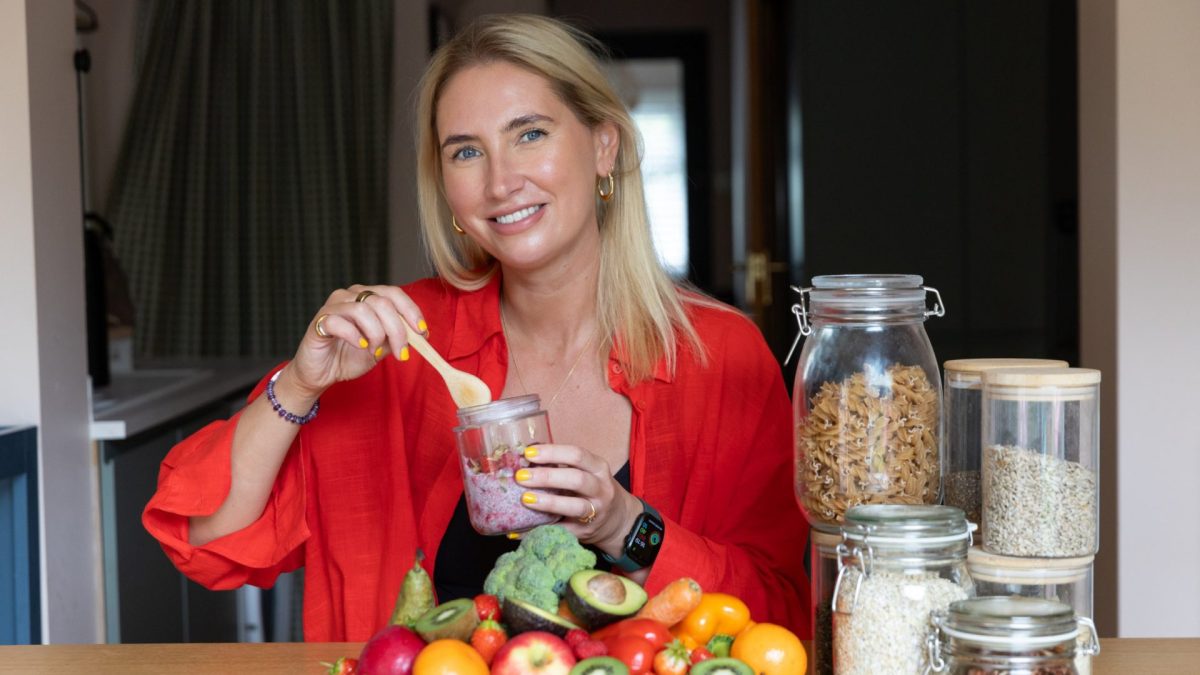
It’s a small habit, but over time these additions help close the gap between what most people eat (around 16–18g fibre a day in the UK) and what’s recommended (30g). Since I had a go at fibremaxxing, I’ve eaten a chia and oat overnight concoction loaded with nuts, seeds and berries every morning. It keeps me feeling full until lunch like no other breakfast.
Rhiannon Lambert, nutritionist, podcaster and author, has also just released a book on the upping your roughage: The Fibre Formula. One of her top tips is a simple cooking trick. “Cool your carbs, then reheat them,” she advises. “When foods like potatoes, rice or pasta are cooked and then cooled, some of their starch is converted into resistant starch, a type of fibre that isn’t digested in the small intestine. Resistant starch feeds beneficial gut bacteria and contributes to the production of short-chain fatty acids, which are linked with improved gut health and metabolic function. This also works for bread – pop your loaf in the freezer and defrost as needed!”
Olive oil shots all round
TikTokers are swigging morning shots of olive oil purporting everything from weight loss to glowing skin. While the science behind some of these claims might be shaky, the idea may be loosely adapted from the Mediterranean, where Cretan fishermen in the 60s, who were known for their longevity, were said to start a long day of fishing with a glass of olive oil.
Higher olive oil intake, specifically extra virgin olive oil which contains more health-promoting polyphenols (as not all olive oils are created equal), has been associated with lower rates of heart disease and early death. One major study which followed more than 90,000 people over a period of 28 years, found those who ate the most olive oil (more than half a tablespoon a day) had a 19 per cent lower risk of death from any cause, compared to people who never or rarely used olive oil.
Indeed, investing in good quality olive oil is one of the health rules gut health doctor Megan Rossi swears by. I can’t stomach the idea of a shot first thing, and don’t see that it’s necessary, so instead I drizzle and douse my EVOO on pretty much everything, and now use it instead of butter. It’s an easy swap with some convincing health benefits.
Eat an early dinner
After weighing up the research, and speaking to experts like Dr Sarah Berry, it appears there are benefits to be reaped from eating more of your calories earlier in the day, when we are more insulin sensitive, and in line with your circadian rhythm, according to an emerging area of research called chronobiology.
I have been aiming to bring my eating window forward a little earlier (having breakfast around 8am, dinner around 6pm, when possible, and avoiding late-night snacking). This factors in an overnight fast of at least 14 hours on a good day which gives my digestive system a break, something that is believed to have significant benefits for metabolic health, as well as sleep quality. Admittedly, logistically it doesn’t work every night, but when it does it seems to pay off – I wake up feeling a bit more refreshed and energised.
Take a post-meal stroll
Experts can’t seem to agree on the magic number of steps per day for optimal health – is it 5,000, 7,000 or 10,000? – but one thing most do seem to strongly agree on is that postprandial walking (after meals) is a good idea to help support blood glucose control, digestion, heart health and even lower inflammation.
A short walk after dinner makes a lot of sense, particularly with lighter evenings ahead, although it is not an option for me as I have a toddler bedtime to contend with. Instead, I have started going for a half-hour walk around my local park immediately after lunch and I’m surprised at the difference it has made to my energy levels. It is also a brilliant reset for the mind, and helps me concentrate better in the afternoons.
Research suggests doing so as soon as possible after a meal has the best benefit. In fact, one small study found a 10-minute walk immediately after eating had a greater benefit than a 30-minute walk 30 minutes after eating.
Most experts advise keeping the pace moderate to avoid interfering with indigestion. I’m increasingly picking up the pace to more of a march with purpose. A large analysis of nearly 80,000 participants found just 15 minutes of fast walking can cut your risk of early death by 20 per cent.
I don’t have my phone, which means I’m more in tune with my surroundings. I’ve been using this to practice a moment of gratitude, nothing too spiritual, just making a mental note of one or two things I’m grateful for. The practice is scientifically proven to make you happier and healthier, potentially even live longer.
Embracing daily vilpa
Vilpa, a term coined by Professor Emmanuel Stamatakis and his team also at the University of Sydney, stands for “vigorous intermittent lifestyle physical activity”. Rather than structured exercise or gym workouts, it’s those everyday activities that feel like a mini HIIT workout and naturally make you break a sweat – running up stairs, carrying heavy shopping or children. His various studies suggest that as few as one to four minutes of incidental vilpa each day may reduce your risk of heart attack, stroke and even certain cancers.
I recently took a longevity fitness test which told me my aerobic fitness is better than I’d expected. Specifically, it looked at my VO2 max, the gold standard measurement for cardiovascular fitness and essentially reflects how efficiently your heart, lungs, and muscles work together to deliver and use oxygen during exercise.
I’m no marathoner, but I suspect my above-average score was down to a HIIT class that I do twice a week (after neglecting cardio for years). It features fast sprint intervals for 30 seconds at a time – and lately I’ve been gradually notching up my speed. In the last year I’ve also started cycling everywhere (in a purely pootling around town fashion), but where I used to dread cycling up any form of hill, I now see it as a chance to add vilpa in my day.
Though the idea of only having to do a minute or two of exercise each day is alluring, the more vilpa you do, the greater the benefits. Plus, my mission now is to protect my VO2 Max score, as it naturally declines with age. I asked fitness experts for their best one minute exercises for a longer life. On days where I’m working from home, I’ve been forcing myself into the odd minute of squat jumps, barre-inspired pliés or – when i’m feeling really self-punishing – mountain climbers, (no matter how many I do, they don’t get any easier).
Dead hangs for grip strength
Experts are clear that strength training should be the cornerstone of your fitness routine at any age, greater overall strength is linked to a multitude of better health outcomes. One analysis found that just 30 to 60 minutes of muscle strengthening activity every week is associated with a 10 to 20 per cent lower risk of death from all causes.
Anyone who lifts regularly will tell you it boosts their mood, and research indicates it may even have an anti-depressant effect, while other studies suggest cognitive benefits. That’s not to mention the convenience and sense of independence that feeling strong affords.
Grip strength in particular is an area increasingly being looked at by experts for its association with longevity. “Grip strength is a well-established biomarker of overall health and is strongly associated with lower all-cause mortality,” says Aaron Deere, health and performance director at Hooke Fitness (where my longevity fitness parameters were assessed). My grip strength for my age and sex is good according to the dynamometre, but to improve or maintain it, he suggests dead hangs. “These exercises build grip strength and upper body strength while decompressing the spine.”
It’s harder than it looks, I discover as I gingerly sway from the tallest bar I can find in the park’s outdoor gym. I only managed eight seconds on my first go, but afterwards I felt like I’d been to the chiropractor. Hanging seemed to have ironed out all of the kinks in my spine from being crumpled over my laptop, and I could feel my abs kick into action.
Teeth brushing on one leg (closed eyes optional)
The next thing Deere prescribes is some balance training. I have always prided myself on having pretty good balance and am used to single leg postures in yoga, but this confidence is quickly shattered when I’m asked to stand on one leg with my eyes closed. I’m rubbish.
The lack of visual cues changes everything. “Balance training improves neuromuscular co-ordination and proprioception, which are critical for preventing falls — one of the leading causes of morbidity and loss of independence in older adults,” Deere explains. “Simple exercises such as single leg balances with your eyes open and eyes closed, are great for helping train the neuromuscular system and maintain balance as you age.”
Teeth brushing seems to be the obvious time for me to practice my single leg stance, this is called “habit stacking”. Swapping legs halfway through, I level it up by closing my eyes, a hand hovering over the sink (keep your eyes open if you are very unsteady). It’s all a bit disorientating and messy – I definitely spill toothpaste down my top – but I’m embracing the wobble and encouraged by the fact that balance is something experts say you can improve relatively quickly with regular practice.
So have I added a year or more to my life yet? I can’t predict the future, but it’s true that making a few microtweaks to my weekly routine have had a surprisingly uplifting effect on my mood. As the world feels so utterly terrifying, taking control of the small things feels like therapy.
Dining and Cooking