
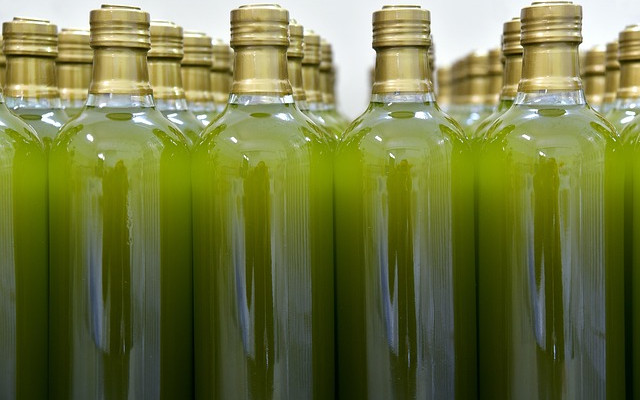
Regulations (EU) 2022/2104 and 2022/2105 have updated the regulatory framework for olive oil labeling, introducing greater transparency and stricter controls. Below is a brief guide to understanding the new EU rules.
The European Union has profoundly renewed the discipline oflabeling and of the Checks
olive oils with the adoption of two complementary regulations, which entered into force on 24 November 2022. Delegated Regulation (EU) 2022/2104 establishes the marketing standards, while Implementing Regulation (EU) 2022/2105 defines the conformity checks and analysis methods.
These acts repealed the previous legislation dating back to 1991 (EEC Regulation No. 2568/91) and 2012 (EU Regulation No. 29/2012), marking the definitive transition from the old Regulation No. 136/66/EEC and EC Regulation No. 1234/2007 to the current EU Regulation No. 1308/2013 on the common organization of agricultural markets. The stated objective is to simplify, clarify, and ensure greater transparency in the European olive oil market.
The scope of the new regulation covers all olive oils sold to the final consumer, whether marketed as such or used as ingredients in other food products.
Olive oils, the categories
The classification of olive oils is defined in Annex VII, Part VIII, of Regulation (EU) No. 1308/2013, which distinguishes different categories based on production processes and chemical and organoleptic parameters.
Virgin olive oils
– virgin olive oils They are defined as oils obtained from the fruit of the olive tree exclusively by mechanical or other physical processes, under conditions that do not cause alterations to the oil. They must not have undergone any treatment other than washing, decantation, centrifugation, and filtration. Oils obtained using solvents or chemical or biochemical adjuvants, re-esterification processes, or mixtures with other types of oils are excluded.
Within this category we can distinguish:
extra virgin olive oil: has a maximum free acidity of 0,8 g per 100 g, expressed as oleic acid, in addition to other characteristics compliant with the parameters established by the European Commission;
virgin olive oil: maximum free acidity of 2 g per 100 g of oleic acid and characteristics compliant with the category;
lampante olive oilFree acidity greater than 2 g per 100 g of oleic acid and/or other characteristics not conforming to the previous categories. Not intended for direct consumption but for refining.
Refined oils and blends
Refined olive oil: obtained by refining virgin olive oil, with free acidity not exceeding 0,3 g per 100 g;
olive oil – a mixture of refined olive oils and virgin olive oils: it is obtained by blending refined oil with virgin oil (other than lampante), with a maximum acidity of 1 g per 100 g.
Pomace oils
Crude olive pomace oil: obtained from olive pomace through treatment with solvents or physical processes, with characteristics corresponding to lampante oil;
refined olive pomace oil: derives from the refining of crude pomace oil, with a maximum acidity of 0,3 g per 100 g;
olive pomace oil: obtained by blending refined pomace oil with virgin oil (other than lampante), with a maximum acidity of 1 g per 100 g.
Quality and purity characteristics
European regulations define analytical parameters Precise tests to guarantee the quality and authenticity of olive oils. Quality characteristics include free acidity, peroxide value, ultraviolet absorption (K232, K270, ΔK), and organoleptic analysis.
I purity parameters include fatty acid composition, saturated fatty acid content in the 2-position of triglycerides, total sterol content and sterol composition, triterpene dialcohols, wax composition, stigmastadienes, and other specific chemical markers.
New parameters for Δ-7-stigmastenol
Important changes regarding the Δ-7-stigmastenol parameter came into force on June 10, 2024. The general limit is set at ≤ 0,5% of total sterols. For extra virgin and virgin olive oils with values between 0,5% and 0,8%, additional checks are also required: the apparent β-sitosterol/campesterol ratio must be ≥ 28, the ΔΕCN42 must be ≤ |0,10|, and all other parameters must fall within the limits.
For lampante oil with Δ-7-stigmastenol between 0,5% and 0,8%, the requirements include apparent β-sitosterol/campesterol ≥ 28, ΔΕCN42 ≤ |0,15| and stigmastadienes ≤ 0,30 mg/kg.
Legal names and mandatory information
The mandatory legal names, to be reported in the main visual field of the label, are specifically defined:
extra virgin olive oil: ‘superior category olive oil obtained directly from olives and solely by mechanical means’;
virgin olive oil: ‘olive oil obtained directly from olives and solely by mechanical means’;
olive oil: ‘oil containing exclusively olive oils that have undergone a refining process and oils obtained directly from olives’;
olive pomace oil: ‘oil containing exclusively oils derived from the processing of the product obtained after the extraction of olive oil and oils obtained directly from olives’.
Indication of origin
For the oils extra virgin and virgin The place of origin must be indicated, specifying where the olives were grown and where the oil was extracted. If these places are different, both must be clearly indicated on the label.
Other mandatory requirements
La maximum capacity of containers intended for the final consumer is set at 5 litres. The packaging must be equipped with a closing system which loses its integrity after the first opening, to guarantee the authenticity of the product. Where applicable, the alphanumeric code of the air conditioning system must be reported.
Optional regulated indications
Exclusively for the virgin and extra virgin olive oils, the regulation provides for some optional, but strictly regulated indications:
‘first cold pressing’, only if the extraction took place at a temperature below 27°C using a traditional system with hydraulic presses;
‘cold pressed’, if the extraction took place at a temperature below 27°C by percolation or centrifugation.
organoleptic characteristics relating to taste or smell can be declared in compliance with the specific conditions dictated by the regulation (see next paragraph);
the maximum acidity it can only be indicated if accompanied by other chemical parameters (peroxides, waxes, UV absorption), all measured in the same way;
collection campaignThe indication of the vintage is permitted only if 100% of the contents come from a single olive growing season.
Organoleptic characteristics on the label
The regulation establishes precise criteria for the declaration of organoleptic attributes, based on the evaluation of panel of tasters Qualified. Positive attributes include fruitiness (green or ripe), bitterness, and pungency.
The intensity of the ‘fruity’ is classified into:
intense: when the panel median is greater than 6,0;
middle finger: median greater than 3,0 and less than or equal to 6,0;
light: median less than or equal to 3,0.
An oil can be defined as ‘balanced’ when there is no imbalance between the attributes, that is, when bitterness or pungency do not exceed the fruitiness by more than 2,0 points. The attribute ‘Dolce’ can be used when bitterness and pungency are both less than or equal to 2,0.
Certification of organoleptic characteristics is the responsibility of the head of the tasting panel, who can certify the oil’s compliance with the established definitions. It is essential to emphasize that only the characteristics explicitly defined in Annex IX of the regulation may be included on the label.
Control and compliance system
Implementing Regulation (EU) 2022/2105 established a comprehensive system of compliance checks, entrusting Member States with specific responsibilities.
Organization of controls
Member States must carry out selective controls based onrisk analysis, with an adequate frequency to verify that the oil corresponds to the declared category. In the event of substantial irregularities, the frequency of checks must be increased.
A crackdown is expected cooperation between Member States for cross-border checks. The deadlines are precisely defined: samples must be collected by the end of the month following the request, while the response with analytical results is due within three months.
Analysis and sampling methods
I analysis methods are based on recognized international standards:
EN ISO 661 standard for sample preparation;
EN ISO 5555 standard for sampling;
International Olive Council (IOC) methods for alignment with international standards.
Panel of tasters
Taster panels must be recognized by the Member States. The panel leader must receive training from recognized organizations, and the recognition is subject to annual review to verify its validity.
Documentary requirements
The regulation imposes specific documentary obligations on both industry operators and supervisory authorities:
The operators In the olive oil sector, producers must maintain an incoming and outgoing register documenting every movement of oil from the mill to the bottling plant. Detailed documentation must be maintained for each category of olive oil held, and must be provided upon request by the Member State;
The Member states They must submit to the European Commission, by 31 May each year, an annual report containing the results of the compliance checks carried out in the previous year and the sanctioning measures adopted.
Sanctions and management of non-compliance
The sanctioning system provides that the measures adopted by the Member States are effective, proportionate and dissuasive, calibrated on the gravity of the irregularity ascertained.
Notification system
The IMSOC (Information Management System for Official Controls) system is operational for communications between Member States. Specifically, for extra virgin olive oils with organoleptic defects, notification between Member States is mandatory, with a response due within three months.
The 2024 updates introduced new provisions for the reporting of organoleptic defects and more rigorous sampling methodologies.
Conclusions
The new EU rules on olive oil labeling represent a significant step forward in consumer protection and the fight against fraud. Simplified regulations, combined with greater transparency and more effective controls, help ensure the quality and authenticity of European olive oil products.
Key elements of the system include clear and precise labelling, mandatory indication of origin for virgin oils, risk-based controls, cooperation between Member States, and continuous scientific updates of analytical parameters.
A modern and dynamic regulatory framework, capable of adapting to scientific developments and market needs, while keeping consumer protection at its core.
References
Commission Delegated Regulation (EU) 2022/2104 of 29 July 2022 supplementing Regulation (EU) No 1308/2013 of the European Parliament and of the Council as regards marketing standards for olive oil, and repealing Commission Regulation (EEC) No 2568/91 and Commission Implementing Regulation (EU) No 29/2012 https://eur-lex.europa.eu/legal-content/IT/TXT/?uri=CELEX:32022R2104

Dario Dongo, lawyer and journalist, PhD in international food law, founder of WIISE (FARE – GIFT – Food Times) and Égalité.
Dining and Cooking