
Often overshadowed by the nations more available Sauvignon Blanc, Chilean Chardonnay is being transformed by cooler sites and evolving winemaking, reports Sophie Arundel.
Chilean Chardonnay’s challenge in the UK remains one of perception and visibility, particularly against the entrenched success of its Sauvignon Blanc. Yet there are signs that this dynamic may be shifting. As Félix Solís quipped in conversation with db at ProWein this year, “Sauvignon Blanc has had its time. It’s Chardonnay time now.” While said with a degree of levity, the sentiment reflects a broader industry belief that Chardonnay’s versatility and premium potential are increasingly aligned with changing consumer preferences.
Richard Cochrane, managing director of Félix Solís UK, makes a similar point while discussing the new Aires de Casablanca project from Casa Solís’, the company’s Chilean oupost, established in Cachapoal Valley in 2024. The first two wines underneath the Aires de Casablanca label are a Chardonnay and a Pinot Noir: “Chardonnay, by its breadth, its diversity and its real interest almost became confusing… people try one version they don’t like and then that answers it for everything.” He contrasts this with Chilean Sauvignon Blanc’s clarity of identity, noting that it has been “really singular, really clear, and everyone got it… vintage after vintage”, helping to cement its dominance in the UK market.
Peter Greet, commercial director at Chilean producer Luis Felipe Edwards (LFE), notes the difference in commercial appeal between the two varieties in the UK: “Chilean Chardonnay has traditionally been viewed as more premium than Chilean Sauvignon Blanc. Whilst both offer exceptional value for money, it is Sauvignon Blanc which has established a reputation as a popular entry-point wine, not only overdelivering at volume-driving price points, but also offering exceptional consistency. He continues: “Few retailers do well with entry-level Chilean Chardonnay, whilst the likes of Majestic and Tesco are very successful with premium Chilean Chardonnay; LFE’s Gran Reserva Chardonnay, which is a 50:50 blend of Casablanca and Leyda fruit, sells particularly well in the UK at a £9 and £11 price point.” This contrast reflects a broader market reality: Sauvignon Blanc enjoys high visibility in the UK, whether it be in supermarkets, pubs or casual dining, while Chilean Chardonnay is still in the process of finding its place.
Clive Donaldson, senior buying manager for wine at UK supermarket Asda, confirms this. “Chilean Chardonnay continues to perform well for us at Asda and remains an important part of our Chilean range,” he reports. “Within the category, it comfortably outsells Chilean Pinot Noir, although it does sit behind Sauvignon Blanc, which is hardly surprising given the broader dynamics of the UK market… “Against that backdrop, the fact that Chardonnay continues to hold its ground and deliver consistent sales volumes is encouraging, and it shows there is still a strong appetite among shoppers for well-made, good-value examples of the variety from Chile.”
The identity of Chilean Chardonnay is closely tied to its climate and soils. Agronomist Maximiliano Morales highlights Limarí, Casablanca and Araucanía as regions leading the modern style, explaining: “Over the past two decades, Chardonnay has undergone a significant transformation in Chile. “Once dominated by warmer-climate styles – often ripe, tropical and heavily oaked – the variety has increasingly shifted toward cooler terroirs and more precise expressions of place. This evolution has allowed Chilean Chardonnay to gain international recognition, particularly from coastal and limestone-influenced regions such as Limarí, Casablanca and, lately, Araucanía, 600km south of Santiago.”
In particular, Morales points to Viña Tabalí’s coastal vineyards: “These sites benefit from cold coastal breezes and relatively low temperatures, allowing the grapes to ripen slowly and develop complex mineral profiles and vibrant acidity – characteristics increasingly associated with the new generation of Chilean Chardonnay.” Marcelo Papa, technical director at Concha y Toro, reinforces this shift toward site expression. “Chilean Chardonnay today is defined by its remarkable diversity and an increasingly strong focus on origin-driven expressions,” he says.
“Newer coastal regions such as Limarí Valley, Aconcagua Costa and San Antonio Valley are redefining the style, producing wines with greater tension, precision and minerality.” Emily Faulconer, technical director at Chadwick Family Estates, similarly underlines how far the category has come, noting that “Chilean Chardonnay today has a much clearer identity than it did 15 years ago, strongly shaped by coastal influence and a growing focus on site expression”, with regions such as Aconcagua Costa producing wines of “precision and elegance … balanced by texture”.
Ocean influence
The Pacific Ocean, moderated by the Humboldt Current, is central to Chile’s uniqueness. Cynthia Ortiz, winemaker at La Rosa Winery in Peumo, Cachapoal Valley, emphasises its role, pointing out: “Chile has something that no-one else has: the Pacific Ocean and particularly the cold influence produced by the Humboldt current… Combined with different soils and transversal valleys that work as cold moderator winds, the Humboldt allows us to produce Chardonnay in the west side of the coastal mountain range with amazing results.” Ricardo Baettig, chief winemaker at Viña Morandé, highlights the diverse character of Chardonnay seen across Chile’s different regions: “In Casablanca Valley the climate is strongly influenced by the ocean and frequent coastal fog … In Malleco Valley, the period of higher temperatures is shorter and there can still be rainfall during the summer months. This results in slower ripening, more persistent acidity and fruit that shows less sweetness. The wines express elegance and texture, rather than overt fruitiness, with more length and structure.”
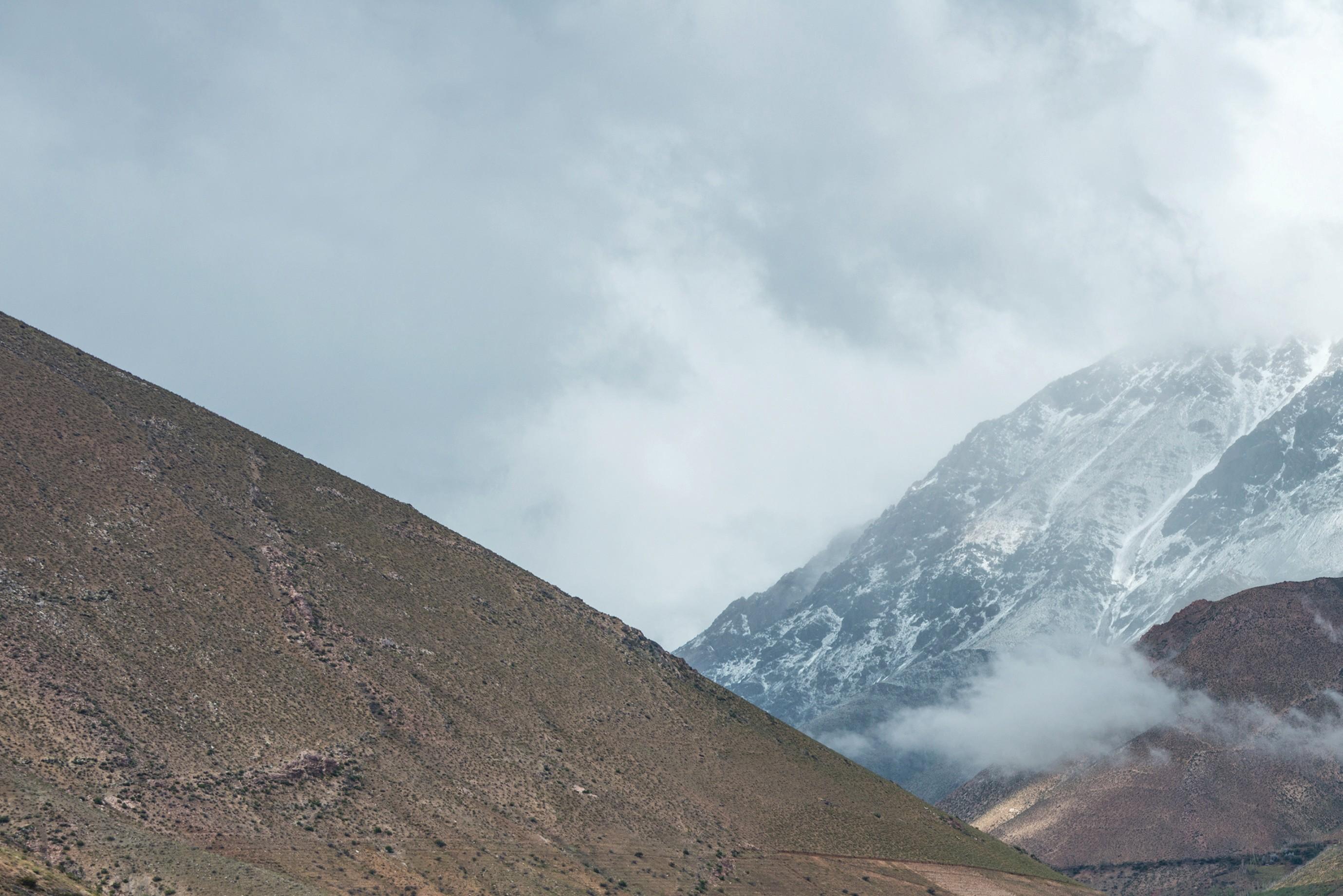
He also points to the role of soils in shaping the wine: “The volcanic breccia soils we have in the south are very interesting. They retain moisture well due to their clay content, while the volcanic rocks that are present at different depths contribute minerals and improve drainage … In many ways, they play a similar role to gravel in an alluvial soil.” Meanwhile, Gonzalo Castro, technical manager and winemaker at Baron Philippe de Rothschild Chile, draws parallels with the world’s most famous Chardonnay-producing region. “I love the Chardonnay variety, because it reminds me always of Burgundy, and we found in Casablanca Valley something similar in climate conditions and in the terroir expression,” he says. Sophie Ragot, chef de groupe for Baron Philippe de Rothschild Chile, summarises: “The style of Chardonnay in Chile has evolved significantly in recent years, moving toward a fresher, more fruit-driven profile, with less emphasis on creaminess and heavy oak. Today, the focus is increasingly on cool-climate expressions and a clearer reflection of terroir.”
Winemaking in Chile has shifted dramatically over the past 10–15 years. Previously, Chardonnay was best-known for being heavily oaked, tropical and high in alcohol, often sourced from the country’s warmer inland valleys. Today, earlier harvests, restrained oak and cooler sites are making their mark. Maximiliano Morales attributes this evolution to a new focus on balance and elegance, explaining: “With the arrival of Franco-Chilean winemaker François Massoc in 2004, Viña Aristos was born. His French perspective introduced a new sensitivity to balance, freshness and elegance in Chilean wines … I have seen how his vision has contributed to shaping a more refined and terroir-driven expression of Chilean Chardonnay.” Ortiz highlights the role of lees ageing and freshness: “From over-oaked 15 years ago to over-acidic five years ago, nowadays there are much more balanced wines, expressing the soil and ocean influence, allowing the Chardonnay to rest on the lees, something known as ‘chardonear’ in Spanish, obtaining creaminess with freshness that makes you ask for another glass.” However, all this being said, Clive Donaldson notes that UK consumers are still attracted to traditional oaked styles: “We haven’t seen a particularly strong shift towards fresher or coastal styles among our customers just yet,” he says. “In fact, our best-selling Chilean Chardonnay remains one of the richer, oak-influenced expressions … The slightly fuller, oak-led styles continue to resonate most strongly with our core shoppers.” This evolution reflects Chile’s dual approach when it comes to Chardonnay: retaining some of the traditional richness, while also embracing modern, cooler-climate styles that highlight freshness and minerality.
Cooler sites
Investment in cooler, coastal and southern vineyards is accelerating. Juan Ignacio Montt, Chilean wine expert at producer and wine merchant Les Grands Chais de France (GCF), notes that Leyda Valley plantings had remained stable, but are now seeing premium-focused expansion: “In the Leyda Valley … the proportion of Chardonnay has remained more or less stable for the last 10 years … This year, 2026, we will increase our planted area to 10 hectares. While we have Chardonnays of varying qualities and prices, we are convinced that the premiumisation of our wines is the future for Chile.” That shift is echoed at a national level, with Faulconer noting that, while plantings have stabilised at around 10,000ha, Chardonnay is increasingly moving “towards the premium segment, with more wineries producing high-end expressions from cooler coastal and southern regions”. Chilean Chardonnay occupies a nuanced space in both retail and on-trade markets, and producers themselves are capitalising on these dynamics. Ortiz of La Rosa outlines how the goal with the company’s portfolio was to balance accessibility with premium positioning, saying: “We produce Chardonnay from mid-range (£8 retail) to premium (£40 retail) quality. The differences are in the origin of the fruit and more fine-tuning work in the cellar, respecting the origin and maintaining freshness’. He adds that the sweet spot for Chilean Chardonnay “would be from £12–£18 at retail, which means competing with other New World wines in the lower tier and Chablis in the upper tier.” Montt of GCF echoes this focus on premiumisation, noting that “premiumisation of our wines is the future for Chilean wine. Therefore, our efforts today are focused on investing in this category, and that is what we are doing at Leyda”.
Value perception relative to other white varieties is another critical factor in the success of Chilean Chardonnay. Ortiz highlights its versatility: “In our perception, Chardonnay can go up to premium quality. Also, the tasting notes can have many more layers both in the nose and palate compared to a Sauvignon Blanc, for example”. Similarly, Montt observes that, “because Chardonnay is a variety with excellent ageing potential, further enhanced by oak ageing, we can produce wines of great elegance and value, perhaps even more so than with Sauvignon Blanc, where styles are more varietal”. Gonzalo Bertelsen, head winemaker at Veramonte in the Casablanca Valley, underscores the importance of terroir in creating distinctiveness: “Chilean Chardonnays are moving into a fresher, cleaner, more authentic style of wine, but with concentration and weight, with ageing potential and complexity … It is not just the climate and soils, it’s what we do with that, and how we interpret the landscape.” UK market perception remains shaped by both volume and stylistic clarity. Asda’s Donaldson explains: “Sauvignon Blanc has been the UK’s number one grape variety for a number of years now and enjoys enormous popularity with consumers, so it naturally dominates in terms of sales.” Montt adds that Chardonnay’s broader stylistic range complicates its recognition:
“It often happens that when I present our Sauvignon Blanc from Leyda, many customers associate it with the Sauvignon Blanc from New Zealand … However, Chilean Chardonnay has a wider palette, which requires more education to communicate the uniqueness of each valley.” Meanwhile, Ortiz sees gastronomic potential as a differentiator: “Balanced Chardonnay from Chile offers great complexity, fruit and smoothness that makes it perfect for food.” On-trade presence is similarly uneven. Donaldson notes that Chilean Chardonnay has less visibility in pubs compared with Sauvignon Blanc, because “Sauvignon Blanc is simply more popular with UK drinkers … Chardonnay also tends to divide opinion more, with many consumers still having something of a love/hate relationship with the variety”. Sophie Ragot of Baron Philippe de Rothschild agrees: “In pubs, consumer preferences are often oriented toward beer as a refreshing drink. Sauvignon Blanc offers a more comparable alternative in terms of freshness and vibrancy”. She considers Chardonnay to “offer a more complex personality in both aromas and flavours”; ideal for food pairing. Export markets illustrate another layer of opportunity, with Ortiz highlighting strong demand for Chilean Chardonnay in the Netherlands, Denmark and Brazil. “The US is more difficult as consumers there are used to oaked Chardonnay.” Ragot notes Japan and Brazil as two further markets showing growing interest in higher-end Chardonnay styles, while Donaldson observes that, in value terms, Chilean Chardonnay is becoming increasingly competitive with other New World regions such as Australia and California. In essence, producers and importers alike identify the potential for Chilean Chardonnay to become a flagship export alongside Sauvignon Blanc and Cabernet Sauvignon, provided that stylistic clarity and terroir expression are emphasised. Morales reflects: “Chilean premium Chardonnay is gaining traction as one of the country’s most promising white wine categories,” while Montt points to education and tourism as key tools for market development: “We need to continue educating the UK market about our wine valleys… it requires collaboration between the public and private sectors.” As these efforts gather pace, Chilean Chardonnay appears poised to secure both commercial success and international recognition, especially for its distinctive coastal and southern expressions.
Related news
How Baronesa P. pays tribute to an icon of the wine world
Casa Solís takes root in Chile
Viña Santa Rita appoints Schenk Family
Dining and Cooking