
Credit: Photo by Jenn de la Vega
Key points
I cooked Barilla ($2.49) and Rummo ($4.19) spaghetti at multiple cook times to see which tasted better and held up best.
Rummo had a firmer, more satisfying texture overall and was more forgiving. Barilla was good when cooked perfectly, but too little or long left it undercooked or mushy.
I found it worth it to spend a couple more dollars for the “fancy” brand. But ultimately, knowing how to cook pasta to your preferred doneness is the most important factor.
Spaghetti was my gateway to “adult” dinners when I was in college. I could easily toss a 1-pound box with jarred marinara or Alfredo sauce for a simple, affordable meal that stretched a couple of days.
These days, you can find many varieties of dried spaghetti at the grocery store, including more premium brands — but do the extra couple dollars you’ll pay really make a difference in enjoyment? To put that question to the test, I picked up the least and most expensive boxes I could find at my local store: Barilla Classic Spaghetti No. 5 ($2.49 per pound) and Rummo Spaghetti No. 3 ($4.19 per pound).
Related: 22 Spaghetti Recipes From Panko Pesto to Pantry Puttanesca
Notably, all of Rummo’s pasta shapes are cut with bronze dies rather than Teflon, which means the noodles offer a rougher, more porous surface for sauces to cling to. (Barilla offers a bronze-cut spaghetti through its Al Bronzo line, which comes in a red box and retails for a slightly higher price, but I tested its more widely available blue-box spaghetti).
How I tested
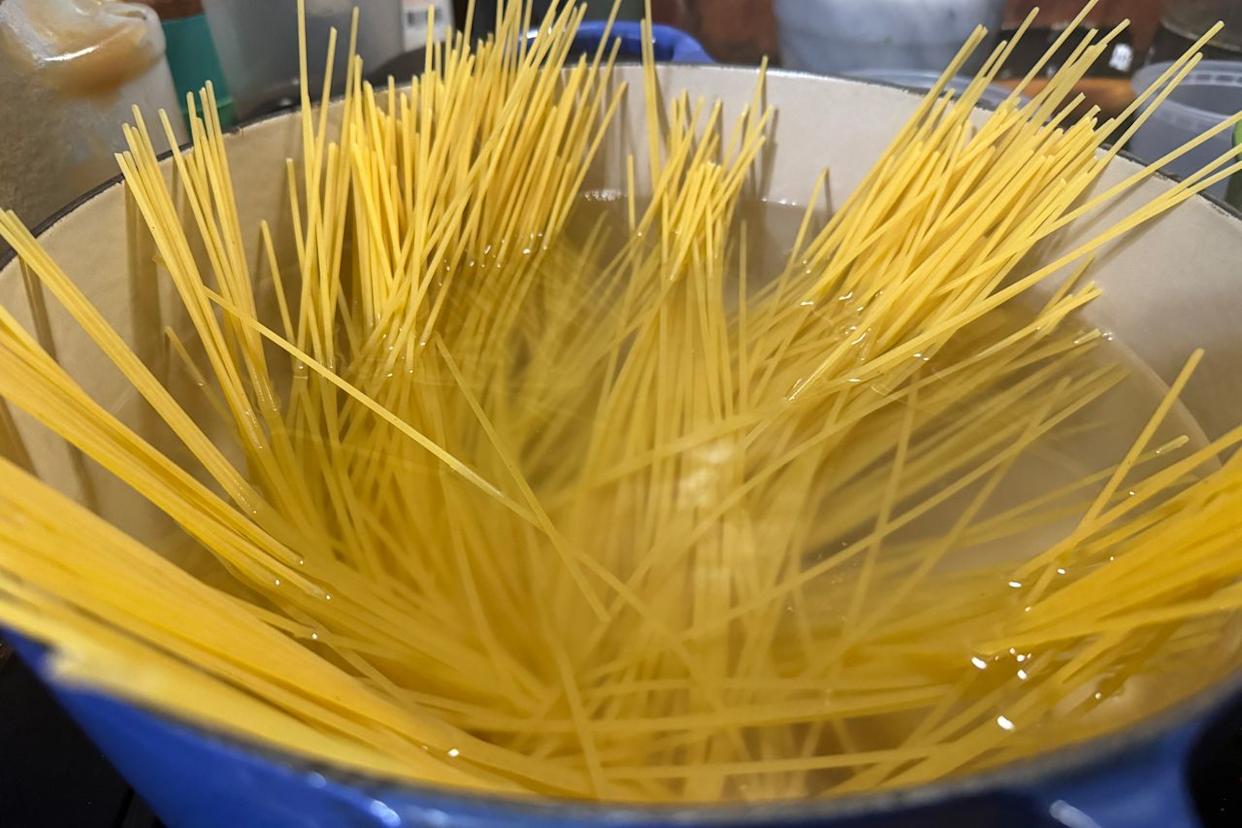
To test the spaghetti, I brought two large pots of water to a rolling boil, each containing 1 gallon of water and 1 tablespoon of Morton’s kosher salt. (While dry pasta can technically be cooked starting with cold water, it’s important to bring it to a rolling boil or the pasta won’t turn out as directed.) The Barilla box advises 10 minutes for al dente and 11 minutes for tender pasta, while the product’s website suggests 9 to 10 minutes. Rummo’s bag gives the options of 9 minutes for “Italian style,” or al dente, and 11 minutes as a general cooking time.
Credit: Photo by Jenn de la Vega
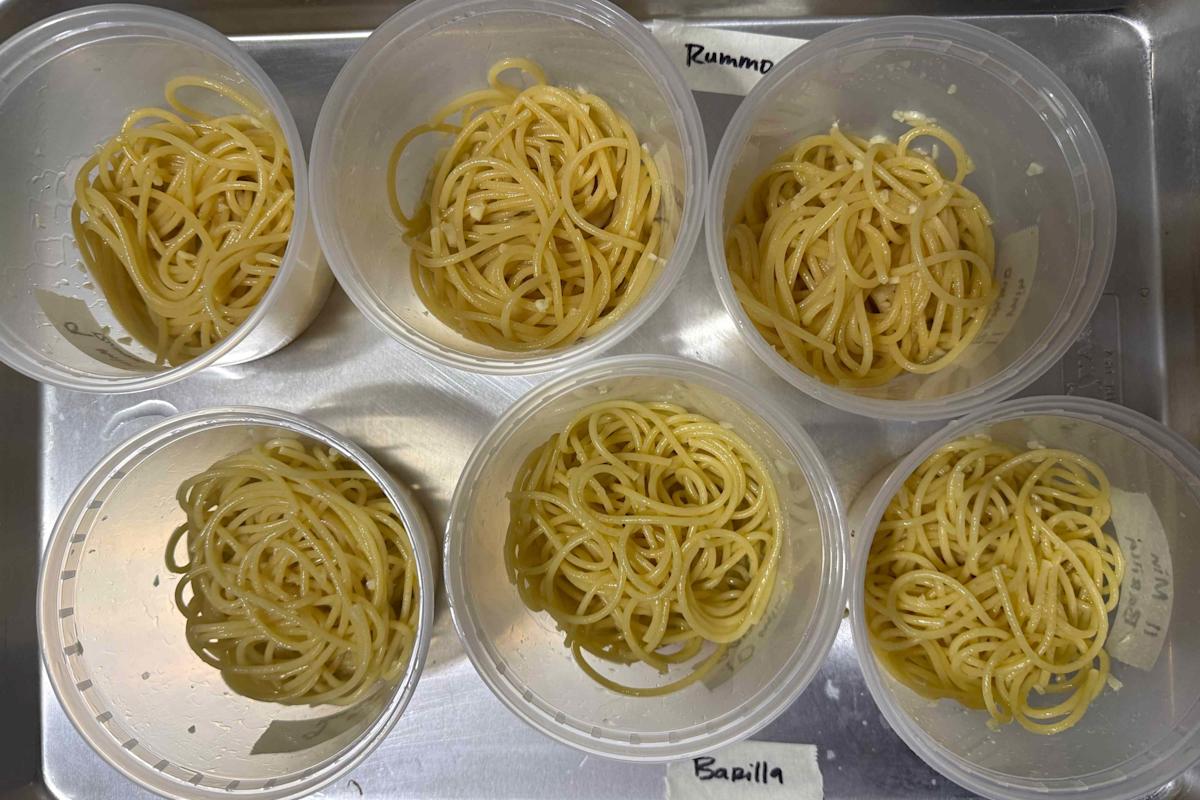
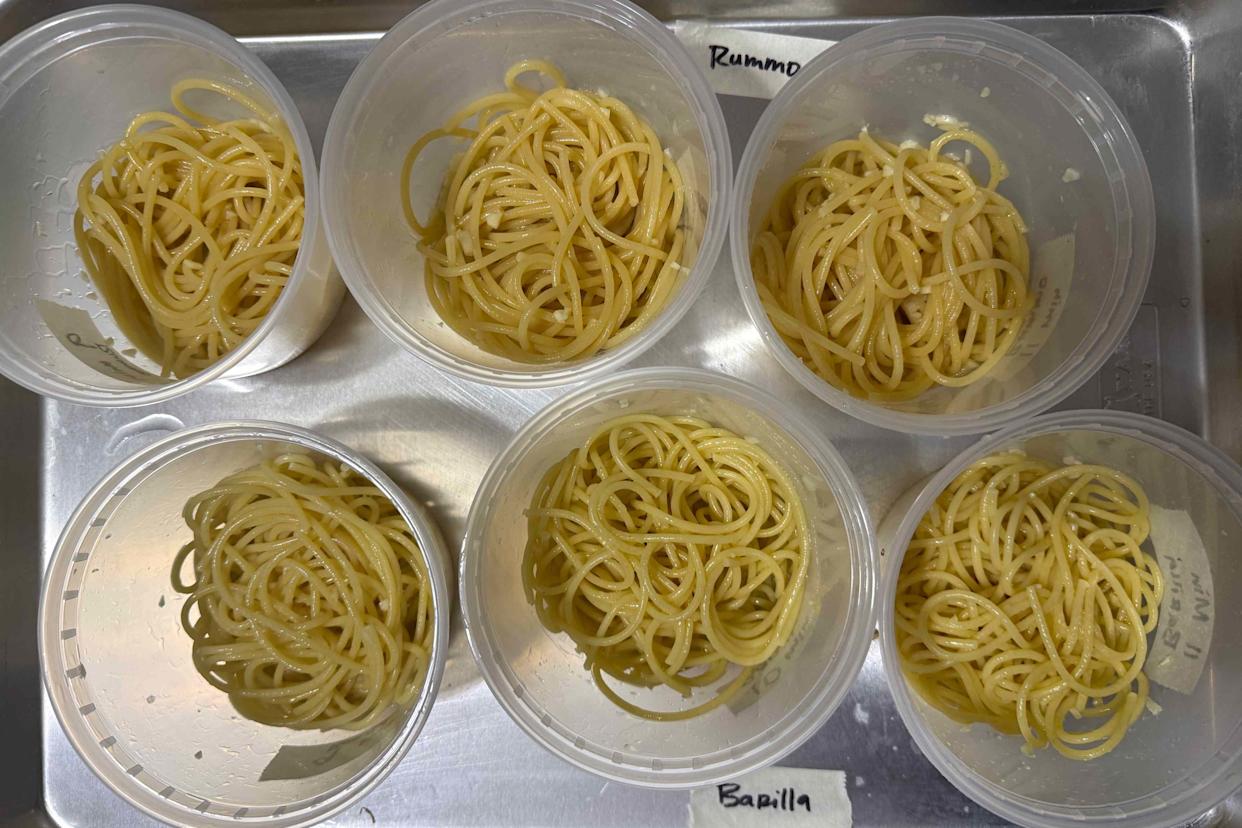
I dropped the pastas into each pot at the same time and fanned them out in a circle. I pulled out 1/2-cup portions at the 9-minute, 10-minute, and 11-minute intervals. To keep the playing field as even as possible, I kept the preparation simple: I tossed each portion with 2 teaspoons of extra-virgin olive oil, 1 medium minced garlic clove, and a small pinch of kosher salt.
Finally, I asked two friends to help me taste-test the spaghetti so my own biases wouldn’t affect the results. One of them loves their pasta al dente, while the other prefers more tender pasta. We tasted each brand at the 9-minute, 10-minute, and 11-minute cook times, while the spaghetti was still warm.
The winner boiled down to consistency.
The resultsBarilla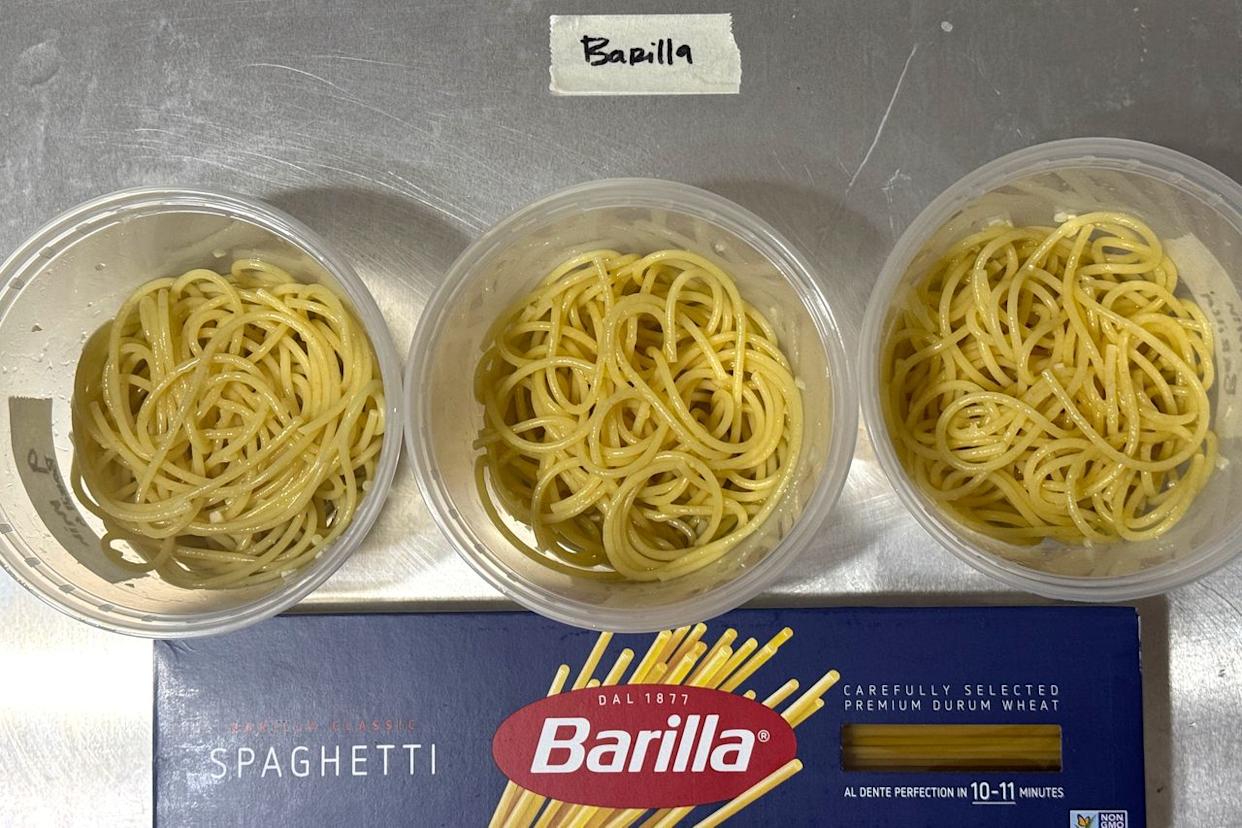
Credit: Photo by Jenn de la Vega
9 minutes: The spaghetti was undercooked and gummy — it stuck to someone’s teeth and visibly had a bit of starch in the middle of it. Sadly, this was everyone’s least favorite bite.
10 minutes: My tasters agreed this was “pretty good” — firm yet tender.
11 minutes: It was perfect for one person and too mushy for the other.
Rummo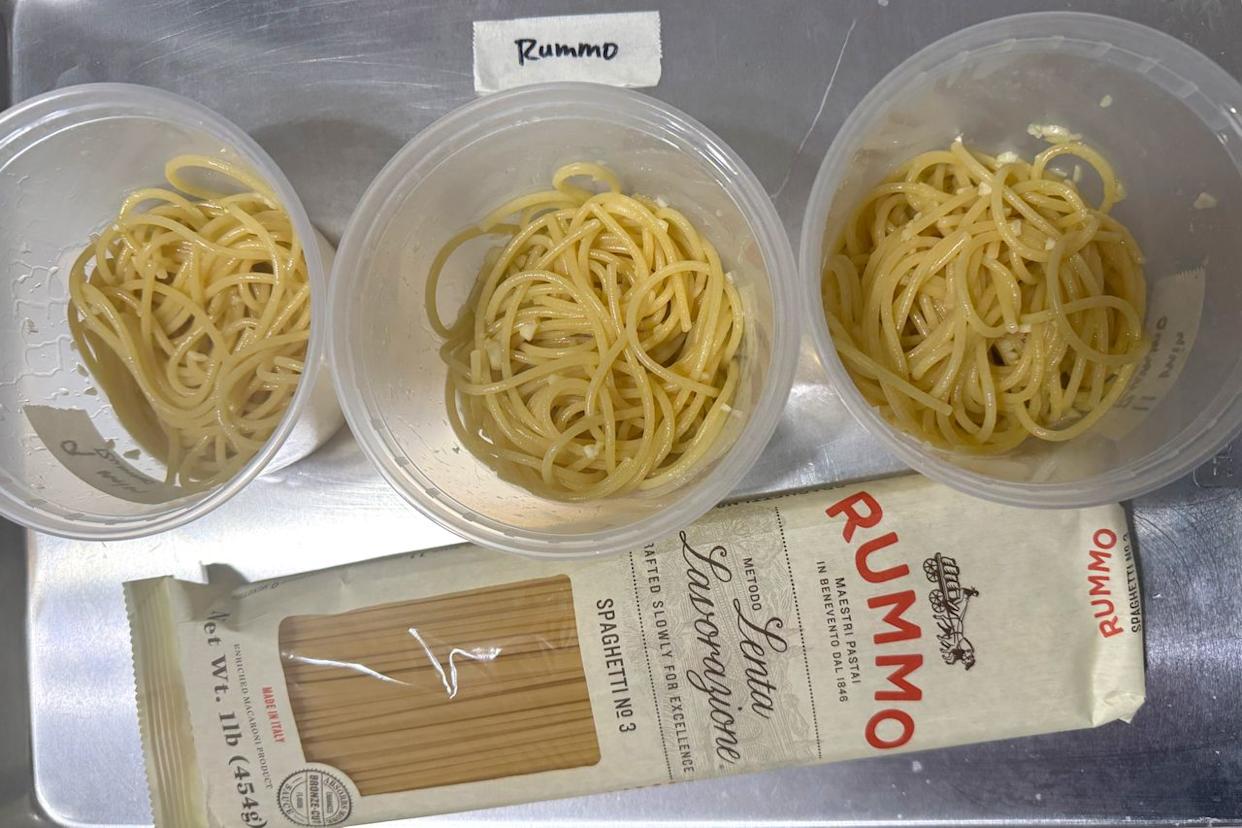
Credit: Photo by Jenn de la Vega
9 minutes: While the spaghetti didn’t stick to anyone’s teeth, it was “toothy.”
10 minutes: It had a pleasant chew, and struck a good balance between firm and tender.
11 minutes: We preferred this slightly less than the 10-minute cook time.
Across the board, the Rummo spaghetti looked thicker than Barilla and was more forgiving — it had a firm, consistent texture at every cook time tested. Barilla was enjoyable at the 10-minute mark, but cooking for too little or too long left it undercooked or mushy.
I saved the pasta water and was surprised to find that the Rummo water was noticeably more opaque than the Barilla pasta water. Despite it leaching more starch into the water, Rummo was still the more substantial-feeling spaghetti.
The next morning, I tried the spaghetti again. Surprisingly, the Barilla pastas were still tender, while the Rummo pastas had dried out slightly and would benefit from reheating with some pasta water or sauce. With that in mind, I’d probably choose Barilla for cold preparations like pasta salad.
Related: 19 Noodle and Pasta Salads to Upgrade Your Cookout
The bottom line
If you can afford it, Rummo spaghetti feels like a worthwhile upgrade for a couple dollars more at the grocery store: It had a firmer consistency that my tasters and I enjoyed and offered more margin for error. But in the end, you still can have great spaghetti if you know how long to cook it to your preferred doneness, whether you toss it with a simple jarred pesto or use it for an easy pasta dinner.
Read the original article on Food & Wine
Dining and Cooking