
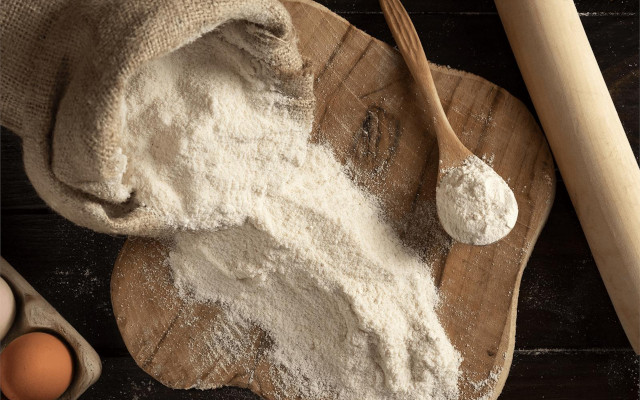
La durum wheat flour It is the emblem of an Italian leadership that is articulated on two fronts: agriculture and industry.Italy confirms first EU producer of durum wheat, with a 2025 harvest of 4,3 million tonnes that meets more than two-thirds of the national needs, ensuring a solid basis of food sovereignty.Italian milling industry It is established as a global technological summit: with over 6 million tons of durum wheat Processed every year, Italian mills not only support the domestic pasta industry but also set quality standards for the entire international market. With rigorous legal requirements (Presidential Decree 187/01) and rheological innovation, the semolina supply chain represents a strategic pillar of Made in Italy agri-food.
The cultivation of durum wheat in Italy
Il Italian durum wheat It is mainly grown in the regions of Center-SudPuglia (30% of national production), Sicily (20%), Basilicata (12%), Marche, Molise, Abruzzo, and Campania account for the remaining production volume. The concentration of production in the South is determined by optimal soil and climate factors: medium-textured soils with a good organic matter content, high temperatures during the grain filling phase, and controlled water availability that favors the accumulation of high-quality proteins and gluten.
Le variety of durum wheat grown in Italy include:
modern high-yielding varieties – such as Duilio, Marco Aurelio e Claudio, Antalis, Maestrale and Iride – selected for resistance to fungal diseases, productivity, gluten quality and protein content;
ancient grains such as Timilia, Turanian, Russello, Senator Cappelli e Saragolla, currently being rediscovered and valorized in the context of agroecology.
Le agronomic practices For quality durum wheat, they include crop rotations with grain legumes (chickpeas, lentils, and field beans) to maintain soil fertility, fractional nitrogen fertilization calibrated based on soil analysis to optimize protein content without excess, and emergency irrigation during the critical stages of earing and kernel filling in irrigated areas. Harvesting takes place between June and July when grain moisture reaches 12-14%, followed by immediate artificial drying to prevent fermentation and mycotoxin contamination.
The market: Made in Italy and international competitiveness
The Italian semolina milling sector is represented by Italmopa (Association of Industrial Millers of Italy), which brings together 290 mills, including over 100 production facilities specializing in durum wheat processing. Major Italian industrial groups, such as Casillo, Molino Pivetti, and Molino Grassi, combine milling tradition and technological innovation, supplying high-quality semolina to domestic and international markets. The main target markets for Italian semolina include Germany, France, Northern European countries and non-European markets where the quality of Italian raw materials is particularly appreciated by the food processing industry.
The growing attention of consumers towards traceability, sustainability e origin of raw materials is pushing the Italian milling industry towards supply chain contracts with national producers, voluntary quality certifications (e.g., ‘100% Italian wheat’), and investments in regenerative agriculture to reduce the environmental impact of grain cultivation. The Italian milling industry is characterized by a strong focus on quality, transforming the best varieties of durum wheat available to obtain semolina capable of meeting the needs of Italian pasta makers and international markets (Italmopa, 2025).
Regulatory framework: legal requirements for durum wheat flour products
The Italian legislation – DPR 187/01 and subsequent amendments, article 2 – distinguishes precisely between durum wheat flours in the following terms:
‘durum wheat flour’, oo ‘semolina’ is ‘the sharp-edged granular product obtained from the milling and subsequent sifting of durum wheat, freed from foreign substances and impurities’;
‘durum wheat semolina’and’granulated’, is ‘the product obtained from the milling and subsequent sifting of durum wheat freed from foreign substances and impurities, after the extraction of the semolina’;
‘whole durum wheat semolina’and’wholemeal semolina’ is ‘the sharp-edged granular product obtained directly from the milling of durum wheat freed from foreign substances and impurities’;
the production of semolina and semolina is permitted reground, to be used exclusively for baking and for the consumer, as well as durum wheat flour;
‘whole wheat flour’ is ‘the product non-granular obtained from the milling and subsequent sifting of durum wheat freed from foreign substances and impurities’.
The durum wheat flours intended for trade have amaximum humidity of 14,5% (or 15,5%, reporting this data on the label) and a protein content minimum of 11,5% (10,5% for semolina).
‘È addition prohibited of organic and inorganic substances of any nature, as well as any treatment of flours with physical or chemical agents’, subject to specific provisions of the Ministry of Health.
Table 1 – Legal requirements for durum wheat flours (Presidential Decree 187/01)
Semolina
14,50%
—
0,90
10,50
Semolina
14,50%
0,90
1,35
11,50
Wholemeal semolina
14,50%
1,40
1,80
11,50
whole wheat flour
14,50%
1,36
1,70
11,50
Distinctive characteristics of semolina
Semolina is distinguished from semolina and other durum wheat flours, pursuant to Presidential Decree 187/01, in several respects:
granulometry coarser. The granulometric value at the sieving test, according to Presidential Decree 187/01, is expressed as a maximum of 25% passing through a sieve with a mesh size of 0,180 mm;
minimum content of protein 10,5%, although the best Italian semolina can reach 13-15%;
maximum content of ashes less than 0,90%.
La granulometry The consistency of semolina is essential for its technological applications: uniform particles between 250-500 micrometers guarantee optimal hydration during kneading and give the pasta its characteristic grainy texture that better holds the sauces.
Il amber yellow color characteristic is determined by the presence of carotenoids (mainly lutein and zeaxanthin) – compounds with proven antioxidant properties beneficial for ocular and cardiovascular health – in quantities varying between 3 and 8 mg/kg (Hidalgo & Brandolini, 2014).
THEyellow index (yellowness index), measured with a tristimulus colorimeter, is also an important quality parameter for the processing industry, directly influencing the visual appeal of finished products.
From caryopsis to semolina: milling process technology
The process of milling of durum wheat To obtain quality semolina, several technological phases are involved, each of which influences the characteristics of the final product. The process begins with the reception and storage Wheat: upon arrival at the mill, the wheat undergoes qualitative analysis (hectolitre weight, moisture, protein, gluten, impurities, mycotoxins) and is stored in silos separated by batch and quality, ensuring complete traceability of the raw materials.
Cleaning and air conditioning
The phase of cleaning It is essential to remove impurities present in the grain: screening systems, suction, magnetic separators and densimetric tables eliminate straw, soil, stones, foreign seeds and metal bodies. This phase is followed by the conditioningA process that involves the controlled addition of water (wetting) to clean grain to bring its moisture content from an initial 12-13% to 15-16%, followed by resting in conditioned cells for 16-24 hours. Conditioning facilitates the separation of the outer casings (bran) from the endosperm, improving milling efficiency and reducing roller wear.
Grinding and sifting
La grinding The actual milling takes place through a series of successive steps (breaking and re-grinding) between grooved and smooth cylinders which progressively reduce the grain, separating the vitreous endosperm from the external envelopes. Durum wheat, unlike soft wheat, has a compact endosperm and crystalline, which breaks into coarse particles (semolina) rather than breaking down into fine flour. This behavior is advantageous because it allows for a clean separation between semolina and bran, minimizing the presence of husk fragments that would give an unwanted dark color.
THEsifting (sieving) classifies milling products based on their particle size: the semolina itself is separated from the (finer) semolina, the semolina, the fine flours, and the bran. Modern milling plants use plansifters (multi-level oscillating sieve systems) and pneumatic conveyor systems that ensure precise separation of the different particle size fractions, optimizing yield and quality.
Quality control and storage
Each batch of semolina produced is subjected to rigorous analytical controlsIn addition to the parameters required by law (moisture, ash, protein, particle size), modern mills also evaluate the yellow index, enzymatic activity (falling number), dough rheology (farinograph, extensograph, alveograph), and the absence of contaminants (mycotoxins, pesticides, heavy metals). The compliant semolina is then stored in silos or packaged in 25 kg bags for industrial use, or in smaller packages intended for the HoReCa and retail channels.
Quality parameters: gluten, yellow index and purity
La semolina quality It is defined by a complex set of chemical, physical, and rheological parameters that determine its suitability for industrial use and its nutritional value for the end consumer. Among the most relevant parameters are:
protein content and gluten qualityThe total protein content (Kjeldahl method, N x 5,7) must be higher than 10,5% ss, but excellent semolina reaches 13-15%. More important than the quantity is the gluten quality: the gliadin and glutenin proteins must form, in the presence of water, an elastic and tenacious gluten network (gluten index >80), capable of retaining the starch during cooking and giving the dough its firmness. pasta the characteristic hold and consistency ‘and cook until pasta is’. The durum wheat varieties grown in Italy, particularly those from the South, are genetically selected to produce gluten of high technological quality;
carotenoids and colorThe presence of carotenoid pigments (lutein 2-5 mg/kg, zeaxanthin 0,5-1,5 mg/kg) gives the semolina its intense amber yellow color, much appreciated by consumers. Carotenoids, in addition to their aesthetic value, have proven antioxidant properties and protective for the retina, reducing the risk of age-related macular degeneration (Hidalgo & Brandolini, 2014). Carotenoid content is influenced by the variety, growing conditions (high sunlight favors synthesis) and post-harvest storage methods;
ashes and purity. The content of ashes (inorganic residue after combustion at 900°C) must not exceed 0,90% dry matter in the semolina. High values indicate contamination from peripheral parts of the grain (bran) during milling, reducing the purity of the product. High-quality semolina has an ash content between 0,70-0,80%, indicating effective endosperm/bran separation.
Nutritional profile: ‘Glycemic Index’ and antioxidants
From a nutritional point of view, durum wheat semolina is an excellent source of complex carbohydrates (mainly starches, 70-75% of dry matter), providing slow-release energy that promotes a moderate glycemic index (45-55) compared to other refined cereals (Chiavaroli et al., 2018). The content in dietary fiber It varies between 2,5-3,5% in sifted semolina and up to 8-10% in whole grain semolina that retains part of the outer shell rich in cellulose, hemicellulose, and lignin. Fiber intake is associated with benefits for intestinal health, blood sugar regulation, and lowering blood cholesterol (Bustos et al., 2011).
Semolina is also a natural source of B vitamins (thiamine B1, riboflavin B2, niacin B3, folic acid B9), essential for energy metabolism and nucleic acid synthesis. minerals present in appreciable quantities include phosphorus (120-150 mg/100g), magnesium (45-60 mg/100g), iron (1,5-2,0 mg/100g, although in a poorly bioavailable form), zinc and selenium. wholemeal semolina they retain greater quantities of fat-soluble micronutrients (vitamin E, tocopherols) and phenolic compounds with antioxidant activity, located mainly in the external layers of the caryopsis.
Epidemiological studies associate the regular consumption of durum wheat products integral to a reduction in the risk of cardiovascular disease, type 2 diabetes and some types of cancer, thanks to the synergistic effect of fibre, antioxidants and bioactive phytochemicals (Aune et al., 2016; Giacco et al., 2010). antioxidant properties The antioxidant properties of semolina are mainly derived from phenolic compounds (phenolic acids, flavonoids) which protect cells from oxidative stress and chronic inflammation (Melini et al., 2020).
Industrial applications: the art of pasta and bread making
La durum wheat flour It is mainly used indry pasta industry (95% of industrial uses), where its rheological properties are indispensable for ensuring the quality of the finished product. When mixed with water (the semolina/water ratio) gives the dough the plasticity, extensibility, and mechanical strength necessary for subsequent drawing.
THEextrusion through the dies (traditional bronze or Teflon for smooth surfaces) it gives shape to the pasta, while the phase of drying (temperatures 50-90°C for 6-24 hours, depending on the shape) causes the starch to fully gelatinize and stabilize the protein structure, ensuring shelf life and firmness during cooking. Italian pasta must be made exclusively with durum wheat semolina, and its quality is characterized by its lack of stickiness, elasticity after cooking, resistance to overcooking, and reduced starch loss in the boiling water.
Other applications of semolina include bread-making (bread, focaccia, breadsticks), where the coarse grain size gives greater friability and shelf life compared to soft wheat flours, traditional pastry (cakes, regional dry biscuits), and the use home for fresh homemade pasta, Roman-style gnocchi, and breading for crispy fried foods.
La re-milled semolina (obtained from a second grinding of coarse semolina) has an intermediate granulometry between semolina and flour, making it particularly suitable for the production of fresh pasta and regional breads with compact crumb.
Biodiversity and Territory: From Modern Varieties to Ancient Grains
Durum wheat semolina is deeply rooted in the Italian gastronomic tradition, especially in the southern regions where the Mediterranean climate favors the cultivation of high-protein varieties. Historically, semolina is the main ingredient of traditional dried pasta – from Apulian orecchiette to Sicilian busiate, from Lucanian cavatelli to Ligurian trofie – but also of numerous regional preparations such as Bari-style focaccia bread, traditional breads and sweets.
In Sardinia, the Sardinian wheat semolina It is used to make the characteristic ‘pane carasau’, while in Sicily, re-milled semolina is the basis of the traditional bread of Castelvetrano. In Puglia, whole-wheat semolina is used to make ‘pane di Altamura DOP’, one of the few European breads protected by Geographical Indication. In Central Italy, particularly in the Marche and Abruzzo regions, durum wheat semolina is also used to make fresh pasta such as maccheroni alla chitarra and vincisgrassi.
Il territorial bond The connection between semolina and regional cuisine is not only cultural but also technical: the climatic characteristics of the southern Italian regions (high sunlight, temperature variations, periods of controlled water stress) favor the accumulation of proteins and carotenoids in the kernels, giving Italian semolina distinctive organoleptic characteristics appreciated globally.
Conclusions
The excellence of the Made in Italy durum wheat semolina lies in its ability to evolve without compromising its defining purity. While protein content and carotenoid profile remain the cornerstones of technological quality, future challenges lie in climate resilience and full traceability. In this scenario, the transparency guaranteed by supply chain contracts and the integrity of the flours represent the best guarantee for the global consumer, confirming durum wheat as an essential asset of the Mediterranean diet and the national economy.
Cover credit: Lands and Traditions
Bibliography
Aune, D., Keum, N., Giovannucci, E., Fadnes, L.T., Boffetta, P., Greenwood, D.C., … & Norat, T. (2016). Whole grain consumption and risk of cardiovascular disease, cancer, and all causes and cause specific mortality: Systematic review and dose-response meta-analysis of prospective studies. B.M.J., 353, i2716. https://doi.org/10.1136/bmj.i2716
Chiavaroli, L., Kendall, C. W., Braunstein, C. R., Blanco Mejia, S., Leiter, L. A., Jenkins, D. J., & Sievenpiper, J. L. (2018). Effect of pasta in the context of low-glycemic index dietary patterns on body weight and markers of adiposity: A systematic review and meta-analysis of randomized controlled trials in adults. BMJ Open, 8(3), and 019438. https://doi.org/10.1136/bmjopen-2017-019438
Giacco, R., Lappi, J., Costabile, G., Kolehmainen, M., Schwab, U., Riccardi, G., … & Poutanen, K. (2010). Effects of rye and whole wheat versus refined cereal foods on metabolic risk factors: A randomized controlled two-centre intervention study. Clinical Nutrition, 32 https://doi.org/10.1016/j.numecd.2009.03.025
Hidalgo, A., & Brandolini, A. (2014). Nutritional properties of einkorn wheat (Triticum monococcum L.). Journal of the Science of Food and Agriculture, 94 https://doi.org/10.1002/jsfa.6382
Melini, V., Panfili, G., Fratianni, A., & Acquistucci, R. (2020). Bioactive compounds in durum wheat pasta and their derived fractions: A review with a focus on phenolic compounds and antioxidant properties. Antioxidants, 9(4), 343. https://doi.org/10.3390/antiox9040343

Dario Dongo, lawyer and journalist, PhD in international food law, founder of WIISE (FARE – GIFT – Food Times) and Égalité.
Dining and Cooking