
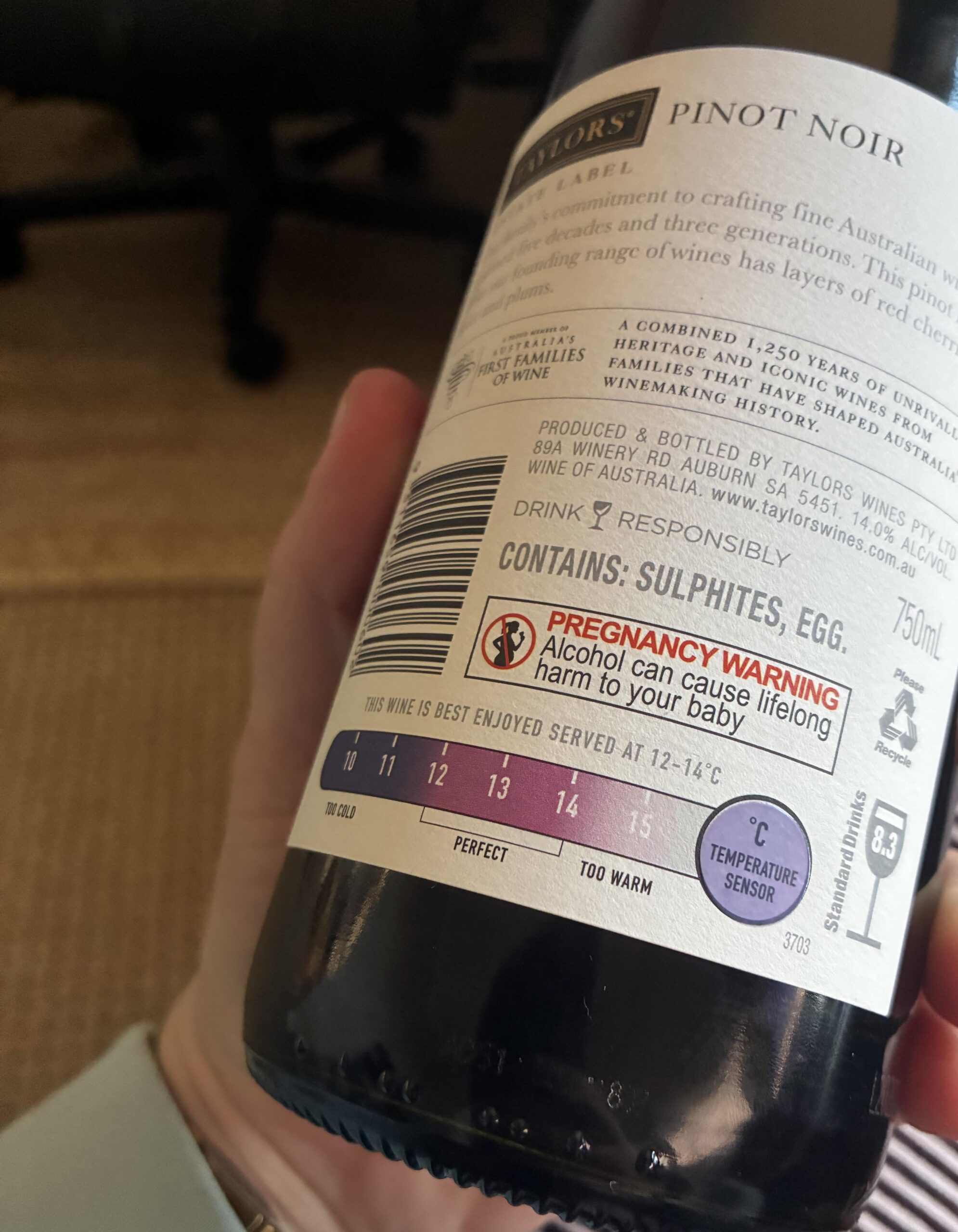
(AUS) My partner picked up a bottle of pinot noir and it has this temperature sensor sticker on the back. I’ve never seen this before but seems like an interesting idea especially for us Aussies who tend to drink reds at room temp and not ‘cellar temp’.
Edit: Yet to open but can report back with my notes once I have
Further Edit: Sticker has not changed colour yet.
On the nose, this is a big wine. Pronounced aromatics and a New World ripeness on the nose. Maybe a touch of oak but in that rough, coconutty kind of way. Wouldn’t be surprised if there’s some kind of wood chip situation happening here.
Everything confirmed on the palate with a moderate acidity, larger body than I prefer in a pinot and short tannin that’s felt on the cheeks. Hair on your chest level of alcohol. Not surprising for a South Australian pinot.
Perfectly acceptable for a Tuesday night, and whilst a big, fruit driven wine is not usually my vibe, I enjoyed not being the one to pick a wine for once.
by louise_sophie
10 Comments
That’s so interesting, does it work?
Italians are in for a surprise! (Never had a red below 68°)
It’s not a sensor though right? Just recommended drinking temps?
I like how it doesn’t remotely match any point on the scale
If it works – i love the idea.
So many Reds are served far too warm in restaurants.
More like wine soup sometimes!!!
Serving temp feels to low? 12-14 in the perfect range? How do others feel?
I had a bottle of Chapoutier rouge clair with a label where some text only showed up at ideal serving temperature. A pretty good idea in that case, because it’s an unusual type of wine requiring a serving temperature people might not be familiar with. Also makes it easier to get right if you bring it to a picnic or something like that.
It’s a gimmick, that AU$16 supermarket wine is going to be a one dimensional fruit bomb regardless.
I’m not opposed to it at all. Especially for Australian domestic consumption, because frankly most of us still drink our reds too warm and our whites too cold, the recent ‘chilled red’ phenomenon notwithstanding.
More interesting to me, though, is the temperature sensor on bottles of Laurent Ponsot Burgundy that change colour when the bottles get exposed to potentially damaging heat levels, then don’t change back. That could be an absolute game-changer for the secondary market in fine wine if widely adopted, since it eliminates a huge chunk (but not all) of the guesswork on the purchaser’s end about whether or not the wines have been properly stored and transported in their lifetime.
I know I’m off topic, but I just learned why egg is used in some wines.
Uhhh, are you sure it’s a sensor and not just a guide?