
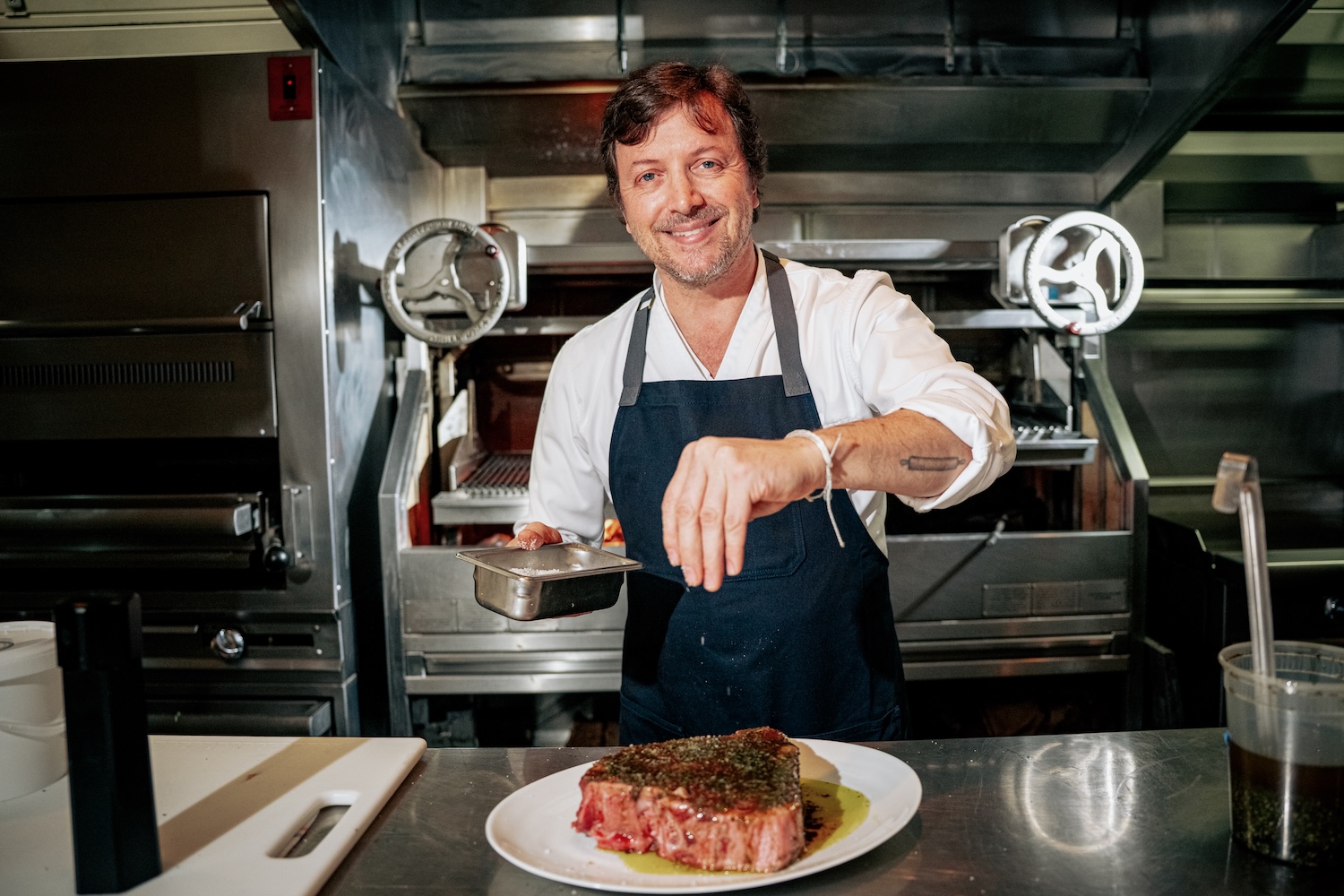
“There’s always been a very big passion for food in our family,” says Edoardo “Edo” Baldi, who was born in Italy’s Forte dei Marmi, an upscale coastal town in northern Tuscany.
One of his grandmothers owned a restaurant there. “I remember her hands — they were big and strong. And she used to always make pasta,” Baldi says. “My other grandma, she was from Piacenza and very high-class, a lady. But she loved cooking, too. So it was two different experiences, but always about food.”
His childhood revolved around it: “Even the passion of going to the open market in Forte dei Marmi, where my mom brought me, every day, on the bicycle, and we bought fish and vegetables,” Baldi recalls, noting how Sundays epitomized this. “Usually you go to church and then you go back home and have a Sunday brunch. We used to make gnocchi Saturday nights, to have on Sundays. Always in our little kitchen, at the table, making pasta and then eating the next day there.”
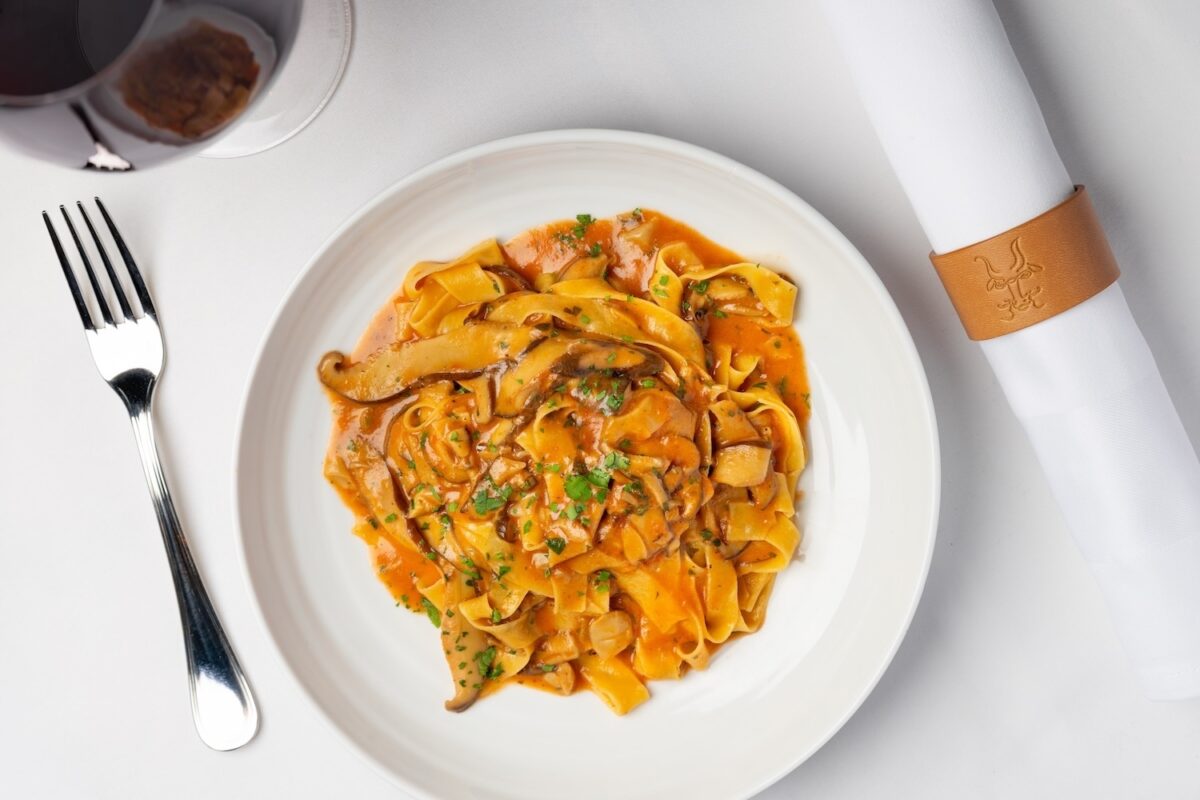 Fettuccini with Sautéed Porcini at BaldiCredit: Jakob Layman
In 1982, his father Giorgio Baldi left Italy and came to Los Angeles to work alongside the Vietina family, who later founded L.A. Italian staple Madeo in 1985. “The people from Madeo, they opened a restaurant called Il Giardino on Maple and Third,” Baldi says of the family from their town. “A lot of the people that were interested in cooking from Forte dei Marmi ended up moving here because it was a great opportunity. My dad came here and saw the potential that, in Italy, was lacking — the economy was really bad during those years. The first summer that we came to visit him, we just stayed — we never went back.”
Baldi had just turned 10 in that summer of 1985, and L.A. proved a culture shock. “My dad had a little apartment in Hollywood,” he says, vividly remembering the drive from LAX airport and how they stopped at a Safeway supermarket (now a Pavilion) on West Hollywood’s Santa Monica Boulevard. “It was so massive, but there was no one in there, because it was Fourth of July, and it was so awkward but fascinating.”
L.A. didn’t have much in the way of Italian food, as he’d known it. “The market would only have the wine [bottles] with the hay around it. And there was no olive oil yet. Really, a lot of the revolutionary Italian movement of L.A. needs to be credited to Bruno Vietina, who’s now back in Italy, because he really did bring what is now quite often on many Italian menus in Los Angeles.”
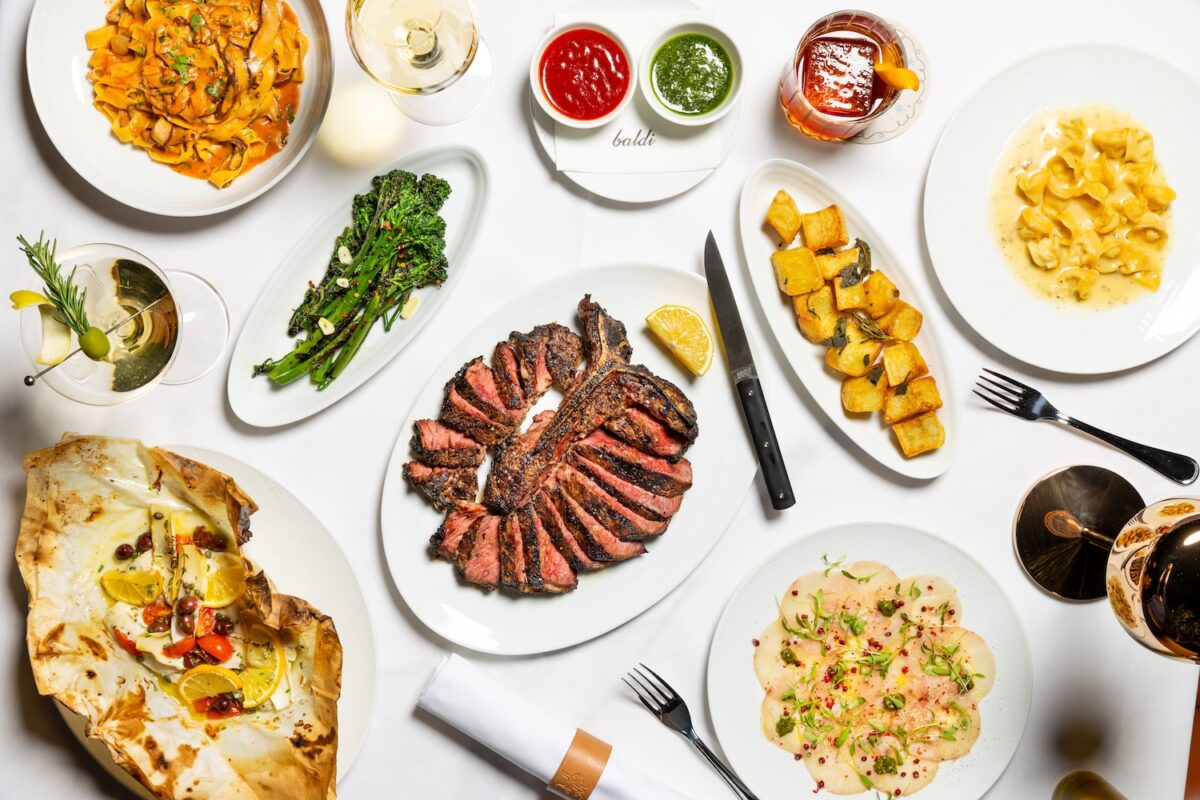 Food from BaldiCredit: Jakob Layman
Angelenos embraced the simple, ingredient-focused Tuscan cooking introduced by immigrants such as Bruno Vietina and Giorgio Baldi at Il Giardino, which Baldi remembers as being “super popular.” “It was a car garage turned into a restaurant,” he notes, “so it was nothing fancy, and yet you would see all the most important L.A. people waiting in line. And the line would literally go around the corner, every day.” Nothing they were cooking was so complicated: “They were doing penne pomodoro, and milanese, and it was the first introduction to tiramisu by the chef, who also worked at Madeo. No one knew what that was. There were these very simple dishes that, even today, that’s what people really request.”
Baldi used to accompany his dad to work. “My dad worked at Il Giardino, and then at [an Italian] restaurant in Glendale,” says Baldi. “Economically, we were not in a good shape … And because we couldn’t afford a babysitter, every day I was with him.” After school, his father would pick him up and they’d spend evenings wherever he worked. “He got a job at the Polo Lounge for a couple years, and then, he moved to the Palisades and opened [his restaurant] with a resident of the Palisades that was a client of his.”
Scroll to continue reading

Il Ristorante di Giorgio Baldi, which Giorgio Baldi opened on Channel Road in 1990, quickly became a celebrity hot spot due to Baldi’s loyal following. High-profile guests such as Tom Hanks, Warren Beatty, David Geffen and President Clinton were the norm, and later, Rihanna could be seen there weekly — along with fans like Meryl Streep, Taylor Swift and Justin Bieber. Originally called Giorgio, the name was changed after his partner Vietina left. And his teenage son joined him there.
“I was a paper boy, and I was riding back from my newspaper [job] and he pulled up next to me,” Baldi says. “He said, ‘You can’t do this anymore. You’ve got to start working at the restaurant.’ And so that’s what I did.”
First, he took reservations. “But I’ve always had this huge passion for desserts,” he notes. “I used to make these star cookies, made out of puff pastry.” He also found his way into the kitchen: “Between 13 and 25 you know, my dad got sick a lot — with several cancers — and so, I put myself in the kitchen because I had to.”
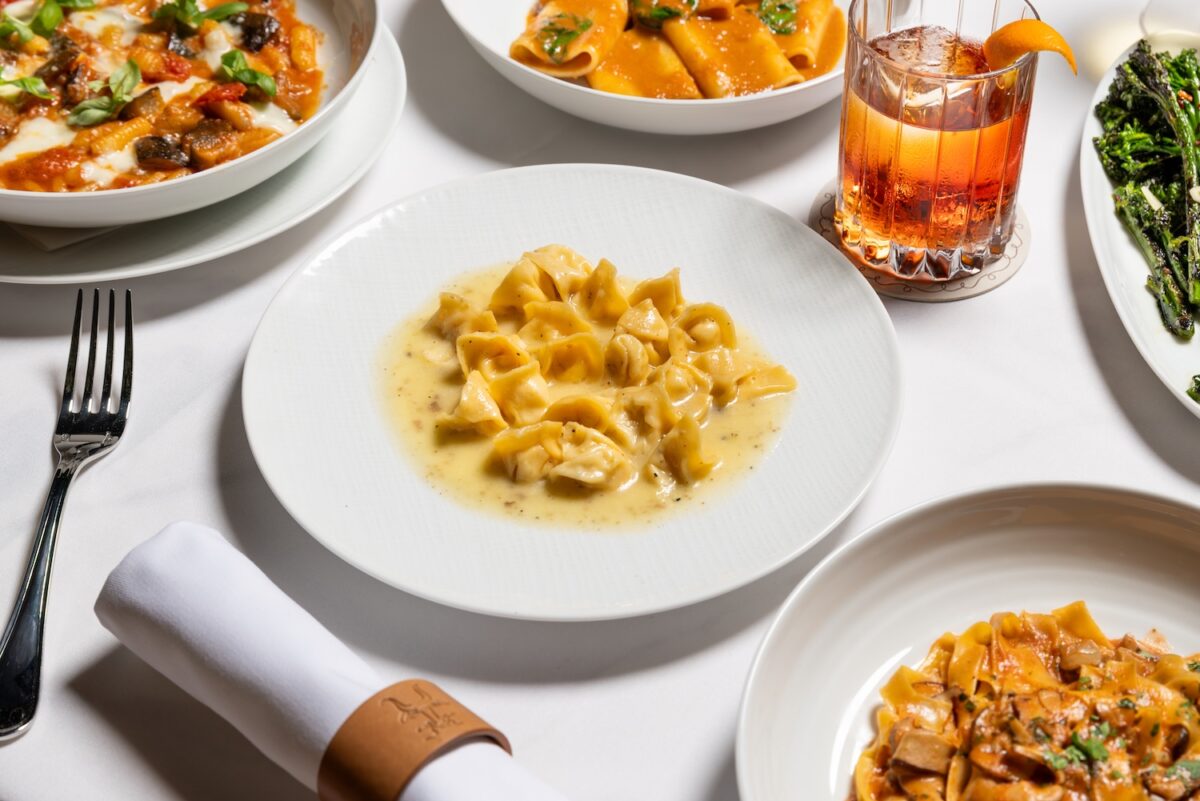 Sweet Corn Tortellini from BaldiCredit: Jakob Layman
Slowly, he got affirmation. The first pasta he made in the kitchen scored rave reviews from the host (“who was the son of the Madeo people”). Then, after tasting a corn dish, he created a sweet corn ravioli that his father first scoffed at, noting that corn was for the chickens. “Which then became [one of] the most praised dishes,” he adds. “After I did that one pasta, he gave me the freedom to just do whatever I wanted.” However, from his father — and mother — he learned the basics.
“Italian food is very much a layering process,” Baldi says. “It begins a lot of times with olive oil, onion, garlic, parsley, and you layer — whether you’re doing roasts or fishes or sauces, it’s a layering process that takes time. I learned the foundations, and from then, I just took off and I did my own things.”
Giorgio Baldi was a showman. “My dad was very good at communicating with the guests,” Baldi says. “Even though he didn’t really know how to speak English, he had this magic about him that — people loved him for who he was.” However, the whole family supported the restaurant: “My sister [Elena] in the front of the house,” says Baldi, “but me and my mom were really the back-of-the-house culinary powerhouse.”
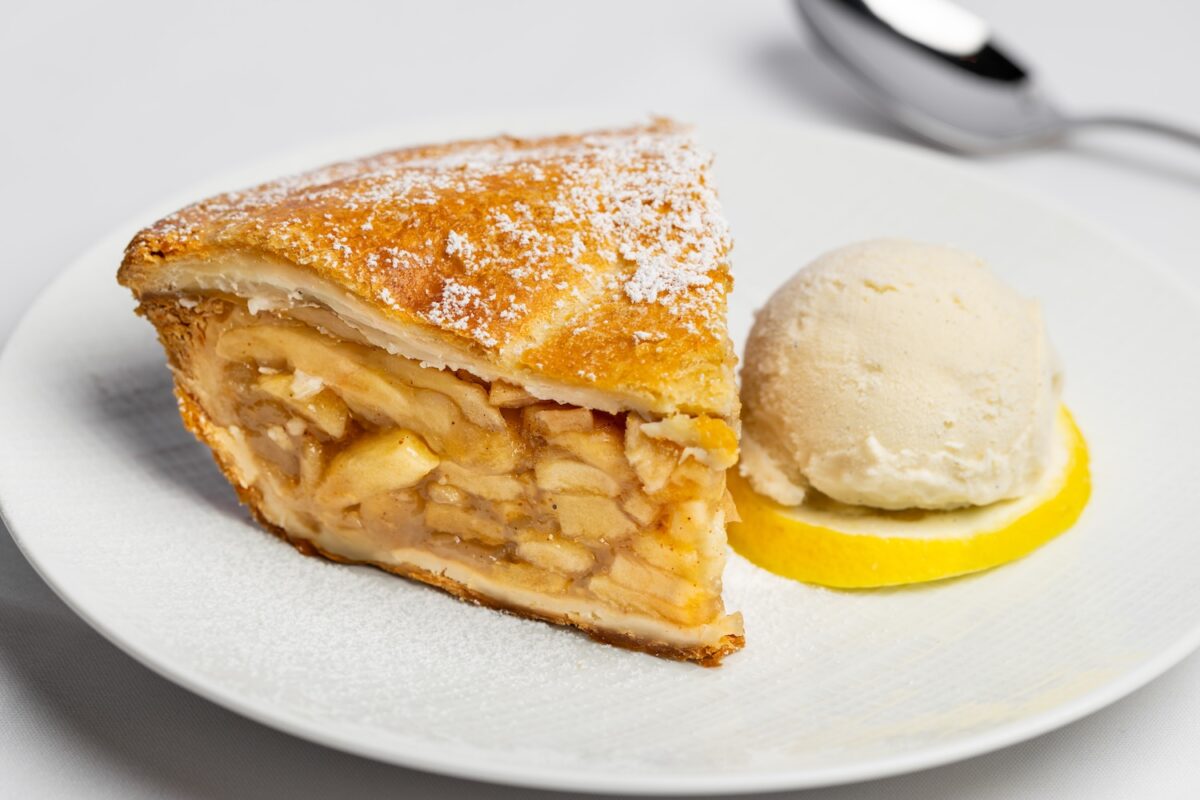 Edo’s Apple Pie a La Mode at BaldiCredit: Jakob Layman
A time came when Baldi wanted to stand on his own. When he was 25, he went to Italy to work in a pastry store — “my first and only real education, if you’re talking about learning from a teacher,” he says of the pastry master. Then in 2006, he opened his own restaurant, e. baldi, on Canon Drive in Beverly Hills. “It’s hard to work with your family,” he notes. “So it was a combination of that, and me trying to show that I can do it by myself.”
His own restaurant became just as much of a celebrity magnet, luring industry patrons like Brian Grazer, Denzel Washington, Jennifer Lopez, Eva Longoria and Elton John. “I think people long for intimate, small, family-style places,” says Baldi, referencing his favorite small trattorias in Florence, like Camilo or Cinghiale Bianco. “People that are eating there are multi-generational and they really love that atmosphere, which is a combination of family-run small restaurants, and very simple, traditional food. I just think that that’s what people want, and it’s what has worked for us here in L.A.”
Baldi, who’s known for being at his restaurant every night it’s open, hadn’t planned to open another one in Los Angeles. “I am all [about] enjoying one restaurant and making sure that everyone that comes in gets the top-quality experience as best as I can deliver it,” he says. But the right person came calling.
“Mr. [Beny] Alagem, who is the owner of the Waldorf, he wanted to meet with me,” recalls Baldi. “I’ve known him forever, because he used to come to Giorgio Baldi and e. baldi. He’s really — like many of my other customers — I consider them my family. And so, he came to me and asked me, ‘What do you think of doing an Italian steakhouse?’”
Baldi considered himself much more of fit for seafood. “But that in itself was a challenge,” he says. “I’m one to believe in challenges. I don’t want to be stale in the restaurant for the rest of my life. I feel like I have a lot more to give, and not only in the food, but in the creative process. … Then, together with this family that I’ve known so long, and the honor of being in the Waldorf, I came to the conclusion to do it.”
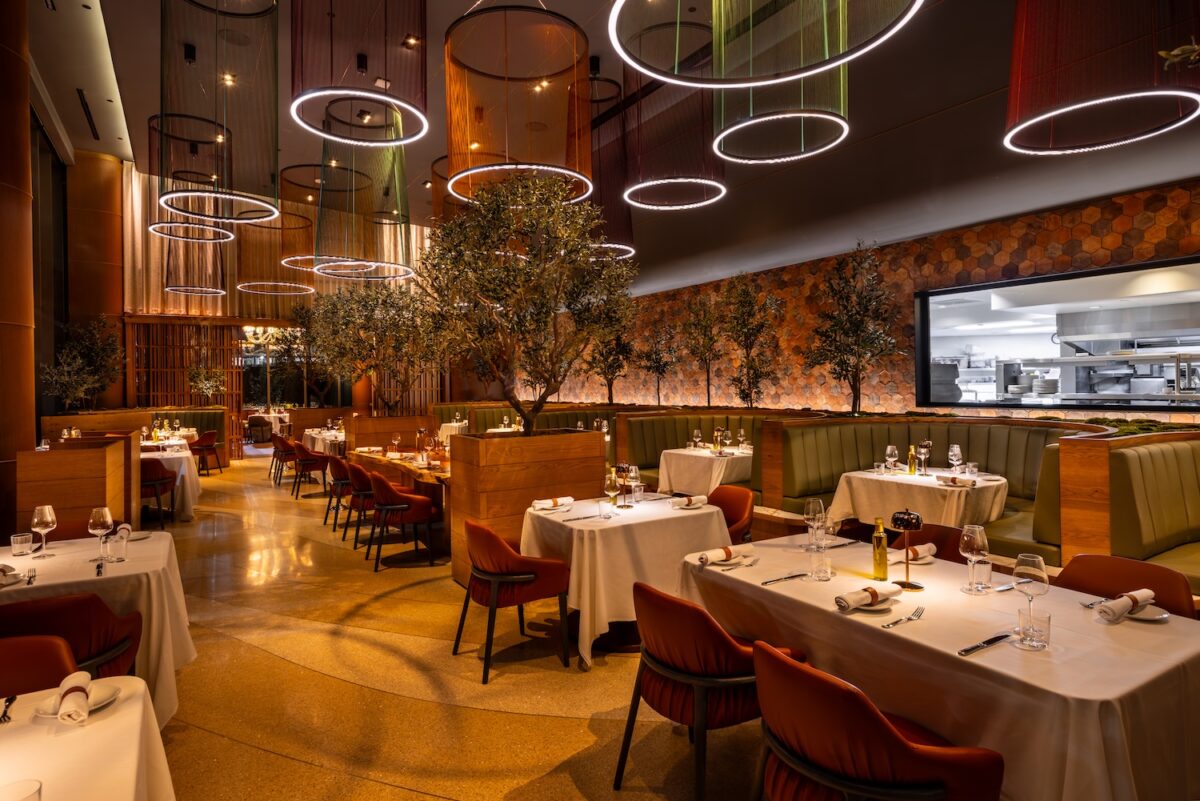 Baldi Dining RoomCredit: Jakob Layman
He had a lot of say in designing the restaurant. “David Alagem, who’s the son of [owner] Beny Alagem, he did an amazing job on the branding side — the details, [from] the logos, to the drawings, plates, glass holders, napkin holders,” Baldi notes.
“The one challenge with the Waldorf that I think the past restaurants have had was the space: because it’s a huge space, how do you create that intimacy?” says Baldi, who worked with the architect firm Ezequiel Farca Studio in creating private areas and an open kitchen. “You cannot deny that it’s a beautiful restaurant. But the trick was, ‘How do we try to mimic that very small, intimate feel in that large space’?”
Whereas the restaurant that formerly housed Jean-Georges and then Espellette was large, open and white, the new restaurant, Baldi, consists of separate dining areas and 180 seats.
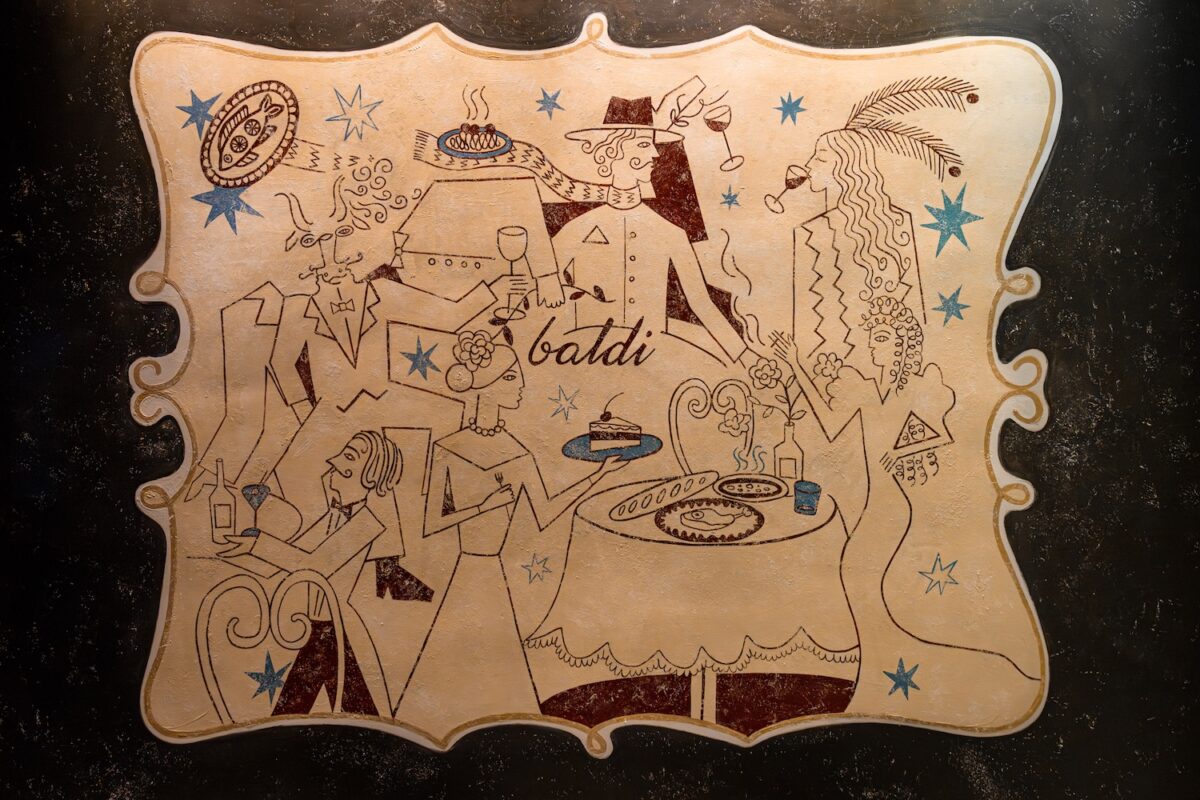 Baldi mural by Drawing Room NYCCredit: Jakob Layman
A separate entrance now enables guests to enter from outside the hotel — past a mural of an Italian dinner party by Drawing Room NY and into a bar area. Inside, the glamour of the Waldorf meets the relaxed vibe of a Baldi restaurant. A main dining area houses an open kitchen, and the terrace has been converted into an outdoor dining section. There’s still a private dining room, that can fit 50 people for events. Olive trees decorate the dining rooms, as well as natural materials like stone, wood, marble and terracotta — plus an olive wood-fired grill. Baldi took inspiration from his country home in Chianti. “The atmosphere is very much about country cooking and living,” he says. “It’s really to feel like you are in Tuscany.”
The menu also reflects his upbringing. “It’s very much going back to tradition and to where my dad’s restaurant Giorgio Baldi started from,” Baldi says. “[For] example, he used to make this pasta with tuna, olives and capers and tomato. It’s very simple. Now, we finessed it a little bit, but I wanted to go back to those kind of dishes.”
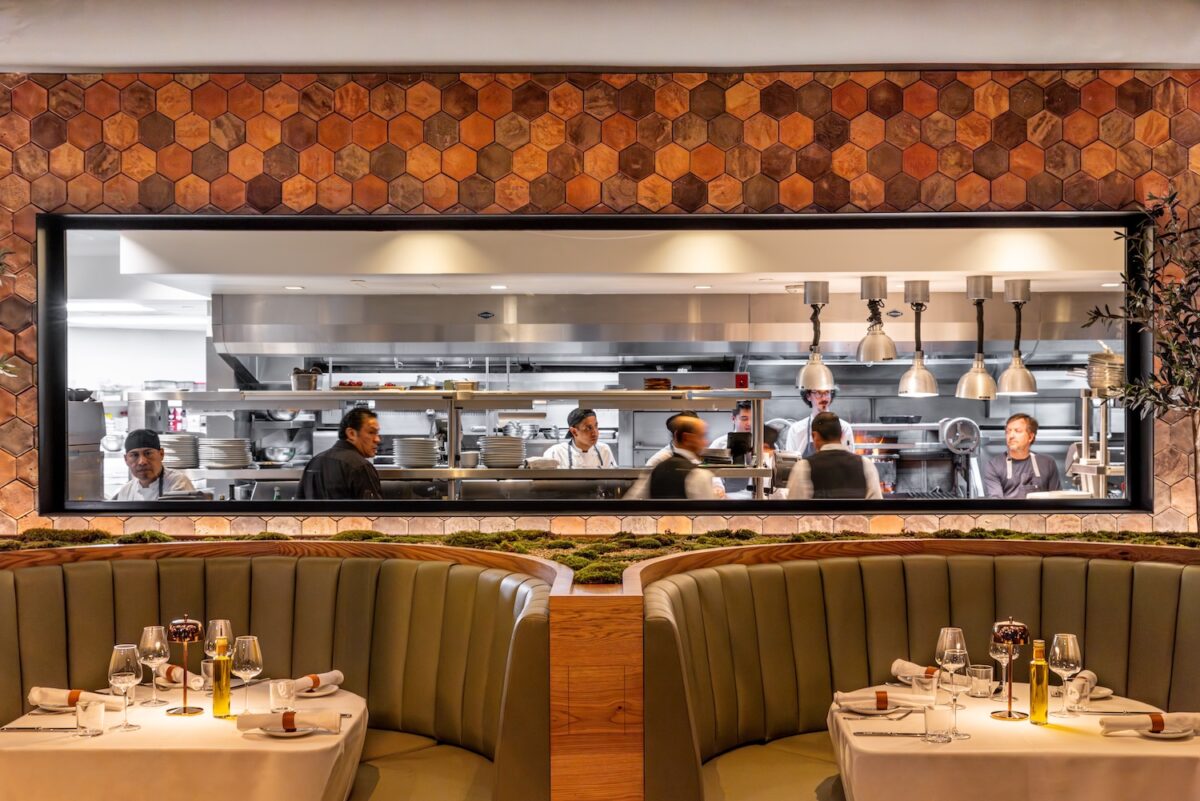 Baldi Dining Room Open WindowCredit: Jakob Layman
A pasta dish he never thought he’d serve is spaghetti with tomato sauce and chicken meatballs. “A lot of times, it’s a no-no in Italian culture to eat spaghetti with meatballs, but it works — and the ingredients take you really back to not only Tuscany, but to the Etruscan times, where they used poultry and tomatoes and grains to make their pasta,” he says of the civilization dating from about 900 BC to 27 BC. “This is where my mind went: This ancient way of cooking, with the grill and these ingredients that were commonly used by this beautiful civilization that came before the Romans and what now you call ‘the Italians.’”
Dishes that adhere to his less-is-more, ingredient-driven principles also pay tribute to his family — like the beef meatballs with Tuscan tomato sauce named for his mother, Roberta, and a simple dish made by a family friend in Italy. “Sauro was a great friend of my dad, and his wife used to always cook the same pasta, but it was so good,” he says.
Start with fresh appetizers like burrata with pesto and cherry tomatoes; chicken meatballs “in umido” with nicoise olives; and hamachi carpaccio. Salads include the signature sliced artichoke and the colorful Etruscan with cannellini beans. A sweet corn tortellini nods to his original — “inside is the same stuffing, and people are going crazy over it,” Baldi notes — and other pastas include the lobster linguine with spicy tomato sauce and paccheri Pomodoro. Don’t miss another favorite Baldi dish, the grilled Dover sole with lemon sauce.
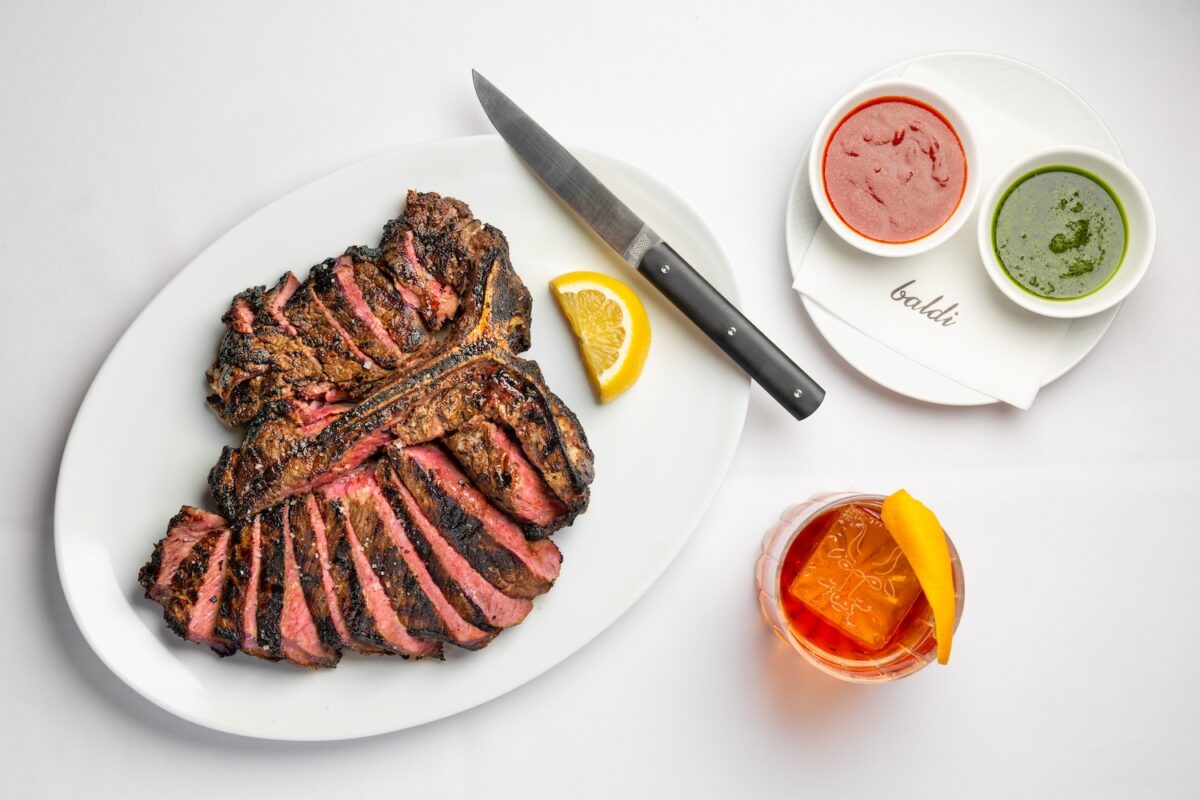 Steak at BaldiCredit: Jakob Layman
Steaks cooked over an olive-wood live-fire grill range from a strip to a ribeye, and the USDA Prime beef comes from top U.S. ranches like Creekstone Farm (Kansas), Autonomy Farms (Bakersfield) and Double R Ranch (Washington). Wagyu options from Australia, Japan and America include Australia’s wagyu tomahawk, Japan’s Sanuki Kawai and America’s Snake River Farms in Idaho and Blackhawk Farms in Kentucky. Pair steaks with two sauces, a signature salsa verde and tomato-based Italian steak sauce, as well as sides like crispy roasted potatoes, steamed spinach and grilled asparagus.
Finish with Baldi’s signature desserts, like the apple pie a la mode, tiramisu, butterscotch budino pudding or chocolate cake with Frangelico sauce. “Because at the end of the day, it is a steakhouse, I wanted to not go too far from the American way,” notes Baldi. “So I have a beautiful ice cream soft serve sundae with bananas and a wafer cookie with sprinkles on it and Chantilly cream and a little cherry on top. And the pancake soufflé, which I used to do at e. baldi. It’s a laborious dessert that takes time, but at the Waldorf, people are loving it,” he adds of the piping hot dessert for two that’s topped with strawberry Grand Marnier sauce.
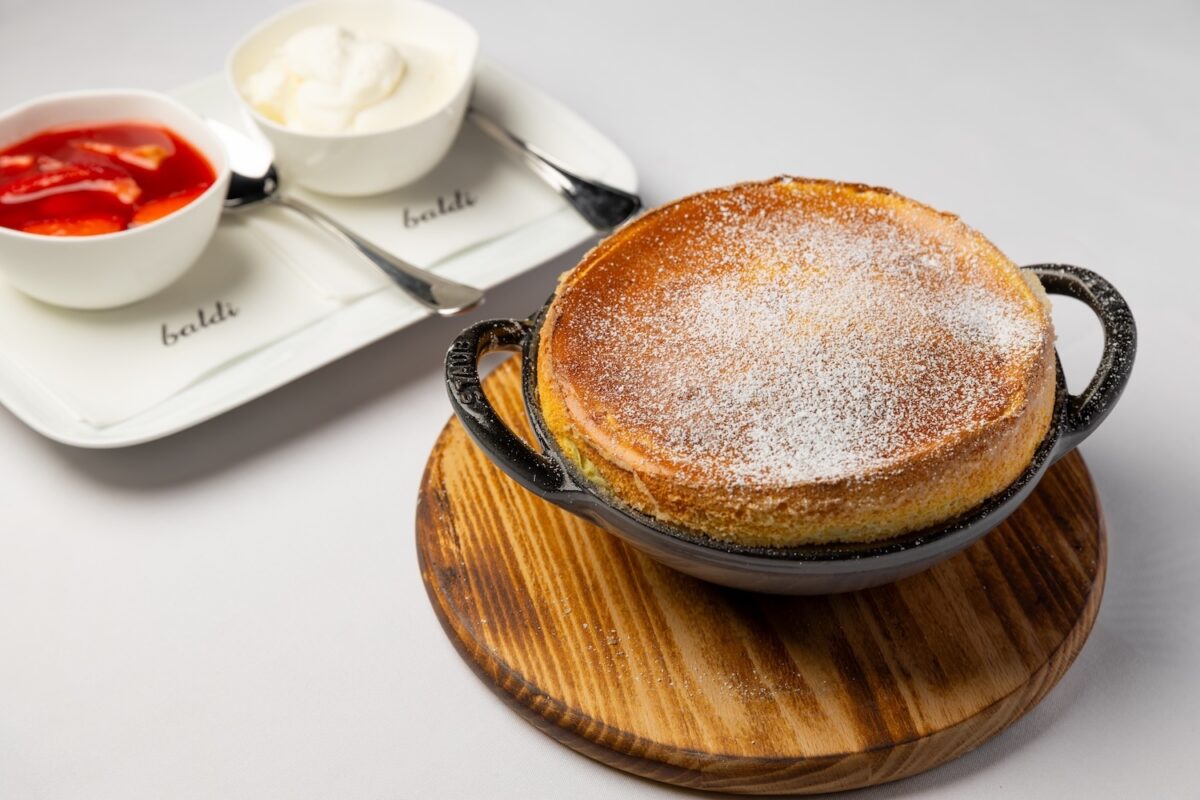 Pancake Souffle at BaldiCredit: Jakob Layman
Pair dishes with Italian aperitivo-style spritzes and Negronis created by Jim Kearns, like The Limone Spritz with Malfy Limone gin or a selection of martinis. The wine list leans into Italian regions like Piedmont and Tuscany, with Barolos, Super Tuscans and more. While the restaurant is open from Wednesday to Sunday, Bar Baldi is open every night, serving a menu of dishes from pizzas to pastas to fish and steak, from 5 to 11 p.m. “It’s a very trimmed-down version of the regular menu,” Baldi says.
The restaurant, which opened Feb. 18, proved an instant hit. “Hopefully it will continue,” he says. “I think in part, it has to do with our clients from e. baldi and from Giorgio Baldi, a lot of friends and family, and also a combination of the hotel guests and people from outside. So, the idea is to hopefully open seven days a week [for dinner] in the soon future.” He’s also able to accommodate larger private events. “So, the beautiful thing is, there’s enough kitchen space to grow into more and more.”
The Waldorf Astoria’s rooftop and pool — reimagined by French-Italian designer Marc Ange (Muse) — will also soon be opening for the season.
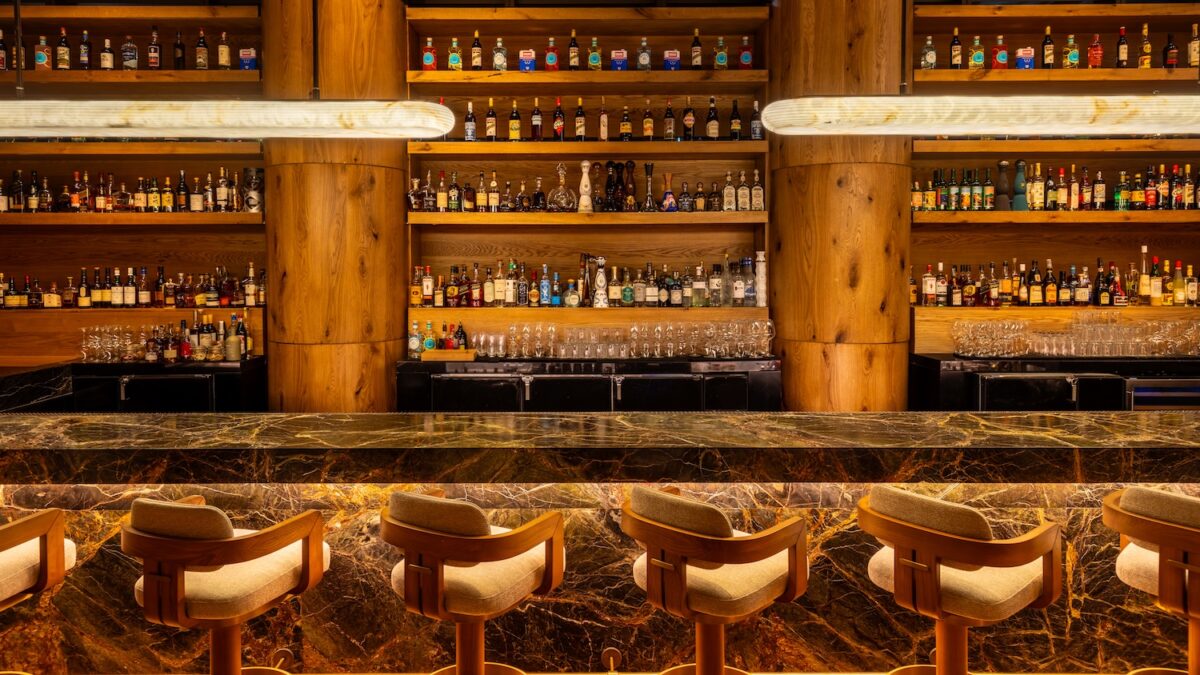 Baldi BarCredit: Jakob Layman
Baldi — who’s birthed casual outposts called Edo Bites at Caruso’s Palisades Village and The Grove — has been splitting his time between his two restaurants. E. baldi is turning 20 years old, and his mother and sister have helmed 36-year-old Giorgio Baldi since his father’s passing in 2011.
“In the morning, I go to e. baldi, and I spend all day,” Baldi notes. “At around 4:30 p.m., I go to the hotel. Then around 9:30/10, I go back to e. baldi, till 1 o’clock in the morning. So, I’m crazy. That’s what you can take from that — is that my meticulous mind continues, and I will never jeopardize e. baldi for any future businesses. I have to make sure that everything is on top, all the time.”
His affection for his home country has never waned: “I love Italy,” Baldi says. “Italy’s to me like drinking the right cup of coffee at the right time of the day. I always tell my mom, ‘Why did you take me away from there?’ I am more American than Italian because I’ve been here 40 years now — but there’s something about Italy [where] I just can’t take it away from my heart, and it’s eventually going to take me back there and make me stay.”
However, he adds, “But look at all the beautiful things that have happened being here.”
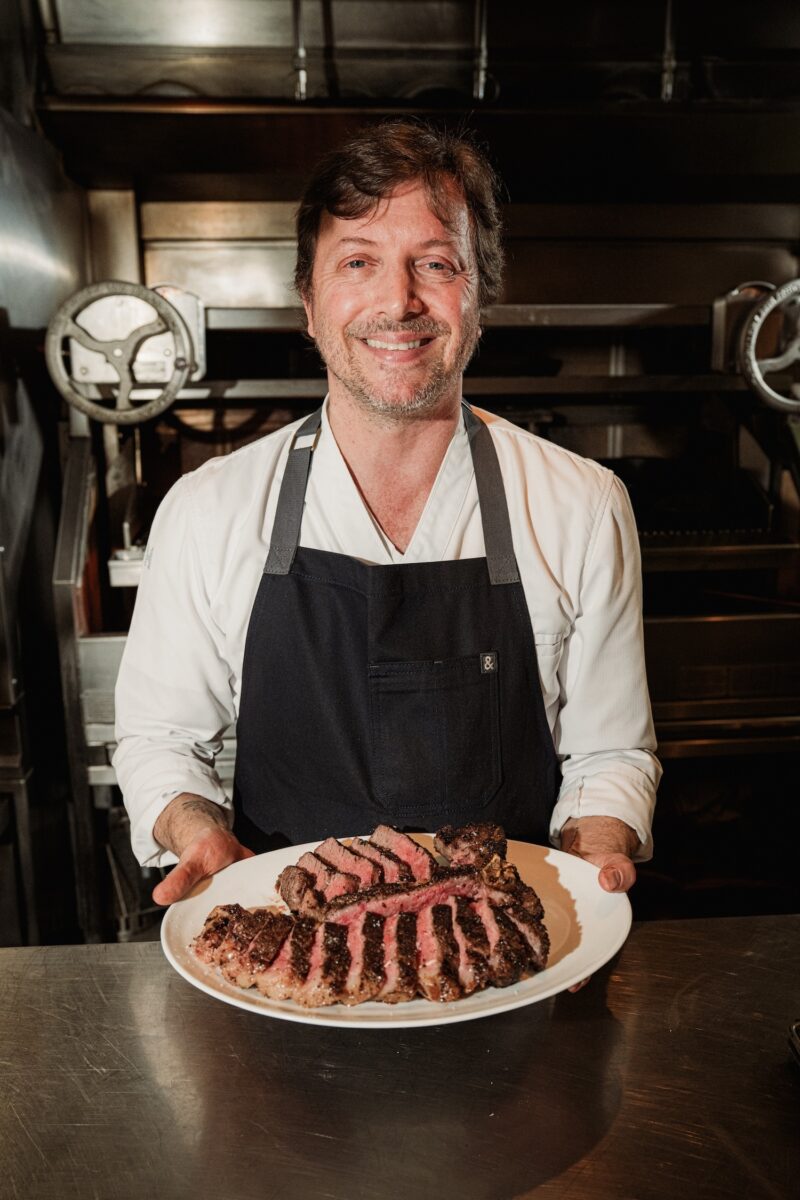 Chef Edo BaldiCredit: Kim Fox
Dining and Cooking