
New Orleans is a culinary sponge. The food has absorbed many international influences over the generations, and the journey of our cuisine is both deep and broad.
For example, the Native Americans who gathered at Bulbancha gave us our base of corn, beans, squashes and other fruits along with meats and seafood. And then there were African and European influences from the people who ended up in Louisiana, helping our cuisine to become established and documented in cookbooks and travel reports.
Now we are eating Mexican tacos with fried oysters and Vietnamese banh mi with fried crawfish, thanks to people who have come here from Mexico and Vietnam. Our very deeply rooted, but ever curious, cuisine is still very vibrant and not stuck in the past. We still look forward and appreciate our food as it changes with new influences.
One example of the sturdiness and flexibility of our cuisine can be found at Saffron NOLA, the restaurant owned by Pardeep and Arvinder Vilkhu. The Vilkhus moved to the United States and settled in New Orleans more than 30 years ago.

Saffron chef Arvinder Vilkhu on Thursday, March 12, 2026 in New Orleans. (Photo by Chris Granger, The Times-Picayune)
PHOTO BY CHRIS GRANGER
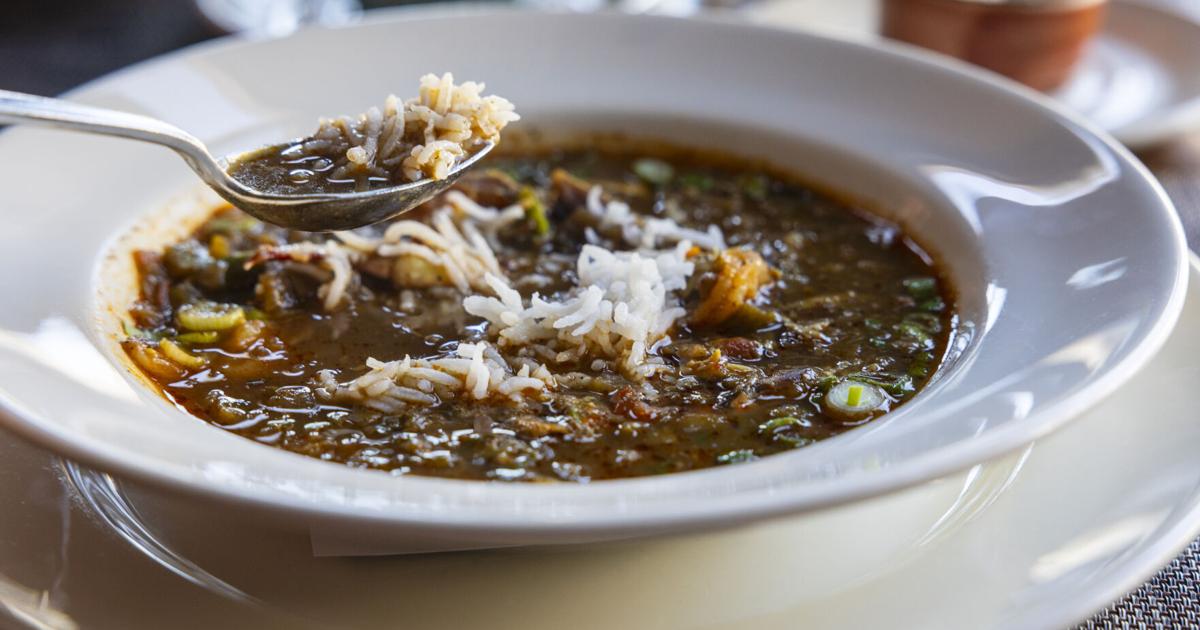
After cooking and managing for years, becoming New Orleanians, they opened their restaurant. Chef Vilkhu, of course, is an international chef, but with an appreciation for the local food and the local diner. And no other dish exemplifies that than his curried gumbo.
We all know that no two gumbos are alike. My gumbo is different from your gumbo. But we always know we are eating gumbo. And so it is when you eat Chef Vilkhu’s curried gumbo. There is no moment when you don’t feel that sense of recognition — gumbo! It’s not your gumbo. It’s not my gumbo. But it is a little piece of New Orleans. It is right at home.
“You cannot live in New Orleans without making parallels,” Chef Vilkhu said. “The food of India is varied and regional as is the food of Louisiana. They are both layered by influences. And gumbo and curry marry well together. Why not have gumbo with an Indian flair?”
And in addition to the wonderful flavor, there is care in presentation. Chef Vilkhu wants your gumbo to be hot. The serving bowl is heated. The rice arrives in a small bowl so you can pick your preferred amount. The seafood arrives hot, and the gumbo is poured hot into the hot bowl.
Saffron chef Arvinder Vilkhu with a gumbo dish in New Orleans on Thursday, March 12, 2026. (Photo by Chris Granger, The Times-Picayune)
PHOTO BY CHRIS GRANGER
Our cuisine is being teased along, just a little bit at a time, by all of the people who are born here, of course, but also by all of the people who come to settle here. Some of those people come from other states, influencing us with their “other” American tastes.
Some come from other countries, influencing us with the tastes of their homelands. It has always been that way here. Our food and tastes are still a living thing, and I hope our cuisine continues to be vibrant and changing!
Chef Arvinder Vilkhu’s Curried Seafood Gumbo
Makes 4 servings.
For the roux:
3/4 cup vegetable oil
1 cup of all- purpose flour
For the gumbo:
1 1/2 cups finely chopped white or yellow onions
3/4 cup finely chopped green pepper
3/4 cup finely chopped celery
2 tablespoons minced garlic
2 tablespoons of minced ginger
1 cup crushed fresh tomatoes
6 cups homemade shrimp stock (or store-bought seafood stock), at room temperature if frozen
1/4 teaspoon dried thyme
2 dried bay leaves
2 sprigs of curry leaves (about 15 leaves)
1 teaspoon turmeric powder
1 1/2 teaspoons salt
1/2 teaspoon Kashmiri red pepper powder or ground cayenne
1 pound medium-size shrimp, peeled and deveined
1/4 pound (about 3/4 cup) lump blue crabmeat (or other lump crabmeat)
Cracked black pepper, for serving
1/2 cup chopped cilantro (stems and leaves), for serving
1/2 cup chopped green onion tops, for serving
Hot, cooked rice for serving
1. Heat oil in stockpot over medium heat for 3 to 5 minutes, or until the oil is just short of smoking hot.
2. Stir flour into oil with wooden spoon, lower heat to medium-low and continue to cook, stirring almost constantly stir for 15 to-20 minutes, until roux is the color of milk chocolate.
3. Add onions, bell peppers and celery to the roux, stirring to blend. Cook for 5 minutes, stirring frequently.
4. Add garlic and ginger and cook for 30 seconds before stirring in the crushed tomatoes and shrimp stock.
5. Add thyme, bay leaves, curry leaves and turmeric, along with one teaspoon of the salt and 1/4 teaspoon of the red pepper.
6. Bring gumbo to a boil, then lower heat. Simmer for one hour, skimming foam and oil that rises to surface.
7. Season shrimp with remaining 1/2 teaspoon of salt and 1/4 teaspoon red pepper. Stir shrimp into gumbo and cook for 2 minutes.
8. Add crabmeat, stir and taste. Adjust seasoning as necessary.
9. Crack black pepper into warmed empty soup bowls, then add pinch each of chopped cilantro and green onion and a scoop of steamed rice. Ladle gumbo into the bowls. Serve immediately.
Dining and Cooking