
“Hearst Magazines and Yahoo may earn commission or revenue on some items through these links.”
There’s a lot to love about Costco groceries—even when you opt for name brands. Members can savemoney with bulk sizes, try brands not found in standard supermarkets, and even enjoy variety packs available only at the warehouse. But did you know that name-brand foods can be made with a different, Costco-exclusive recipe?
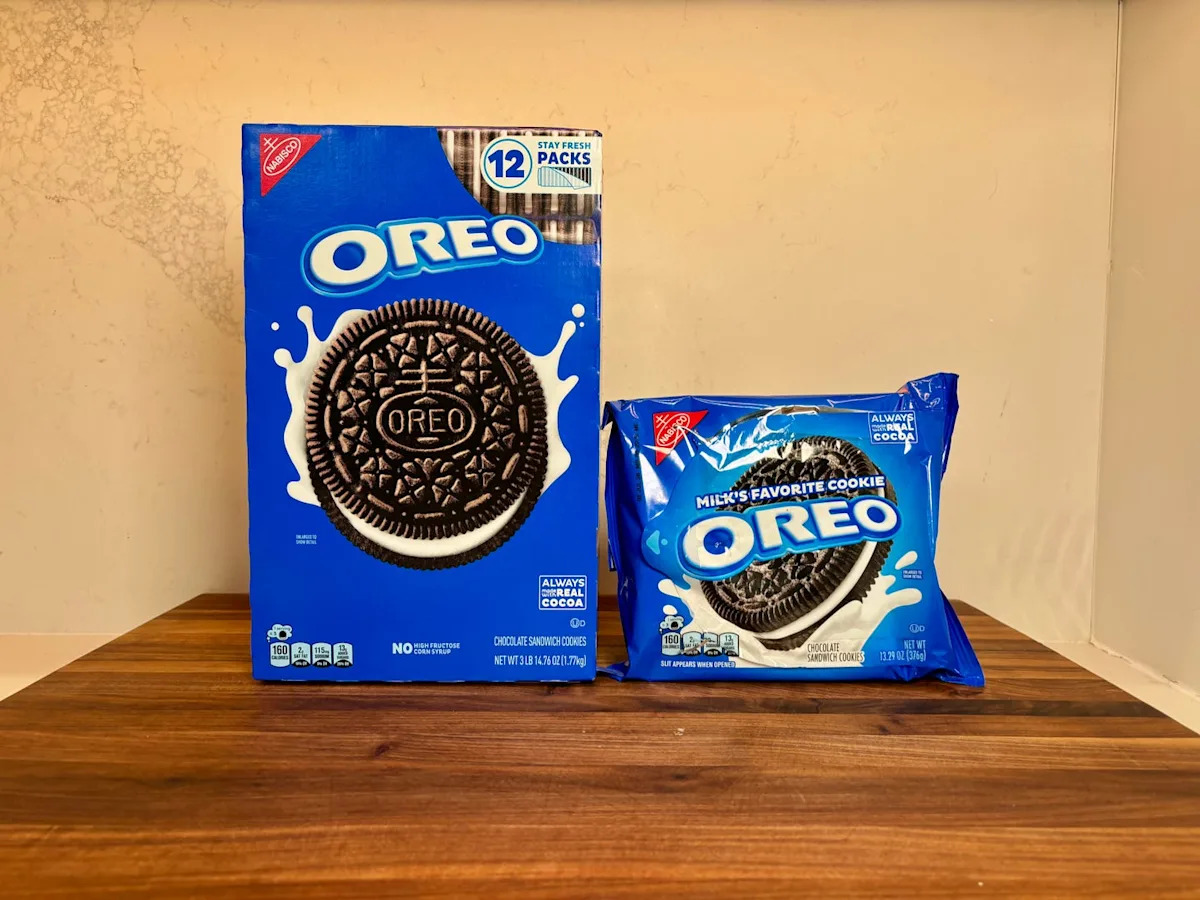
The most notable example is Oreos. America’s favorite cookie has been a fixture on Costco shelves for decades. But they’re not the same as the Oreos you’ll find anywhere else—and not just because they come with 156 cookies per box.
We bought a box of Costco Oreos to break down how they differ from the standard recipe. And, of course, we had to conduct a head-to-head taste test with the OG. Here’s what you need to know.
The Sugar
The standard Oreos you’ll find in your average grocery store are made with high-fructose corn syrup, while the Costco Oreos are made with invert sugar, a derivative of granulated cane sugar.
High-fructose corn syrup is a proverbial boogeyman in the nutrition world. However, using invert sugar does not necessarily make Costco Oreos a healthier alternative. They may have a more balanced ratio of glucose and fructose, but you’re still consuming 14 grams of sugar per serving.
The Flavoring
The Oreos sold at Costco are made with natural flavor. By contrast, the flavoring used in standard Oreos is artificially derived. The producers of the cookie no longer disclose exactly what that artificial flavor is, but older labels used the more specific term “vanillin.”
The synthetic flavor is typically sourced from petrochemicals or wood pulp to simulate the taste of pure vanilla extract. Vanillin is commonly used in packaged snacks, ice cream, and beverages. It’s the same as the bottles of imitation vanilla flavor that you find in the baking aisle. It’s a more affordable way to add the taste of vanilla to the crème in the middle of each cookie.
By that logic, the natural flavor used in Costco Oreos is presumably a vanilla extract made from actual vanilla.
The Salt
Both Oreo recipes use salt, as nearly every baked good does. The difference lies in the quantity. Costco Oreos are less salty, with 115 milligrams of sodium per serving. The same amount of standard Oreos contains 130 milligrams.
The nutritional difference is pretty much negligible. That extra 15 milligrams of sodium equals 1% of your recommended daily value. And let’s be real: we’re not eating Oreos as a diet food anyway.
Do Costco Oreos Taste Different From Regular Oreos?
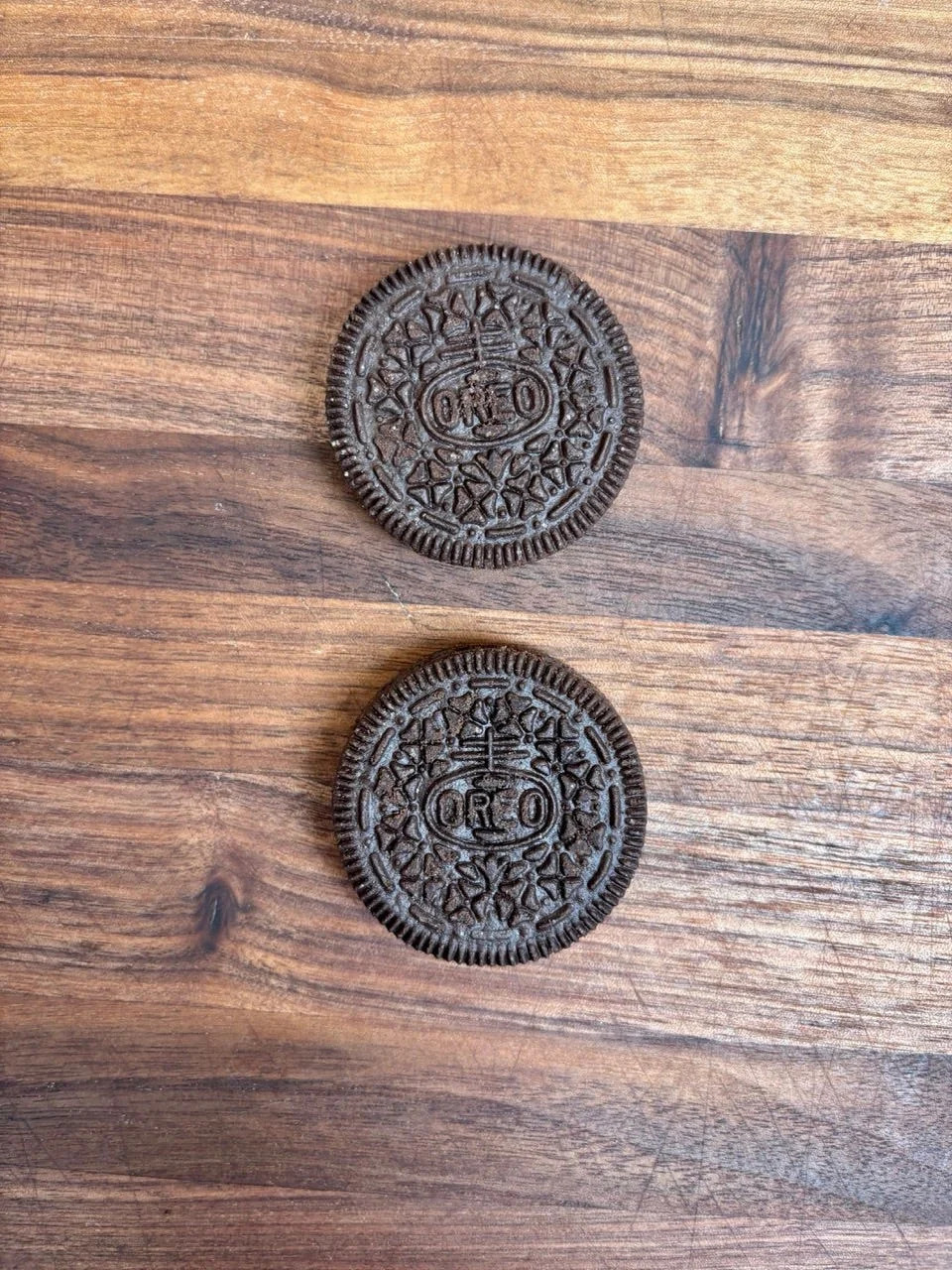
Most consumers won’t be able to distinguish between the two recipes when casually snacking. But there are some noticeable differences if you’re looking for them.
Deputy Community Editor and Oreo Connoisseur Camille Lowder immediately preferred the classic recipe in a blind taste test. “My main problem with the Costco Oreos was the slight difference in salt between them and the OGs,” she says. “I think the higher amount in the OG really makes a big impact on their deliciousness.”
Associate Editor Amanda Mactas shared a similar opinion. “These were truly SO similar; however, I love me a classic Oreo,” she says. “It felt more cocoa-forward and had a crumblier texture.”
Gabby Romero
But there were just as many people who preferred the Costco recipe. I, for one, found the classic Oreo’s taste comparatively more muted. The Costco version had a cleaner, crisper chocolate flavor. Associate Social Media Editor Taylor Daly agreed, saying, “Even though I thought they were extremely similar, I preferred Costco’s chocolate flavor more.”
At the end of the day, an Oreo is an Oreo whether you buy it at Costco or otherwise. But the warehouse version does have an indisputable leg up. The bulk discount means the cost per cookie is a fraction of what you’d pay for retail, which, for many of us, makes the taste of an Oreo even sweeter.
You Might Also Like
Dining and Cooking