
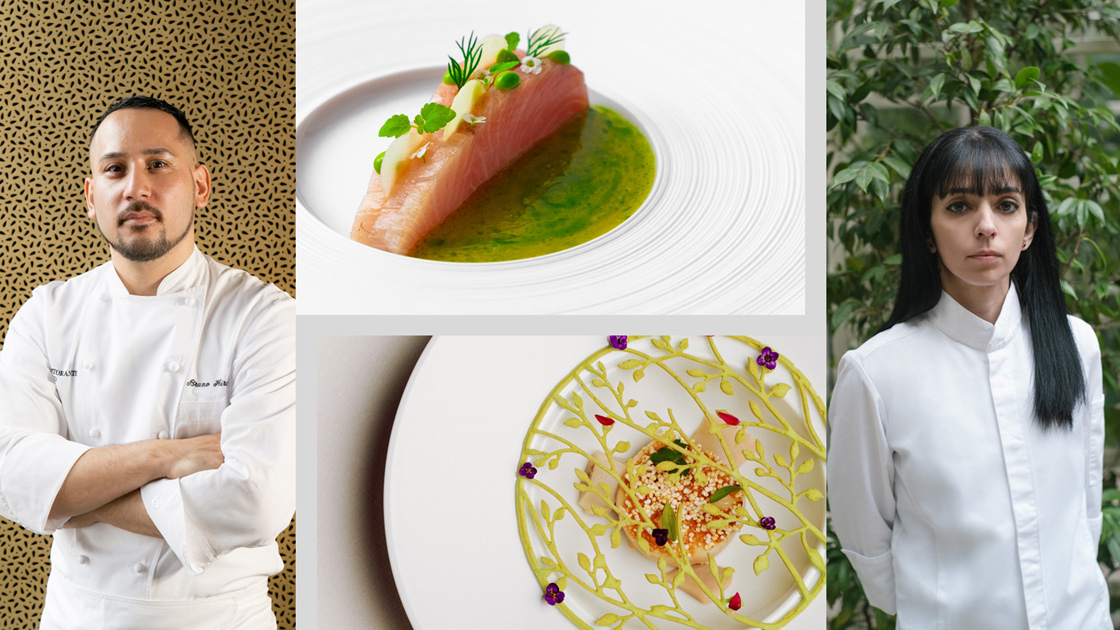
In the international metropolis of Tokyo, fine-dining restaurants operated by fashion brands have emerged, including ARMANI / RISTORANTE and Gucci Osteria da Massimo Bottura Tokyo. Both present Italian cuisine infused with a Japanese sensibility, ushering in a new wave of culinary innovation. Here, we introduce two restaurants that embody this Italian elegance.
ARMANI / RISTORANTE
The late Giorgio Armani, known as the “Emperor of Mode,” invented the “unconstructed jacket” — removing the shoulder pads of conventional jackets to create a lighter silhouette — and was celebrated for his minimalist and elegant style.
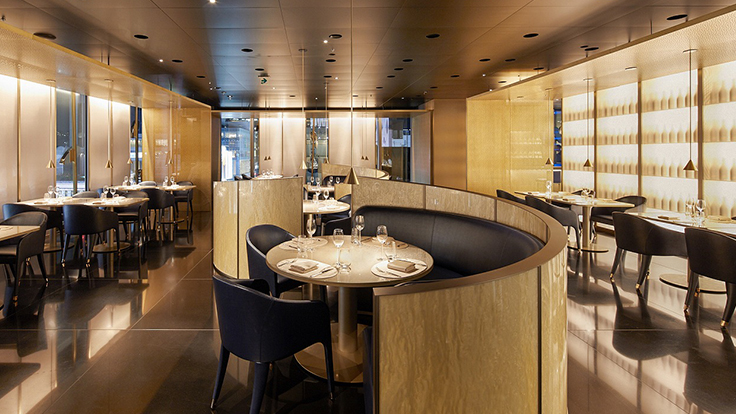
The interior features wave-shaped sofa seating set against a calm gold palette. (© ARMANI / RISTORANTE)
That philosophy is expressed in the culinary world at ARMANI / RISTORANTE. The executive chef in Tokyo is Bruno Hiruma, who was raised in Spain by a Japanese father and a Spanish mother. Having long enjoyed the bounty of the Mediterranean, Hiruma holds Japanese ingredients — particularly seafood — in especially high regard. He arrived in Japan in 2010 at the age of 18 and worked for five years at a French restaurant in Hakodate. Even today, many of the fish used at the restaurant are selected by producers he met during that time. He later worked as sous-chef at the Spanish restaurant Zurriola in Tokyo before joining the team at ARMANI / RISTORANTE in 2021. Since December 2024, he has led the restaurant as executive chef. What he values most is communication with people. Fluent in Japanese, Hiruma has actively visited producers across the country since taking his position and has been deeply impressed by the craftsmanship that creates subtle but meaningful differences on the plate.
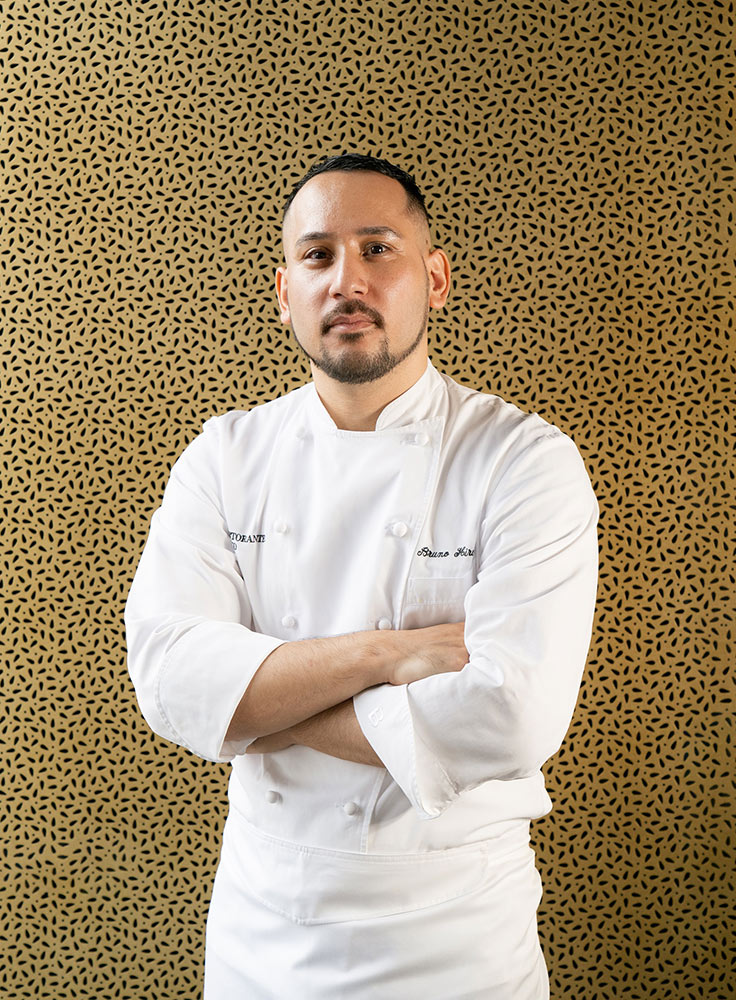
Executive Chef Bruno Hiruma, whose cuisine highlights the true character of ingredients and expresses a minimalist aesthetic. (© ARMANI / RISTORANTE)
His dishes appear simple and avoid excessive elements, yet he carefully draws out temperature and texture to reveal the character of each ingredient and deliver moments of surprise and discovery. What he asks of producers is not specific sizes or varieties, but simply how exceptional the quality is.

“Smoked Buri (Yellowtail) Carpaccio” (© ARMANI / RISTORANTE)
For example, wild fish used in the main dishes vary in fat content and moisture from one specimen to another, so each is aged accordingly and grilled over charcoal at the perfect moment. The result is the aroma of crisp skin, melting fat and juicy flesh. Served at the precise moment it reaches its peak, Hiruma says, “I would be delighted if you could taste it as soon as it arrives at the table.”

Charcoal-grilled kinki (channel rockfish), served with a sauce made from fish bones and tomatoes. (© Kyoko Nakayama/The MICHELIN Guide)
A new project will begin at ARMANI / RISTORANTE this spring called “47 Roots.” The project brings together the style of Mr. Armani — who expressed timeless beauty beyond trends — with Hiruma’s focus on ingredients, the source of enduring flavor, to explore the terroir of Japan. Beginning with Ehime Prefecture in the spring menu launching in March, this project will, four times a year, focus on the ingredients and food culture of one of Japan’s 47 prefectures and use them to further evolve traditional Italian cuisine.
“I want to feel the passion of producers across the country more directly,” says Hiruma. “It will take twelve years to visit every prefecture, but it is a theme worthy of dedicating one’s life to.” What will emerge beyond that journey? The search for a “new universality” has only just begun.
Gucci Osteria da Massimo Bottura Tokyo
Gucci has created a style that brings the best of the past into the present, embodying the idea of learning from the old to create the new. Expressing this philosophy through cuisine is the executive chef of Gucci Osteria da Massimo Bottura Tokyo, Chef Raffaella De Vita from Foggia in southern Italy. Inspired by Japanese minimalism, aesthetics and art, De Vita moved to Japan in 2017. While studying Japanese she worked as a chef and today communicates fluently with producers and staff. She became senior sous chef at Gucci Osteria in 2022 and assumed the role of executive chef in spring 2025.
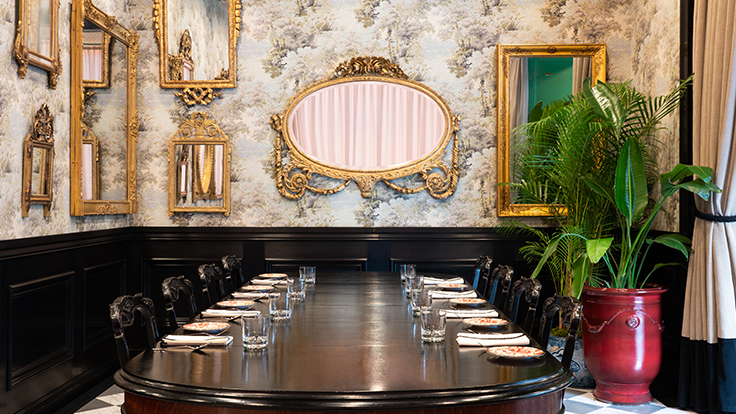
The interior reflects the world of Gucci through vivid colors, including a striking mirrored private dining room.(© Gucci Osteria da Massimo Bottura Tokyo)
She describes her cuisine as a nostalgic and emotional style rooted in memories of the past. The dishes her grandmother once prepared and the memories of traveling across Italy are artistically transformed into a distinctive culinary world. She seeks to translate flavors that move her heart into dishes that resonate emotionally with those who taste them.
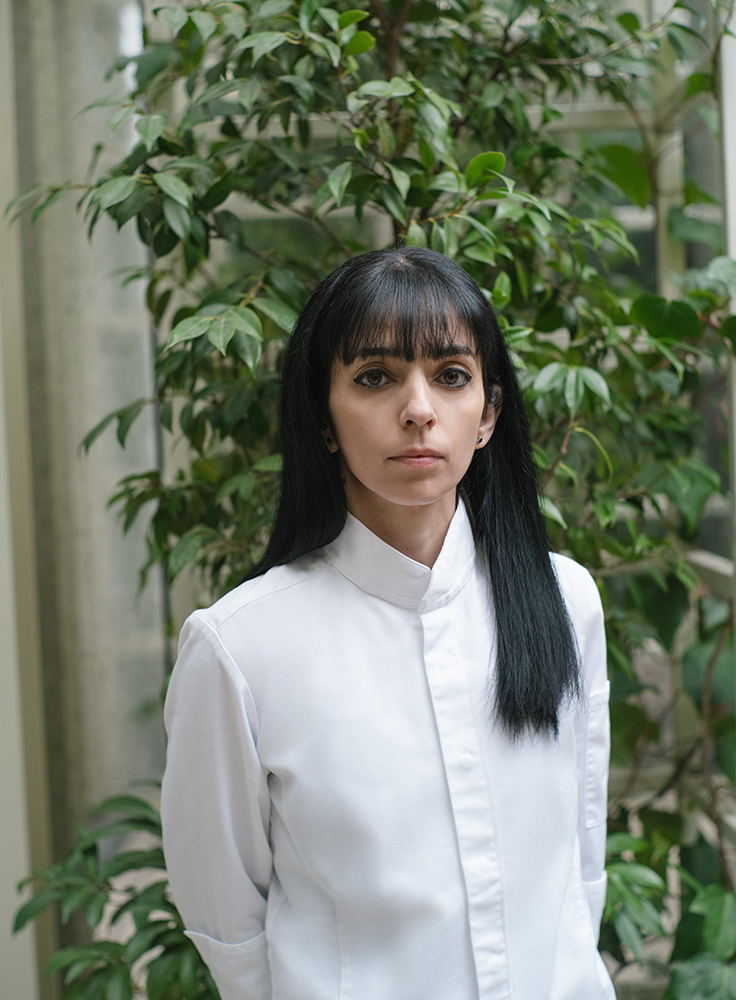
Executive Chef Raffaella De Vita expresses what she senses from ingredients through richly designed presentations. (© Gucci Osteria da Massimo Bottura Tokyo)
Like supervising chef, the internationally-lauded Massimo Bottura, De Vita also possesses a deep appreciation for art. She is a person of few words and prefers to dress in black. Yet in contrast, her cuisine bursts with color, as if expressing the energy within her. Signature dishes such as Cartellate — a circular open ravioli inspired by the shape of a traditional southern Italian sweet — feature particularly distinctive presentations.
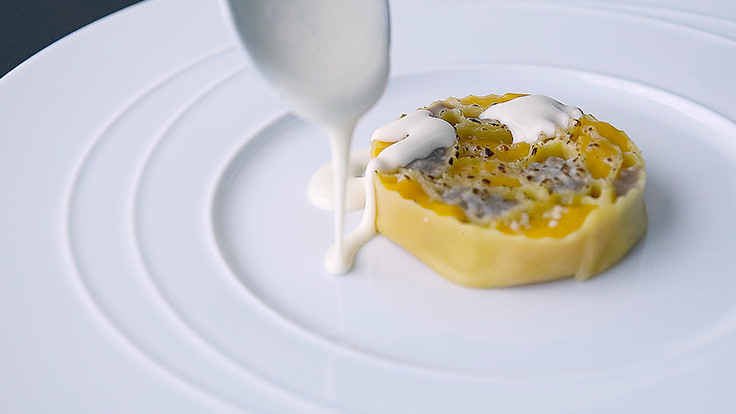
Cartellate with ravioli layered like flower petals. The filling changes with the seasons. (© Kyoko Nakayama/The MICHELIN Guide)
What she values most is the sensation she feels when touching ingredients. She believes that ingredients made by honest people carry an honest flavor, reflecting the character of those who produce them. She once visited a rice farmer in Niigata and even experienced rice planting herself, deeply impressed by the effort devoted to Japanese ingredients. Learning this ancient skill renewed her determination to treat ingredients with respect and gratitude. She brings together the passion of Italian cuisine with the dedication of Japanese producers, creating a bridge between Japan and Italy. One dish that embodies this sentiment is Homage to Japan.
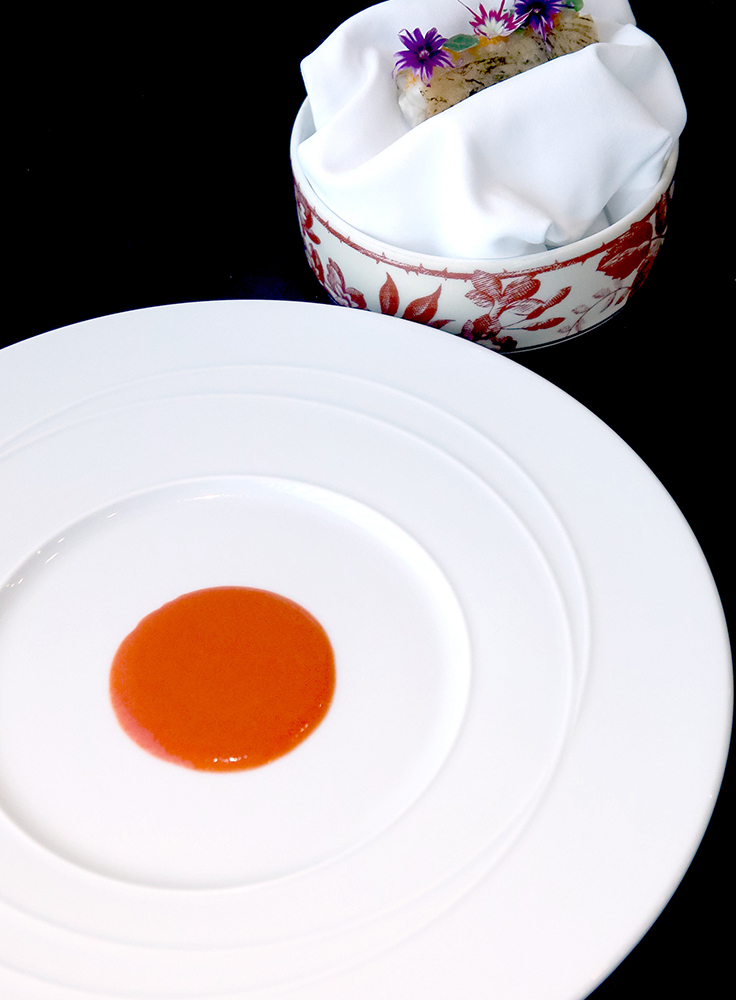
A thin tuile cylinder evokes a cannolo — traditionally a fried pastry filled with sweet cream — but here filled with scallop, representing her southern Italian roots known for seafood. A red sauce of paprika and squid, inspired by the Japanese flag, is poured across a pure white plate. “My dream is to develop a style where people can recognize my work at a glance,” she says. She believes that striking visuals, combined with the story and passion behind each dish, have the power to move people.
Left image: Homage to Japan presents two plates simultaneously — one inspired by Japan and the other by Italy — expressing her identity as an Italian chef who loves Japan. (© Kyoko Nakayama/The MICHELIN Guide)
Both Hiruma, who highlights the natural colors of ingredients with refined minimalism, and De Vita, whose vibrant, playful palette creates richly designed dishes, express their own elegance, rooted in a love for Japan and deep respect for its ingredients. Italian cuisine served in Japan’s landscape will continue to flourish, bringing abundant richness to the country’s gastronomic scene.
Header image: Smoked Buri (Yellowtail) Carpaccio from ARMANI / RISTORANTE, combining rich buri from Hakodate with a clear apple and dill sauce (top left: © ARMANI / RISTORANTE). A delicate latticed chip replaces the usual bruschetta, while tomato consommé is poured over awabi (abalone). Gucci Osteria da Massimo Bottura Tokyo’s Reconstruction of Bruschetta — A Magnificent Transformation (bottom right: © Gucci Osteria da Massimo Bottura Tokyo).
Written by
Kyoko Nakayama
Kyoko Nakayama is a MICHELIN Guide contributor. With nearly 20 years of experience in Japanese television, she worked as a news anchor before moving into food journalism. She spent six years in Singapore, where she also worked as a radio DJ at Mediacorp. Now based in Tokyo, she contributes to newspapers and magazines in Japan and abroad, and writes in both Japanese and English. She has traveled to more than 60 countries in search of a deeper understanding of global food culture.
Dining and Cooking