
Reviewed by Dietitian Katey Davidson, M.Sc.FN, RD, CPT

Credit: Photographer: Jen Causey. EatingWell Design.
Key Points
Fiber-rich overnight oats support gut, heart and blood sugar health on the Mediterranean diet.
This make-ahead breakfast provides 11 grams of fiber and 12 grams of protein per serving.
Pair fiber-rich foods with protein and healthy fats to stay full and support steady energy.
More of a lifestyle than a diet, the Mediterranean diet has long been praised for its plant-forward, minimally processed approach to eating. Centered on vegetables, fruits, whole grains, legumes, nuts, seeds, olive oil and seafood, it’s consistently linked to a lower risk of heart disease, type 2 diabetes and certain cancers, as well as greater longevity.
Advertisement
Advertisement
A big reason it works so well? Fiber. The diet is naturally loaded with the plant-based fiber that feeds the beneficial bacteria in your gut—and most of us could stand to eat more of it.
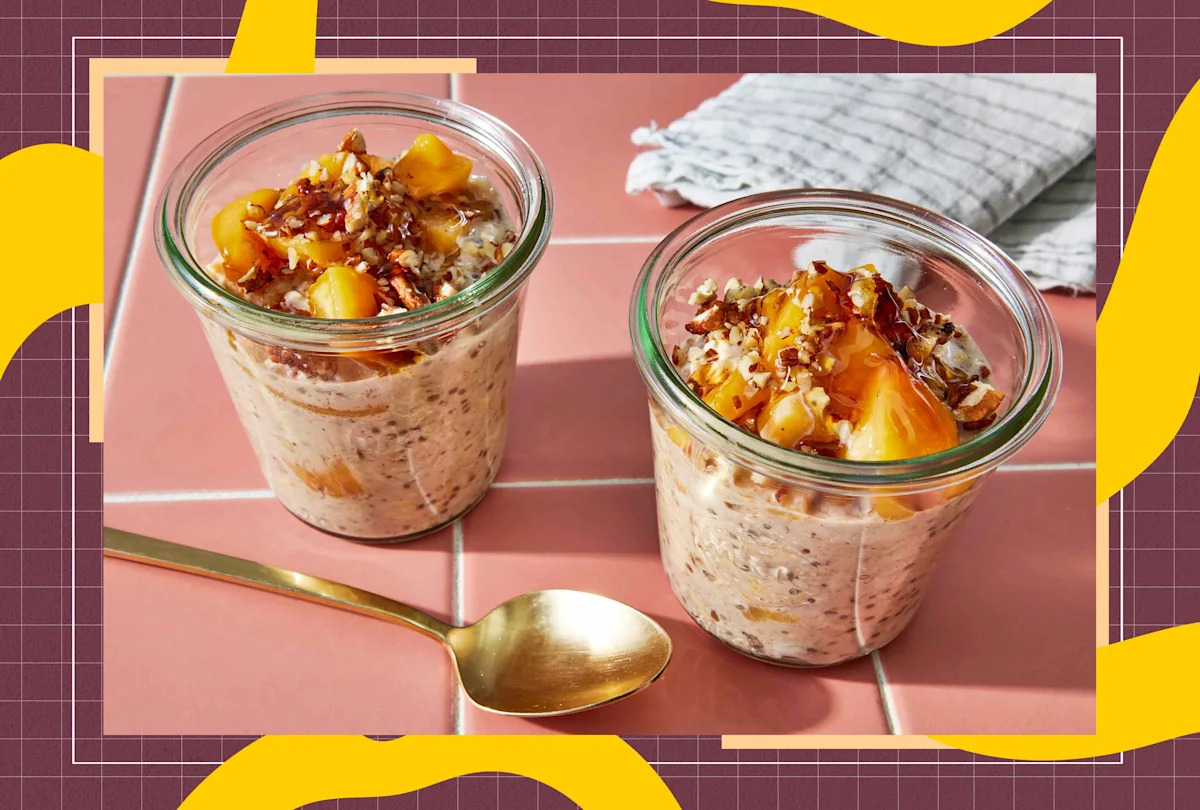
Breakfast is one of the easiest places to start, but what should you actually be eating? We spoke with three registered dietitians to find the best high-fiber breakfast for the Mediterranean diet, and they kept landing on one make-ahead favorite: Overnight Oats with Chia Seeds. With 11 grams of fiber per serving—roughly one-third of what most people need in a day—it’s proof that a nourishing breakfast can come together with zero cooking.
Why Dietitians Love It
This recipe was crowned the winner for its smart combination of ingredients. You’re soaking rolled oats and chia seeds in almond milk, then stirring in strained (Greek-style) yogurt, peaches and pecans. “Together, they check nearly every box the Mediterranean diet is built around: whole grains, healthy fats, fiber and micronutrients, all in one simple breakfast,” says Val Warner, M.S., RD, CSSD, CPT. Here’s what makes it a standout.
It’s Great for Gut Health
Fiber is food for the trillions of bacteria living in your gut, and the Mediterranean diet delivers it in spades. Research links the eating pattern to a more diverse microbiome and the growth of beneficial, anti-inflammatory bacteria—including butyrate-producing species like Faecalibacterium prausnitzii and Roseburia—along with lower levels of inflammation.
Advertisement
Advertisement
This recipe gives those bacteria plenty to work with, drawing fiber from oats, chia seeds, peaches and pecans. “This combination helps support digestive health, fullness and steady energy throughout the morning,” says Sheila Patterson, RD, CDCES.
Oats are particularly beneficial thanks to their soluble fiber content, especially beta-glucan. When gut bacteria break that down, they produce short-chain fatty acids like butyrate—the preferred fuel for the cells lining your colon and a key player in maintaining the gut barrier and calming inflammation.
It’s Heart-Healthy
This breakfast is also good for your heart, thanks to its soluble fiber. “Soluble fiber becomes gel-like in the digestive tract and binds to cholesterol and bile acids, preventing them from being reabsorbed and escorting them out through the stool,” says Warner. “This is one of the key mechanisms behind fiber’s ability to lower LDL [“bad”] cholesterol and triglycerides.”
The benefits go beyond cholesterol. Research links higher fiber intake to healthier blood pressure, better cardiovascular outcomes and a lower risk of heart disease. “Some dietary fibers may reduce inflammation, a risk factor for coronary heart disease,” says Briana V. Reamer, M.S., RDN, LDN. “High-fiber diets also help with weight management, which is crucial for heart health.”
Advertisement
Advertisement
Warner recommends that if you’re significantly increasing your fiber intake, you do it gradually and drink plenty of water: “Fiber needs water to do its job.”
It Keeps You Full & Your Blood Sugar Steady
Each serving delivers 11 grams of fiber and 12 grams of protein, plus healthy fats from chia seeds and pecans. “Fiber, protein and healthy fat are the power trio for blood sugar and satiety,” says Warner. “Together, they slow digestion and the absorption of sugar into the bloodstream, which means steadier energy and fewer crashes through the morning.”
That balance is especially valuable in an oat-based breakfast. “A lot of people assume oatmeal is bad for blood sugar, and on its own, it can cause a quicker glucose rise,” Warner says. “But when you pair it with protein, fat and extra fiber as this recipe does, you completely change how your body responds to it.”
Fiber plays a direct role, too. “Adding fiber to your meals helps your body respond better to insulin,” says Reamer. “It allows your body to become more satiated and reduces the need to overeat.”
Other High-Fiber Options
Overnight oats are an easy winner, but they’re far from your only option. Any breakfast built around whole grains, fruits, vegetables, legumes, nuts and seeds can boost your fiber intake. Here are some dietitian-approved ideas:
Advertisement
Advertisement
Ricotta & Yogurt Parfait: Layer creamy strained (Greek-style) yogurt and part-skim ricotta with raspberries, a sprinkle of chia seeds and slivered almonds, and brighten it with a little lemon zest. “It comes together in five minutes and checks every box,” says Warner—protein, fiber, antioxidants, omega-3s and gut-friendly probiotics.
Avocado Toast on Whole-Grain Bread: Pair avocados with whole-grain bread and other nutritious toppings for a delicious breakfast that’s packed with heart-healthy fats and fiber.
Savory Cottage Cheese Bowl: Patterson’s go-to pairs cottage cheese with diced peppers, cucumber, red onion and tomato, plus a scoop of roasted chickpeas for crunch and a fiber boost.
Veggie-Packed Grain Bowl: Warner builds hers with eggs, avocado, roasted sweet potato and sautéed arugula, mushrooms and onions—fiber from the vegetables, healthy fat from the avocado, and a solid protein base.
Green Smoothie: Blend spinach, banana, mango and pineapple for a smoothie that delivers 11 grams of fiber and a bright, natural sweetness. “Make sure you’re including protein and fat so it’s not just fruit and greens,” says Warner. Try adding strained (Greek-style) yogurt or a scoop of protein powder.
Our Expert Take
If you want to eat more fiber on the Mediterranean diet, breakfast is one of the simplest places to start—and dietitians keep coming back to Overnight Oats with Chia Seeds. With 11 grams of fiber and 12 grams of protein per serving, this make-ahead meal supports gut health, heart health and steadier blood sugar—no cooking required.
Not in the mood for overnight oats? A yogurt parfait, loaded avocado toast or a veggie-packed grain bowl can help you get there, too. Whatever you choose, pair fiber-rich foods with protein and healthy fats, and increase your fiber intake gradually while drinking plenty of water to help keep things comfortable.
Read the original article on EatingWell
Dining and Cooking