
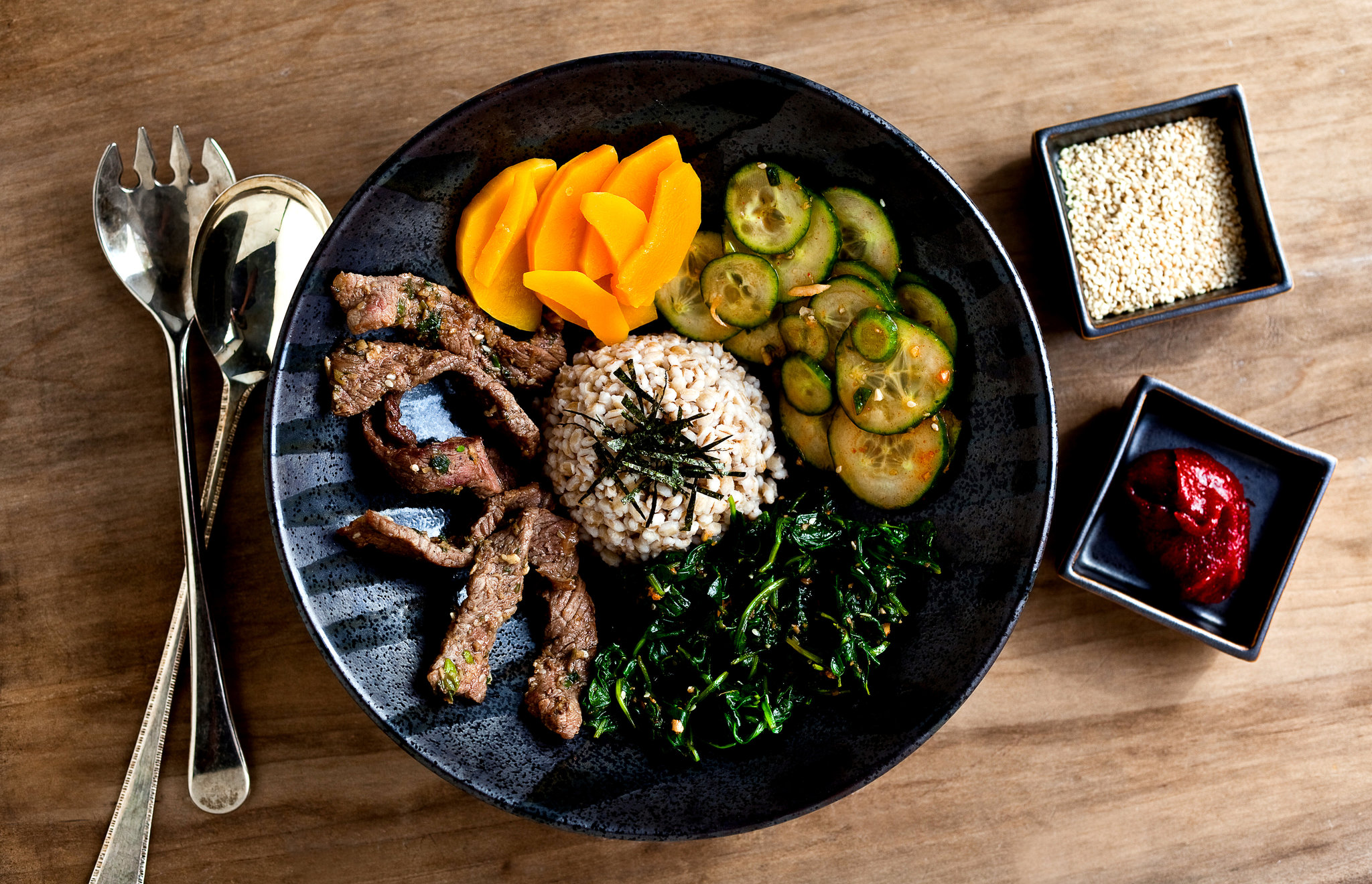
Bibimbap is a classic Korean mixed-rice dish. In traditional bibimbap, a large serving of rice is placed in the center of a hot bowl and surrounded with small amounts of meat — usually beef — and seasoned vegetables that include a mixture of cultivated vegetables (cucumber, carrot, daikon or turnips, spinach, lettuce, mushrooms) and wild items like fiddlehead ferns and reconstituted dried toraji (bellflower roots). A fried egg is often placed on top of the rice, and diners stir everything together. This recipe breaks with traditional bibimbap by using brown rice (you could also use barley, quinoa or another grain of your choice). As for the winter squash and spinach? The recipe is a template: use whatever vegetables you like.
Ingredients
For the beef:
- 8 ounces beef, like top sirloin, thinly sliced across the grain
- 1 tablespoon soy sauce
- 1 teaspoon sugar or brown sugar
- 1 tablespoon sesame oil
- 1 teaspoon toasted sesame seeds
- 1 to 2 garlic cloves, to taste, minced or puréed
- A half-inch piece of ginger, minced
- 2 scallions, finely chopped
- Freshly ground pepper to taste
For the vegetables:
- 2 tablespoons rice vinegar
- 1 tablespoon sesame oil
- 2 large garlic cloves, minced or puréed
- 2 to 3 scallions, minced
- 1 tablespoon toasted sesame seeds
- Salt to taste
- Korean red pepper paste (kochujang) to taste (available at Korean markets) (optional)
- 2 Persian cucumbers or 1/2 long European cucumber, thinly sliced
- ½ pound winter squash, like butternut, peeled and sliced or cut in 3/4-inch dice
- 1 12-ounce bunch spinach, stemmed and washed, or 1 6-ounce bag baby spinach
- 6 fresh shiitake mushrooms, stemmed and sliced
- Soy sauce to taste
- 1 tablespoon canola oil
For the rice and garnishes:
- 1 ½ to 2 cups brown rice, barley, quinoa or another grain of your choice, cooked (keep hot)
- 4 eggs (optional)
- Korean red pepper paste (kochujang) to taste (available at Korean markets)
- 2 sheets nori seaweed (kimgui), lightly toasted* and cut into thin strips (optional)
- 2 teaspoons toasted sesame seeds or black sesame seeds
- Toast nori sheets (if not toasted already) by quickly passing them over a gas flame (hold with tongs) until crisp.
- Nutritional Information
Nutritional analysis per serving (4 servings)
367 calories; 16 grams fat; 2 grams saturated fat; 0 grams trans fat; 7 grams monounsaturated fat; 5 grams polyunsaturated fat; 38 grams carbohydrates; 6 grams dietary fiber; 4 grams sugars; 20 grams protein; 35 milligrams cholesterol; 344 milligrams sodium
Note: Nutrient information is not available for all ingredients. Amount is based on available data.
4 servings.
Preparation
- Marinate the beef. Mix together the soy sauce, sesame oil, sesame seeds, garlic, ginger, scallions and pepper and toss with the sliced beef. Refrigerate for 30 minutes.
- Mix together the rice vinegar, sesame oil, garlic, scallions, sesame seeds and salt to taste in a small bowl or measuring cup. Add red pepper paste if desired. Set aside.
- While the beef is marinating, toss the cucumber with salt to taste and place in a colander in the sink for 15 to 30 minutes. Rinse and squeeze dry. Place in a bowl and toss with 2 teaspoons of the vinegar and sesame oil mixture. Set aside in the refrigerator.
- Steam the squash over an inch of boiling water until tender, about 10 minutes. Remove from the heat and toss in a bowl with 1 tablespoon of the vinegar and sesame oil mixture. Add salt or soy sauce to taste.
- Wash the spinach and wilt in a large frying pan over high heat. Remove from the heat, press out excess water and toss in a bowl with 1 tablespoon of the vinegar and sesame oil mixture.
- Heat a wok or large, heavy skillet over medium-high heat until a drop of water evaporates immediately on contact. Add the canola oil. Stir-fry the beef for 3 to 5 minutes, until lightly browned, and remove to a plate. Add the shiitakes to the pan, let sit without stirring for 1 minute, then stir-fry for another minute or two, until tender. Remove to a plate.
- Fry the eggs in the hot pan or in a separate nonstick skillet until the whites are set and the yolks are still runny. Season with salt and pepper.
- Heat 4 wide soup bowls. Place a mound of hot grains in the middle of each one and surround with the meat and vegetables, as well as kimchi if desired, each ingredient in its own little pile. Place a fried egg and a small spoonful of chili paste on top of the rice and garnish with the toasted nori and sesame seeds. Serve at once. Diners should break the egg into the rice. Pass the chili paste and add more as desired.
- Advance preparation: You can do this in whatever order is convenient for you. The grains can be cooked ahead and reheated. The cucumbers, spinach and squash can all be prepared ahead and refrigerated, then reheated before serving. It’s best to cook the beef and mushrooms just before serving so they’re nice and hot. But since this is often a way to use leftovers, you can also reheat.
Dining and Cooking