
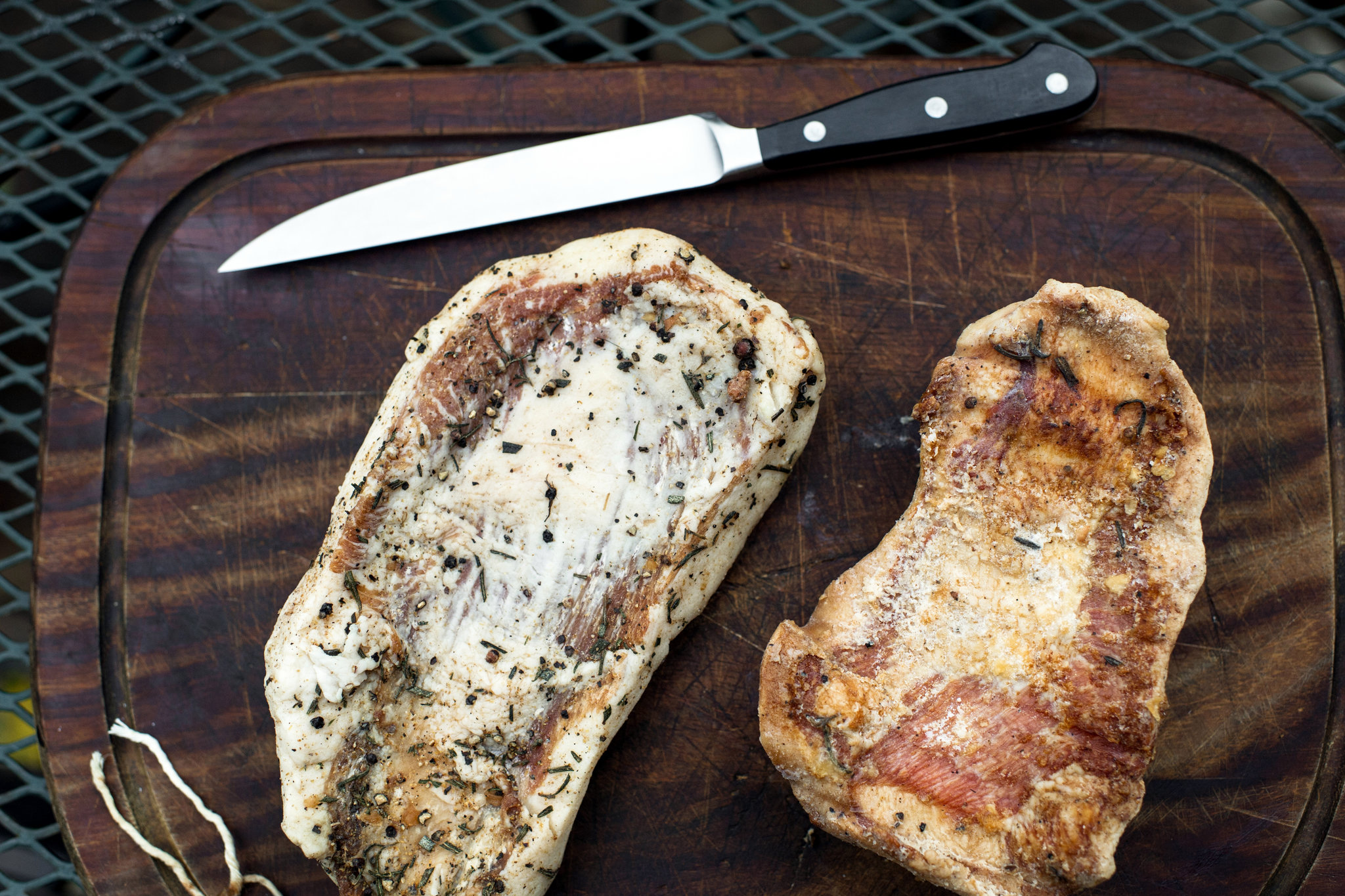
There is an edge of obsessiveness to carbonara — and I gave in to it completely by starting to make my own guanciale, the cured pig cheek central to most Italian versions of the dish. There’s no real need to; it’s available online, but I was inspired after eating a wonderful meal at Vetri Ristorante in Philadelphia, and buying a cookbook, “Rustic Italian Food,” by its owner, Marc Vetri. He made it sound easy — and it is. It’s also satisfying. Guanciale is generally cured for a week, then hung to dry for about three weeks, which is how I usually make it. A fireplace is perfect. But Mr. Vetri has a version that cures for only three days, then is baked. If you order raw cheeks, they need to be trimmed. You want to end up with a neat, flat slab, roughly an inch and a half thick. The key is to cut off the glands, down to the first level of meat, and all excess fat. Here is Mr. Vetri’s recipe:
Ingredients
- 1 pork jowl (about 1 pound)
- 2 tablespoons and 1 teaspoon kosher salt
- 2 teaspoons dextrose powder or 1 1/2 teaspoons superfine sugar (I use the latter)
- ½ teaspoon ground coriander
- 1 teaspoon ground pepper
- 1 teaspoon curing salt No. 1 (available at Amazon.com)
- 1 teaspoon crushed garlic
- 1 tablespoon chopped rosemary
-
Nutritional Information
-
Nutritional analysis per serving (10 servings)
301 calories; 31 grams fat; 11 grams saturated fat; 14 grams monounsaturated fat; 3 grams polyunsaturated fat; 1 gram carbohydrates; 0 grams dietary fiber; 0 grams sugars; 2 grams protein; 40 milligrams cholesterol; 717 milligrams sodium
Note: Nutrient information is not available for all ingredients. Amount is based on available data. -
Preparation
- Rinse pork jowl and pat dry. Combine other ingredients in a bowl.
- Rub the curing mix on the jowl, then place jowl in a gallon Ziploc bag with the cure evenly spread on top and bottom. Refrigerate for 3 days.
- Rinse the jowl and dry it. Roast at 275 degrees for 2 1/2 to 3 hours.
Dining and Cooking