
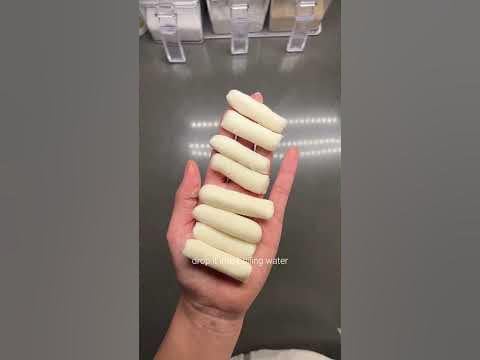
I followed this shorts tutorial: [https://youtube.com/shorts/I2YLsKMCZC8?feature=share](https://youtube.com/shorts/I2YLsKMCZC8?feature=share)
In the short, she says to use sweet rice flour or Mochiko flour with half the amount of boiling water and a pinch of salt. Knead 20 times. Boil until they float to the top of the water. Use them immediately or freeze them.
It seemed extremely accessible, which was great for me because I live in a place that doesn’t even have a single Asian market (truly painful). I ordered the Mochiko rice flour from Weee! so that it would be close to what was in the video. Tried to make it twice and I messed up both times 😿.
The first time, I boiled the rice cakes too long and they fell apart. That seemed like an easy enough thing to fix. The next time I tried it, I boiled it just enough and stored them in the freezer. I thought I was golden until I tried them the same night. They were weirdly chemically and grainy. It was like they didn’t cook inside at all. The texture halfway reminded me of mochi from the My Mochi ice creams, but not smooth or chewy enough. Was it too little kneading? The wrong flour? Perhaps my expectations are wrong? I want to make these rice cakes a common part of my diet. Just gotta get to making them correctly. THank you !!
by luckycloves04
3 Comments
Maangchi stir-kneads her microwave recipe 100 times… Or mortar and pestles it 100 times.
Not sure about the chemical taste tho.
Link to her recipe
https://youtu.be/oMz4t12DIGQ
Sweet rice flour? There is a different type of rice flour, not mochiko. It’s made from short grain rice, not sweet rice. When I buy it, it’s usually frozen.
ETA link: https://www.maangchi.com/recipe/mepssalgaru
Garaetteok does *not* use chapssal-garu/sweet rice flour/glutinous rice flour!!
It’s made with mepssal-garu (short grain rice flour). Here in Korea, you can get the rice flour in two types:
1. Wet rice flour (습식 쌀가루, btw most packages don’t label them specifically as 멥쌀가루 as mepssal is the default type of rice in Korea, but will label glutinous rice flour correctly as 찹쌀가루) which has to be stored in the freezer to prevent spoiling. It’s often sold with a bit of salt mixed in, especially if you buy it from a rice mill or a tteok store.
2. Dry rice flour (건식 쌀가루) which is not hydrated and sold in the form of sealed dry powder. It usually does not contain salt, which means you need to increase the amount of salt as well as water when you make tteok with it.
As the other comment said, Maangchi has a recipe for homemade mepssal-garu on her website. She uses the wet rice method.
Save the glutinous rice flour for making injeolmi, chaltteok, or chapssal-tteok! You can even mix a 3:1 ratio of wheat flour and glutinous rice flour for hotteok dough.