
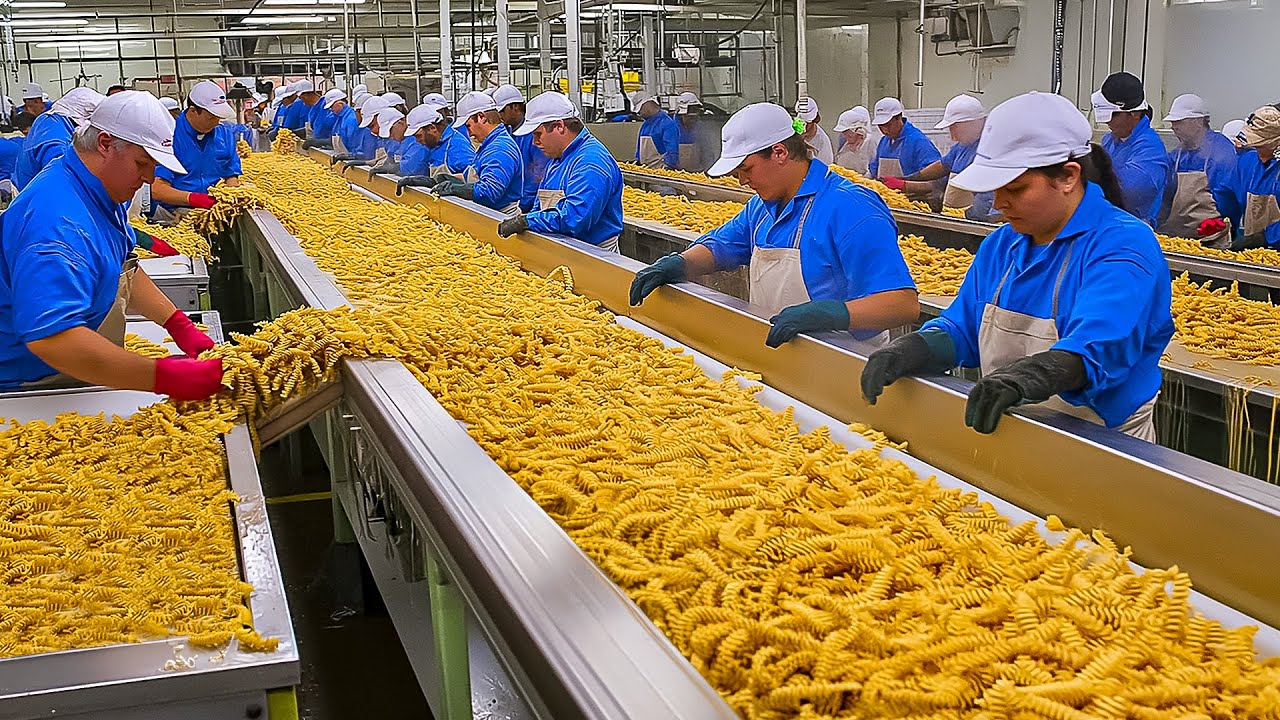
The demand for pasta around the world particularly from Italy where it is part of their tradition has been on the rise now here you are the best spaghetti in a town Italy is leading the way in Pasta Production churning out approximately 6.4 billion pounds of pasta every day
And responsible for about 77% of all the pasta exported by the EU what’s even more interesting is that the Italian pasta industry is expected to expand further as it brings new varieties to the Market setting a global Trend it begs the question what is the secret behind Italy’s ever growing pasta
Industry how is the country able to produce such an enormous amount of pasta join us as we look at how Italy produces 6.4 billion pounds of pasta every year while the true origin of pasta remains a mystery it’s hard to deny that Italy has become synonymous with this beloved dish
With a wide variety of types including Penny Linguini Ravioli fusili and capalini Italy produced over 4 million tons of pasta in 2022 alone accounting for nearly 68% of the entire eu’s Pasta Production while this number represents a slight dip from the country’s Peak production in 2020 when Italy produced
3.9 million tons it’s still impressive additionally Italy is the largest exporter of pasta in the EU responsible for 77% of all pasta exports the top five countries for dried Pasta Production in 2015 2016 were Italy the United States turkey Brazil and Russia Italy was the top pasta exporter in 2018
Selling $2.9 billion worth followed by China with 0.9 billion the worldwide value of Pasta Production has crossed $2 billion and Italy makes about a quarter of it making it the leading country this information comes from an analysis by the Italian Farmers Association ceretti presented on World Pasta Day 2021 at
Tuda food in Milan in Italy 3.9 million tons of pasta are produced involving 120 companies over 10,000 employees and almost 200,000 Farms growing highquality Durham wheat as for pasta consumption worldwide in 2021 Italy tops the list with 23.5 kg per person other big consumers include Tunisia Venezuela Greece Chile the USA Argentina and
Turkey the variety of pasta shapes has grown a lot reaching 300 now besides traditional types whole meal gluten-free and pasta are made from alternative flour or legumes the search for ma in Italy has also brought back Ancient Grains like Senator Capelli timila sagola and others that are part of
Italian food history during the toughest times of the pandemic Italians have returned to making pasta at home in 2021 it was reported that during that period four out of 10 families tried making pasta themselves influenced by a return to tradition and spending more time indoors from taglia LA to tortillini
Lasagna to ravioli the passion for homemade pasta is catching on even among the youngest and paste is being made in almost every corner of the country it’s no coincidence that more than half about 62% of Italian Pasta Production is sent abroad the top importing country is Germany followed by the USA France the
UK and Japan these five countries make up over half of Italian pasta exports with the fastest growing markets being China Canada Spain and Saudi Arabia give how the making and consumption of pasta are traditions in Italy just how far back did the pasta tradition start in Italy Italy’s earliest reliable details
About pasta go back to the 13th or 14th centuries in the first century ad Horus mentioned Lagana thin sheets of fried dough and a common food in the 2 Century atheus of nres shared a recipe for Lagana attributed to cipus of Tiana from the first century involving Dough made
From wheat flour and crushed lettuce juice flavored with spices and deep fried in oil there’s also a fifth century cookbook describing a Lagana dish with layers of dough and meat stuffing similar to today’s lasagna however how they cook these dough sheets doesn’t match the modern definition of fresh or dry pasta solid information
About pasta products in Italy started emerging in the 13th or 14th century historians have found important pasta related words but the fundamental characteristics have remained unchanged for instance in the 2 Century ad Greek physician named galin talked about action a flower and water mixture the Jerusalem talmud from the 3rd to 5ifth
Centuries ad mentions itum a kind of boiled dough common in Palestine a dictionary from the 9th century by Arab physician isobar Ali defines trivia the Arabic version as string-like shapes made of semolina and dried before cooking Muhammad al- idrc’s geographical text from 1154 mentions itria being made
And sent from Norman Sicily to various places including Muslim and Christian countries one type of trivia with a long history is Lagana which in Latin means thin sheets of dough and led to the creation of Italian lasagna in North Africa a food called cous cous has been
Eaten for a long time but pasta is more flexible than couscous couscous is more like small dough droplets dry pasta used to be considered a luxury in Italy because making it required a lot of Labor due to the long needing process of Durham wheat semolina es there’s a story
About Marco Polo bringing pasta from China but it likely started as a promotion in the macaroni journal A publication by a group promoting pasta in the United States rello deisa in his travels wrote that Marco Polo talked about a food similar to Lagana we are still determining how pasta came to
Europe but many theories exist Jeffree Stein Garten suggests the Moors introduced pasta to the Emirate of Sicily in the 9th century traces of pasta have been found in ancient Greece and Jane grion believed the Marco Polo story came from an advertisement in the 1920s or 1930s for a Canadian spaghetti
Company food historians think pasta likely became popular in Italy because of the extensive Mediterranean trade in the Middle Ages from the 13th century references to pasta dishes like macaroni ravioli noxi and vermicelli appear more often across Italy in the 14th century writer okak chio’s collection of Stories
The de Cameron there’s a delicious tale about a mountain of parmesan cheese down which pasta chefs roll macaroni and ravioli to people waiting Below in the 14th and 15th centuries dried pasta became popular because it was easy to store this made it convenient for people to bring pasta on ships while exploring
The New World 100 years later pasta was enjoyed worldwide during the Age of Exploration even though Tomatoes were brought to Italy in the 16th century and became a part of Italian cooking in the 17th century the first written records of Italian tomato sauces appear appeared in the late 18th century the earliest
Mention of pasta with tomato sauce is found in the 1790 cookbook Lao Moderno by the Roman Chef Francesco Leonardi before introducing tomato sauce people ate pasta without any sauce using their fingers the liquid sauce made it necessary to use a fork how is Italian pasta made there are various pasta
Making methods but it always starts with pasta dough the word pasta comes from the term impasto in Italy which means a ball of pasta dough and contains the word pasta from which pasta is derived the pasta dough is typically made from just flour and water some pasta recipes
Include eggs but only for certain types considered more luxurious and eaten on special occasions for most Italians everyday pasta is usually made without eggs after kneading flour and water into a dough ball the next step is shaping the dough into different pasta forms Italy has over 700 pasta shapes but
Spaghetti is the most common one you’ve probably heard of of there are two ways to give it its final shape either by hand or machine however most pasta is produced by machines nowadays because making all the pasta by hand for Global consumption isn’t practical nevertheless in Italian homes especially during
Family gatherings like Sunday dinners people still make pasta by hand doing it this way adds a little extra flavor before explaining how pasta gets its shape let’s talk about the six steps involved in making pasta pasta goes through six important steps during its making process these steps are essential
For creating the pasta we enjoy today without these stages pasta wouldn’t be the tasty product it is now with an average shelf life of 24 months enjoyed by people worldwide the initial step in making pasta is gathering wheat although it may seem straightforward this step is fundamental to the production process
That’s why topnotch pasta Brands pay close attention to the type of wheat they use typically pasta is crafted from Durham wheat or Durham wheat this specific wheat was chosen because it gives the pasta a sturdy structure preventing it from falling apart while cooking that’s why reputable Italian
Pasta makers prefer to use Durham wheat Italians believe it should be made with Italian wheat many pasta makers now prefer to use only Italian wheat because that’s what people in Italy prefer in the past to cut costs wheat from various countries like Canada China or Russia was shipped to Italy for pasta while
There’s nothing inherently wrong with that today proud Italians prefer pasta made from wheat grown in their own country that’s why the top pasta producers now exclusively choose Italian wheat once the wheat is harvested it gets taken to a place called a Molino which is like a mill in the Molino the
Wheat grains are finely ground until they turn into flour flour along with water is the basic ingredient for making pasta various types of flour like regular flour are made from Durham wheat this Durham wheat can also be used to create whole wheat flour for making whole wheat pasta additionally flour can
Be made from different types of wheat such as spelled wheat Senator Capelli wheat and more many different kinds of wheat can be turned into pasta after turning the wheat into flour it is packed and sent to the pasta producer the producer will then use the flour to create wonderful pasta certain pasta
Makers want complete control over their pasta’s quality that’s why they have their Molino which processes all the wheat into flour this ensures that the quality remains high and consistent cre creating pasta dough is a crucial step that signals the start of the pasta making process whether made by machine
Or hand the pasta dough is a key part of the process people often make pasta dough at home while most prepackaged pasta is made using machines to understand the distinction between making pasta dough manually or mechanically let’s delve into a bit more detail here in Italian tradition pasta
Dough is made by hand you’ve probably seen it on TV where Grandma needs the pasta dough that’s exactly what we we mean by the manual way of making pasta dough the flour is mixed with water in a specific ratio and kneaded into a nice dough ball to make it when done at home
It’s all done by hand that’s why we call it the manual or traditional way however making pasta dough this way takes a lot of effort and can only be done on a small scale in the early 17th century Naples had basic machines for making pasta they later improveed by adding a
Kneading machine and press making Pasta Production more affordable in 1740 Venice issued the first license for a Pasta Factory during the 1800s water Mills and stone Grinders were used to separate semolina from the braa leading to the growth of the pasta market in 1859 Joseph topit founded hungary’s
First Pasta Factory in pest one of the earliest in Central Europe using steam machines by 1867 the bhon company in Sansa pcro Tuscany had become a well-established pasta manufacturer in the early 1900s artif icial drying and Extrusion processes allowed a greater variety of pasta preparation and increased volumes for export marking the
Start of the industry of pasta in 1884 the zatka brothers plant in borof NAD vavo was founded becoming bohemia’s first Pasta Factory today making pasta dough is mostly done using machines making pasta dough by hand is very hard work and there’s a limit to how much can be produced that’s why most pasta
Producers opt for machine-made pasta dough when pasta machines became available many producers quickly adopted them using machines saves a lot of time and labor and they can keep kneading pasta dough continuously day and night as a result almost all prepackaged pasta is now made using machines mix flour and
Water even with machine-made pasta dough then knead it into a pasta dough ball the key difference from the manual is not the ingredients but how the dough is needed whether done by a machine or hand whether made by hand or machine pasta dough comes from the same ingredients
Flour and water that’s all you need to create tasty pasta once the pasta dough is ready it’s time to turn it into pasta this step can be done in two ways by hand or by Machine since these are entirely different methods let’s first discuss how pasta is made manually when
Making pasta by hand start by flattening the pasta dough this can be done with a rolling pin or a small pasta machine using a pasta machine is considered man ual because it’s a tool that assists in flattening the dough Once the dough is flat it can be rolled up like a pancake
And cut into small strands to make spaghetti this method creates familiar long pasta shapes like fetuccini tagliatele and paparelli short pasta can also be shaped by hand but it requires a lot of practice so it’s suggested to start with long pasta shapes first and try making short ones later in reality
There are no limits to the shapes that can be created imagination and skill are the only constraints since there are over 700 different pasta shapes worldwide developing something entirely new is quite a challenge making pasta with a machine is different from making it at home because professionals need to
Produce large amounts of pasta that’s why they use big machines these machines for making pasta differ from the small ones you might have at home they can be as long as 150 M and are more like a production line the entire pasta making process happens inside this machine from
Kneading the dough to shaping and drying the pasta once the pasta dough is ready it must be pressed into a pasta shape this occurs inside the machine where a big screw presses the dough into a large mold the mold looks like a coin but is much bigger with many small holes
Through which the dough is pressed this process creates familiar shapes like spaghetti each pasta shape has its own mold they just need to change it to make a different shape this makes the producer very flexible and they can make countless different pasta shapes with one machine once a specific pasta shape
Is made it’s time to dry the pasta a crucial step in the production process drying the pasta makes it long lasting and this practical aspect could be why pasta is so popular worldwide during pasta drying the remaining moisture in the pasta is removed there are different
Methods for this the pasta can hang in the open air until all the moisture is gone alternatively the drying process can be sped up by hanging the pasta in a warm environment causing it to dry faster it’s worth noting that fresh pasta skips the drying step instead fresh pasta is packaged and refrigerated
Right after production since fresh pasta still contains moisture it has a shorter shelf life than dried pasta so the main difference between dried and fresh pasta is whether or not it undergoes a drying process after production after making pasta at home it can be dried on a
Drying rack this works well for any long pasta shape just hang the strands over the rack and let them dry for a few hours Short shapes can be placed on a cutting board or a plate and there’s a way to ensure enough space between the shapes so that air can flow around them
Proper ventilation helps the pasta dry faster professional pasta makers aim to produce a lot of pasta quickly they often hang pasta in heated rooms after making it to achieve this the higher room temperature speeds up the drying process some big producers use temperatures around 80° to dry pasta
Finishing the process in Just 4 hours however we believe this temperature is too high and negatively affects pasta quality when the pasta is exposed to 80° heat it gets a shiny coating due to the proteins in the wheat although it might not seem bad this coating can lead to
Uneven cooking pour SAU sticking and digestion issues quite a few drawbacks luckily some pasta makers prioritize quality over speed they choose to dry pasta at a lower temperature around 30° even though it takes longer than 38 hours despite the extended time the pasta remains of high quality once the
Pasta is made and dried the next step is packaging while it might seem small we believe it’s significant packaging plays a crucial role in the consumer’s experience and reflects a certain level of quality with the different types of pasta each type usually has its own packaging many pasta varieties can be
Packaged in a bag or box some however require special packaging to ensure proper preservation the most common types of packaging are plastic bags cardboard box boxes and paper packages in addition to storing the pasta the packaging is the only tool the pasta produces produc has to share their story
That’s why there are so many different looking packages some producers prefer a vibrant and colorful look While others prefer a simpler style apart from the appearance of the packaging the actual packing of the pasta into it is mostly done by machines imagine a large producer making 1,000 kg of pasta per
Hour doing this by hand would be impossible so most pasta producers use packing machines to pack and seal all the pasta neatly some even have machines that pack several bags of pasta into larger boxes in essence machines handle the majority of the packaging process what is the future of Italy’s pasta
Industry to meet the rising Global demand for macaroni Italian pasta companies like Pito Rigo are innovating with new recipes they use ingredients like multi- seral options whole grain gluten-free legume and pulse flour and pasta enriched with vitamins and minerals aligning with superfood Trends you may encounter these Trends in your
Favorite Itali I food restaurant soon whole grain pasta was a growing Trend a few years ago but in 2019 its consumption doubled beyond the demand for healthier foods which results in macaroni products with more fiber and less gluten there’s also a shift in taste preferences pasta manufacturers and suppliers are investing significant
Amounts in research and development often around 10% of their turnover on average to produce products that align with changing consumption patterns the pasta industry consisting of companies utilizes cuttingedge technology automation quality certifications and strict hygiene protocols with over 7,500 employees and a turnover of .7 billion Italian Innovation plays a crucial role
In a sector facing increasing competition particularly from countries like turkey offering lower quality products at competitive prices creating a new pasta product begins with the company’s marketing division analyzing current and future consumer Trends research and development then study the raw material composition and recipe ratios a sensitive phase where even
Slight changes can significantly impact the pasta’s chemical composition affecting factors like cooking resilience texture and mouth field once the initial prototypes are created teams conduct taste tests to validate their hypotheses and document the technical characteristics of the new pasta product and a legal team ensures Conformity and compliance with current regulations
Despite the analed increase in demand for pasta the issue of rising pasta prices in Italy reached a critical point in 2022 leading the government to hold emergency talks pasta prices surged by 17.5% in March 2022 more than double Italy’s inflation rate despite a drop in wheat prices April witnessed a 16.5%
Year-over-year increase in April a report from consumer rights group asut tandi revealed that out of Italy’s 100 10 provinces only 12 had pasta priced below $2.20 per kilogram some cities like Modena saw a nearly 50% increase in pasta prices from the year before Italy’s industry Minister adalo uro
Chaired a meeting in Rome with lawmakers pasta producers and consumer rights groups the commission later stated that pasta prices were showing initial signs of decrease albeit weak and that it was promising to monitor prices for Consumer Protection the surge in pasta prices is a a significant concern in Italy where
The average person consumed about 51 lbs of pasta last year making it a cultural staple however High food prices are not unique to Italy according to David Ortega a food Economist at Michigan State University Federal data shows that the average price of spaghetti and macaroni Rose even more in the US last
Year but the Americans were not in a pasta panic because they consume less pasta per person annually about 19 lbs on average and their diverse C AR preferences mean there isn’t one defining staple food unlike countries strongly connected to specific Staples the US is a Melting Pot of various
Cultures and Cuisines why is the pasta price surging consumer advocates in Italy have accused pasta producers of increasing prices to boost their profits ceretti Italy’s largest agricultural Association argues that the price of Durham wheat the main ingredient in Italian pasta has dropped by 30% since May 2022 they claim there is little
Justification for the spike in retail prices companies attribute the rising production costs to inflation and supply chain issues a spokesperson for Union Italiana food representing food producers mentions that retail prices are influenced by increasing energy packaging and Logistics costs Michigan State University’s Ortega suggests that there are only a few causes behind High
Pasta prices he points to a combination of factors including lingering supply chain disruptions from the covid pandemic and Russia’s war in Ukraine climate change bird flu and shifts in consumer Behavior are additional factors contributing to The Perfect Storm causing High food prices including pasta Global prices for food commodities such
As grain and vegetable oils set new records in 2022 according to the UN while wheat prices have decreased from their highs last summer it takes time for these lower costs to trickle down the supply chain and reflect on price t tags Ortega notes that the actual ingredients in pasta on Supermarket
Shelves represent only a fraction of overall costs food prices tend to be sticky Rising quickly but taking longer to decrease apart from pasta other grocery Staples are becoming more expensive in Italy and other parts of the world Ortega mentions that food prices in Italy Rose 12.1% in April
Compared to the previous year whereas the country’s average rate of food price inflation for the 5 years before covid-19 was about 2% how can the Italian pasta industry be sustained to tackle the rise in pasta prices it’s important to have a smart plan that helps customers and the pasta industry
Pasta makers can save around 10 to 15% by finding more efficient pasta making methods using eco-friendly practices also Cuts costs by 8 to 12% which is good because more people want products that are kind to the environment keeping a good system for getting pasta ingredients and ensuring nothing disrupts the process having different
Suppliers helps reduce Problems by 5 to 8% and regularly checking for issues and finding ways to solve them lowers the chances of things going wrong by 7 to 10% if companies tell customers why pasta prices are changing it builds trust and might make people more okay
With the changes maybe even 15 to 20% more okay to deal with the rising costs pasta companies can try new things having more types of pasta to choose from has worked before bringing in 10 to 15% more money smart ways to pack pasta can also cut costs by 5 to 8% teaming up
With governments for help and following rules can lower production costs by 7 to 10% plus telling customers how healthy and good for the Earth pasta is might make them buy more around 8 to 15% more fixing the issues with pasta prices involves everyone in the pasta business
Teaming up and talking with people who care about customers Industries joining forces with governments have seen costs decrease by 5 to 8% also getting involved with groups that support customers makes the pasta business look better and keeps customers loyal sometimes up to 10% what did you think
Of the Italian pasta industry let us know in the comments below and while you’re here click on the video on the screen for more content like this one
3 Comments
Don’t be one of those folks who cover up the truth.!
The true origin of pasta, is NO SECRET.
Pasta was first made in North Africa
Moores introduced pasta tk Italy in the 9th century
I only use Italian everything
You pronounced penne wrong