
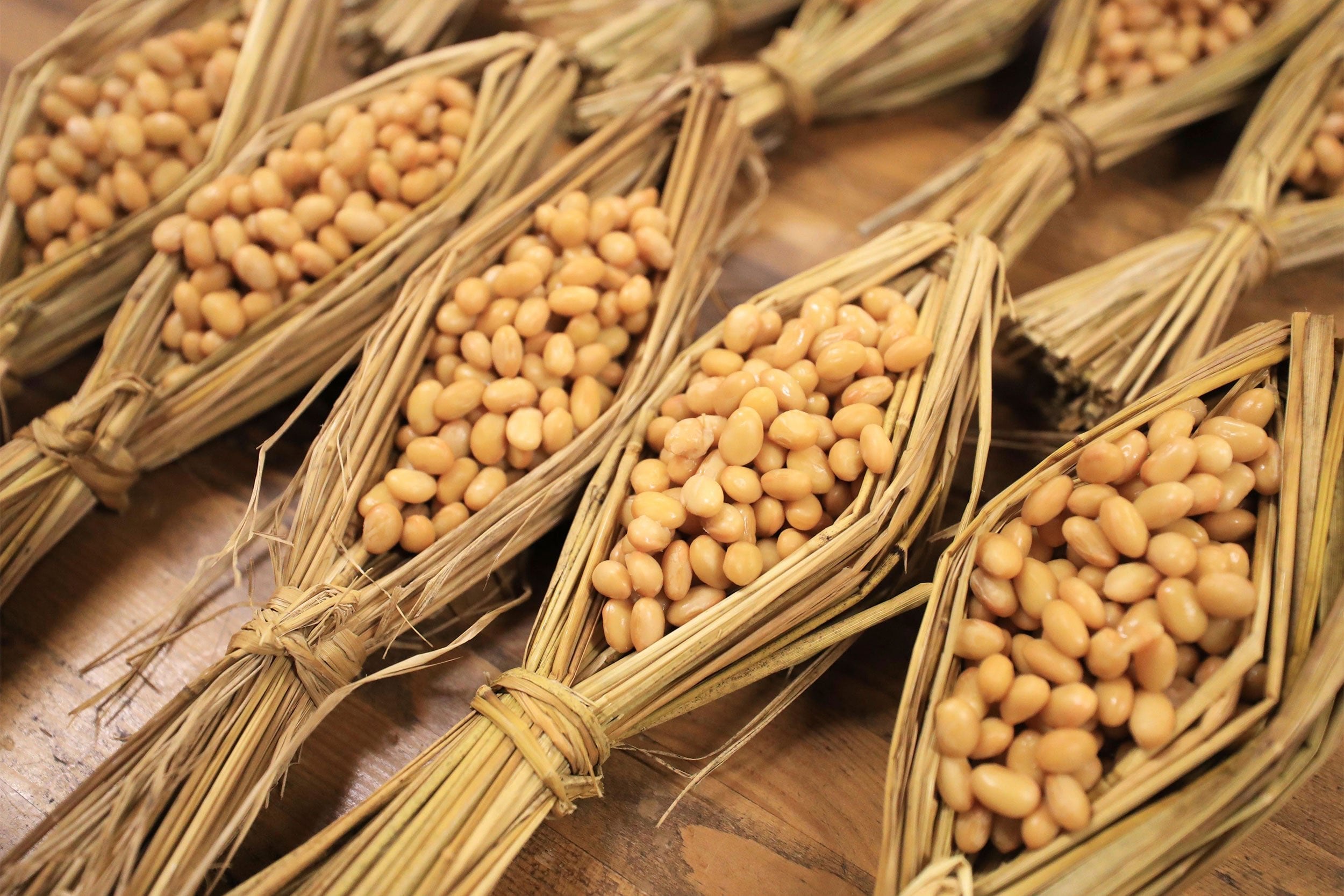
Did fermented foods fuel brain growth?
[https://news.harvard.edu/gazette/story/2024/02/did-fermented-foods-fuel-brain-growth/](https://news.harvard.edu/gazette/story/2024/02/did-fermented-foods-fuel-brain-growth/)
>As research progresses, Bryant sees possibilities for a wide range of benefits. “This hypothesis also gives us as scientists even more reasons to explore the role of fermented foods on human health and the maintenance of a healthy gut microbiome,” she said. “There have been a number of studies in recent years linking gut microbiome to not only physical but mental health.”
Fermentation technology as a driver of human brain expansion
[https://www.nature.com/articles/s42003-023-05517-3](https://www.nature.com/articles/s42003-023-05517-3)
>We have proposed that the acquisition of fermentation technology by early hominins—the External Fermentation Hypothesis—is a good candidate mechanism for human brain expansion and gut reduction. The offloading of gut fermentation into an external cultural practice may have been an important hominin innovation that laid out the metabolic conditions necessary for selection for brain expansion to take hold. While the potential importance of fermentation in the evolving human diet has recently been postulated, and the reduction in human colon size has been previously observed, to the best of our knowledge, the possibility that external fermentation served as the initial trigger in the human lineage for the expansion of brains and the reduction of the gut—specifically, the colon—has so far been unnoticed. We have discussed the adaptive benefits of this hypothesized scenario, its realistic plausibility, and its explanatory power relative to other hypotheses. We invite commentary and experimental tests from the broader academic community.
In other words, it’s adding yet another nail to this coffin:
[Eating meat led to smaller stomachs, bigger brains](https://news.harvard.edu/gazette/story/2008/04/eating-meat-led-to-smaller-stomachs-bigger-brains/)
According to Stanford, we’ve gotta eat fermented whole foods instead of taking probiotics in a pill:
[Health Matters 2023: Food as Medicine – Eat Well for Longevity and Health](https://www.youtube.com/watch?v=R8qTgjflAUQ&t=40m35s)
[The Microbiome Panel at the 2023 Stanford Food Summit](https://www.youtube.com/watch?v=oz6KFgInSCI&t=48m22s)
The 2023 Stanford Food Summit united researchers identifying plant-based solutions to major public health and sustainability challenges
[https://med.stanford.edu/foodsummit/recap.html](https://med.stanford.edu/foodsummit/recap.html)
>Red cabbage sauerkraut with caraway seeds provided fitting fuel for the afternoon panel on the gut microbiome, during which experts from the Sonnenburg lab at Stanford shared that eating plants and fermented foods showed promise in reducing many health problems, including possibly even anxiety.
Fermented foods restructure gut microbiota and promote immune regulation via microbial metabolites
[https://www.biorxiv.org/content/10.1101/2022.05.11.490523v1.full](https://www.biorxiv.org/content/10.1101/2022.05.11.490523v1.full)
Vegan ‘yogurt’ made with lactic acid bacteria from plants
[https://www.food.dtu.dk/english/news/nyhed?id=3d415103-8e2f-4667-852a-4dbad536928d](https://www.food.dtu.dk/english/news/nyhed?id=3d415103-8e2f-4667-852a-4dbad536928d)
Is Lactic Acid Vegan?
[https://allplants.com/blog/lifestyle/is-lactic-acid-vegan](https://allplants.com/blog/lifestyle/is-lactic-acid-vegan)
Formulation of plant-based yoghurt from soybean and quinoa and evaluation of physicochemical, rheological, sensory and functional properties
[https://www.sciencedirect.com/science/article/abs/pii/S2212429222002905](https://www.sciencedirect.com/science/article/abs/pii/S2212429222002905)
Yogurt and whole sauerkraut brine seemed to fair better with the benefits of lactate / lactic acid.
by starchmuncher