
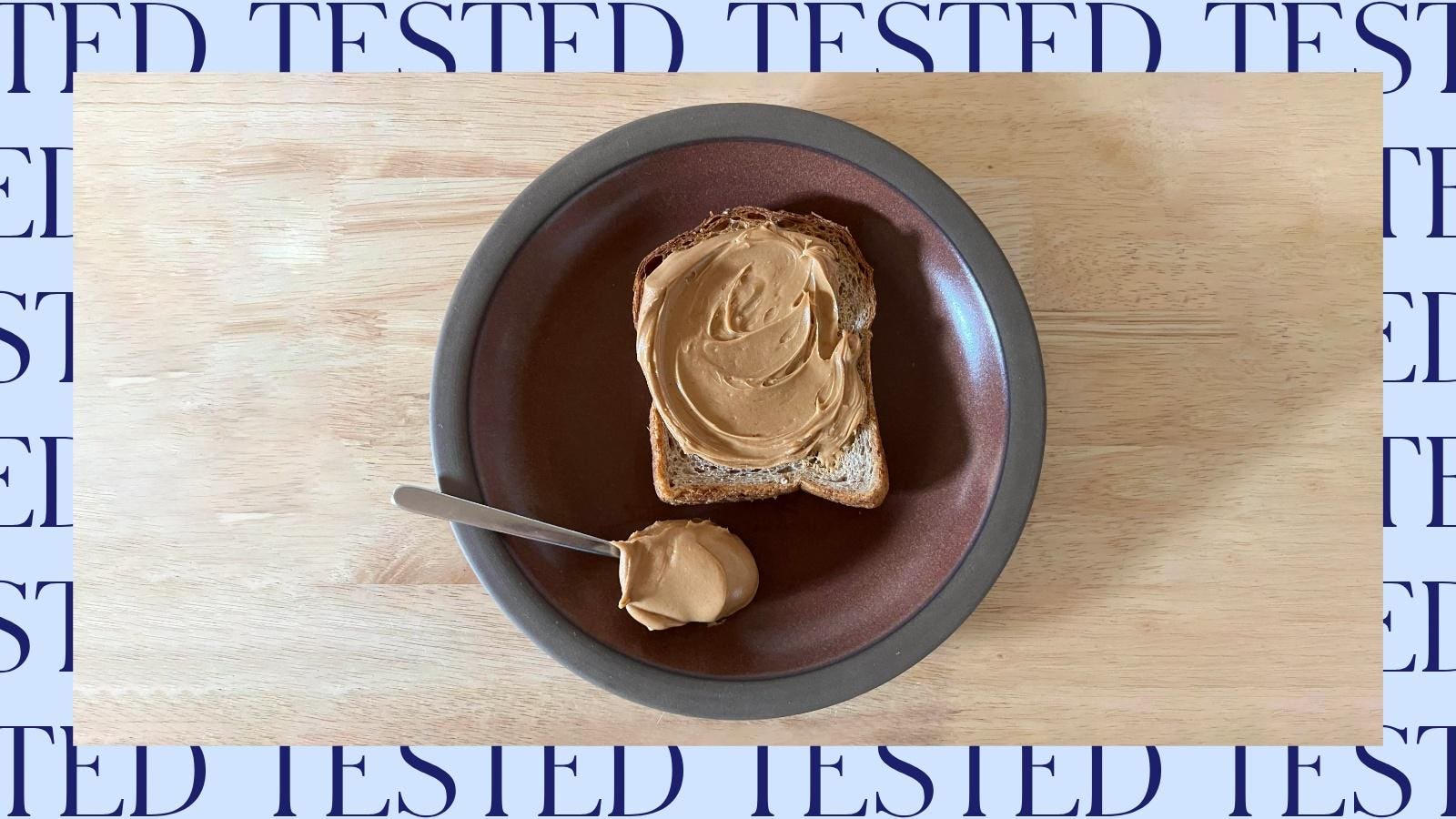
Nostalgic, nourishing and endlessly versatile, peanut butter can be used in a myriad of flavorful baked goods and savory dishes—but it’s also delicious on its own, spooned directly from the jar. After sampling 24 of the best peanut butters out there, from creamy and crunchy to gourmet and organic, I believe five jars stand out from the rest. For fans of a creamy consistency, Skippy’s Creamy Peanut Butter has an incredibly smooth mouthfeel alongside a classic, rich taste. If you’re a fan of texture, Teddie’s All Natural Super Chunky Peanut Butter has substantial peanut chunks mixed throughout (as well as an impressively short list of ingredients). If you’re a true nut butter connoisseur, opt for the truly luscious Koeze’s Cream-Nut Natural Smooth Peanut Butter—the closest you’ll get to “the essence of peanut.”
For its classic flavor and thick, spreadable texture, Skippy’s Creamy Peanut Butter is a standout … [+] jar.
Illustration: Forbes / Image: Anna Perling For Forbes
Here are the five winning peanut butters I tasted:
As popular and ubiquitous as it is, it’s hard to capture the allure of peanut butter in words. “It’s comforting, it’s nostalgic and it’s one of those foods that you can weirdly eat with so many things or with nothing at all,” offers Agatha Kulaga, a founding partner of Very Good Hospitality who previously co-founded the New York City bakery Ovenly, which is known for its viral peanut butter cookie. Peanut butter is also, like all foods, personal—what one person considers their ideal blend could be unremarkable or off-putting to another. That said, I did my best to evaluate each option as scientifically as possible during testing, considering each blend’s taste, texture, smell and oil separation, as well as their accessibility and overall versatility. There are plenty of other delicious options—both on this list and beyond—worth exploring.
Forbes Vetted
Forbes Vetted ratings are based on thorough evaluations by our editorial team to help you choose the best products with confidence.
Eats like: Being a kid again | Quantities available: 16, 28 or 40 ounces, or 5 pounds | Ingredients: Roasted peanuts, sugar, hydrogenated vegetable oil (cottonseed, soybean and rapeseed oil), salt | Refrigeration: Not required
Best for:
Using in nostalgic baking, peanut sauces and classic sandwiches
Skip if:
You want a stronger peanut flavor, and more texture
There’s a reason so many flock to Skippy’s Creamy Peanut Butter. A classic, creamy blend, it’s simply the best of its genre, thanks to its mellow, just-salty-enough peanut flavor and whipped, luxurious texture. While its balanced taste makes it easy to eat by the spoonful, it’s just as good for cooking and baking since its consistency is ideal for mixing into other ingredients. There’s also a punchy, salty aftertaste that gives this peanut butter more mouth-watering depth than others I tried, though it’s not as nut-forward as gourmet butters.
Skippy’s Creamy Peanut Butter has a classic taste and thick, spreadable texture.
Anna Perling For Forbes
Skippy Creamy also had the best texture of any grocery-store creamy peanut butter I tasted. Whereas others were waxy, greasy or dense, Skippy’s feels lighter, almost whipped. When you swirl a spoon through it, there’s a bit of a pull as if you’re stretching melted cheese. Eating a spoonful can be sensuous—it dissolves in your mouth instead of sticking to the roof. Though it doesn’t smell quite as fresh as gourmet peanut butters, the aroma wasn’t off-putting.
This jar’s versatility adds to it overall appeal. Not only does it make the perfect pairing for celery and apples, but it’s also Kulaga’s peanut butter of choice for baking. Since it’s processed, you don’t have to worry about oil separation, which can cause your baked goods to come out crumbly and oily. (For that reason, most bakers advise against using natural butters, which lack stabilizers.) One more perk: It’s a cinch to spread and stir, making this one easy-eating butter.
Forbes Vetted
Forbes Vetted ratings are based on thorough evaluations by our editorial team to help you choose the best products with confidence.
Eats like: Pop Rocks | Quantities available: 16, 26 ounces | Ingredients: Dry roasted peanuts, salt | Refrigeration: Not required
Best for:
A sensory peanut butter experience
Skip if:
You want a classic creamy-to-crunchy ratio
For a richly textured, crunchy peanut butter, Teddie Super Chunky All Natural Peanut Butter—which is made from just dry roasted peanuts and salt—is a winner. Consistency-wise, there’s a lot going on in this jar. Mid-sized peanut bits are suspended throughout a lightly gritty base, resulting in several different levels of crunch. The butter also has a strong hit of salt, which makes for an extra zingy mouthful and umami-rich flavor. To reference another nostalgic food, eating this peanut butter reminded me of savoring the feeling of Pop Rocks ricocheting in my mouth.
This jar from Teddie is ideal for those looking for a crunchy, all-natural blend.
Anna Perling For Forbes
T eddie smells nutty and fresh, and tastes, frankly, delicious. While it’s oily, it’s not goopy—you have to stir it, but it goes fast. It’s also easy to spread and eat without feeling gluey, plus it’s spoonable. If you want an all-natural chunky option with a short ingredient list, this one is a great choice.
Forbes Vetted
Forbes Vetted ratings are based on thorough evaluations by our editorial team to help you choose the best products with confidence.
Eats like: Off-roading | Quantities available: 16, 28 and 40 ounces; 5 pounds | Ingredients: Roasted peanuts, sugar; contains 2% or less of molasses, fully hydrogenated vegetable oils (rapeseed and soybean), mono- and diglycerides, salt | Refrigeration: Not required
Best for:
A dense and uber-chunky butter
Skip if:
You want a looser or easily spreadable peanut butter
The Jif Extra Crunchy Peanut Butter is so crunchy, it’s almost gravelly. This peanut butter is nearly all chunks, with less of a base than other crunchy butters. It’s still easy to spread, though, as the blended butter is totally smooth, offering a great foil for the weight of the peanuts.
This popular blend from Jif is as crunchy as it gets.
Anna Perling For Forbes
As for the blend’s flavor, it’s good but nothing remarkable. There’s a hint of salt and a mellow, muted peanut flavor that reminded me of peanut butter ice cream versus the star ingredient; it’s also a little sweeter-tasting than other natural crunchy butters I tried, which may add to this effect. But again, the flavor of this butter isn’t meant to be the star: It’s the mouthfeel.
Just know that because it’s so dense, I wouldn’t recommend it for dipping. Instead, it’s best spread as a thick layer on pillowy bread with jam for a classic PB&J (or eaten directly from the jar).
Amazon
Koeze Cream-Nut Natural Smooth Peanut Butter
Forbes Vetted
Forbes Vetted ratings are based on thorough evaluations by our editorial team to help you choose the best products with confidence.
Eats like: Clarity | Quantities available: 17 ounces | Ingredients: Virginia peanuts and sea salt | Refrigeration: Not required, but the brand recommends it to “reduce oil separation”
Best for:
True peanut butter lovers
Skip if:
You don’t want to order a pantry staple online
I didn’t know peanut butter could taste so good until I tried this gourmet blend from Koeze. Its flavor is roasted and balanced, and both sweet and salty—the Platonic ideal of peanut butter. The texture isn’t purely creamy; there’s a light grit that offers some bite, but a spoonful will still disintegrate in your mouth. It also has some malty and rye notes and a bit of a peaty aftertaste, resulting in an interesting, memorable jar.
As for its versatility, Koeze’s Cream-Nut Natural Smooth Peanut Butter is thick but spreadable, making it a solid choice for any application. I particularly enjoyed this one on sourdough with a drizzle of honey, and it’s delicious eaten on it own. If you’re looking for a peanut butter to use primarily for cooking, though, this jar might not make sense: Not only is it relatively expensive, but its punchy flavor would likely get lost in spiced or extra-flavorful dishes like curries, stews or noodles.
Koeze’s Cream-Nut Natural Smooth Peanut Butter is a standout gourmet butter.
Anna Perling For Forbes
Having sung Koeze’s praises, it’s worth noting it’s not as accessible to buy as many other butters on this list—you need to order it online (you can purchase it for less on Koeze’s site, though you’ll need to pay for shipping). Still, it costs significantly less than some organic peanut butters I tried and may be worth it for a deluxe peanut butter experience. You can also buy a few jars at a time; they won’t go bad for a year, and you may go through them faster than you think.
Forbes Vetted
Forbes Vetted ratings are based on thorough evaluations by our editorial team to help you choose the best products with confidence.
Eats like: Wearing silk pajamas | Quantities available: 16 ounces | Ingredients: Organic dry roasted peanuts, sea salt | Refrigeration: Yes
Best for:
Those who want the smoothest peanut butter
Skip if:
You like your peanut butter to be on the solid side
Many organic and natural blends are thick, gritty or dry—but not Maranatha’s Organic Creamy Peanut Butter, which is made from two ingredients and has a distinctly velvety texture. You can almost pour this peanut butter, making it great for cooking or drizzling over fruit, though not ideal for spreading on porous bread. Imagine spinning out a silky, peanut-buttery ribbon from the jar.
Maranatha’s Organic Creamy Peanut Butter has a luscious mouthfeel.
Anna Perling For Forbes
Along with a luscious mouthfeel, the Maranatha has a pleasantly roasted, nutty taste that’s salt-forward. Though it does have a slightly acrid aftertaste, that was true of many peanut butters I tried, and it wasn’t harsh enough to be unenjoyable. It’s also worth noting that, as one of the oilier butters I tried, the Maranatha requires some stirring. But because it’s less stiff than others, it isn’t hard to do.
Other Peanut Butters I Tried
In total, I sampled 24 jars of peanut butter, including both creamy and crunchy varieties, as well as gourmet and supermarket picks. Here are the ones that didn’t earn a spot on my list of winners.
Creamy
Teddie All Natural Smooth: While this creamy variety from Teddie is tangy, buttery and lush, it doesn’t have as luxurious of a texture as my winning picks. That said, it’s still delicious.
Smucker’s Natural Creamy Peanut Butter: Salty and slightly vinegary, this is a pleasant natural peanut butter. It just doesn’t have as bright of a flavor as other butters I tried. It’s slightly thick but still spreadable, with some texture.
Santa Cruz Organic Creamy Dark Roasted Peanut Butter: This tasted a little burnt and harsh, and I found the consistency thick and sandy—it stuck to the roof of my mouth.
Peter Pan Creamy Peanut Butter: I was shocked by how bad Peter Pan tasted in comparison to other grocery-store brands I tried. The predominant flavor was vegetable oil, plus it smelled slightly like varnish and had a dense, greasy texture.
365 By Whole Foods Market Creamy Peanut Butter: While this is a passable peanut butter, I wouldn’t describe it as smooth. It’s also super salty, so if you’re cooking with it, you likely need to adjust your recipe’s salt accordingly.
Reese’s Creamy Peanut Butter Spread: Neither sweetness nor saltiness come through in this jar, which I found inoffensive but unmemorable.
Justin’s Classic Peanut Butter: This is a fine peanut butter, though it didn’t stand out from the crowd. The taste is mild, with an almost briny saltiness; the texture, meanwhile, is gritty. (I wouldn’t classify this blend as creamy.) Were I to purchase this jar, I wouldn’t eat the butter on its own—I’d pair it with a wet condiment like honey or jam.
Georgia Grinders Creamy Peanut Butter: While the texture of this is sublime—it’s on a par with the Maranatha in terms of silky-smoothness—I found the flavor to be lacking. It tasted vegetal, almost like stock, with a deeply roasted aftertaste that verged on burnt. That said, it grew on me a bit as I ate it; those who like savory foods may enjoy this butter.
Pic’s Smooth Peanut Butter: I wasn’t dazzled by the texture of this creamy butter; it’s pasty and sandy. The peanut flavor was pronounced but there was also a hint of citrus pith that didn’t complement the traditional roasted flavors.
Krema Natural Creamy Peanut Butter: This doesn’t have salt or sugar, and it shows—it just tastes plain. The flavor isn’t particularly rich, and texture-wise, it has a chewy, sandpaper mouthfeel.
Crunchy
Crazy Richard Crunchy Peanut Butter: This blend has a neutral flavor that’s neither salty nor sweet nor particularly nutty. The consistency knocked it down a few points, too: It’s goopy, oily and hard to mix. It smelled great, though.
Skippy Super Chunk Peanut Butter: Interestingly, this tasted pretty different from the Skippy Creamy. It had a more bland flavor that reminded me of burnt popcorn kernels. Between that and the softer peanut pieces, which had little bite, this jar didn’t impress me.
Santa Cruz Organics Crunchy Dark Roasted Peanut Butter: This butter is oily and lightly salty, with a slightly acrid aftertaste I didn’t love, though it wasn’t terrible. The paste was thick and sandy.
365 By Whole Foods Market Crunchy Peanut Butter: This jar is pretty salty—I thought it tasted a little like French fries with some bitter aftertastes like kale or chicory. Overall, I just found it a little boring, and the peanut flavor wasn’t very strong.
Big Spoon Roasters Crunchy Peanut Butter: The chunks in this peanut butter are full peanut halves mixed into a relatively thicker paste, giving a fuller mouthfeel. Personally, I didn’t love the crunchy-to-creamy ratio, though you might enjoy it if you like unprocessed blends.
Pic’s Crunchy Peanut Butter: This peanut butter tasted bitter, plus it’s dry—eating it felt like a chore.
Georgia Grinders Crunchy Peanut Butter: A smooth butter with small nut chunks, this one had notes of varnish that may be off putting to some.
How I Chose And Tested The Best Peanut Butters
To determine the best peanut butters to include in my tests, I started with a thorough investigation across online grocery stores and purveyors to first understand what was out there—because the world of peanut butter is vast. That search included big-box retailers like Amazon, Whole Foods and Walmart, specialty stores like Milk Street Store and small brands that focus on nut butters like Big Spoon Roasters and Georgia Grinders. I read through editorial reviews, too, to see what others were testing and tasting. In choosing which butters to test, I aimed for a balanced selection of creamy and crunchy varieties that included both mainstream, processed peanut butter and gourmet, natural peanut butter.
Then, I consulted a handful of experts to get a better sense for how to to taste and compare peanut butters. “The first [things to consider] would be appearance, aroma and then mouthfeel,” Dr. Christopher Loss, the Louis Pasteur Lecturer in Food Science at Cornell University, told me. He also touched on the subjectivity of taste—and with peanut butter in particular, he added, “what’s driving preferences are the color and the texture.” He then offered specific qualities to look out for; for example, a darker color of peanut butter typically indicate bitterness. He also explained that some people (jokingly referred to as “textureheads” in our conversation), prefer the textural contrast from a crunchy peanut butter to creamy. Kulaga offered perspectives on using peanut butter for baking and cooking; different peanut butters will be best for different applications.
With all of this in mind, I considered taste, texture, smell, oil separation and color, with a special emphasis on mouthfeel. I also considered how easy it was to stir peanut butters. I spaced out tastings, grouping them by category, and cleansed my palate with water and crackers. When writing my tasting notes, I considered use cases for peanut butters. Based on their salty or sweet flavors and textures, certain butters may be better than others for making peanut butter brownies or peanut sauce for noodles versus spreading on toast or eating with celery.
My Expertise
I’ve been writing about food and drinks for over eight years for publications including Wirecutter, Kinfolk and Saveur, during which I’ve reviewed everything from instant noodles to the best non-alcoholic drinks. Currently, I am the senior reviews editor here at Forbes Vetted, where I guide our tested content. To learn more about the vast world of peanut butter, I consulted several experts to talk about taste, texture and the power of nostalgia. Those experts included Christopher Loss, the Louis Pasteur Lecturer in food science at Cornell University; Agatha Kulaga, a founding partner of Very Good Hospitality who previously co-founded the popular New York City bakery Ovenly; and Dr. Koushik Adhikari, a professor in the CAES department of food science and technology at the University of Georgia.
Frequently Asked Questions (FAQs)
What’s The Best Peanut Butter On The Market Today?
Since taste is subjective, it’s hard to name just one peanut butter that’s better than all the rest—whereas some people like grittier all-natural varieties, others like their peanut butter sweet and ultra-silky. Based on my testing, Skippy Creamy Peanut Butter is the best creamy variety overall, thanks to its light and whipped texture and classic peanut taste. If you’re a fan of crunchy butters, the Teddie All Natural Super Chunky Peanut Butter stood out for its excellent textural variation.
What Kind Of Peanuts Are Used For Peanut Butter?
Most runner varieties of peanuts are used for the production of peanut butter, and certain types work best for blending. To get more specific, “high-oleic acid peanuts are more stable to oxidation and hence can retain flavors better during storage,” said Adhikari in an email.
Is Oil Separation Normal In Peanut Butter?
Oil separation is normal in peanut butters, and it’s especially common in less-processed and organic butters. If you open a jar that has a layer of oil on top, gently stir everything together with a spoon or knife to mix the oils and ensure the peanut butter is blended. You can also try and turn your jar upside down before opening to try and incorporate some oil back into the butter.