
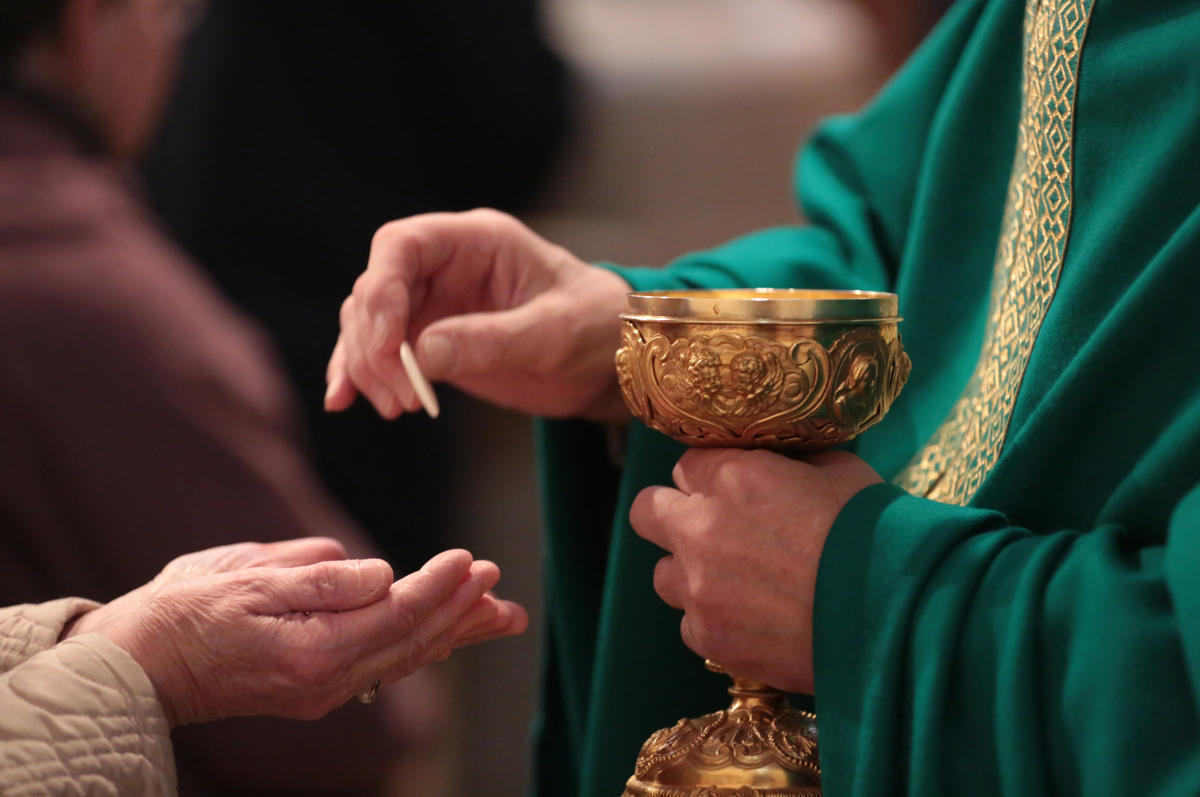
Non-alcoholic wine and gluten-free bread cannot be used during holy communion, the governing body of the Church of England has ruled.
The General Synod had been asked to consider using alternatives to traditional bread and wine used in communion amid claims that people who cannot eat gluten or consume alcohol were being excluded from taking part.
But the Synod said while the situation caused difficulties for some people, there was enough accommodation in the current rules to allow everyone to take part, even if they could not fully consume both the bread and wine.
Here is everything we know about the debate around changes to holy communion:-
What is holy communion?
Holy communion is one of the central sacraments of the Christian faith, with the bread and wine given to the congregation symbolising the body and blood of Christ.
Holy communion is celebrated in different ways in different churches but often takes the form of a shared meal of bread and wine, recalling the fact that at the Last Supper Jesus associated the breaking of bread and sharing of wine with his own imminent death, giving them special significance.
C of E guidance specifies the type of bread and wine that can be consecrated, saying: “The bread, whether leavened or unleavened, shall be of the best and purest wheat flour that conveniently may be gotten, and the wine the fermented juice of the grape, good and wholesome.”
Wheat flour can be processed to remove substantial amounts of gluten and alcohol can be removed after the fermentation process, but a residue will always remain.
Bread alternatives made from rice or potato flour are not allowed as substitutes.
Communion symbolises the body and blood of Christ. (Stock image: Getty)
What were the alternatives people wanted and why?
Ahead of a meeting of the General Synod, taking place in London for five days from Monday (10 February), Synod member Reverend Canon Alice Kemp had asked it to consider the possibility of alternatives, saying: “Can consideration be given to enable the legal use of gluten-free and alcohol-free elements at the Eucharist to remove the injustice of this exclusion?
She said: “Both priests and congregants who are unable to consume gluten and/or alcohol are forced to receive in one kind only or may be prohibited from receiving both elements if they are unable to consume both gluten and alcohol.”
What did the synod say?
The synod said allowing alternatives would not be allowed as they would not meet the criteria set by church guidance.
Michael Ipgrave, the Bishop of Lichfield and chairman of the Church’s Liturgical Commission, said: “First, that bread made with wheat and the fermented juice of the grape are the elements to be consecrated in holy communion; and second, that receiving holy communion in one kind in a case of necessity is not an ‘exclusion’ but full participation in the sacrament, as often practised in the communion of the sick, or with children.
“Indeed, even believers who cannot physically receive the sacrament are to be assured that they are partakers by faith of the body and blood of Christ, and of the benefits he conveys to us by them,” he added.
Are any alternatives allowed?
Communion bread made with wheat flour “that has been processed to reduce the amount of gluten to a low level” can be used, along with communion bread “made with ordinary wheat flour”.
Members of the congregation can also choose to have a blessing instead of communion.
The Church of England’s Synod is gathering this week at what has been described as a time of ‘unprecedented crisis’ since the archbishop of Canterbury’s resignation. (Alamy)
Read more