
Your support helps us to tell the story
From reproductive rights to climate change to Big Tech, The Independent is on the ground when the story is developing. Whether it’s investigating the financials of Elon Musk’s pro-Trump PAC or producing our latest documentary, ‘The A Word’, which shines a light on the American women fighting for reproductive rights, we know how important it is to parse out the facts from the messaging.
At such a critical moment in US history, we need reporters on the ground. Your donation allows us to keep sending journalists to speak to both sides of the story.
The Independent is trusted by Americans across the entire political spectrum. And unlike many other quality news outlets, we choose not to lock Americans out of our reporting and analysis with paywalls. We believe quality journalism should be available to everyone, paid for by those who can afford it.
Your support makes all the difference.Read more
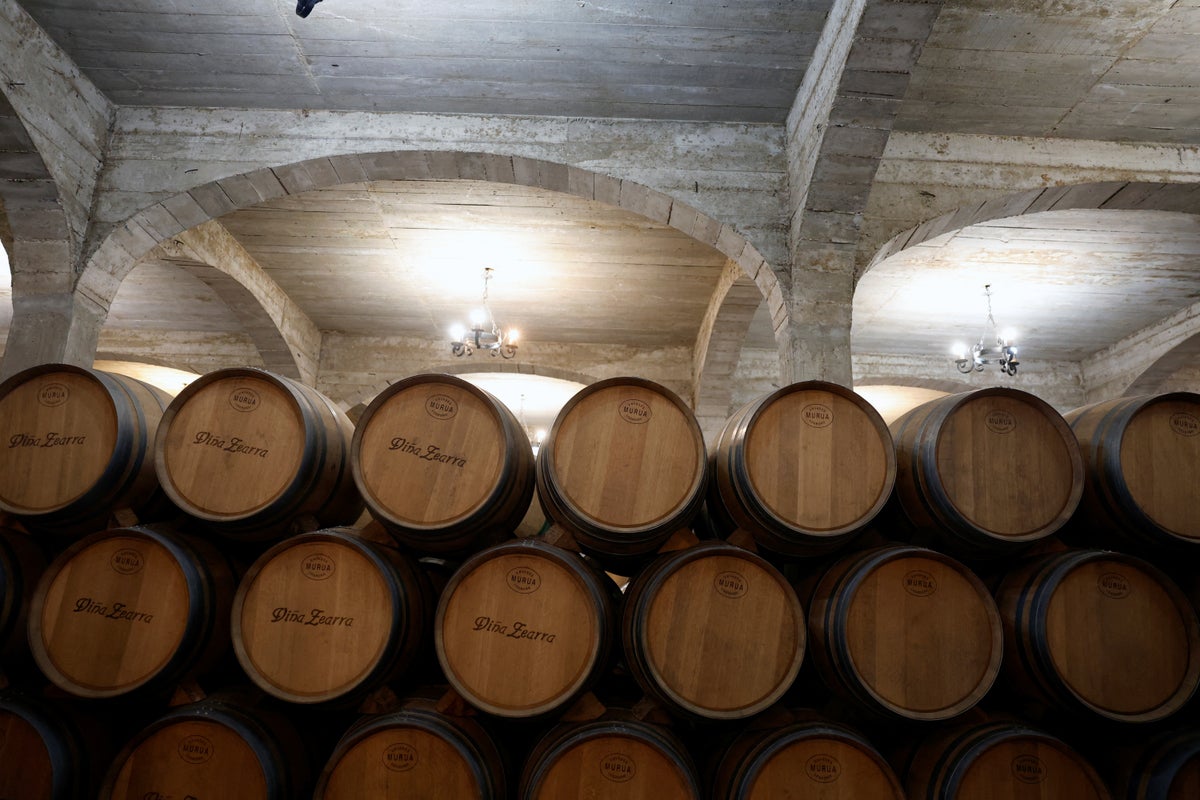
Spanish winemakers are grappling with bulging cellars of Rioja, exacerbated by the pandemic, while facing the prospect of crippling new tariffs on exports to the US.
President Trump’s proposed 200 per cent tariffs on European wine and champagne imports, dubbed “liberation day” tariffs, threaten to exacerbate the existing challenges facing the industry.
This looming threat coincides with a global downturn in wine consumption, further complicating the outlook for Rioja producers.
“There’s wine accumulated since Covid-19, there’s quite a bit piled up, and in the end, that’s a burden on the price … It’s bad for the farmer,” explains winegrower Enrique Lopez de Alda.
While Rioja sales saw a modest 0.6 per cent increase in 2024 compared to the previous year, the existing surplus stock and potential loss of the crucial US market paint a concerning picture for the future of the prized Spanish wine.

open image in gallery
Boxes of wine are stored at the Petrolanda winery (REUTERS)
Given that worldwide consumption of wine has fallen, that was a “rather significant” performance, said Amanda De La Santisima Trinidad, spokesperson for the Rioja regulator council.
The U.S. is the second largest export market for Rioja wines after Britain, with sales there representing 4 per cent of overall production.
“The U.S. is also a wine producer, but it can’t supply its entire market,” said Jorge Rodriguez, co-owner of Petralanda winery and bodega. Tariffs are “not good for them, nor for us, of course. But globally, in the end, everyone depends on everyone.”
European wine makers have already been caught in the crosshairs of prior transatlantic trade tensions: Washington and Brussels hiked tariffs on each other’s agro-food exports in October 2019, during Trump’s first term.
Rioja wines managed to keep their market share in the U.S. – although some operators saw thinner margins, De La Santisima Trinidad said. The 25 per cent tariffs were lifted in 2021 by the new Biden administration.
Spain is the world’s third-largest wine producer after Italy and France, but it leads in terms of exports and the total surface area covered by lush vineyards.
The northern region of La Rioja, with its diversity of terroir, microclimates and grape varieties, accounts for just 0.7 per cent of Spain’s population but makes 21 per cent of its wine, including some lesser-known whites.
The area’s nearly 600 wineries produce 362 million bottles annually, with some vintages valued at as much as €5,000 (£4,100) per bottle. The industry is worth around €1.5 billion a year, accounting for 20 per cent of the region’s economy.