
Summary 
The Italian Polygraphic Institute and State Mint has introduced a new label for extra virgin olive oil with PDO and PGI certifications, featuring advanced security elements and a QR code for accessing product information. The labels are produced at a high-security printing facility in Rome, with the goal of protecting the authenticity of Italian agri-food products and combating counterfeiting, ultimately ensuring consumer trust and health.
As part of a plan to implement security and traceability solutions for the agri-food sector, the Italian Polygraphic Institute and State Mint (IPZS, for its Italian initials) has launched a label developed explicitly for the extra virgin olive oil with Protected Designation of Origin (PDO) and Protected Geographical Indication (PGI) certifications.
The label, featuring exclusive graphics and advanced security elements, is designed to be affixed to the bottle’s cap or canister. It is uniquely numbered and includes a QR code to access a platform with information on the product and the producer.
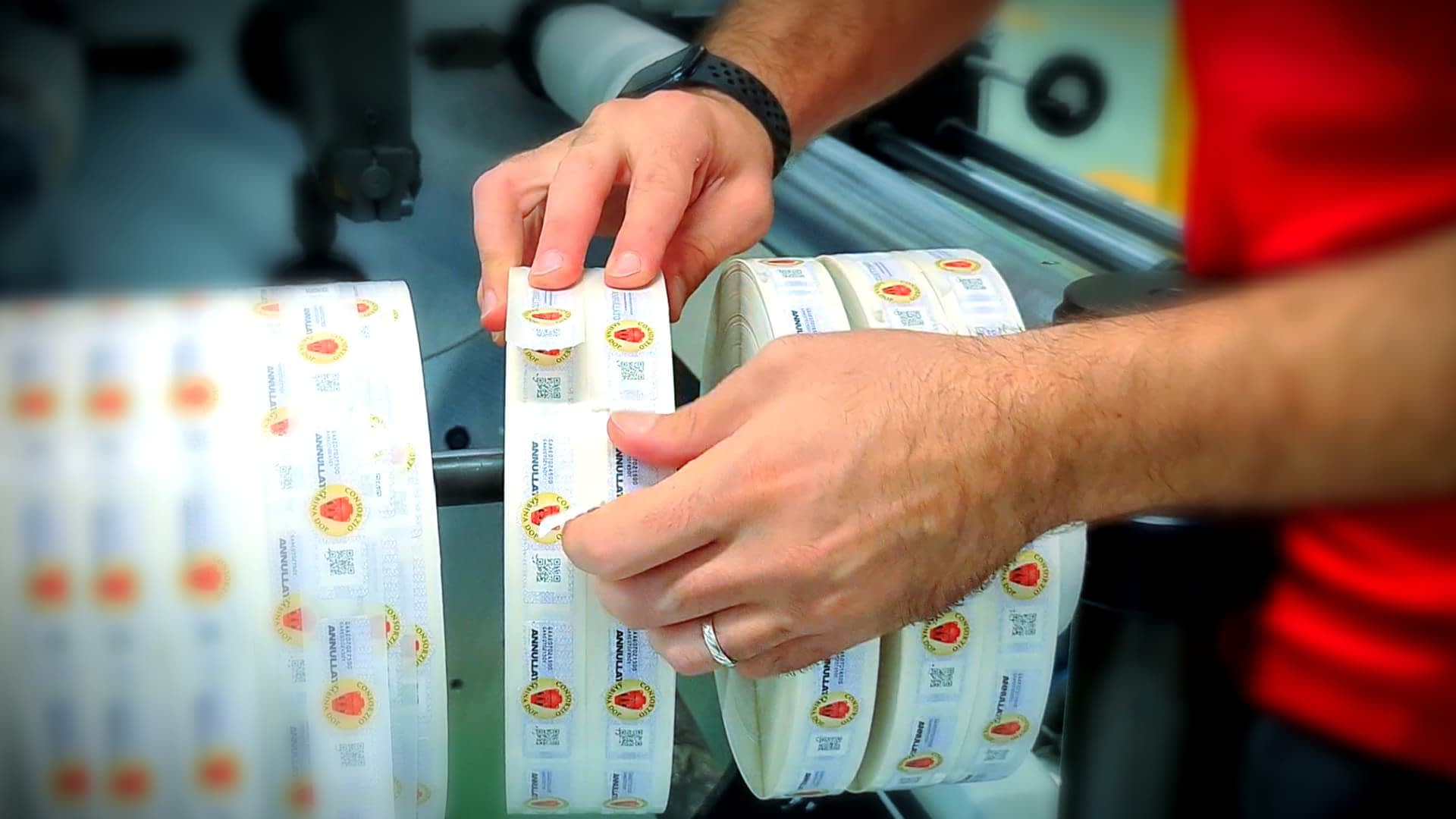
The consortium for protecting the PGI Olio di Roma was the first to adopt the label right after its establishment, followed this year by the PDO Olio Sabina, PGI Olio di Calabria and PDO Olio Terre di Siena consortia.
See Also:Italian Police Official Explains How Olive Oil Fraud Works
Olive Oil Times visited the Officina Carte Valori, the security printing facility in Rome where the labels are manufactured. It is located on Via Salaria, the largest of the four IPZS facilities, with 569 staff members and 15 production departments.
“Here, the Polygraphic Institute manufactures all the traceability products, while the products for the citizen’s physical and digital identity are made in a nearby building,” said Matteo Cerasoli, the manager of the security printing works, while introducing the visit and after passing through the first security check.
The plant also manufactures labels for goods covered by the state monopoly, including tobacco, pharmaceutical labels, revenue stamps and non-traceability numbered products such as lottery tickets. Moreover, a section is dedicated to the printing of stamps and the Official Journal.
In line with the strict security standards that regulate access to all the IPZS facilities, the entrance to the high-security printing area is guarded by the Finance Police, and only authorized personnel can enter the various departments by passing through interlocking doors.
“Like all the other traceability products, the label for the PDO and PGI extra virgin olive oil has security features similar to those we find in identity documents such as passports and identity cards, as well as in banknotes,” Cerasoli said.
As one approaches where the labels are produced, the sound of machinery working at full capacity can be heard. During the Olive Oil Times visit, the IPZS technicians set up the machine that prints the labels arranged in reels.
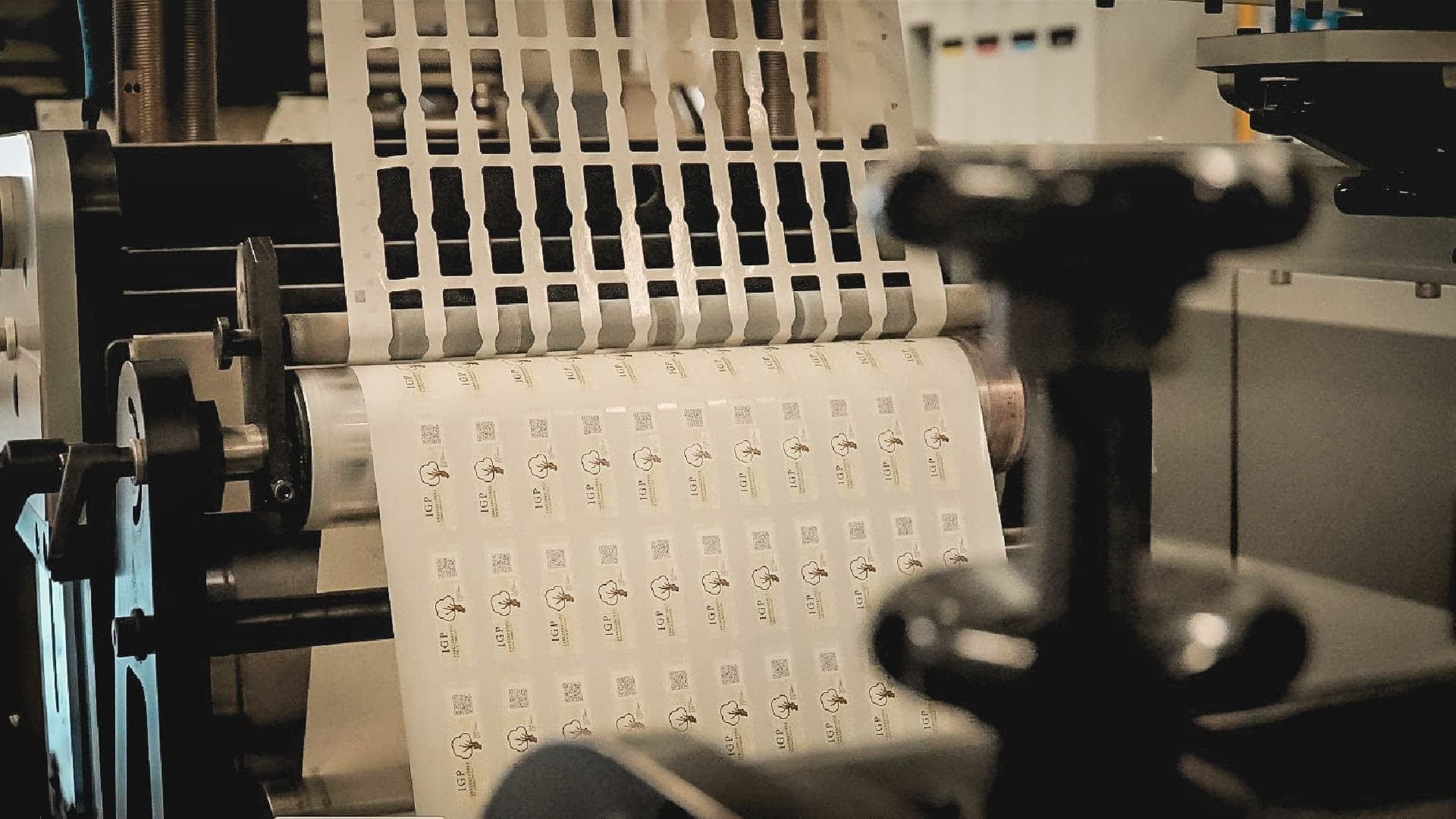 Production of labels for the PGI Olio di Calabria (Photo: Polygraphic Institute and State Mint)
“All the equipment is designed exclusively for the Polygraphic Institute,” Cerasoli said. “This machine has a core consisting in a multiplicity of control systems, which certify 100 percent of the production.”
“We certify the products by checking every visible and invisible security feature,” he added. “We can say that the physical security products have two worlds, a visible one and an invisible one that enhances the protection.”
After they are printed, the labels destined for the agri-food sector, including those for the PDO and PGI extra virgin olive oil, go to the variable data department to be numbered.
“This department carries out a task of significant complexity,” Cerasoli said. “In simple terms, each label is numbered with an alphanumeric code combined with a random control code generated by a proprietary algorithm, which allows us to obtain unique labels.”
Special cameras then check for the presence, readability and quality of both codes on each label so the control bodies can verify the product’s authenticity. Furthermore, they check the QR code to ensure it is fully compliant with the sector’s ISO (quality requirements) and can be read unambiguously by the users’ devices.
“We essentially started from our experience with wine,” said Annalisa Griffo, head of the agri-food unit. “We have produced labels for DOCG and DOC wines for over a decade. We should consider that the label for DOCG wines is mandatory, while that for DOC wines is voluntary.”
“Yet, over the years, we have seen an ever-growing number of producers and consortia choose to adopt the latter,” she added. “We produce two billion wine labels annually, of which 1.5 billion are DOC. This represented a strong point for extending this solution to the PDO and PGI agri-food products.”
At the following machine, which processes the printed paper, the IPZS technicians finish processing a reel.
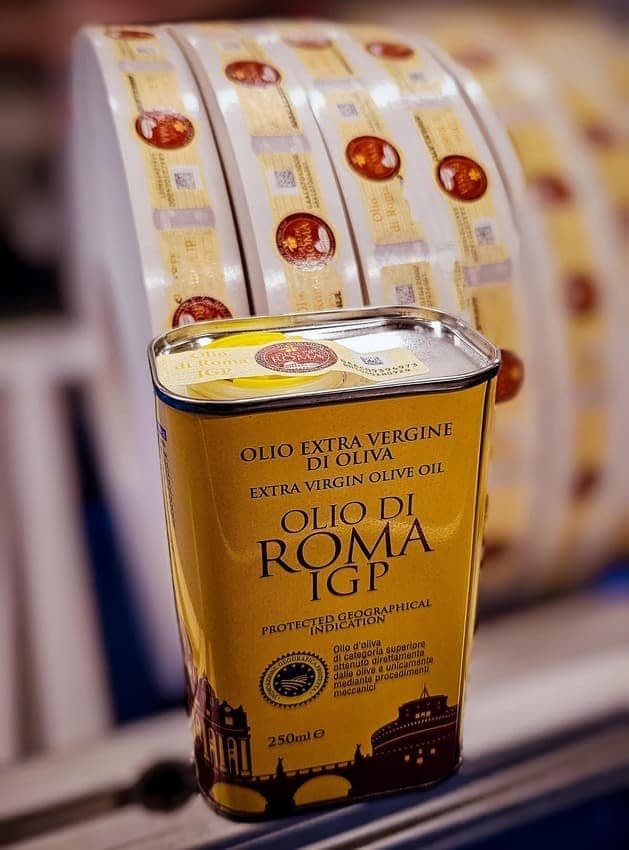 Labels for the PGI Olio di Roma (Photo: Polygraphic Institute and State Mint)
The reels are produced under safety printing procedures in the IPZS facility in Foggia, then accounted for and transferred to Rome.
“Each department in this area is equipped with a vault to store the reels arriving from the previous processing area,” Cerasoli said, pointing out that a report is done at the end of each stage of the production process.
“At each stage, both the good and the waste products are accounted for, counted by piece and weighed,” he added. “In essence, we keep records of the history of each reel and the labels that compose it along the entire production process, whose management is crucial.”
Once IPZS technicians finished processing a reel, Olive Oil Times examined it and closely observed the labels’ physical characteristics.
“Each label is characterized by a series of physical elements, namely the watermark featuring a specific design, along with visible and invisible fibrils,” Cerasoli said. “Also, there is a security print, and therefore, it is impossible to photocopy or falsify it.”
“If we look with a magnifier, we can see micro-writing that reports different wordings with a resolution that makes them detectable only with special systems,” he added. “This is the visible part of the product, complemented by an invisible part behind it, as we said earlier. Some fibrils become fluorescent, and the security printing comprises different inks. In addition, there is a security feature that we are not allowed to reveal.”
The other IPZS labels differ from them in that they have customized graphics. The PDO and PGI extra virgin olive oil consortia can personalize the labels with their logos and colors.
“All this stems from the need to protect the high-quality products, their authenticity, and the true ‘Made in Italy,’” Griffo said. “The Italian agri-food sector is among the most appreciated and recognized in the world, and for this reason also one of the most imitated.”
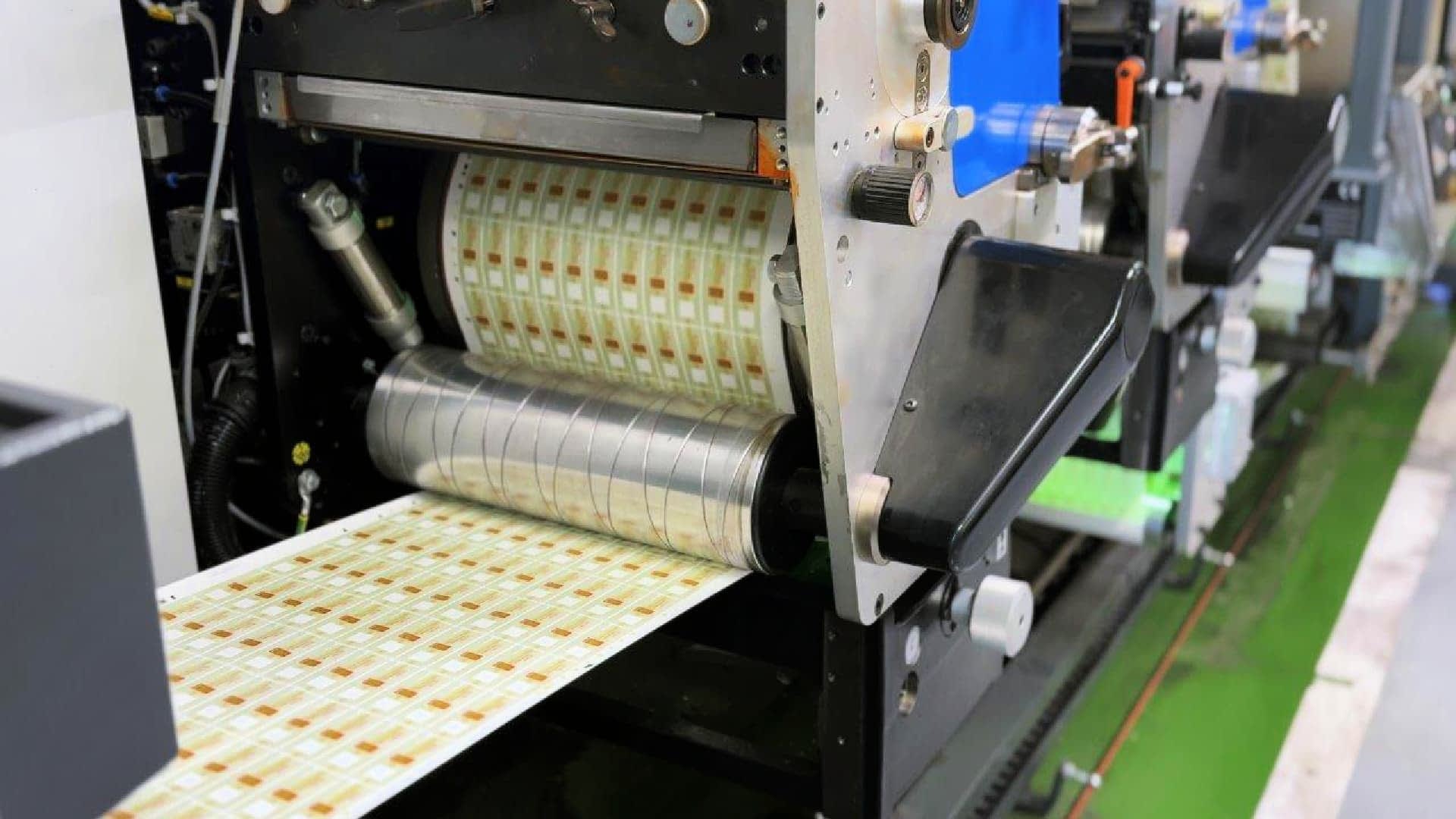 Production of labels for the PDO Olio Terre di Siena (Photo: Polygraphic Institute and State Mint)
She mentioned a recent report by the Italian Quality Control and Fraud Repression Institute, according to which the value of counterfeit agri-food Italian products in 2023 amounted to over €42 million, of which 33 percent were counterfeit PDO and PGI products.
“We believe that it is very important to create a strong identification of the product also to counteract the ‘Italian sounding’ fraud, which has very high figures,” Griffo said. “Every year Italian producers lose almost €100 billion in export sales due to this trick, which involves evoking ‘Italianness’ through the country’s colors, words and symbols.”
“PDOs and PGIs are not only ‘Made in Italy’ but also certified products that go through a further certification and control process,” she observed. “Counterfeiting results in reputational damage, a loss of income, and, not secondary, a risk of harm to health. Therefore, this is important to protect the products, the producer and the consumers.”
Protecting public trust and health is one of the IPZS’s core values. The label aims to further guarantee consumers’ quality while safeguarding authentic and healthy products.
Moreover, the QR code printed on each label gives access to the IPZS platform dedicated to the digital passport of the products, Pass it. Here, the consumers can verify the authenticity and traceability of the products and find a showcase.
“In addition to displaying all the steps of the production process, the platform gives information provided by the farmers, like events, oleotourism and wine tourism tours, recipes and pairings, and more,” Griffo added. “It is intended to be a true communication channel between producers and consumers.”
The visit ended with a final security check, while the production activity at the security printing works continued at full speed.
Label production for the PDO and PGI extra virgin olive oil produced in the regions of Lazio, Tuscany and Calabria is now underway, parallel to the olive harvest.