
This advertising content was produced in collaboration with our sponsor, Rioja.
There are few wine regions in the world that are more influential than Rioja. With 14,000 vintners and over 600 wineries, the Rioja DOCa is a driving force in the social and economic development of the region. But its influence extends well beyond local borders. Its forward-thinking, quality-minded regulations have set a precedent for strengthening the global reputation of Spanish wine.
But Rioja is even more than that—it’s a piece of Spanish wine history that’s positively influenced the wine industry on a global scale for thousands of years. From pioneering a system for aging categorization to introducing new categories, Rioja has continually been at the forefront of the global wine industry.
Now, in 2025, the region is celebrating its 100th anniversary of becoming Spain’s first designation of origin. And looking back on such a long and storied history makes one thing clear: Rioja is anything but old-fashioned.

Don’t miss the latest drinks industry news and insights. Sign up for our award-winning newsletters and get insider intel, resources, and trends delivered to your inbox every week.
Rioja’s History in Context
On June 6, 1925, Rioja became the first Designation of Origin (DO) in the country. And though the designation is celebrating its centennial, ancient artifacts and ruins—including wine presses and cellars dating back 2,000 years—prove that winemaking is a deep-rooted cultural practice in the region.
This deep history allowed Rioja to help the European wine industry through one of its most difficult periods: the phylloxera outbreak that swept across France during the 19th century. While Rioja’s ample production succeeded in slaking international thirst, Spanish winemakers, too, benefitted from this exchange.
“A lot of French winemakers … came to look for grapes here and they actually established wineries,” says Peter Arijs, the education and global projects manager of the Rioja Consejo Regulador, confirming that several of the now century-old wineries in operation today were founded during this time. “The French brought with them their knowledge and also their winemaking techniques and that involved barrels, which was not common to the region.”
What was new a century ago—the aromas, flavors, and oxidative aging of wine in oak—is now considered a classic technique and a well-identified calling card of Rioja, particularly for the region’s red wines.
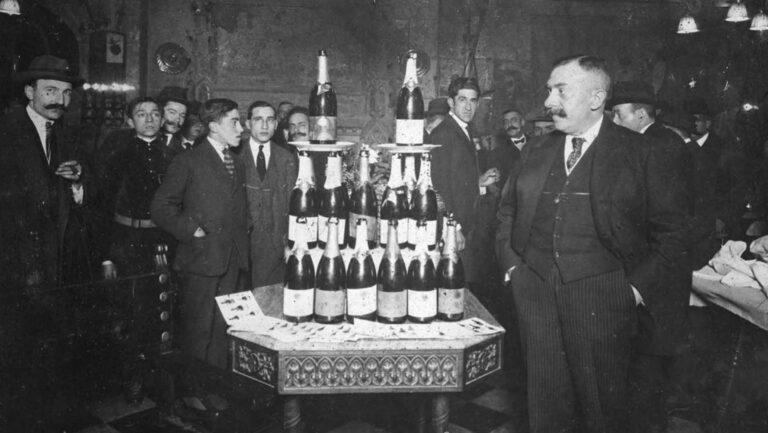 Rioja’s longest-standing bottling winery, Bodegas Bilbaínas, dates back to 1901. Photo courtesy of Rioja.
In fact, the region has never stopped innovating and improving. In 1980, Rioja was the first to develop a system for standardized categorization based on aging—crianza, reserva, and gran reserva—each indicating a specific length of aging time prior to release. “These are wines that have been aged for you in the winery in perfect conditions,” says Arijs. “You don’t have to buy a wine very young, put it in your cellar and wait … These wines are basically released when they are ready to drink. That’s a huge advantage and something that still makes these styles very relevant today.”
As a testament to the high standards met and exceeded throughout the region’s wine industry, in 1991, Rioja became the country’s first Denominación de Origen Calificada (DOCa). Quality control measures put specific restraints on planting density, vine load, and total harvest size in an effort to maintain healthy grapes and quality wine production, and to uphold Rioja’s reputation as a premium wine-producing territory. To this day, only Rioja and Priorat have achieved this prestigious status.
A Land of Diverse Wines
While the region is well-reputed for its red wine production, which is based on its most popular variety Tempranillo and classic blending partners like Garnacha Tinta and Graciano, it’s home to 14 different grape varieties—meaning the region is packed full of diverse wine flavors and styles.
Nine of those 14 varieties are actually white grapes. Many people don’t realize that Rioja is Spain’s second-largest producer of white wines outside of Rueda. Viura is the most planted white grape, followed by Garnacha Blanca and Malvasía. Styles range from single-varietal wines to blends; fresh, primary fruit-driven styles to more full-bodied, oak-aged expressions—and everything in between.
Rosé, often made from Garnacha Tinta, finds a plethora of expressions throughout Rioja as well. Some are pale and fruity, while others are darker, more full-bodied, and capable of long aging. Then there’s the unique claret style, which is a co-fermentation of red and white grapes, a technique not permitted in many appellations.
An emerging category, at least in terms of global recognition and appreciation, is the sparkling wines of Rioja. In 2017, the region leaned into the quality production of this category by introducing a new designation called “Rioja Quality Sparkling Wine.” The classification indicates that the wine is made in the traditional method using any approved Rioja-grown grapes. The wine also must follow strict aging criteria: 15 months for crianza, 24 months for reserva, and 36 months for gran añada.
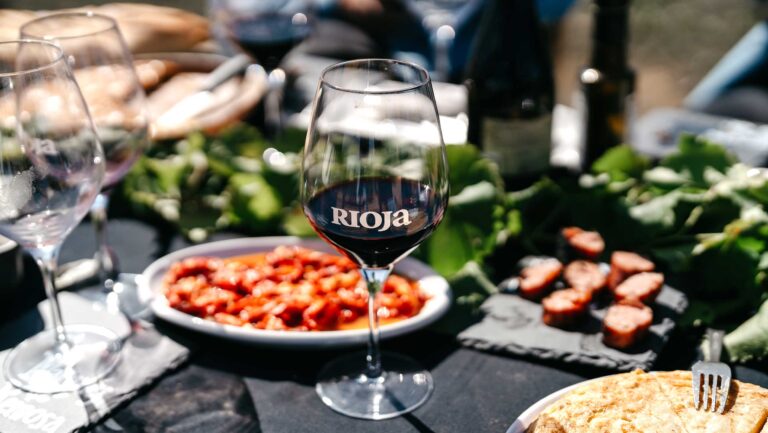 While Rioja is known for its red wines, it’s also home to nine different white grape varieties. Photo courtesy of Rioja.
Future-Forward Thinking
Rioja may be celebrating 100 years, but there’s nothing old-fashioned about the region. One of its most recent investments has been in the use of artificial intelligence to study the effects of climate change on terroir in an effort to implement long-term solutions. The technology is able to gather insight from over 1,600 variables, including historical climate data, annual rainfall, average temperatures, and satellite imagery.
The region is currently home to 61 certified organic vineyards and two biodynamic vineyards. With the integration of agro-technology, providing real-time monitoring of environmental conditions, Rioja is well positioned to increase sustainable practices throughout its vineyards.
Quality grapes lead to quality wines, and that quality is what has allowed Rioja to stay competitive in the global wine market, with exports to 135 countries. In 2024, despite industry headwinds, the region’s total sales grew by 0.63 percent, with an impressive 17 percent growth in the U.S. market.
“[The] U.S. is our second destination abroad,” says general director of QDO Rioja Control Board, Jose Luis Lapuente. “Rioja is the land of a thousand wines … Under these conditions, we are a winning bet. The great diversity means we have an answer for any consumer and preference. [And] our higher value-added products are gaining more and more weight.”
For a region that’s commemorating 100 years of winemaking to still be considered new, interesting, and different is a testament to the culture of innovation that goes into every bottle. And that is truly something worth celebrating.
“The quality and image of Rioja wines, the promotional efforts to increase awareness with campaigns that began more than 20 years ago, and the confidence of the American consumers are key,” says Lapuente. “The conversion of our awareness into purchases—how many of the consumers who know us also buy our wines—exceeds that of many of our competitors and means a solid presence in the market.”

Dispatch
Sign up for our award-winning newsletter
Don’t miss the latest drinks industry news and insights—delivered to your inbox every week.