

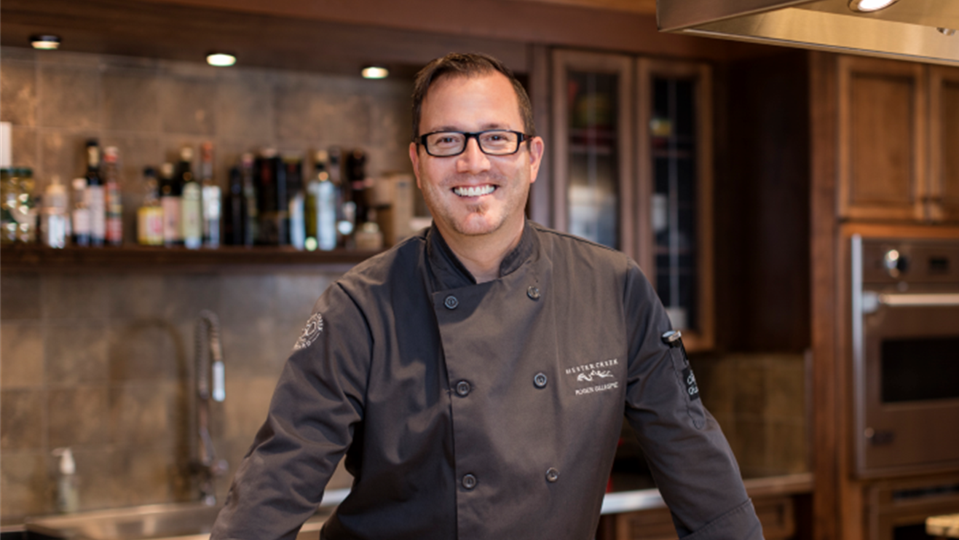
Roger Gillespie, Director of Operations at Hester Creek Estate Winery.
Courtesy of Roger Gillespie
Gabriele Hartshorne-Mehl contributed to this story.
Most visitors to Canada, expecting to find a snowy tundra and maple syrup, are usually surprised by the region’s 40-degree weather and Mediterranean climate of British Columbia’s Okanagan Valley.
Located at the northern edge of the Sonoran Desert, the Okanagan Valley remains in its winemaking infancy compared to other areas of the world steeped in hundreds of years of culture and traditional practice. Of the 18 million acres of grapes grown on the planet, only 30,000 of these acres are farmed on Canadian soil.
Of the 18 million acres of grapes grown on the planet, only 31,001 acres are farmed on Canadian soil, according to Wines of Canada, the official promotional organization for Canadian wine.
Although it comprises only a fraction of the world’s vineyard acreage, this emerging wine capital offers terroir capable of producing a vast range of varietals in small microclimates across the region. The long hours of hot summer sun, steep slopes of hilly terrain, and climate-moderating lakes fortuitously positioned throughout the landscape each contribute to a distinctive geography ideal for growing grapes.
According to Roger Gillespie, Director of Operations at Hester Creek Estate Winery, the Valley’s terroir is one of its most special properties: “In Bordeaux, they grow Cabernet Sauvignon, Merlot, Cabernet Franc, Petit Verdot, and Malbec. We can grow all those varietals here. Like in Burgundy, we can also produce Pinot Noir and Chardonnay. North of Kelowna, Lake Country is an ideal climate for Gewurztraminer and Riesling. We can grow more grape varietals within a few hundred kilometers here, because the temperatures vary from Vernon to the US border.”
Despite its relative novelty and modest size, winemaking has grown into an industry critical to the local economy. The Okanagan Valley is now home to over 200 wineries, from boutique family-owned businesses to larger conglomerate estates, andt the broader Canadian wine industry represents an $11.6 billion economic force.
Hester Creek is located near the town of Oliver (known on the West Coast as the wine capital of Canada) on the Golden Mile Bench, a sub-region of the Valley known for west-facing slopes and diverse soil compositions. One of the oldest estate vineyards in the province, it was named BC Winery of the Year in 2023 by Great Northwest Wine.
Legacy and Terroir
The company’s founder, Joe Busnardo, immigrated from Italy in 1954 and purchased the 70-acre parcel now known as Hester Creek Estate in 1967.
When he arrived, Busnardo made a contrarian bet, planting premium Italian vines imported from his homeland rather than sticking to the proven local varieties. His vinifera included premium European varietals, such as Cabernet Sauvignon, Pinot Gris, Cabernet Franc, Chardonnay, and more obscure varietals like Trebbiano, Garganega, and Malvasia. Many of Joe Busnardo’s vines continue to produce grapes today and form part of Hester Creek’s Old Vine varietal collections.
Busnardo’s foresight positioned the winery to thrive in the province beginning in the 1980s. When estate wineries proliferated in the Valley and began growing European varietals, Hester Creek’s Italian vinifera were already well-established and mature.
Prince George native Curt Garland purchased the winery in 2004 and made a number of significant additions, including a new hospitality centre, luxurious Villa residences, and an Italian-inspired restaurant named Terrafina.
In the vineyard, Garland built on Busnardo’s genius with new plantings, a drip irrigation system, and carefully optimized hillside planning to maximize sun exposure and frost protection. As a result, Hester Creek vines are capable of producing both approachable everyday wines and ultra-premium reds.
The Business of Harvesting, Barrelling, and Bottling
The duality of volume and quality drives Hester Creek’s business model. In 2012, the winery produced 25,000 cases. Today, it averages around 65,000 cases, with peak years reaching 80,000.
Hester Creek is busy all year round. Peak season for the wine shop, villas, and restaurant runs from May to October. For the winemaking team and harvesting crew, however, the winter months are the busiest of the year, as they harvest, press, ferment, and bottle the wines while also preparing and strategizing for next year’s vintage.
The economics start in the vineyard. A $20 bottle might come from blocks cropped with more fruit, maximizing efficiency. For premium bottles, however, the team limits vines to hold just one or two clusters each. This strategy allows the remaining grapes to fully ripen and concentrate flavor.
“The accountants don’t always love it,” Gillespie jokes, “but it’s our commitment to quality.”
The business of winemaking, however, involves far more than agriculture. Every detail, from barrel selection (primarily French oak) to packaging design, carries such a balance of dedication to excellence and brand positioning.
“It is where farming meets science and the art of winemaking in the cellar,” explains Gillespie.
The Judge is a flagship red that exemplifies the winery’s commitment to precision and quality. This wine is a Merlot-forward Bordeaux blend (Merlot, Cabernet Sauvignon, Cabernet Franc, Petit Verdot, and Malbec). Each of the five varietals in the blend are carefully monitored and fermented separately so that the winemaking team can preserve the unique character of each grape. During small trials, the winemaker assesses each varietal and determines the ideal composition of the blend. It is this careful judging of each varietal that inspired the wine’s name, reflecting the precision and commitment to quality behind every bottle. Aged for 30 months in French oak, The Judge is designed to develop complexity and structure as it is cellared.
Navigating Climate and Consumer Shifts
The Okanagan has faced two difficult vintages in recent years, with wildfires and unpredictable weather altering yields.
In 2024, a severe January frost devastated the region. Industry experts predicted losses of 97-99% across BC, with estimated revenue losses reaching $445 million for vineyards, wineries, suppliers and distributors. The near-total absence of any harvest in the Valley sent wineries elsewhere to source grapes for production. The BC government provided temporary relief, allowing BC wines to be made with grapes and grape juice from outside the province for the 2024 vintage year.
This goes to show how wineries must plan production quite far in advance while also remaining adaptable to the radical changes in circumstance that might occur during farming and harvesting – a near-perfect case of Mintzberg’s emergent strategy in action.
Consumer demographics are shifting as well. While Okanagan wineries typically performed well with Boomers and Generation X, younger consumers present a more complex picture. Research shows Gen Z (of legal drinking age) consumes about 20% less alcohol per capita than Millennials or Boomers, with only 18-20% of Americans of legal drinking age under 28 regularly drinking beer, wine or spirits, compared to 31% and 30% for Millennials consuming wine and beer respectively. Those who do drink often choose canned beverages or non-alcoholic options instead of traditional wine.
Hester Creek’s portfolio of both accessible and luxury wines allows it to serve multiple audiences. However, defining the winery’s main consumer demographics remains both its largest challenge and strategic opportunity.
The Business of Storytelling
Storytelling and connection are timeless strategies for cultivating loyal consumers. In winemaking, as in other luxury industries, storytelling is the key to creating lasting resonance.
“People don’t expect to find a luxury wine region in Canada,” Gillespie says. “Then they arrive, and it’s 35 degrees, with sagebrush and vineyards on the hillsides. It’s unlike anywhere else in the country.”
Gillespie is a trained Sommelier who has worked in the service industry since he was 13 years old, polishing golf clubs at the Charleswood Golf Club in his hometown of Winnipeg. As part of the opening team at Tofino’s Wikkinninish Inn, Gillespie gained substantial hands-on experience leading a world-renowned resort in its initial stages.
“I think it all comes back to that connection… Whether through our surroundings, interactions with guests, or our storytelling is all about making people feel like they are coming home.”
Developing a Refined Palate
Understanding a wine begins with determining how you want to enjoy it. We took the opportunity to ask for some tips on how to develop a more refined palate. For those interested, see below.
The journey begins visually – according to Gillespie, “a wine that is bronzing or a little darker in color, with copper around the edges, might show some age on it.”
Next, we look at the aromatics. This stage allows the nose to detect subtle floral, fruit, herbaceous, or spice notes.
“The fact that you can smell wild strawberries in a beautiful rosé, but there are no strawberries put into that wine, I think is just a marvel to me. The fact that such a simple agricultural product can be turned into something so magical, it’s part of the magic of our industry,” says Gillespie.
Then comes taste. It also matters where on your palate you taste. You have thousands of taste buds, and your brain associates memory with taste, as it does with music or smell.
“When I was in my sommelier program, we sat down, we analyzed the wine, we wrote down our notes, and you start to see trends in different varietals.”
Gillespie recommends this practice for those looking to develop their taste in wine: “This was a great exercise for formulating the backbone of my knowledge.”
Canada’s Wine Frontier
Hester Creek represents both the promise and the challenge of Canada’s wine industry. The opportunity for Hester lies not in competing with Old World tradition, but in rewriting what luxury wine can look like in Canada: rooted in terroir, built on consistency, and fueled by connection.
Dining and Cooking