
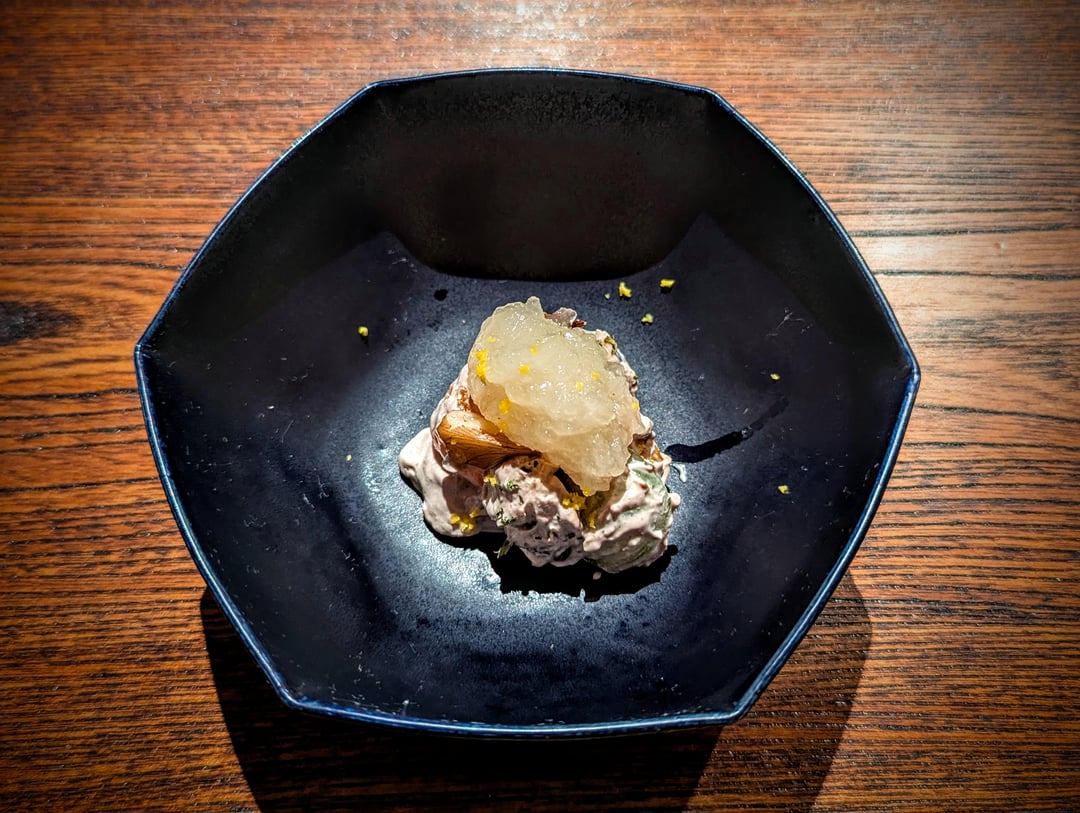
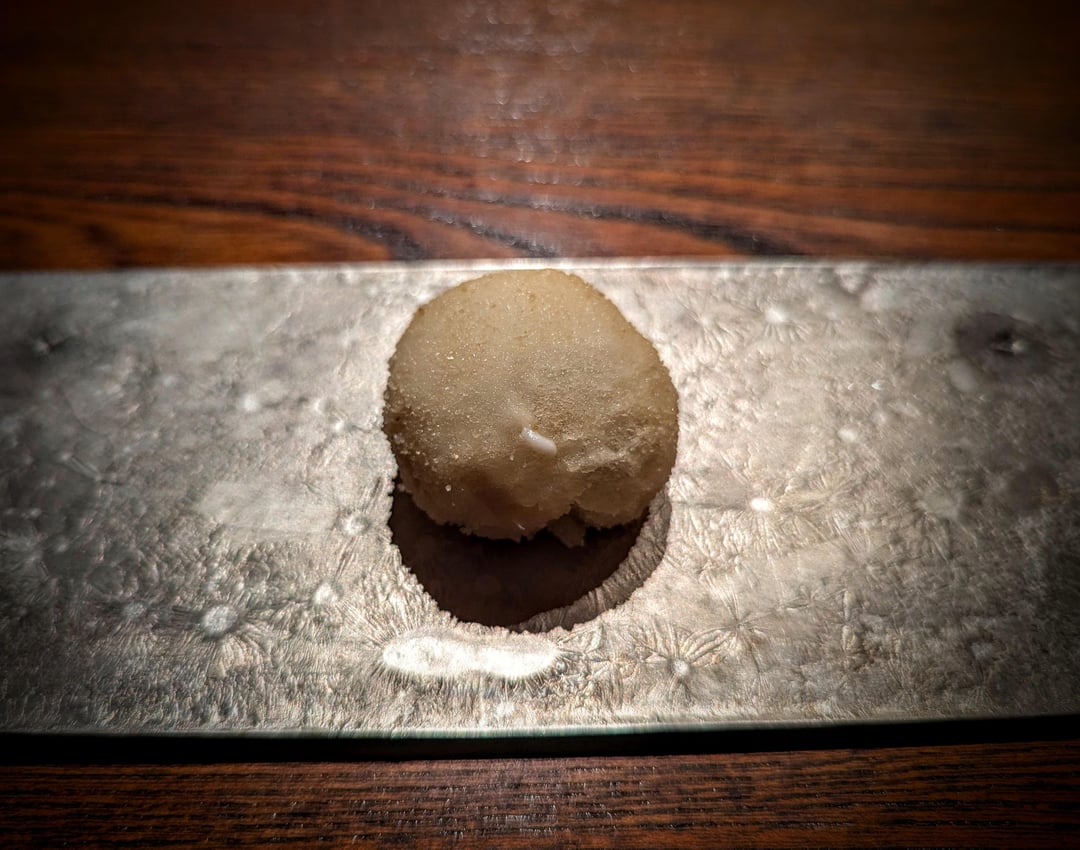
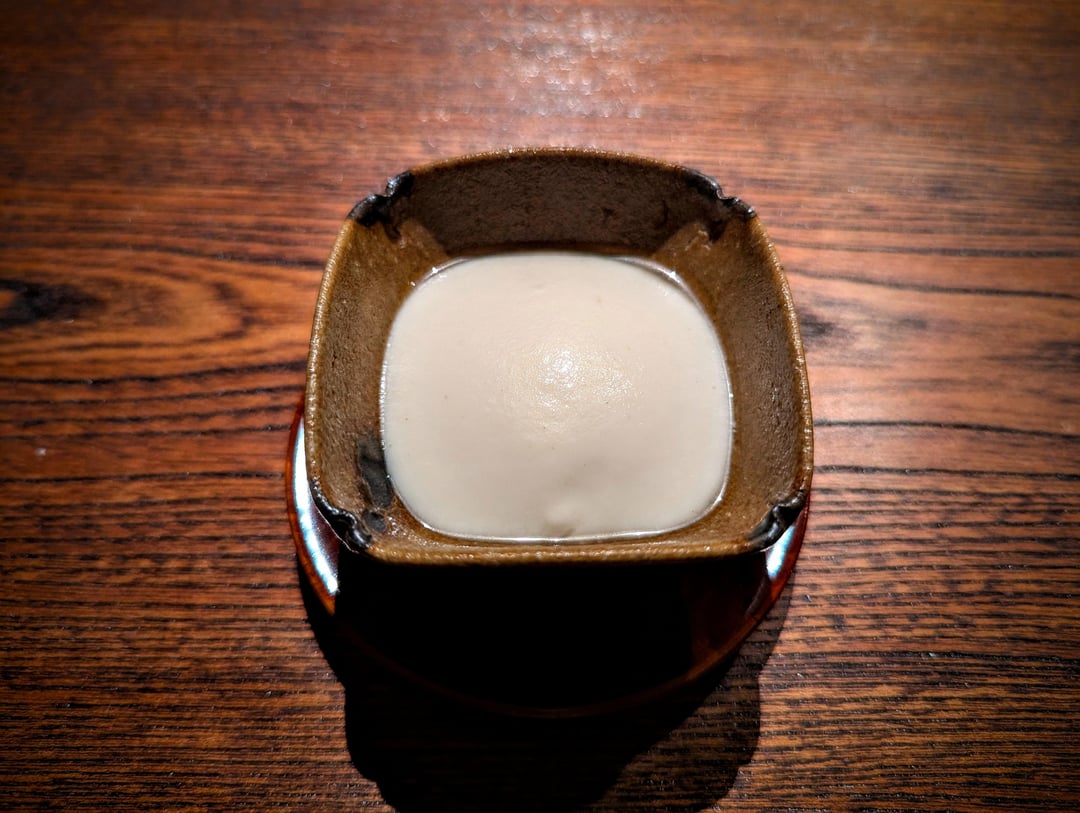
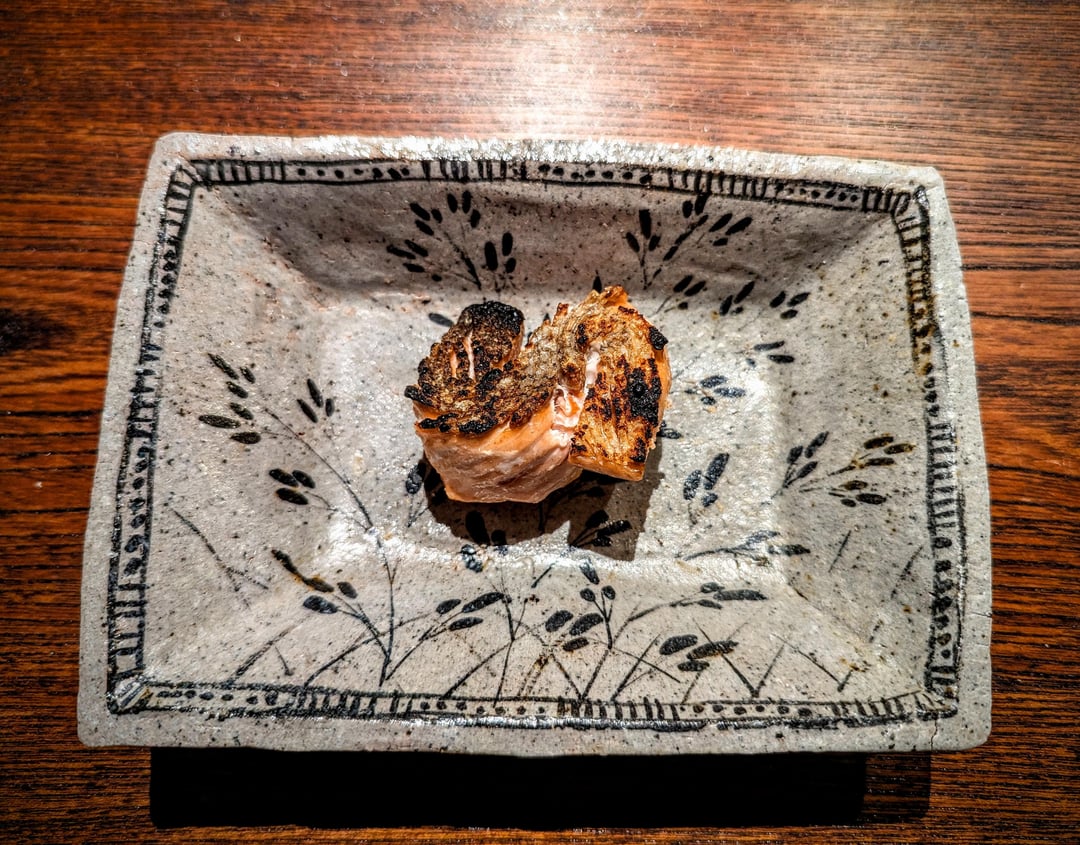
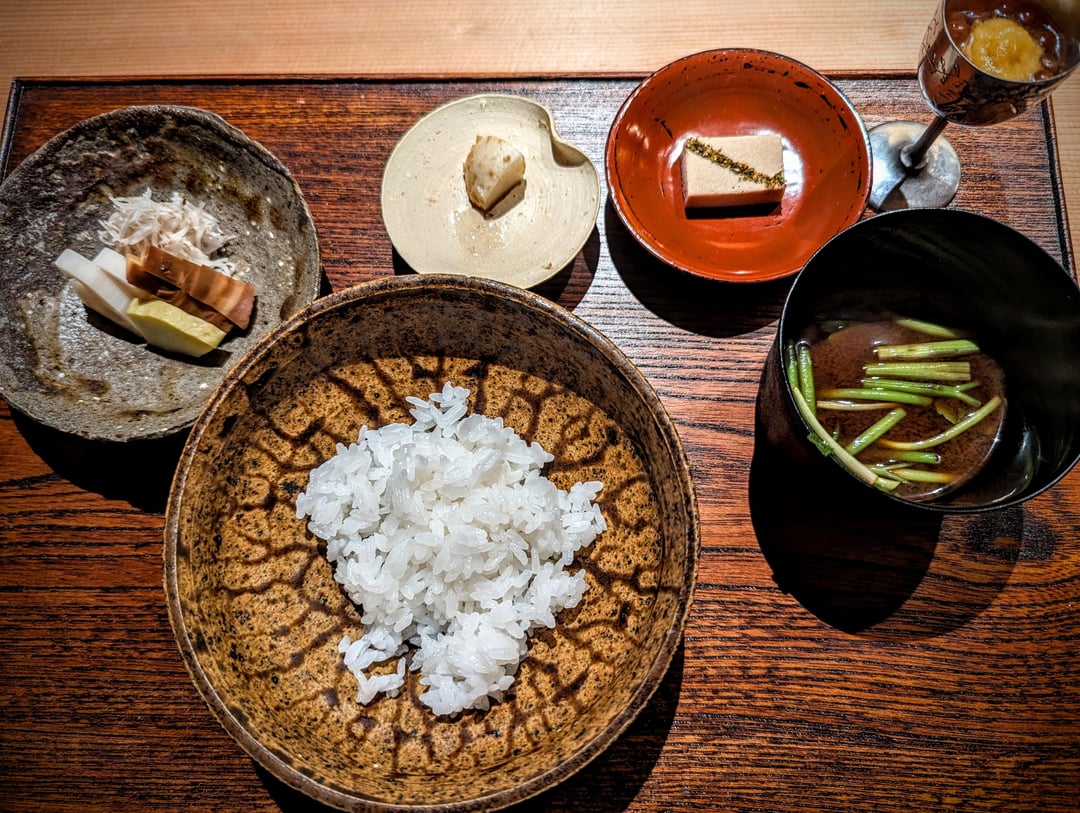
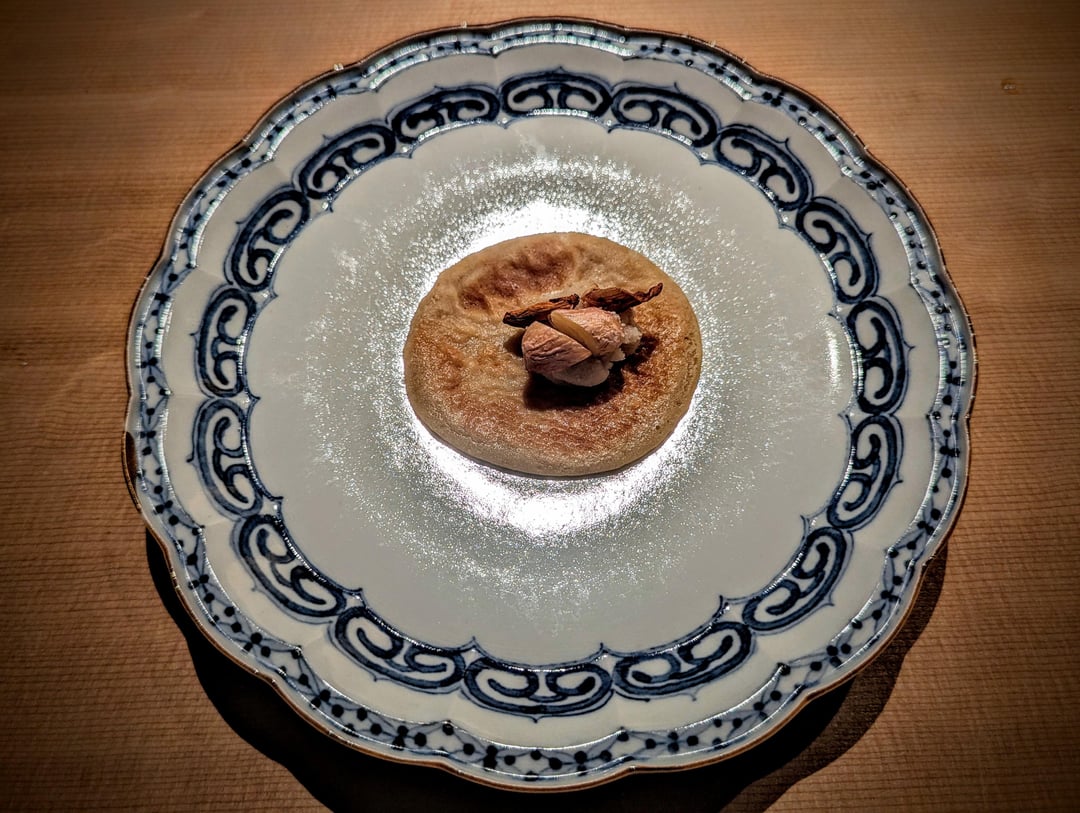
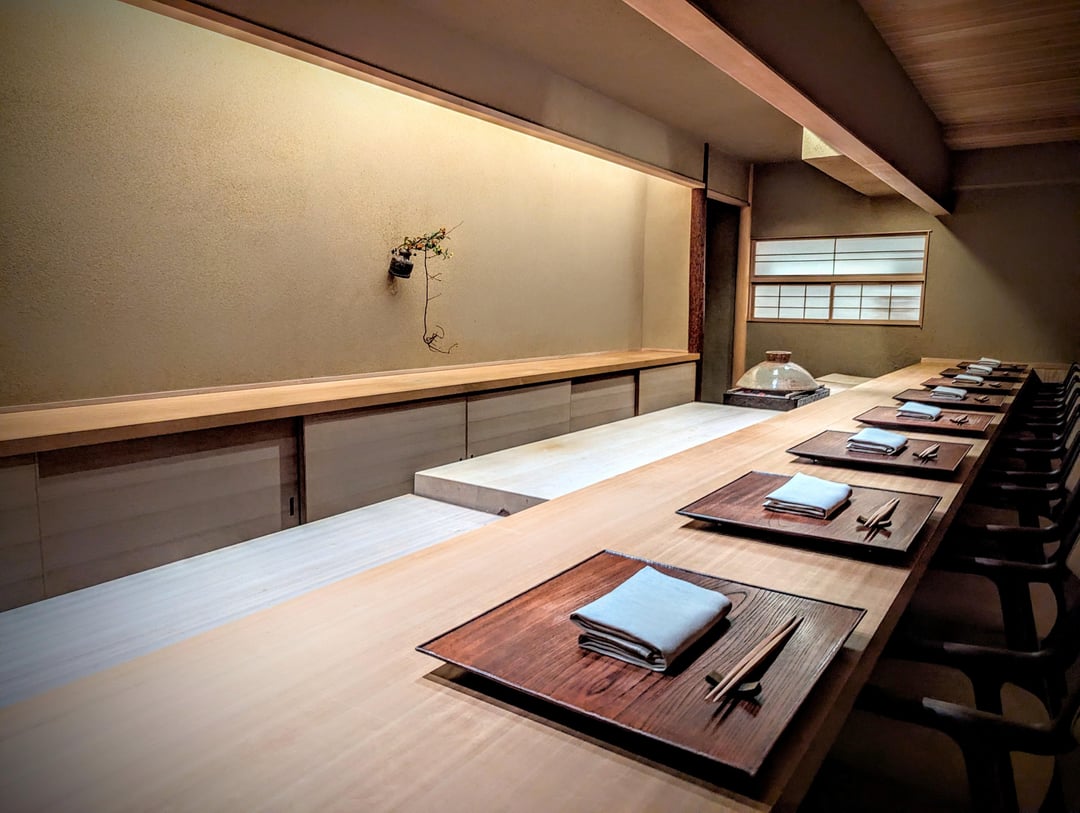
Within the Nishiazabu district of Tokyo lies Myoujyaku, the Tabelog silver and newly-awarded three Michelin star kaeseki restaurant, as of the 2026 guide. With the aim being to bring one closer to nature (the fields, rivers, mountains, seas and soils that the many Japanese ingredients used at Myoujyaku hail from), Myoujyaku is a place of serenity, where a spruce counter seats eight guests, and a lacquered tray is placed before each. Where Myoujyaku differs to other kaeseki restaurants is the use of water as a central ingredient, replacing the dashis that are found elsewhere. Seabed-spring water from Miyazu Bay in northern Kyoto is used in many dishes at Myoujyaku. With its low salinity and being mineral-rich, this water is clean on the palate, and has been used at the restaurant since 2024.
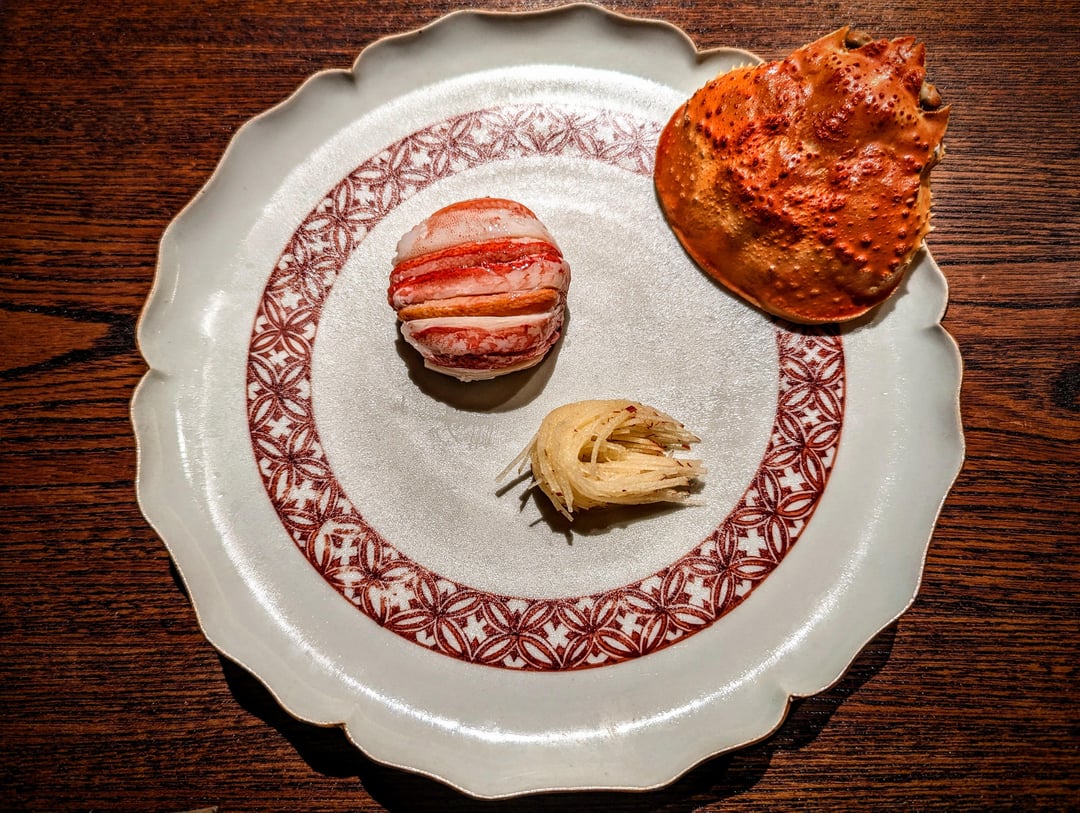
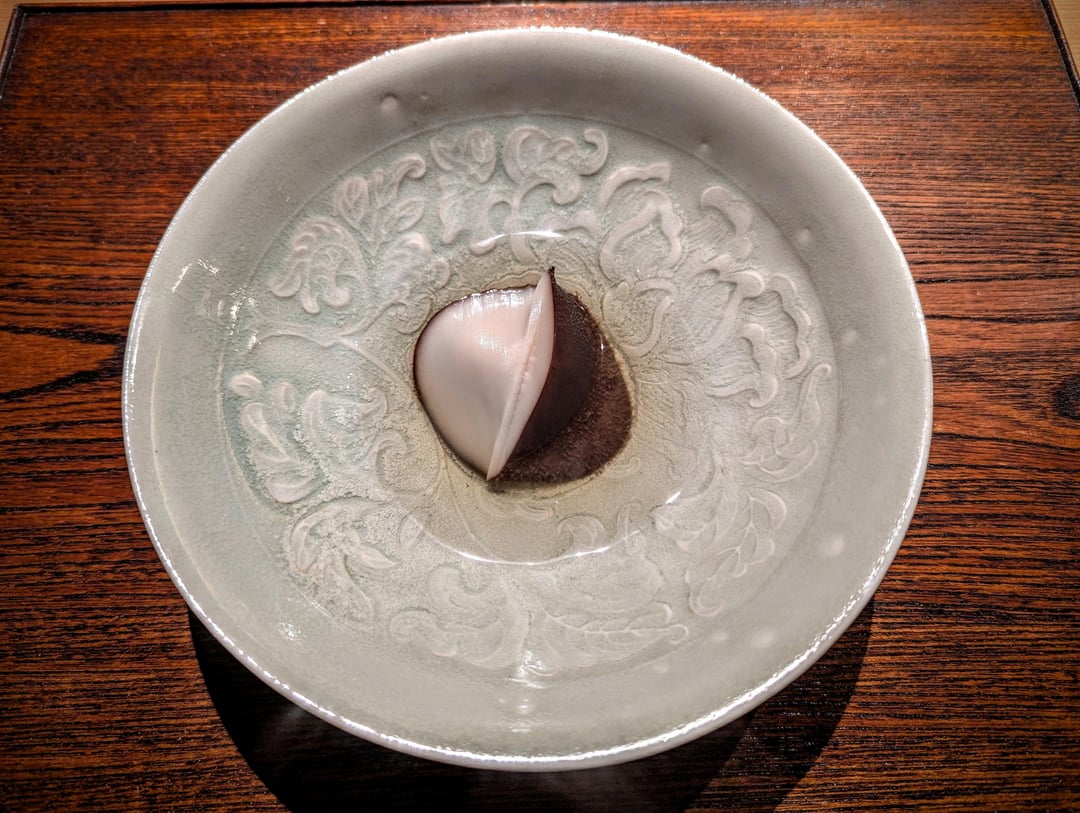
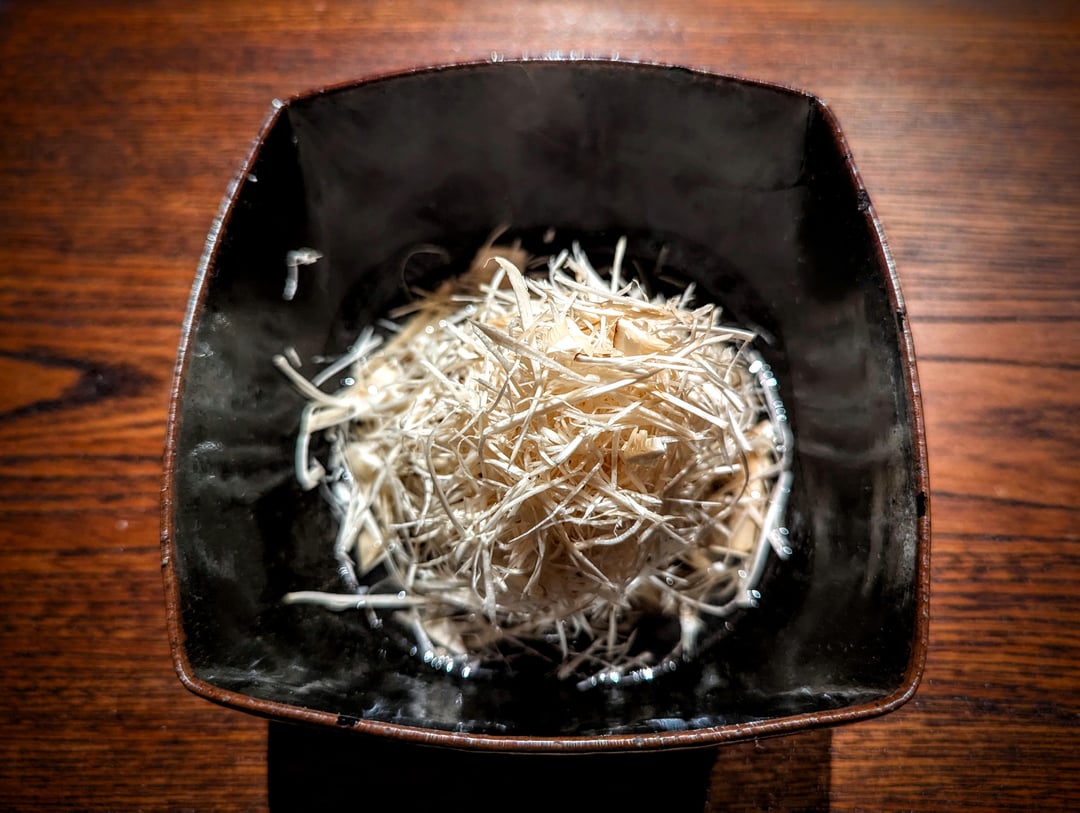
The meal started with shiitake mushrooms steeped in Miyazu Bay water, and spring water. Clean and simple, this is pretty much what Myoujyaku is all about. Crab manjū follows, which uses both female and male snow crab. The crabs are boiled in seabed-spring water, then separated into crab miso, roe, and meat, before the body meat is flaked, folded into a crab-miso filling, and then – along with the roe – shaped. Julienned raw apple plays the role of kani-zu, balancing the dish with acidity. This was a good dish, again very subtly flavoured, but with a nice balance.
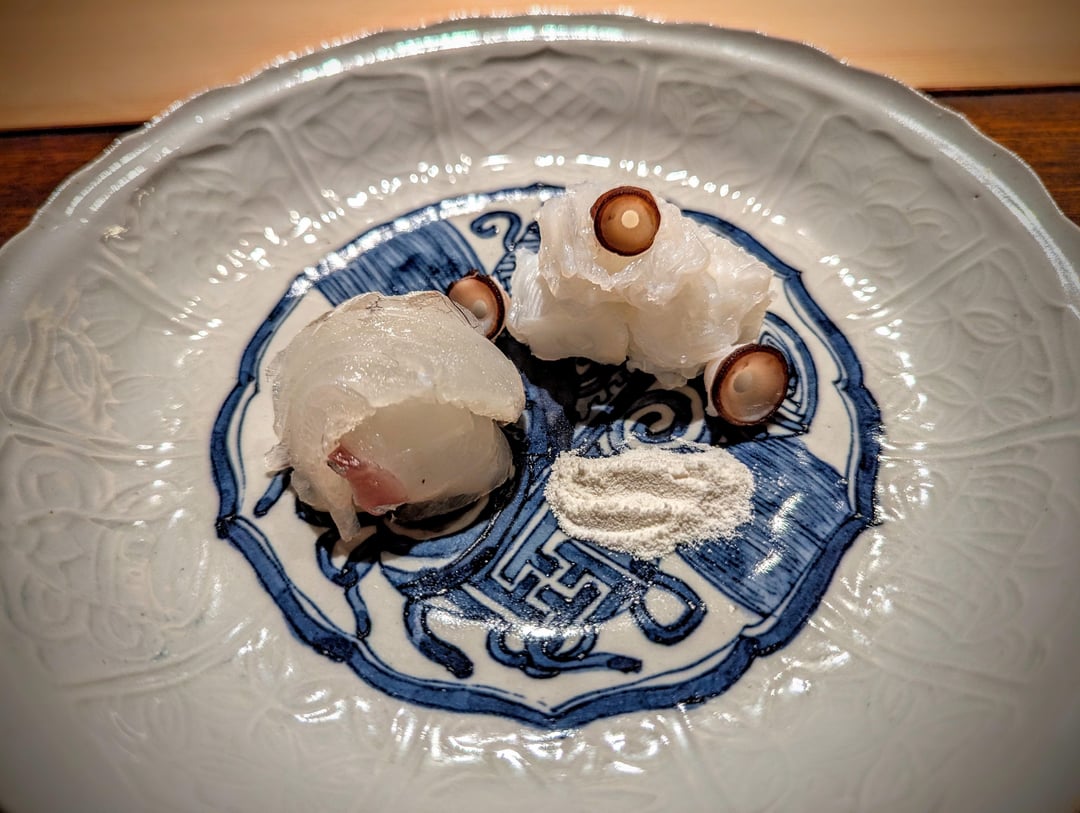
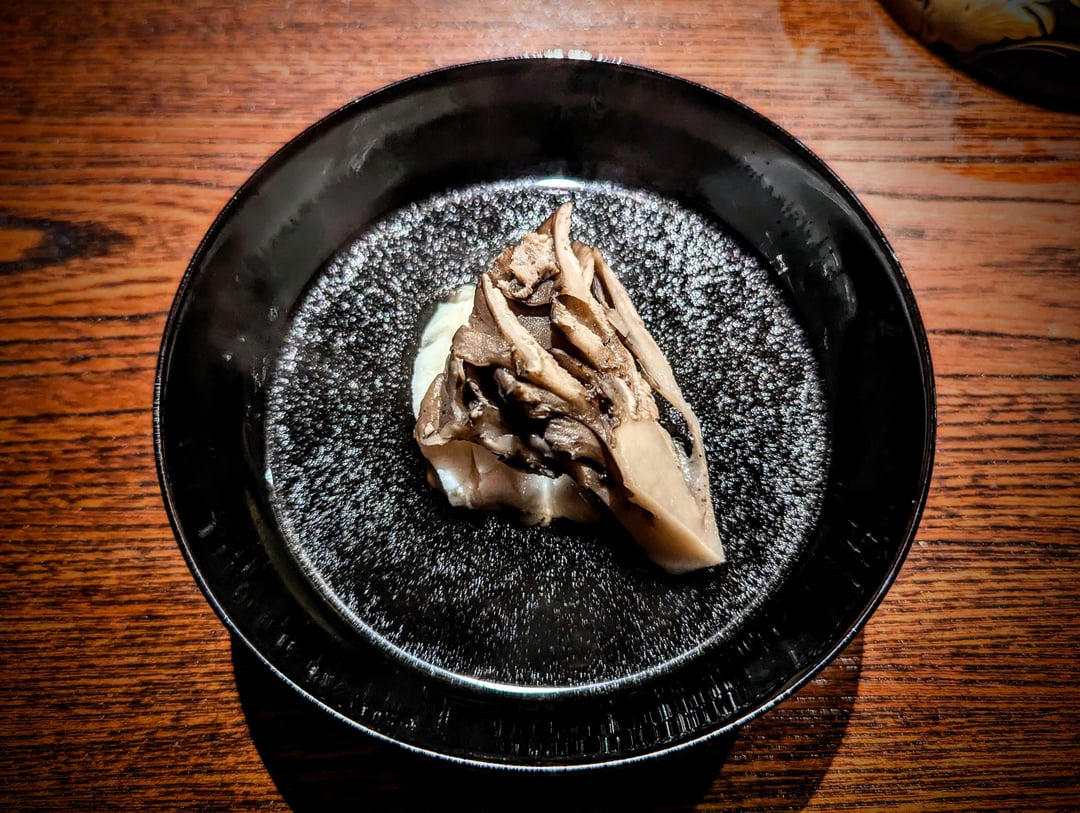
Sashimi of octopus and and white fish was served next, along with homemade "Tako-shio" (a powder of octopus meat and sea salt). This was followed by a clear soup featuring longtooth grouper and wild black Maitake, the soup being a mix of seabed-spring water from Miyazu Bay, and Kyoto water.
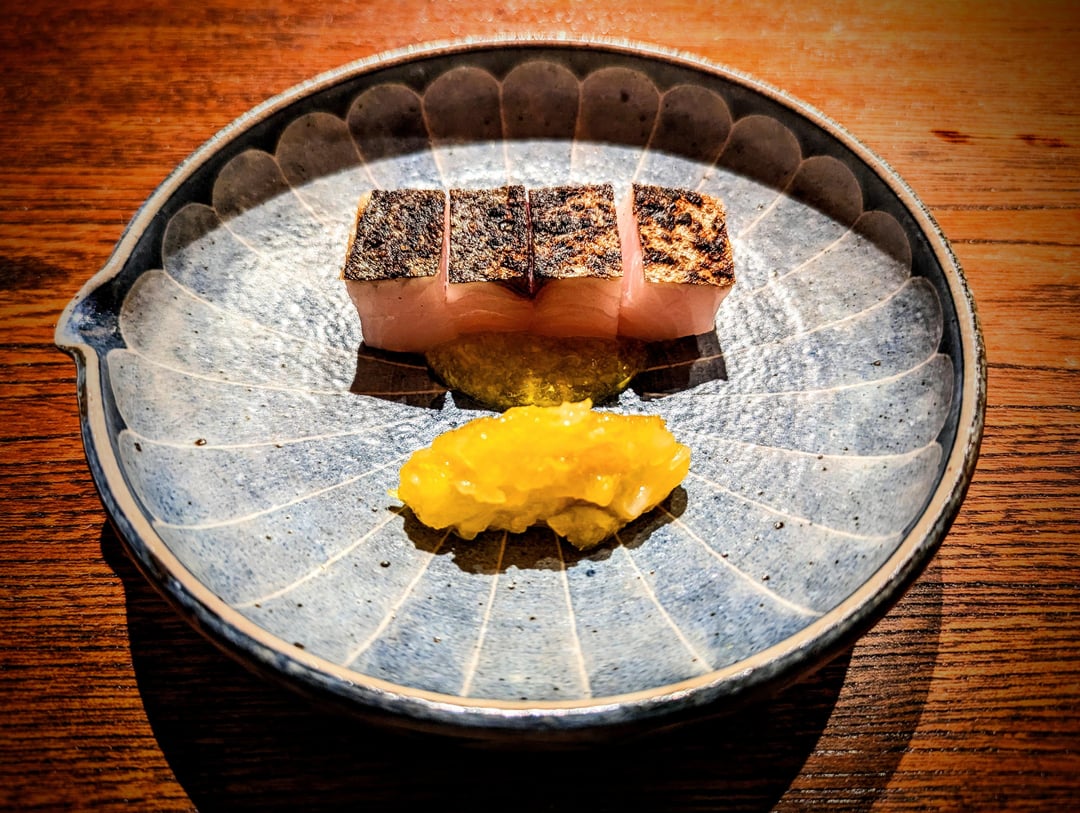
The first standout of the meal appeared next, the sawara (Spanish mackerel) that had been lightly salted, straw-smoked, and seared skin-side only over charcoal. This is served with a ponzu, and a condiment made from daikon, green onion, reduced sake, salt, lemon juice, white soy, and yellow chrysanthemum petals. The sawara was incredibly soft, the skin crispy and brittle, and the gently tart ponzu and daikon relish lifted the natural flavour of the fish.
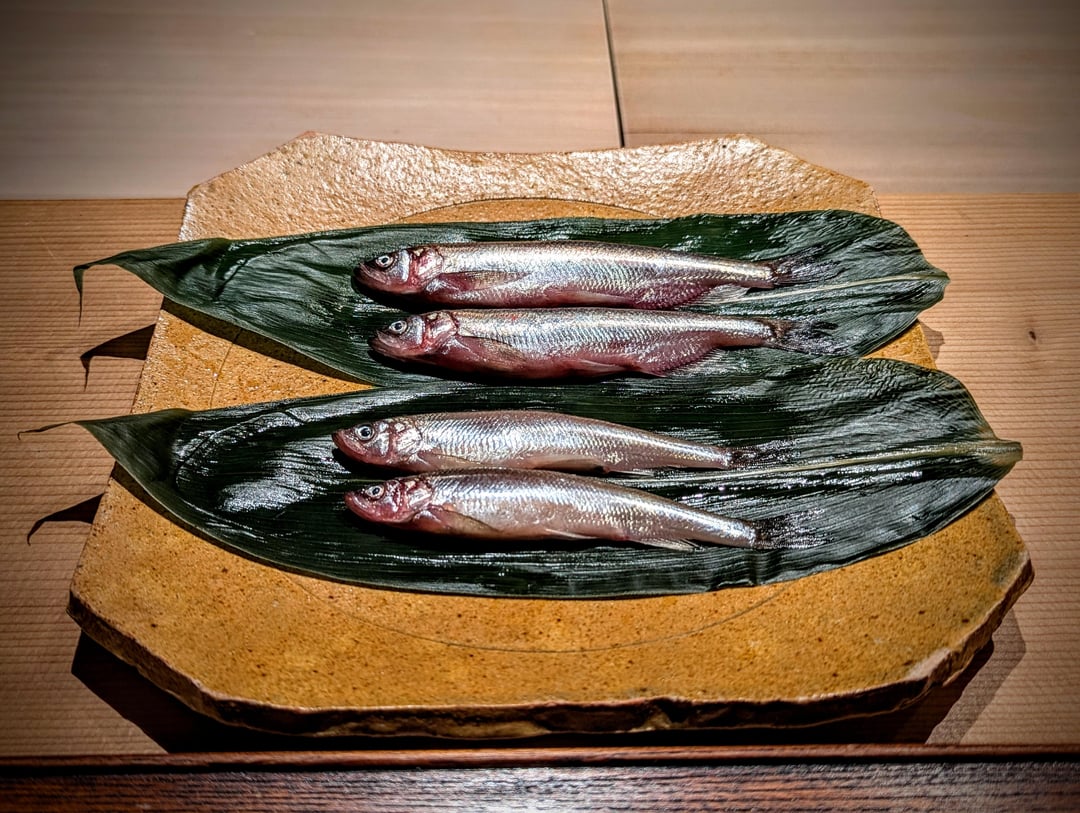
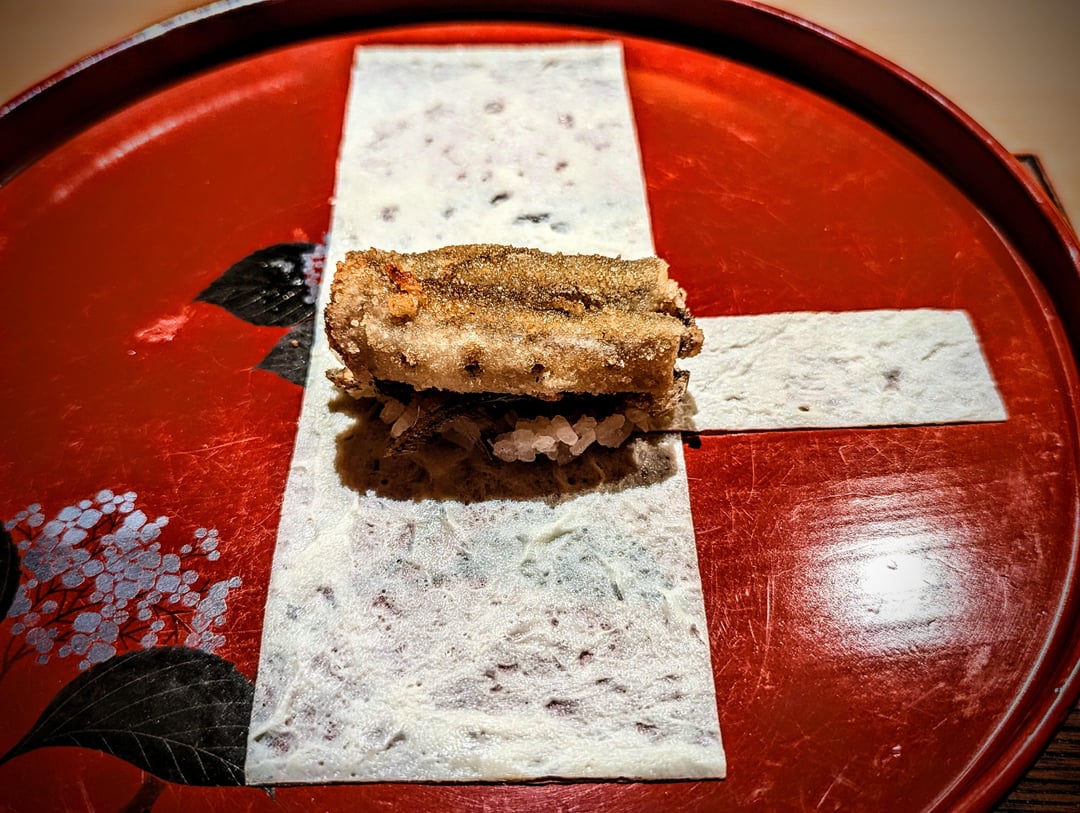
Steamed Chestnut & Black Edamame came next, followed by the Silk-Roll Sushi, which was another standout. Fatty shishamo, with their heads, bones and tails fried crisp, lay atop sushi rice and a white, thin omelet. The crispy fish, slightly salty, played well with the contrasting gentleness of the rice and delicate omelet. Tactile and – despite the use of fried food – still light, this was easily the highlight of the meal.
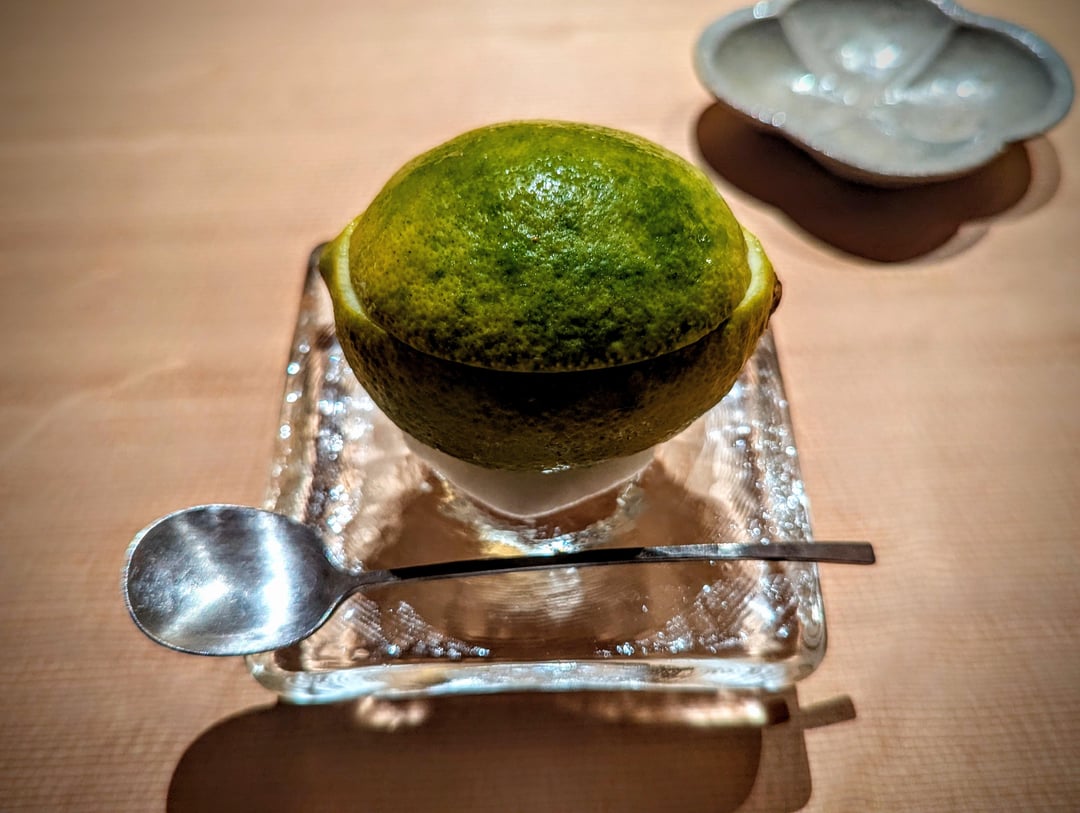
Other highlights of the meal include the charcoal-grilled salmon, seasoned only with a little salt, and the green lemon sorbet, which was the most flavourfuly-intense course of the evening. An eagle-eyed reader will notice that there are several dishes that I haven't covered; honestly, it's more of the same, with minimal seasoning or seabed-spring water being used to bring out the natural ingredients. Three dishes into the meal and you get the gist. And it's for that reason why I don't hold Myoujyaku in the same high esteem as a lot of other reviewers. While I appreciate the use of excellent ingredients and the philosophy of the restaurant, I also don't see a lot of cooking here that is truly exciting. Similar to my feelings on SÉZANNE, which I also visited on this trip, the cooking is clearly refined in the sense that the ingredients are given their dues and prepared well. Nothing was off the mark, but only a couple of dishes were really anything to write home about. Similarly, any sort of cadence to the meal was practically non-existent. The end is the beginning is the end. Some may find this peaceful, but I ended up yearning for a little more excitement (past the clear peak of the meal in the form of the Silk-Roll sushi). I am rarely disappointed to try new (to me) restaurants, and I certainly was not disappointed to visit Myoujyaku. However, I won't be clamouring to return.
Courses:
- Shiitake Ushio-ni
- Crab Manjū (pictured first)
- Sashimi
- Kue & Maitake Owan
- Straw-seared Sawara
- Steamed Chestnut & Black Edamame from Tanba
- Silk-Roll Sushi (Hokkaidō Shishamo Smelt)
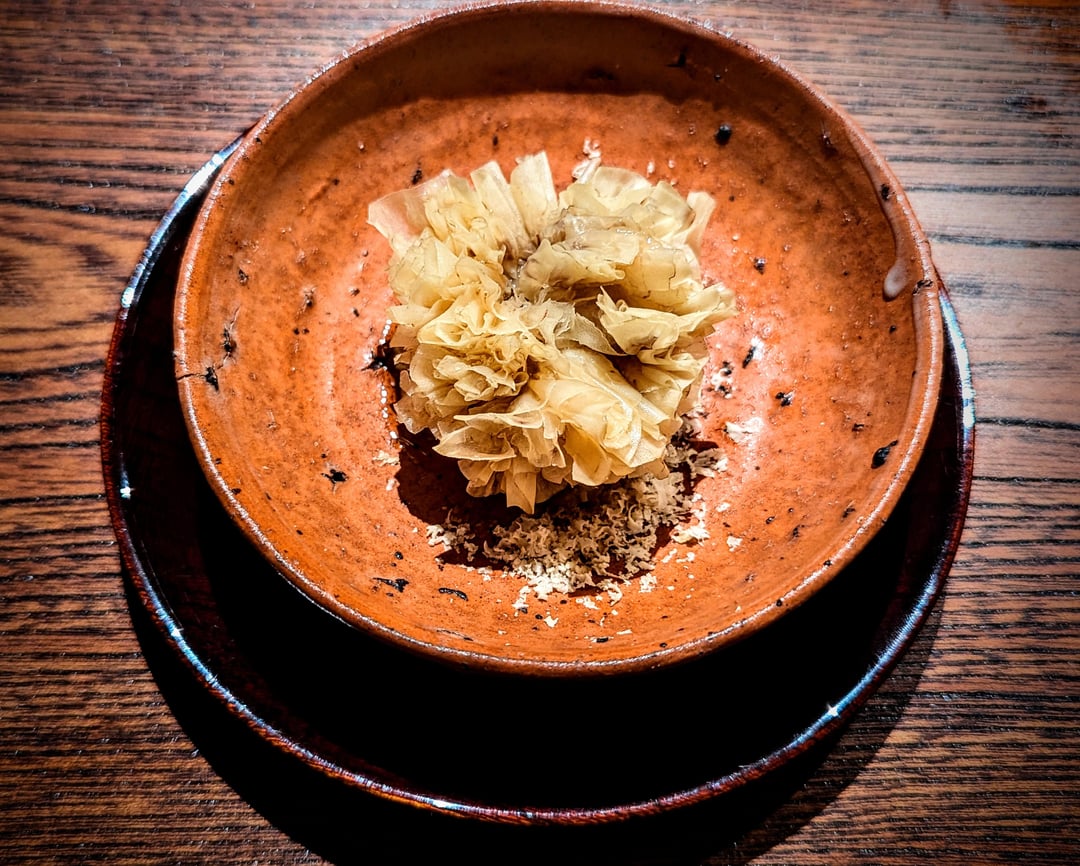
- Autumn Fruit dressed with Walnut
- Harvest Fritter
- Eggplant Sōmen
- Charcoal-Grilled Autumn Salmon
- Morning-Picked Matsutake, Hotpot-Style
- New Harvest Donabe Rice
- Green Lemon Sorbet
- Peanut Hōsho-maki
by MaaDFoXX
Dining and Cooking