
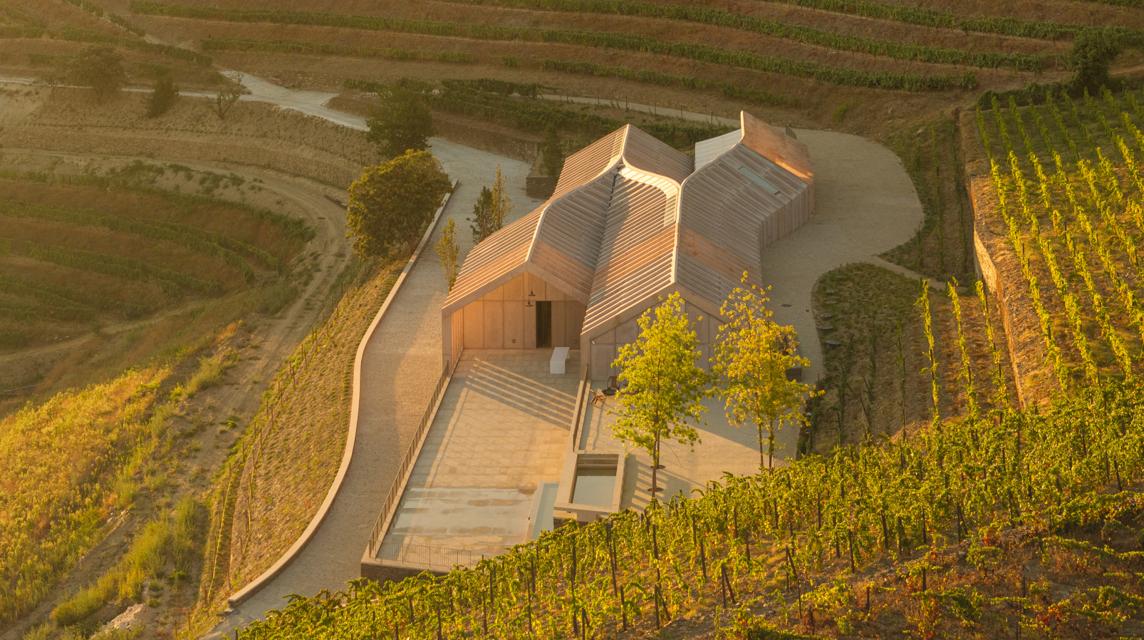
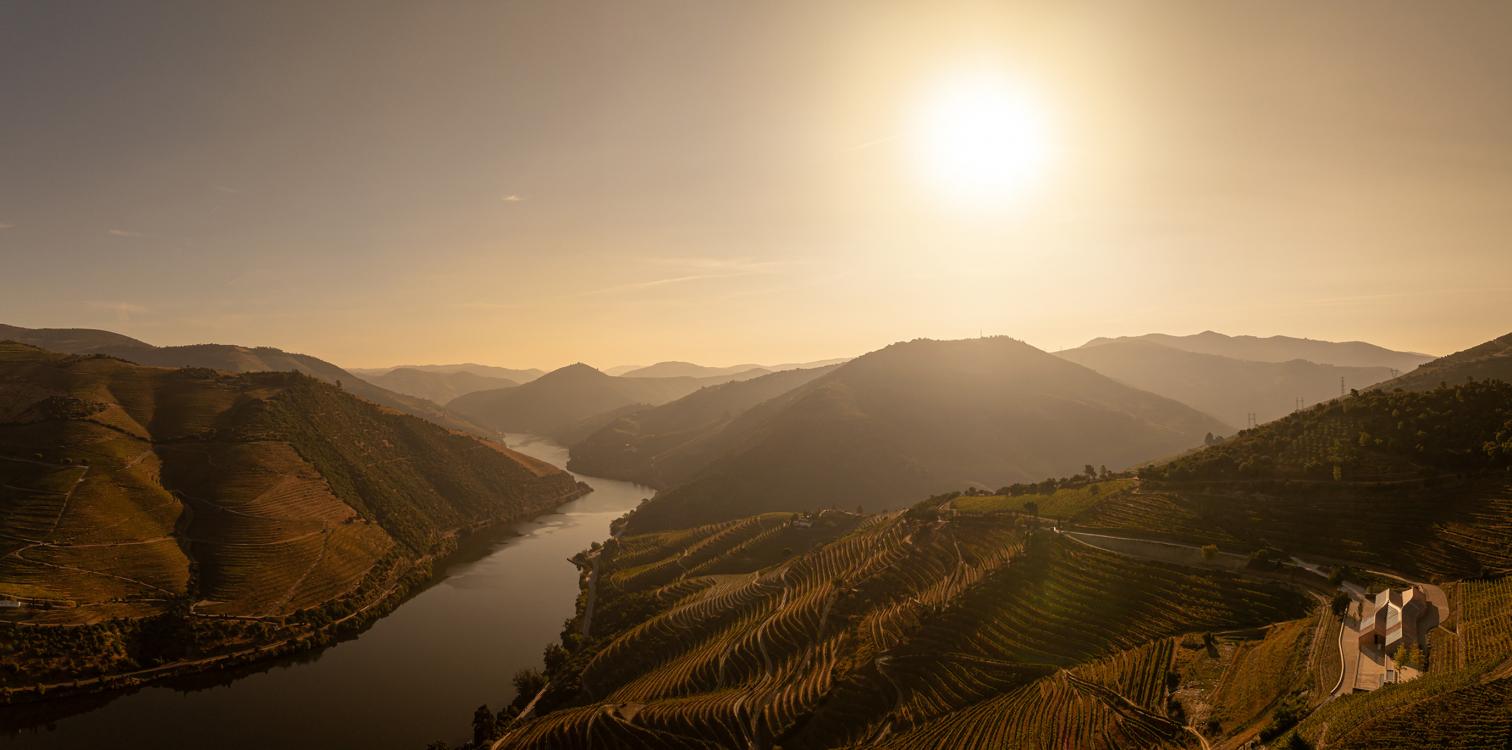
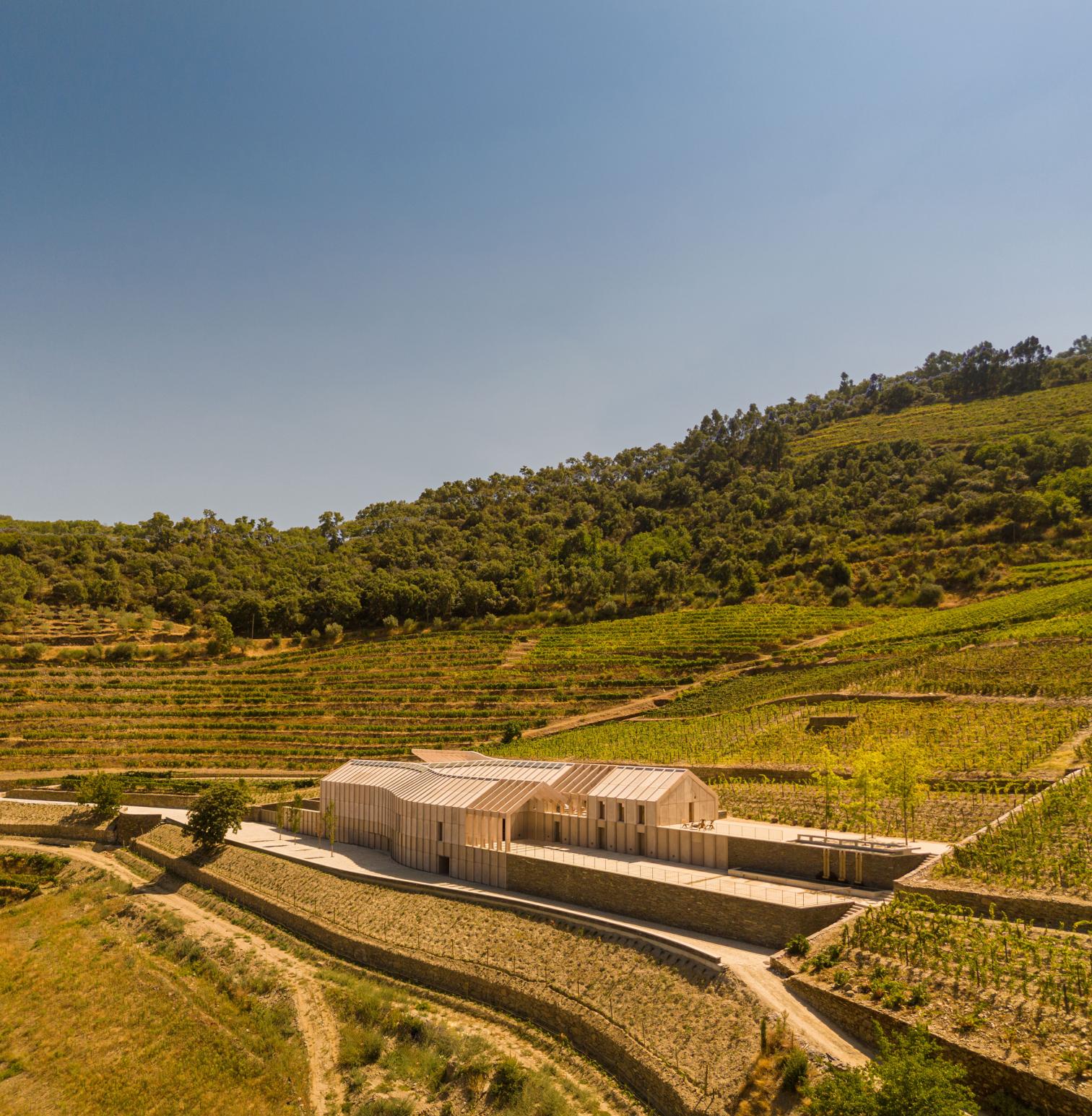
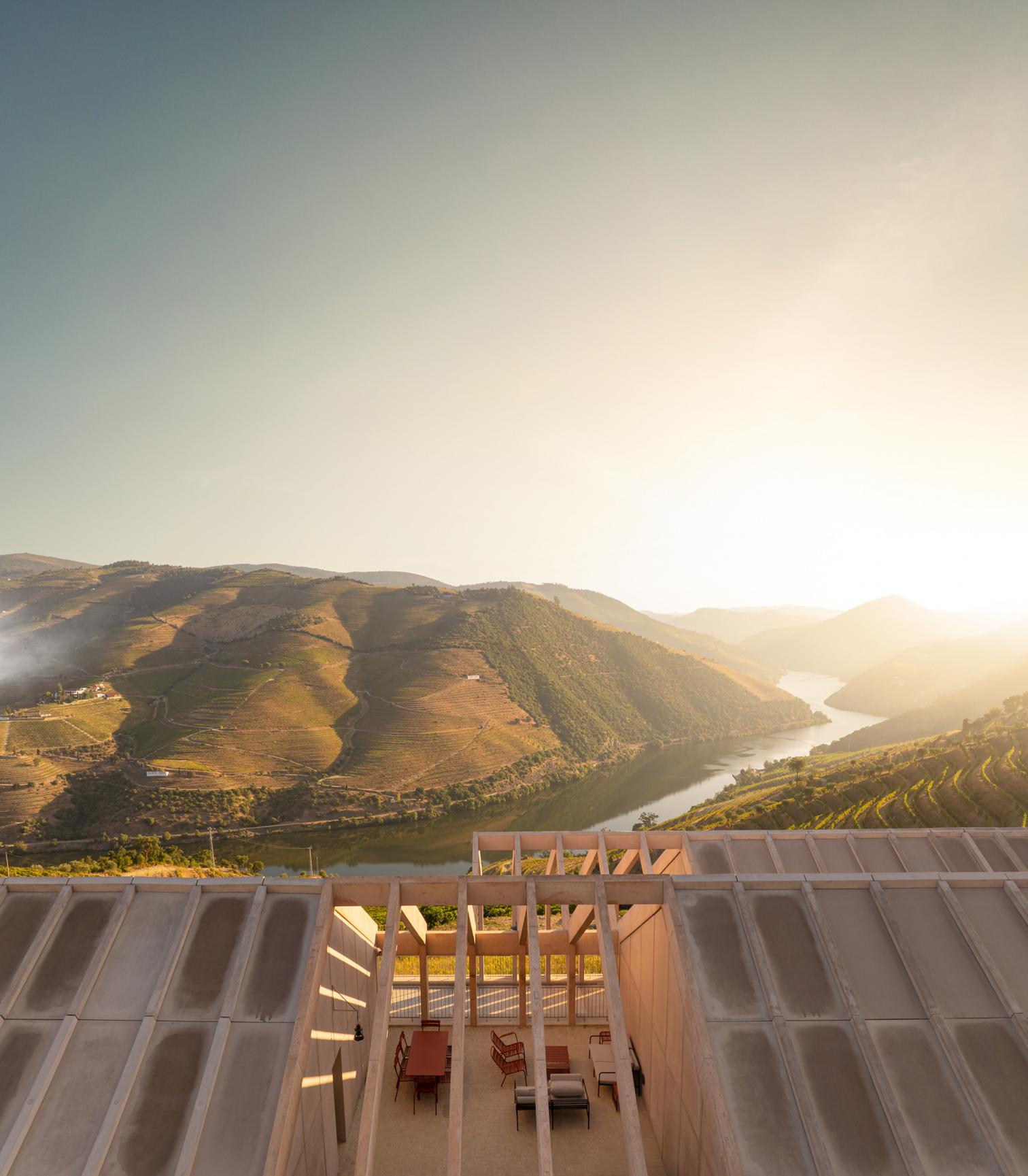
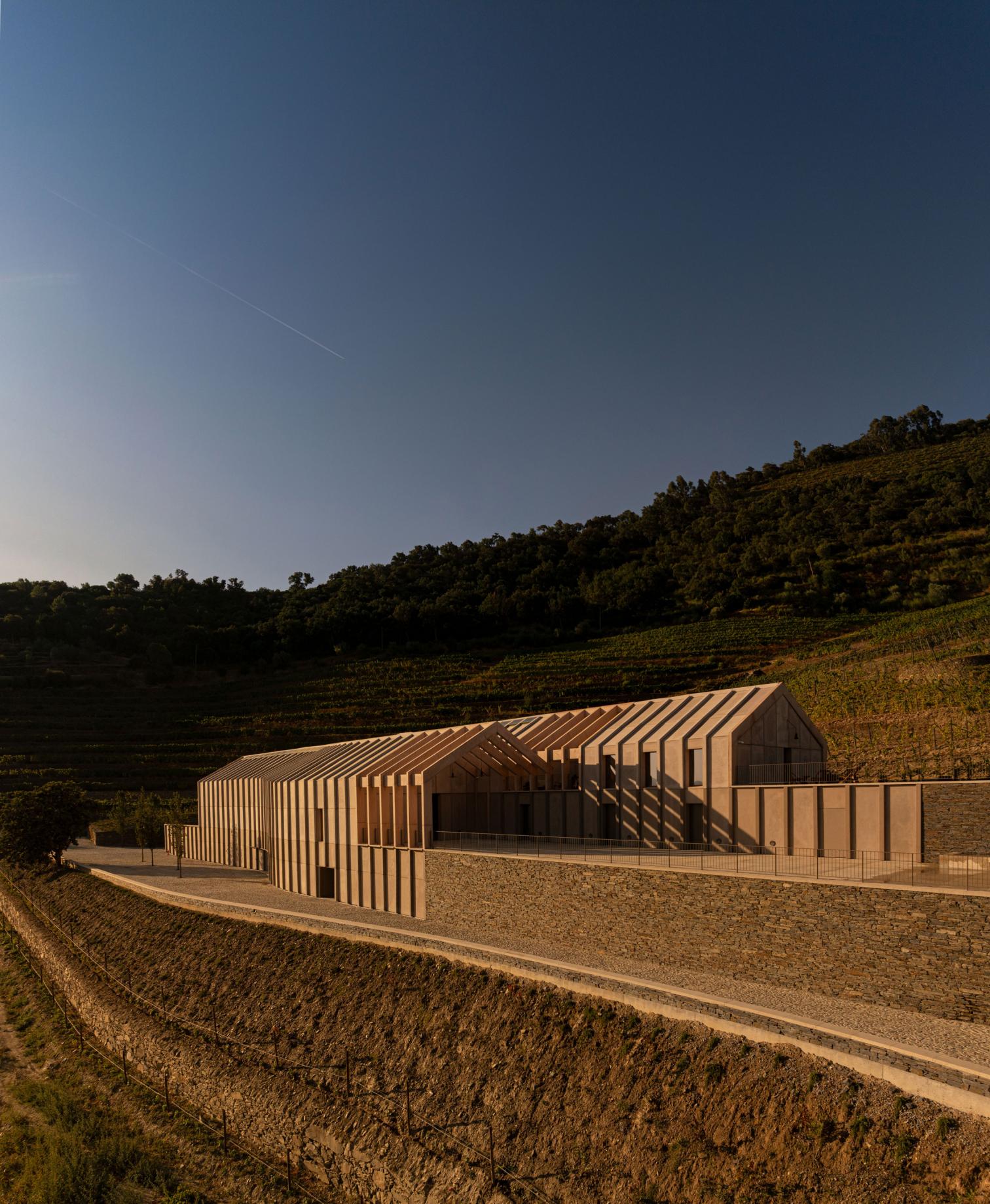
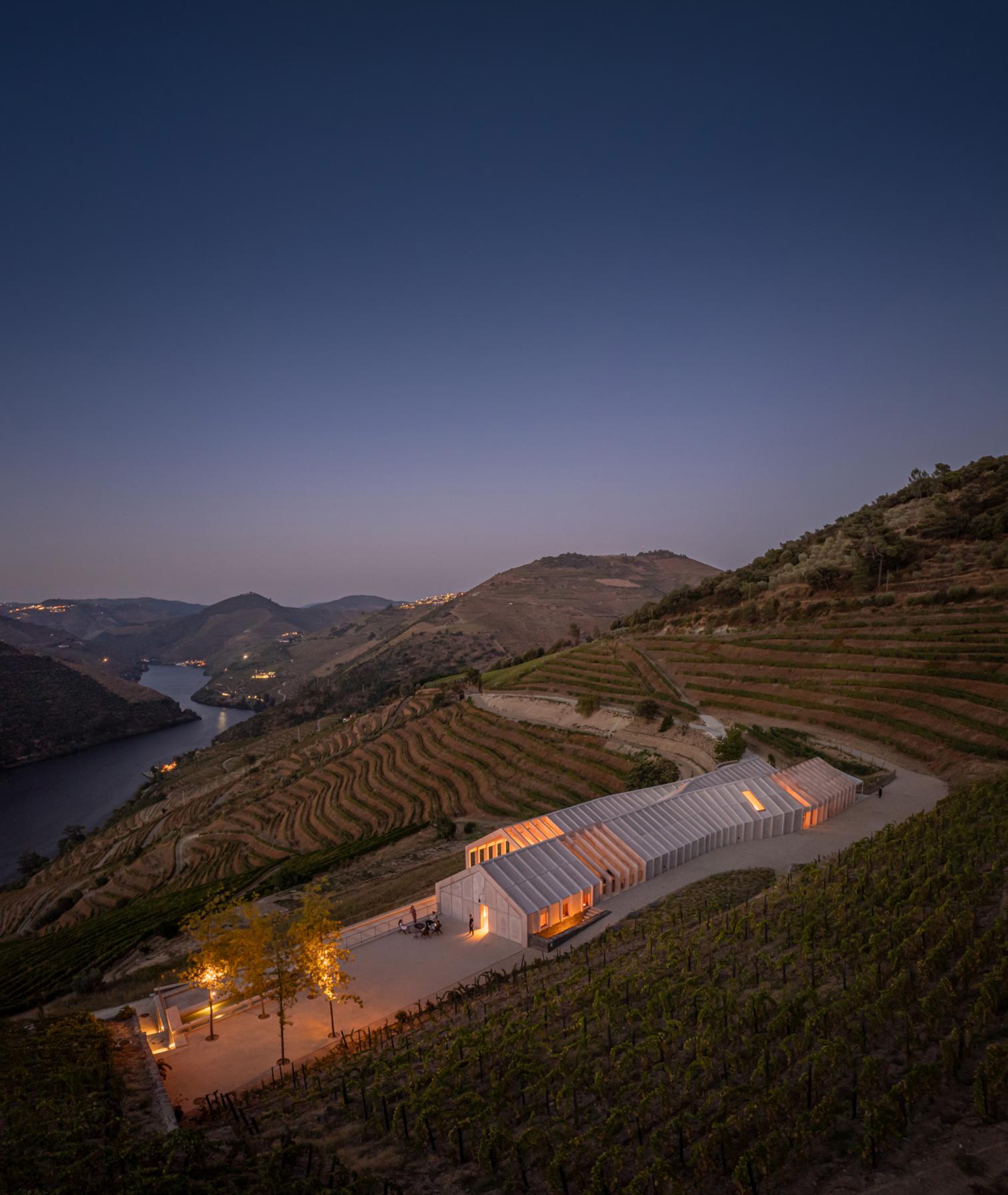
In a region of exceptional beauty, the architecture engages in a dialogue with a centuries-old winemaking tradition deeply rooted in the landscape. The Adorigo estate is located in Alto Douro Vinhateiro, a Portuguese wine-growing area recognized by UNESCO as a World Heritage Site, both for its natural and its cultural attributes. The project is part of a wine-tourism complex that includes a hotel, offering a full experience of architecture, landscape, and wine culture.
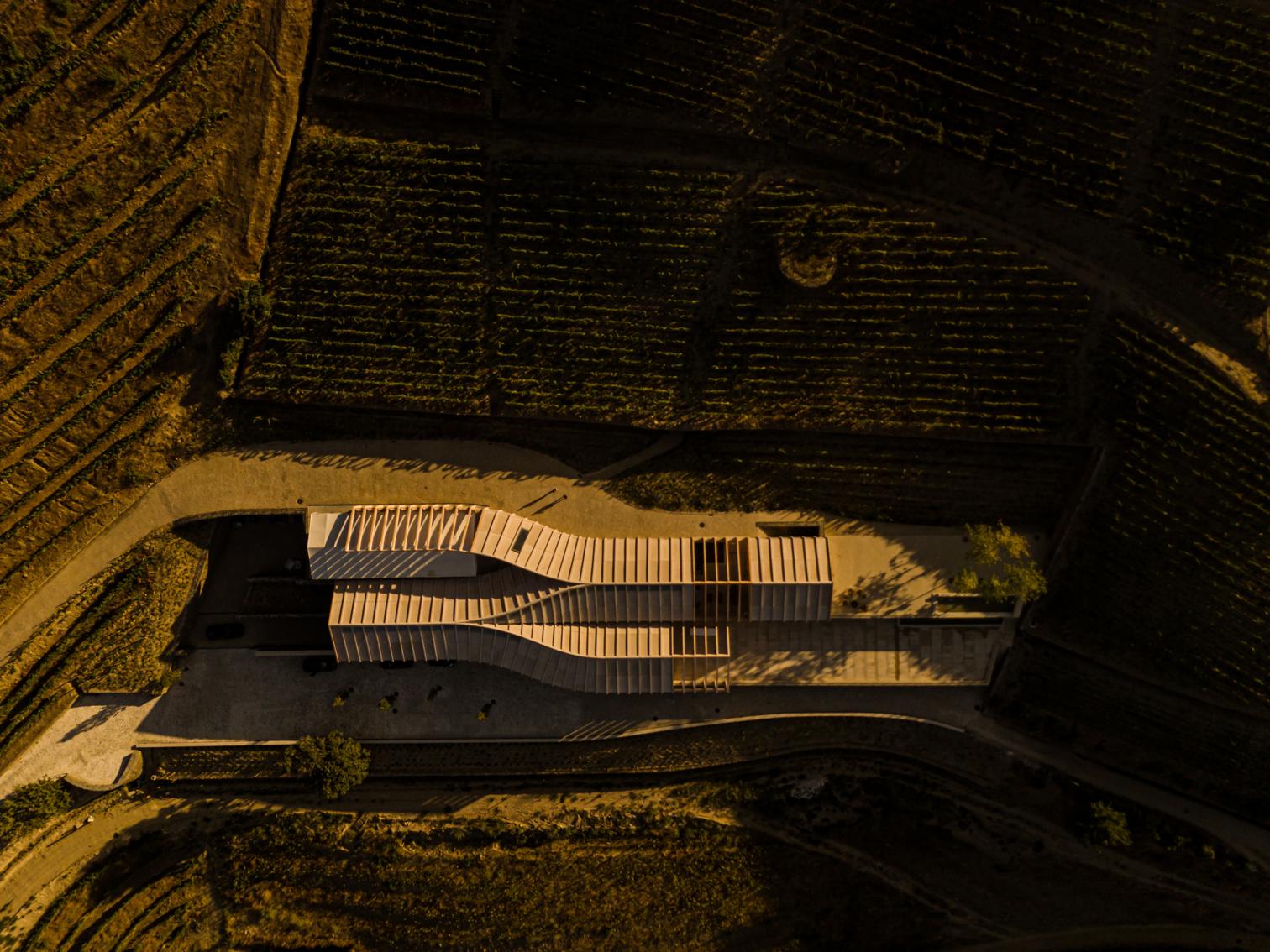
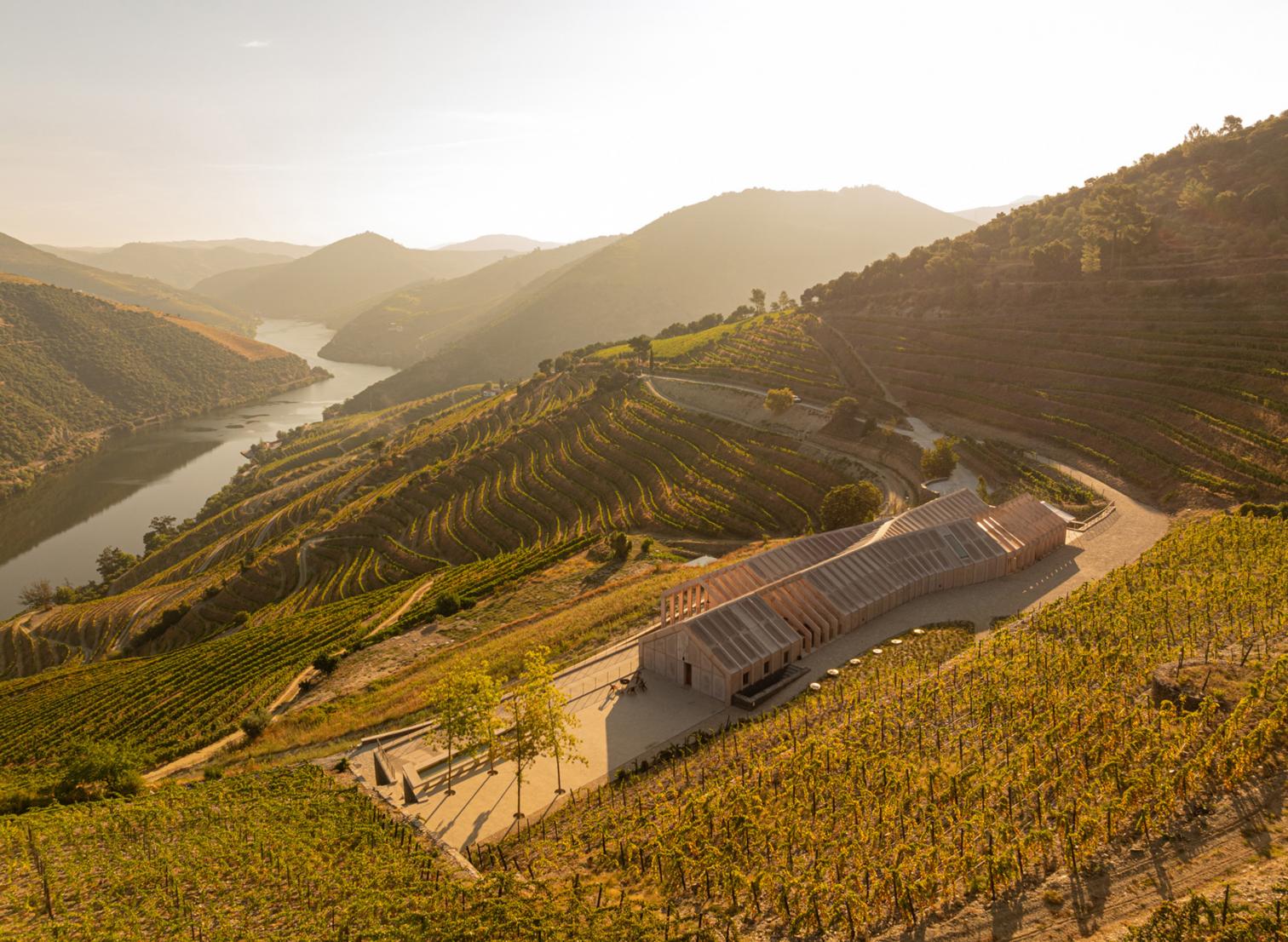
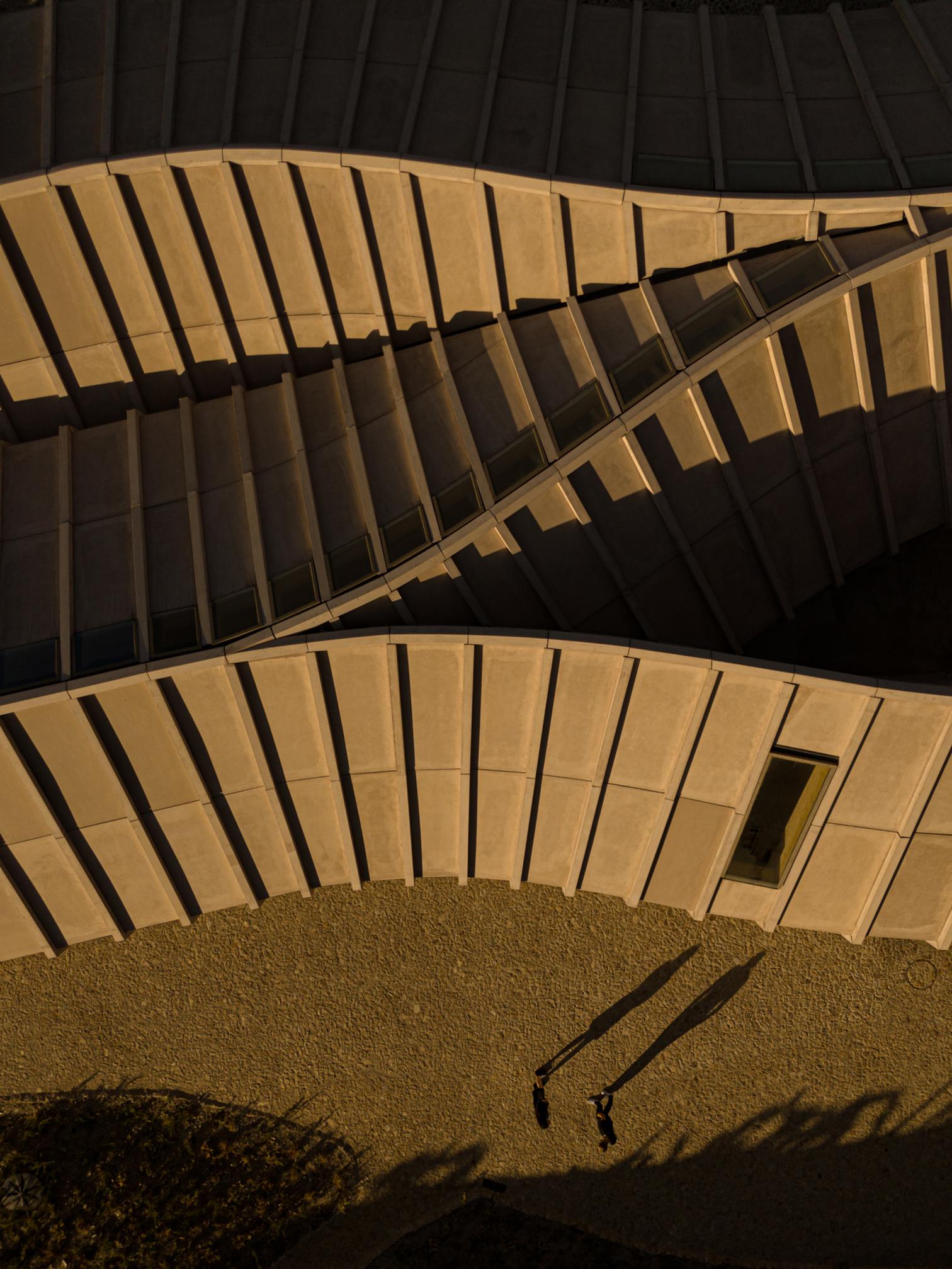
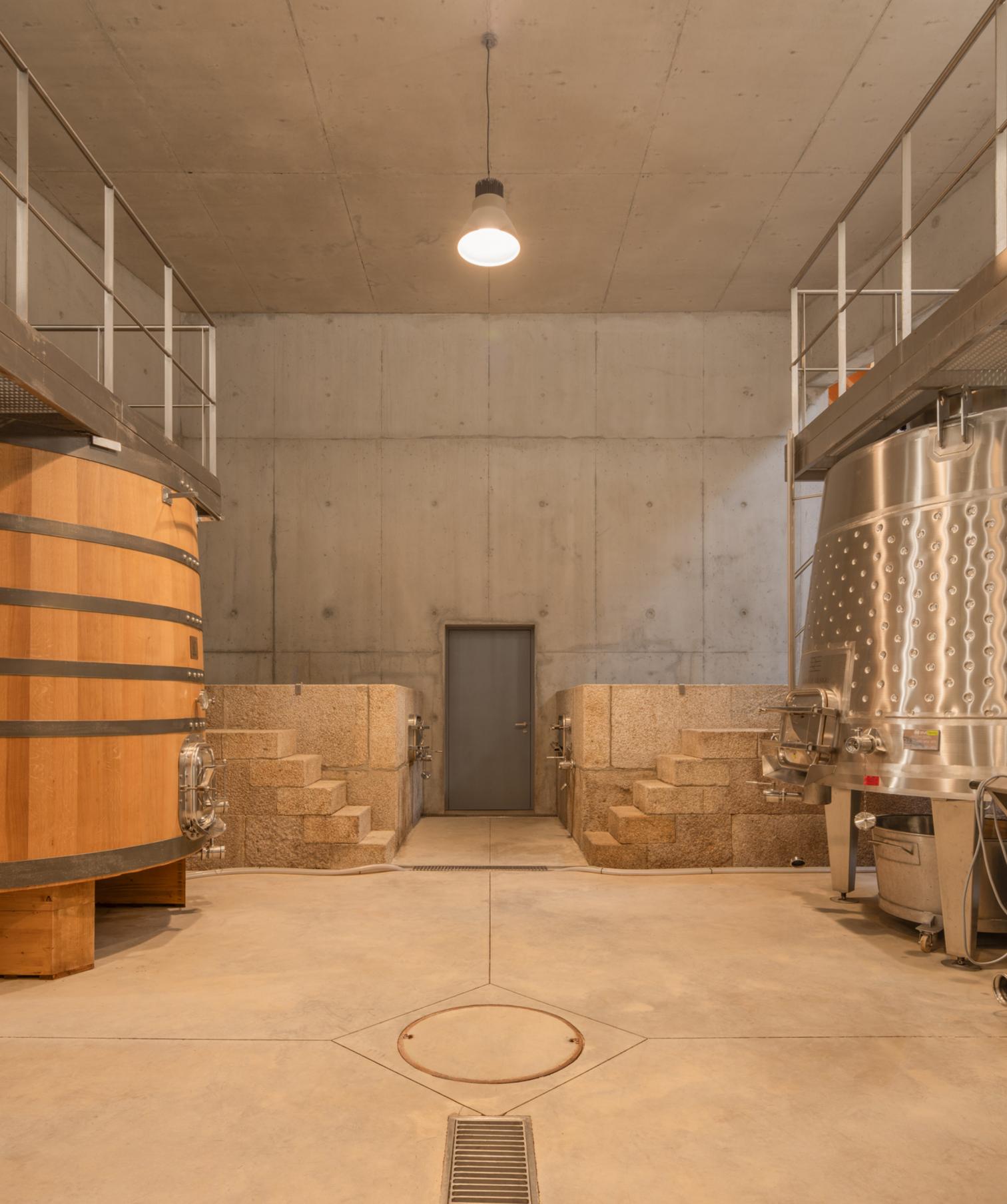
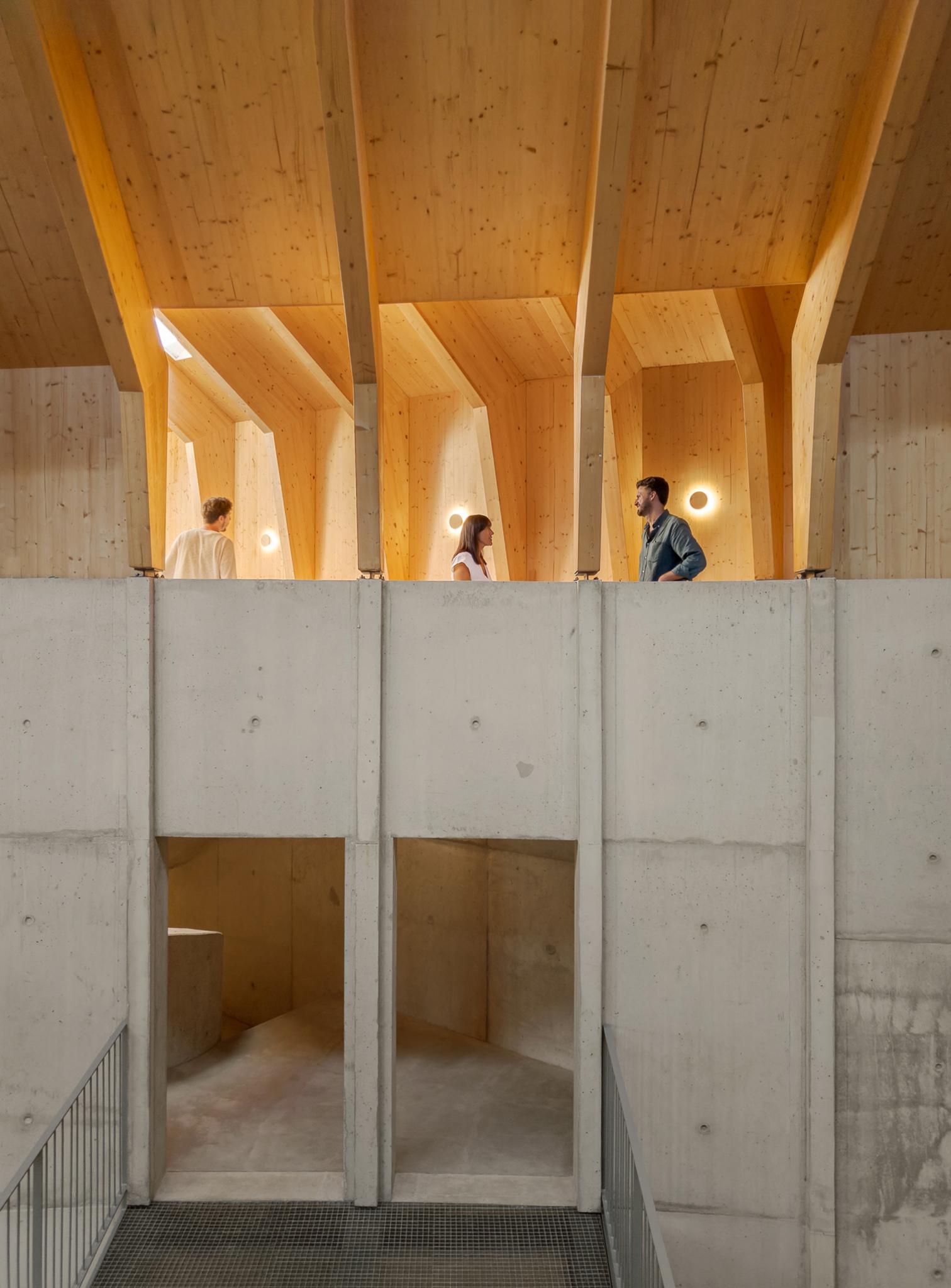
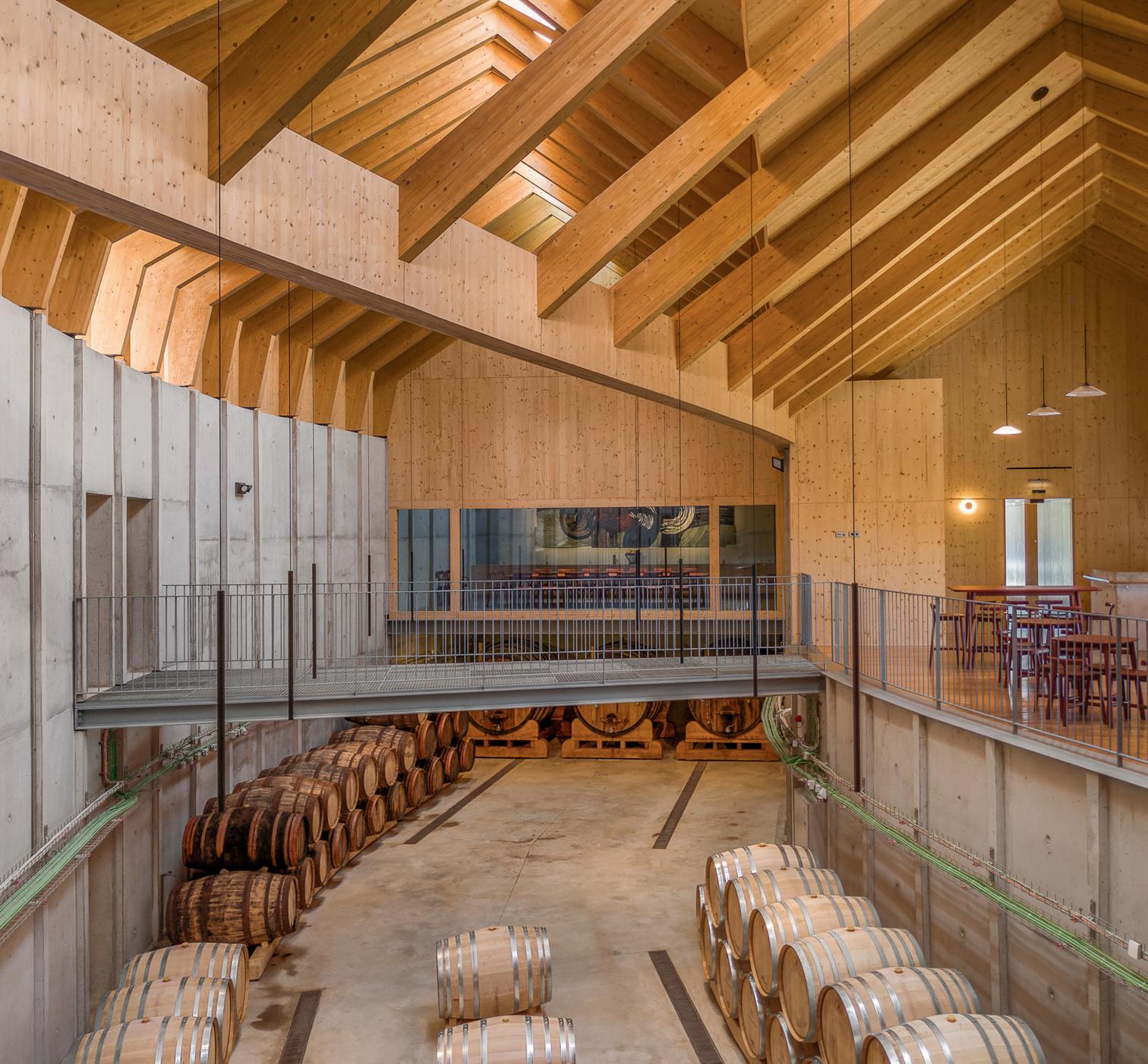
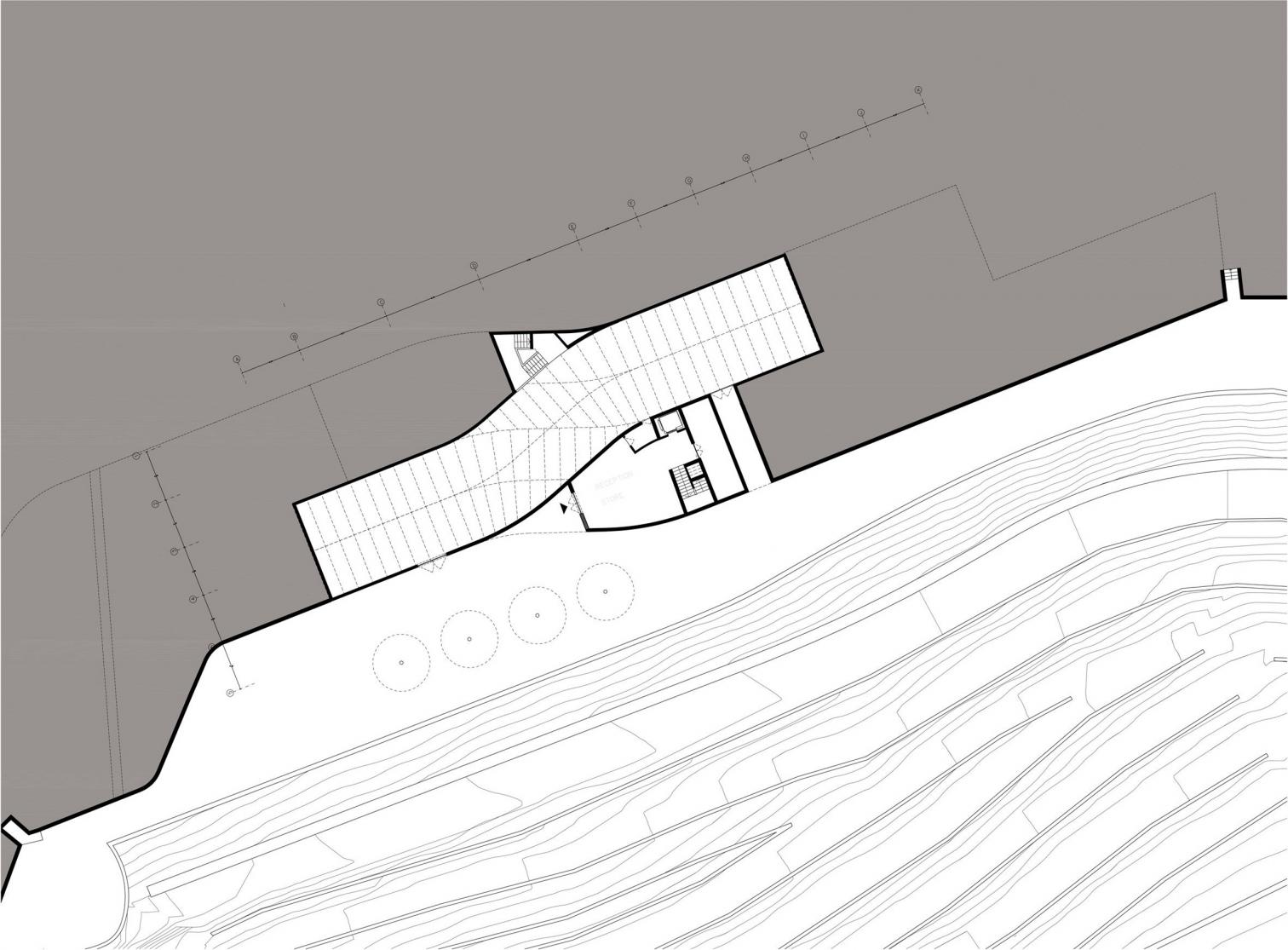
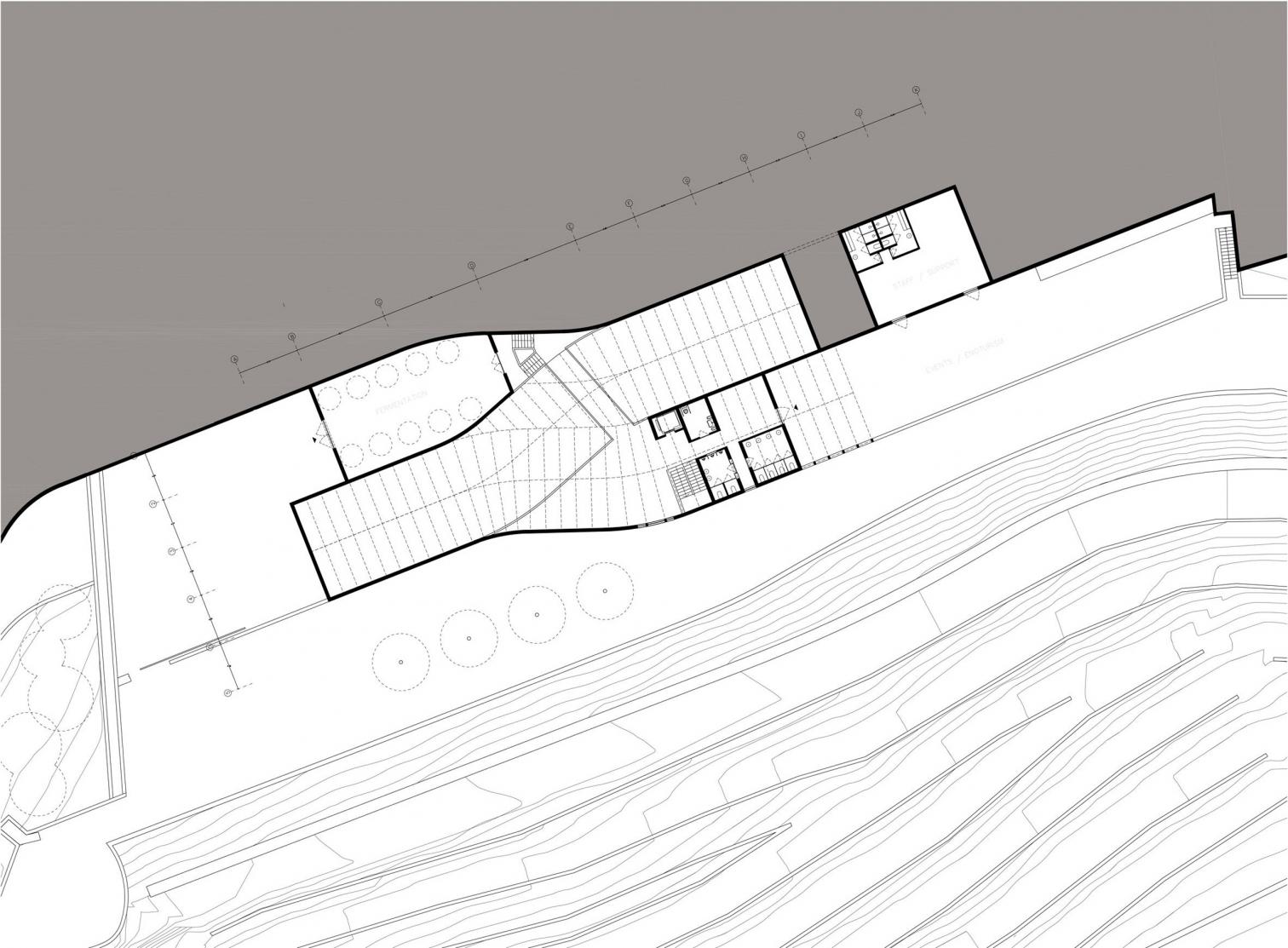
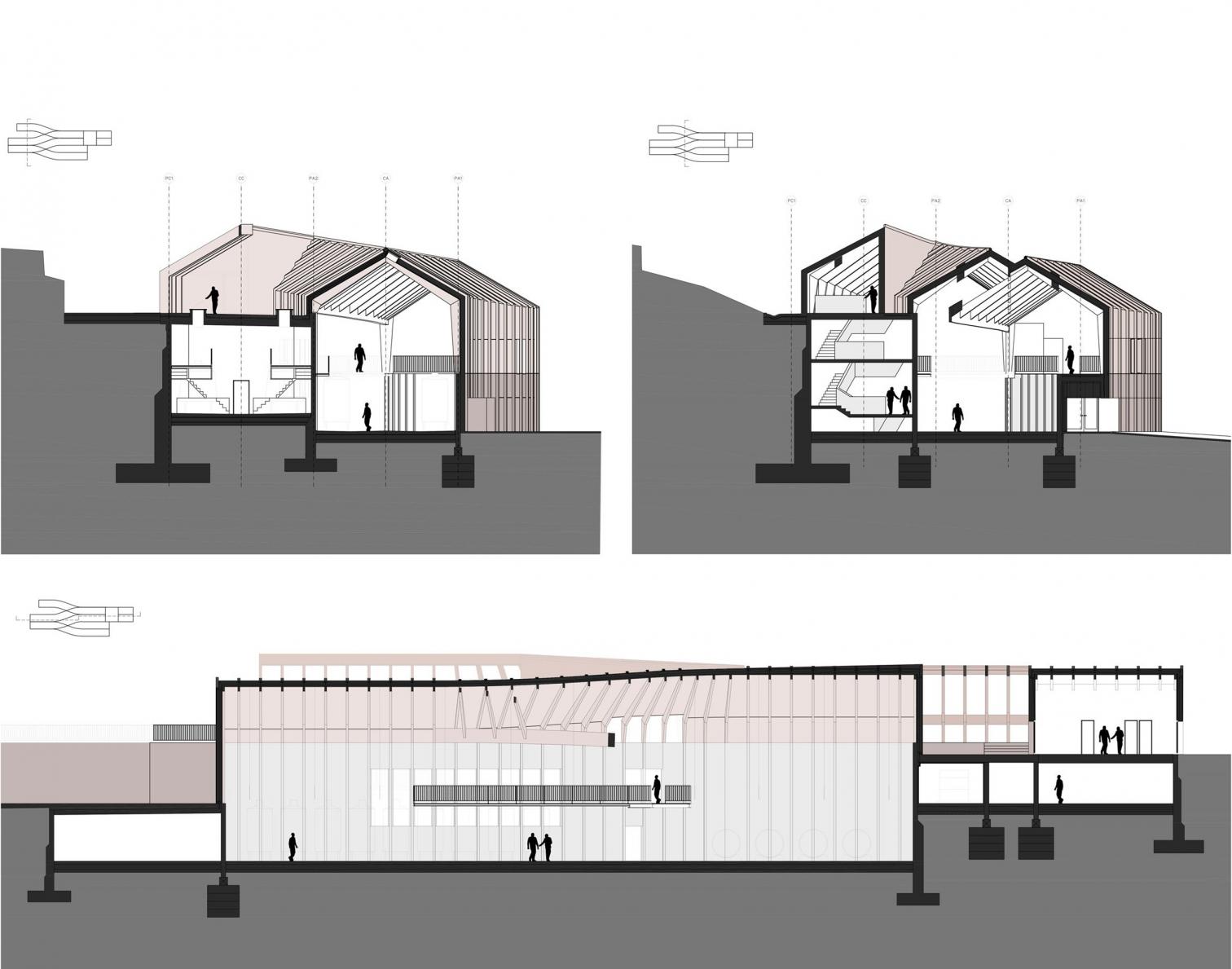
The winery features horizontal and curvilinear forms as well as fluid pathways between its different areas, evoking the zigzagging vineyards. It is not a literal reproduction of the landscaspe, but rather an interpretation that prioritizes production routines, efficient circulation, and internal communication. The building descends following the natural topography, reflecting its inner operations: winemaking is carried out by gravity, a traditional system on the banks of the Douro River. This logic translates into a set of intertwined buildings that follow the slope of the land and are replicated in the interior levels.
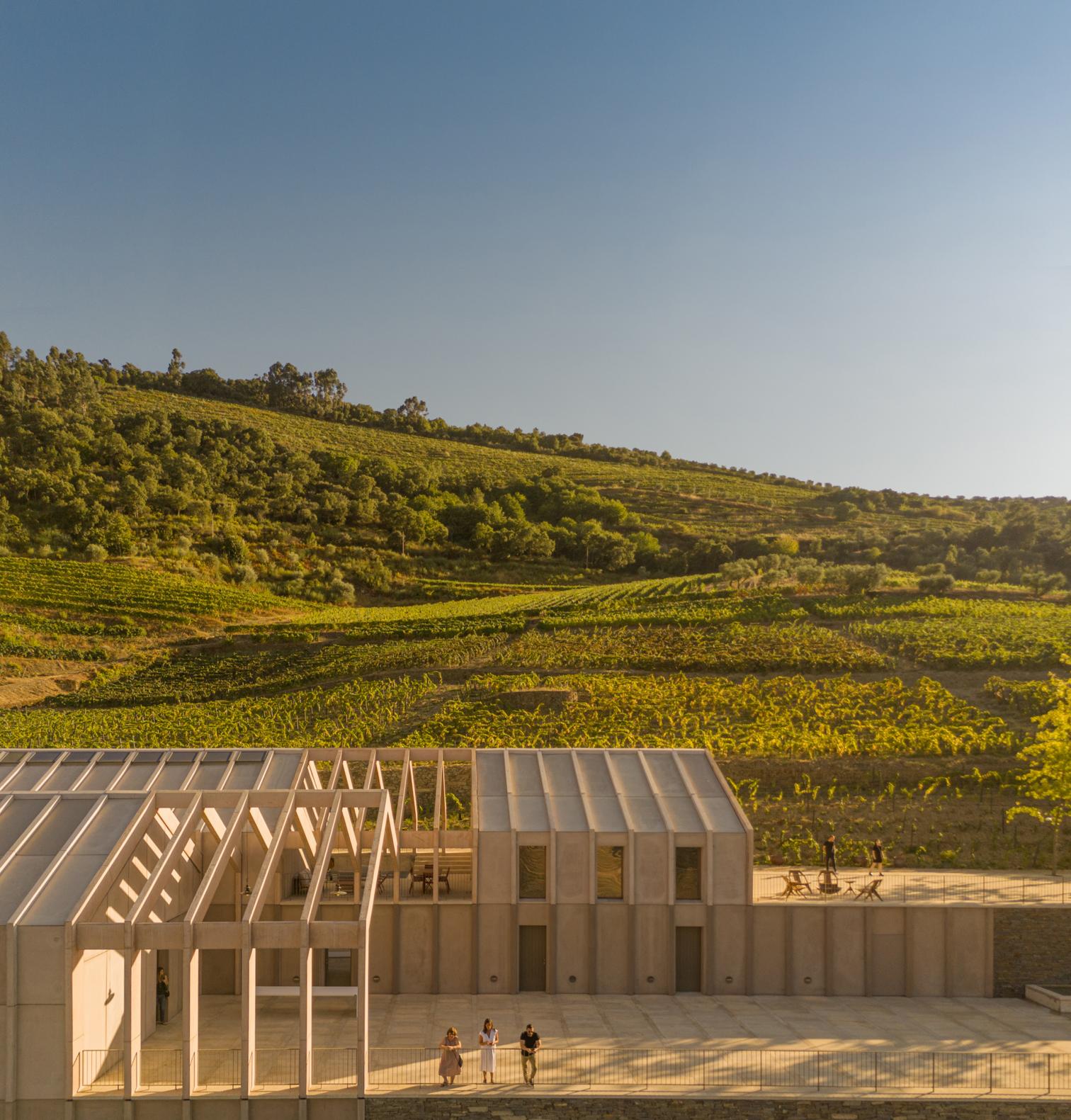
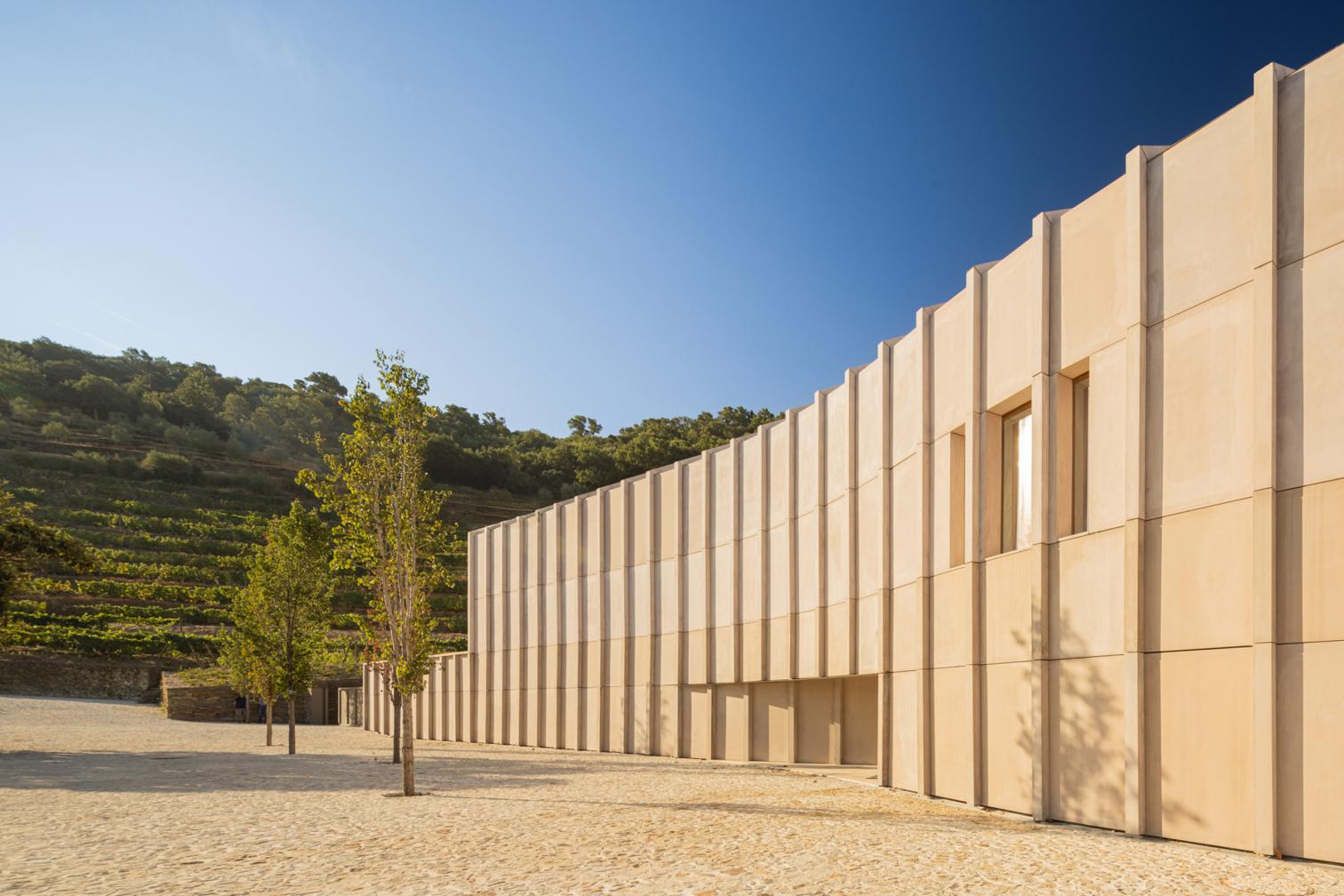
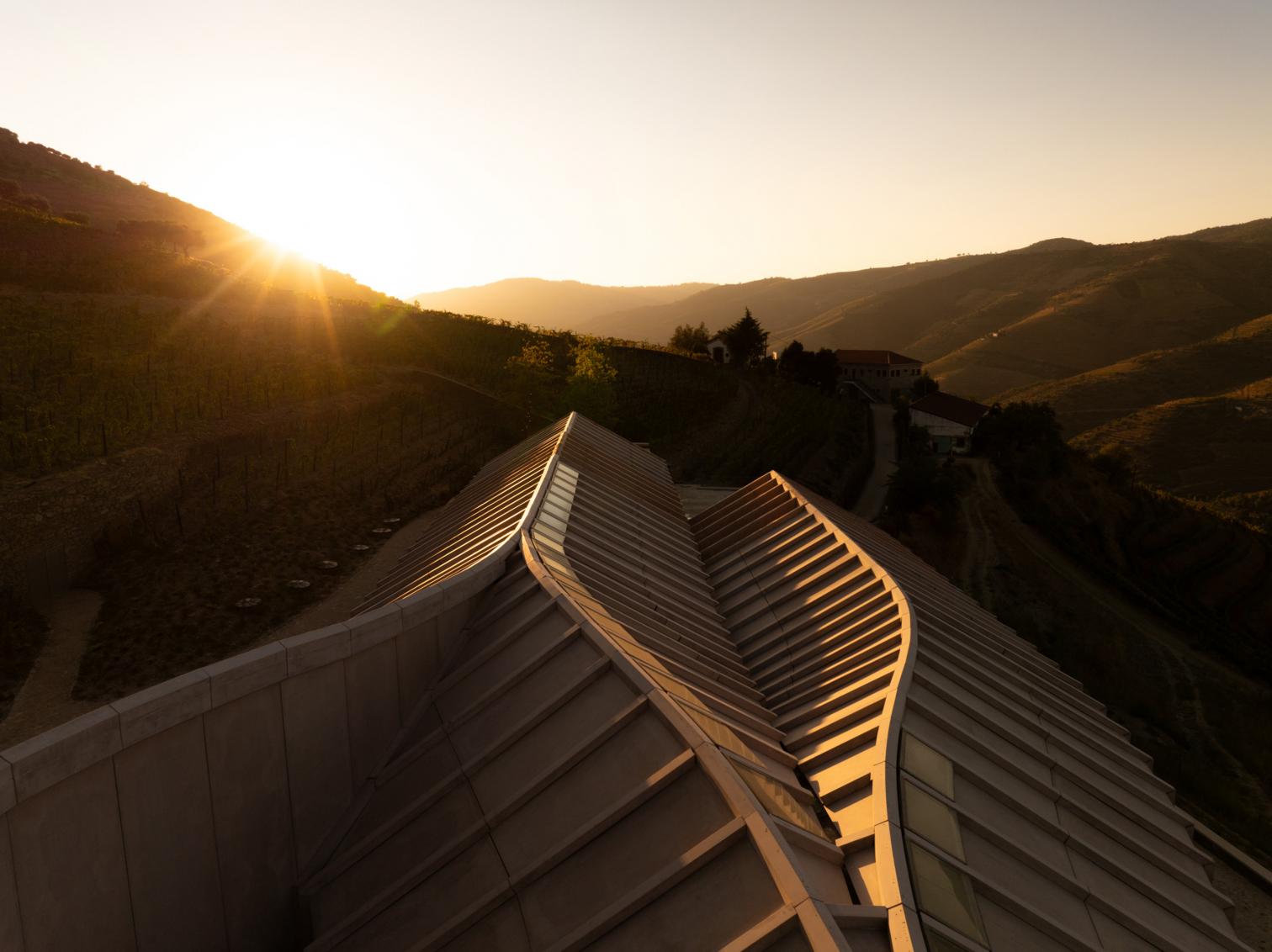
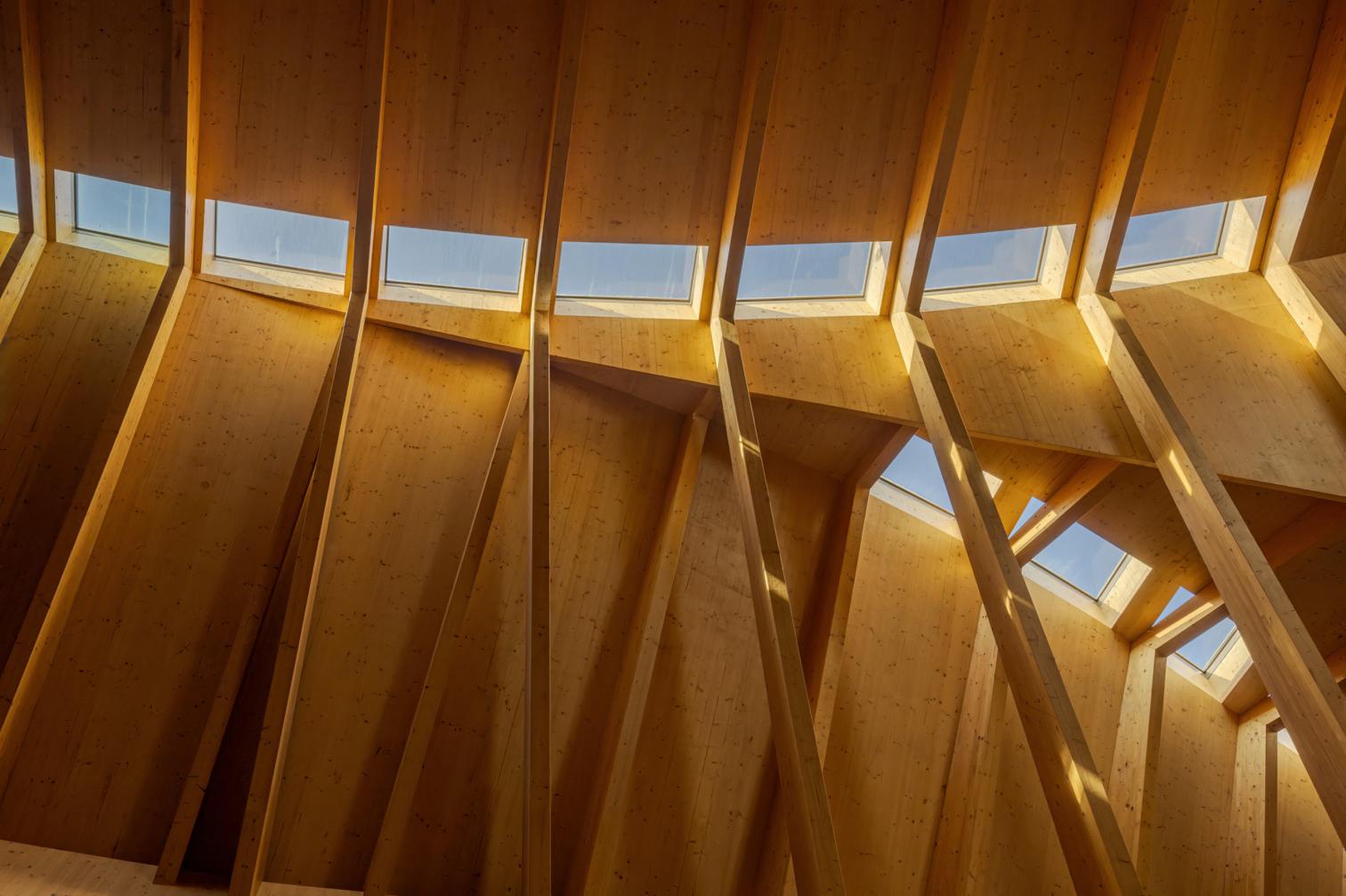
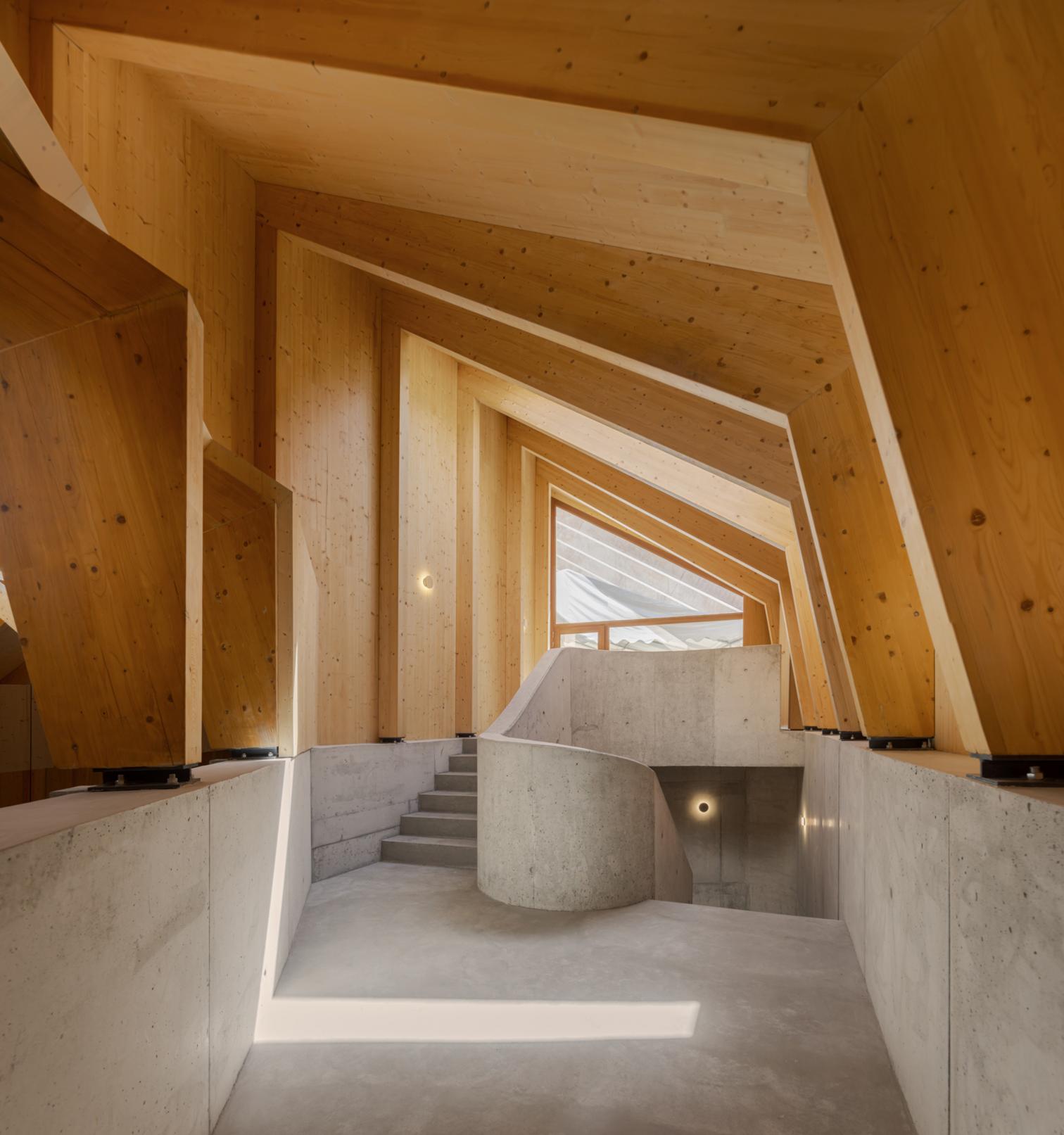
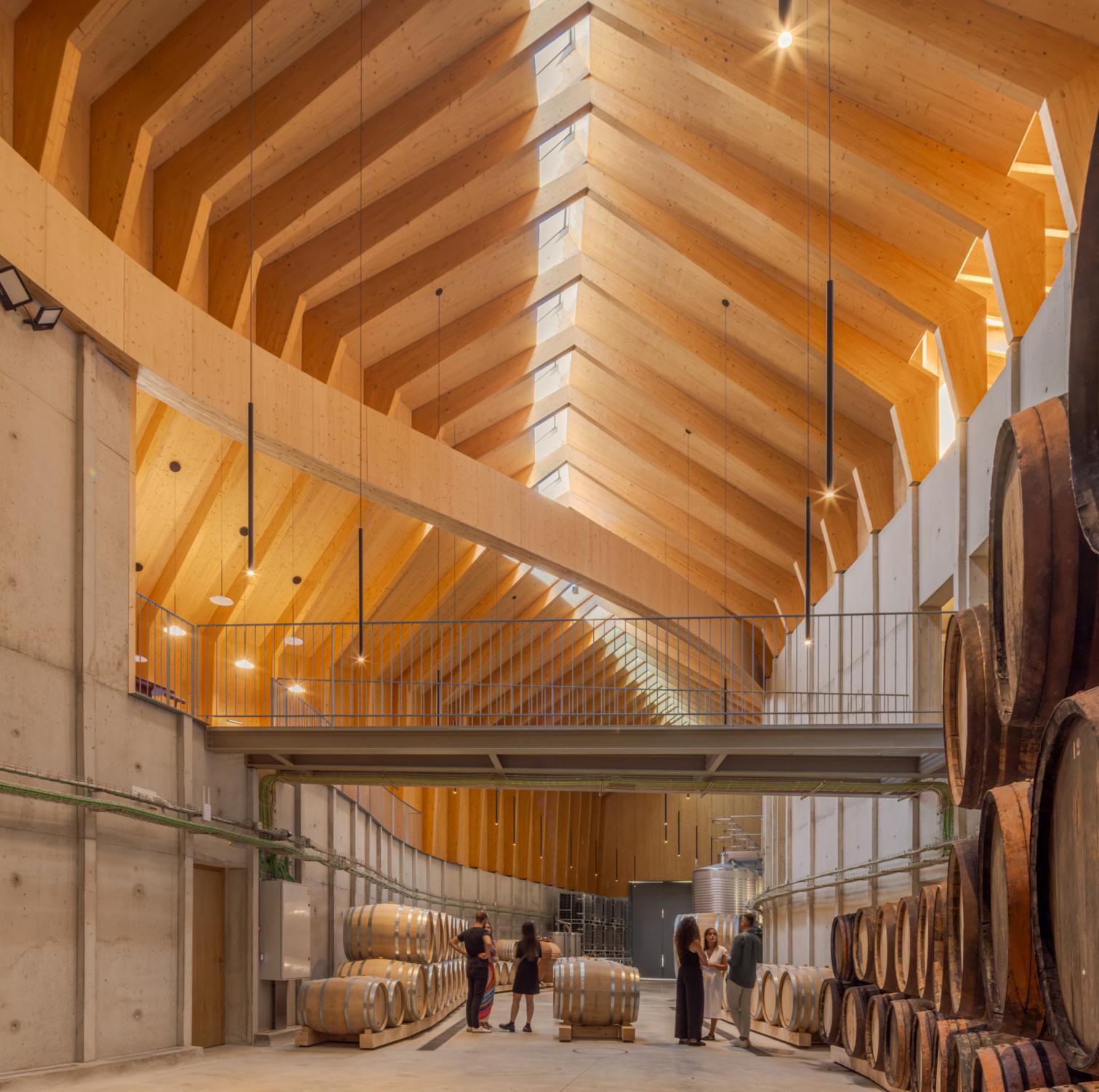
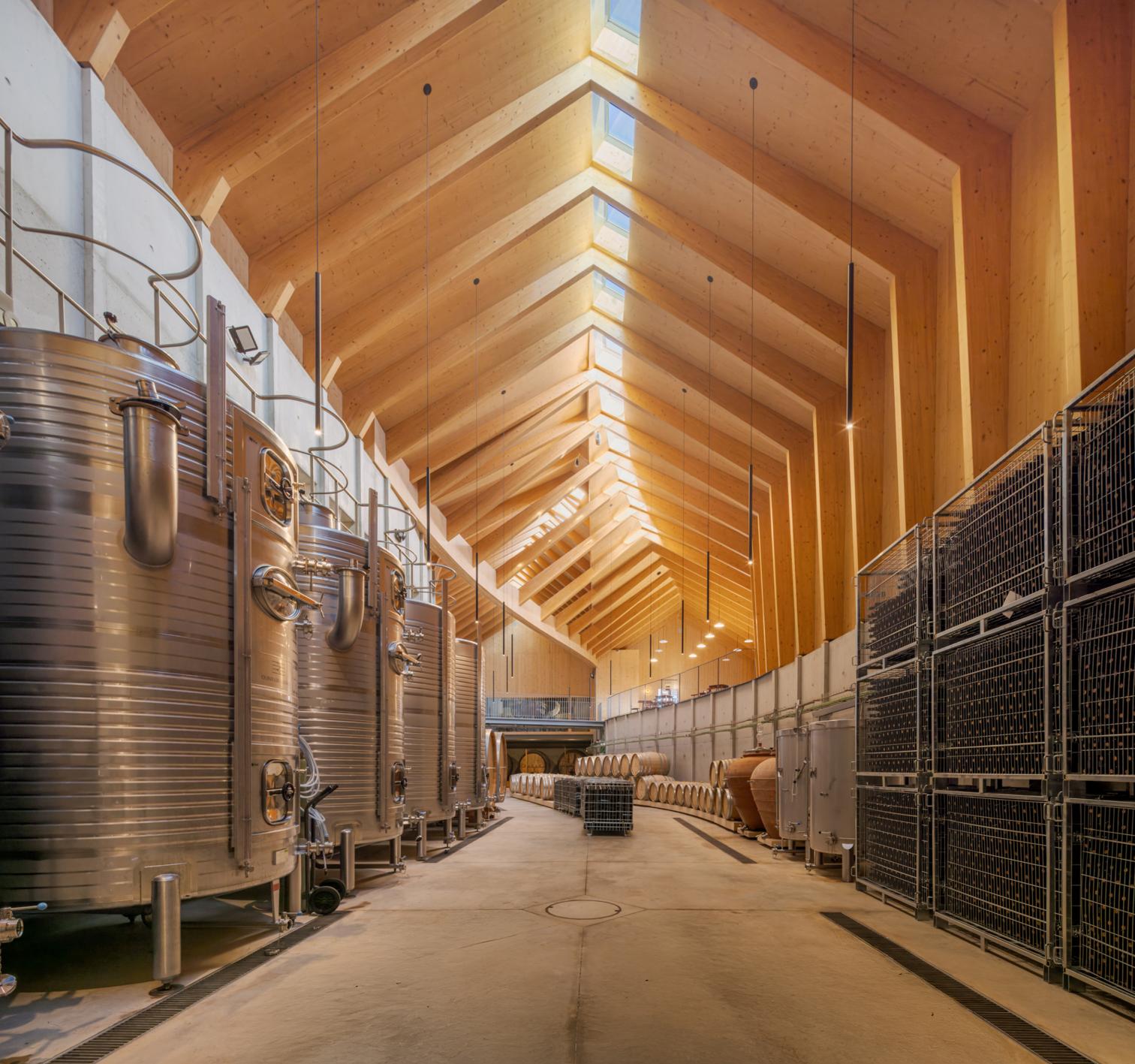
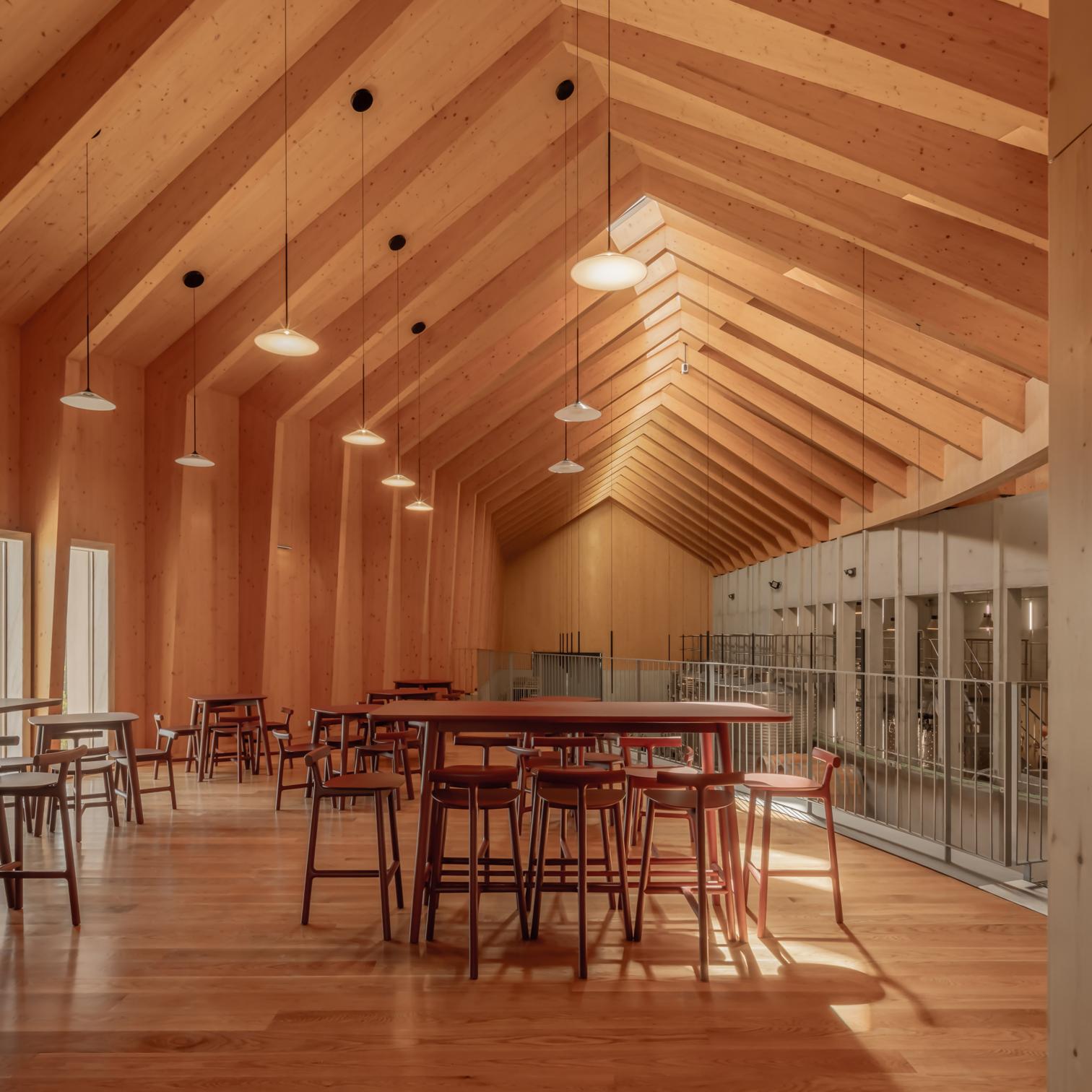
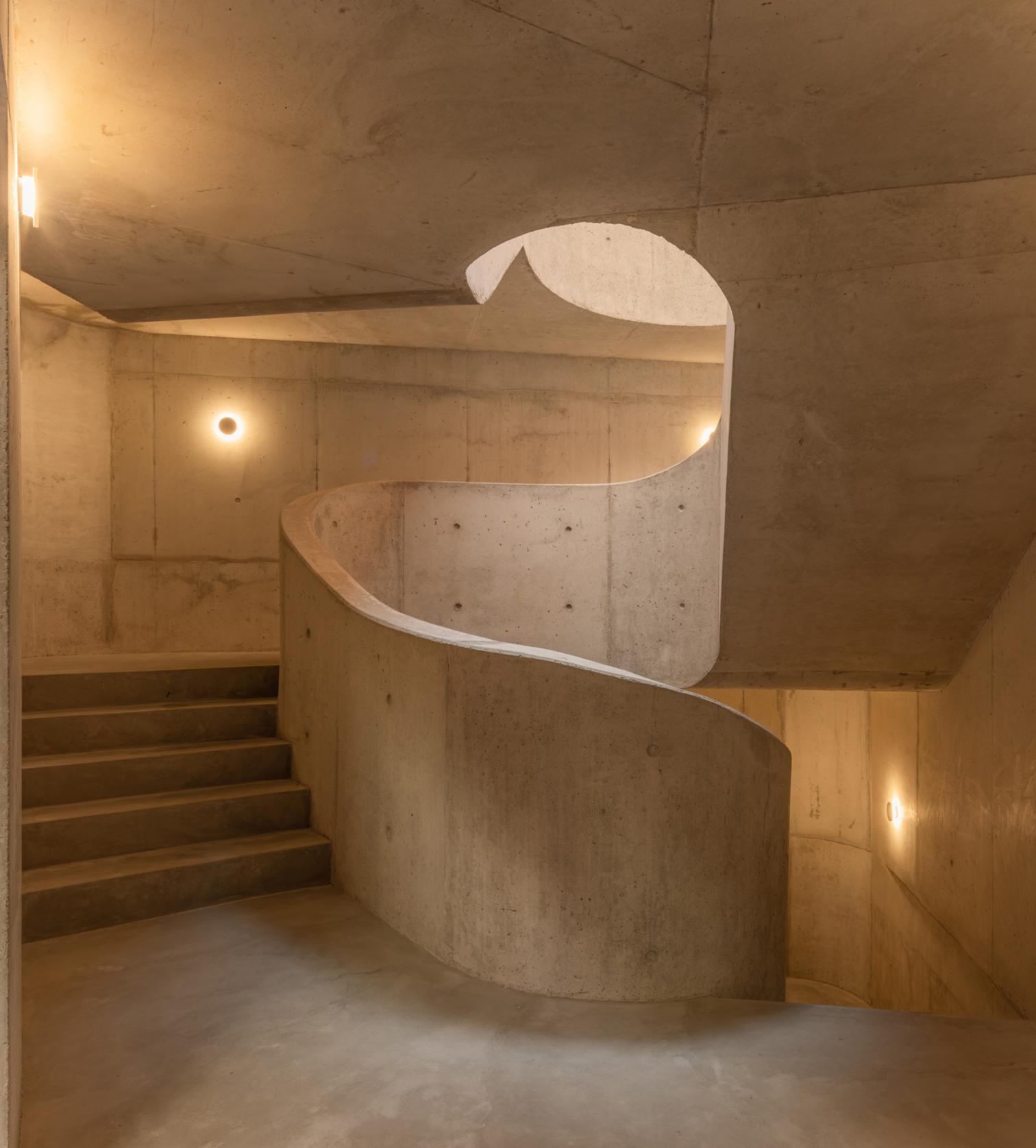
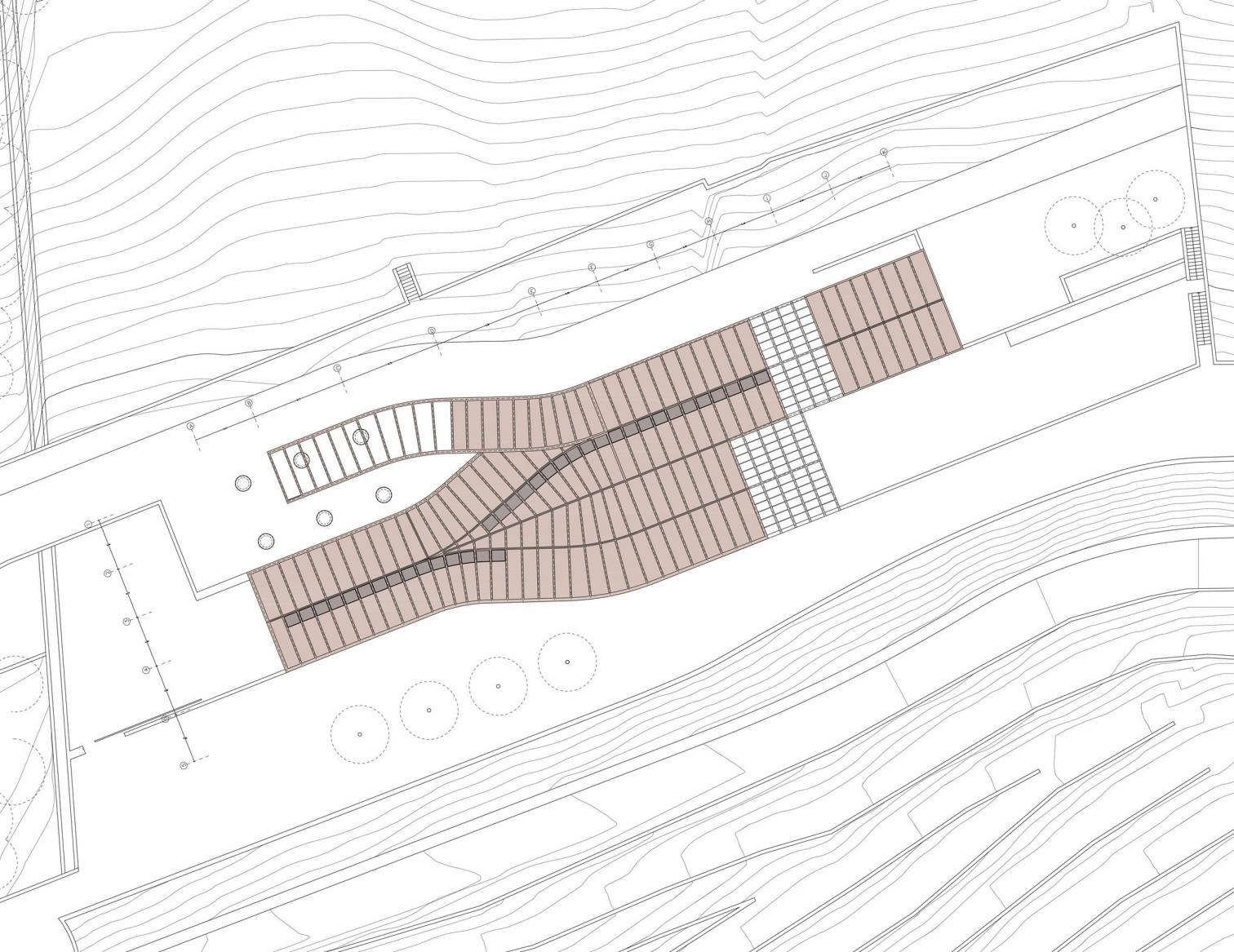
The roof reinterprets the traditional gable roof through a continuous, organic, sculptural geometry, structured in wood and aligned with the curves of the vineyards. Local materials like schist and granite are used on the exterior, while the interior incorporates retaining walls of concrete. The structure combines laminated wood porticos, CLT panels, and prefabricated fiberglass-reinforced concrete claddings, reducing the impact of the construction work and the use of formwork.
The winery integrates passive and active energy efficiency strategies. Partially buried, the building takes advantage of the thermal inertia of the ground to maintain stable conditions between 14 and 16 °C in the wine aging areas, despite strong external temperature fluctuations. The north-facing orientation, contact with the ground, and a geothermal system significantly reduce energy consumption. Added to this are water management solutions, permeable paving, and materials that age gracefully, integrating the building into the landscape while improving its quality over time, like a fine wine.
Dining and Cooking