
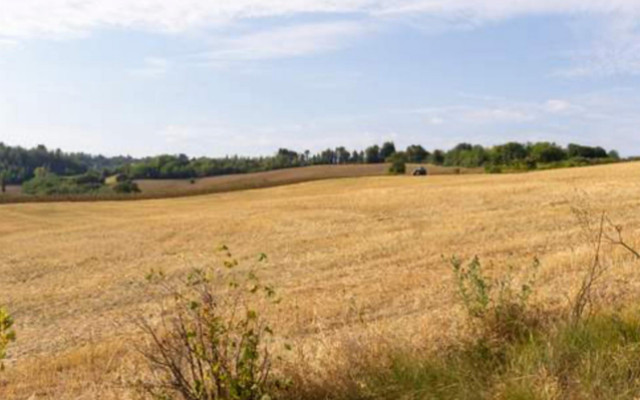
Il organic farming sector Italian organic farming continues its expansion trajectory, surpassing 2,5 million hectares of certified organic farmland in 2024, according to the latest report. Bio in Numbers 2025 published by ISMEA (Institute of Services for the Agricultural Food Market) in collaboration with MASAF (Ministry of Agriculture, Food Sovereignty and Forestry) and CIHEAM Bari. This comprehensive annual monitoring tool, now in its twenty-first edition, demonstrates that theItalian organic farming has achieved unprecedented structural consolidation while strengthening its position as a European leader in sustainable agricultural production (ISMEA, 2025).
Structural growth and European leadership
La organic agricultural area In Italy, it expanded by 2,4% in 2024, adding approximately 60.000 hectares to reach a total of 2.565.000 hectares. Over the last decade, the sector has seen a 68% increase, representing an additional one million hectares cultivated with organic certification, with an average annual growth rate of 6% (ISMEA, 2025). This expansion places Italy among the leaders in the European Union in the development of organic farming.
The impact of organic farming on utilized agricultural area (UAA) total reached 20,2% in 2024, with an increase of 0,4 percentage points compared to 2023. This result brings Italy substantially closer to the 25% target established by the EU strategies.Farm to Fork’ And ‘Biodiversity’ for 2030. The Italian performance significantly exceeds that of other large European agricultural economies, including Spain (12,3%), Germany (11,5%) and France (9,9%), confirming the Bel Paese’s commitment to transition to sustainable agriculture.
Land use distribution and crop categories
The composition of the organic farmland reveals a diversified production system. Arable land constitutes 40% of the total organic UAA, while permanent grassland and pastures represent 31%. permanent crops They make up 22,7% of the organic area, with vegetables accounting for 2,3%. The most significant expansion in 2024 occurred in the meadows and pastures category, which increased by 8,2% (approximately 60.000 hectares), mainly in the Aosta Valley, Campania, and the Autonomous Province of Bolzano.
Permanent crops showed positive growth (+1,9%), while arable land Organically managed crops recorded a slight decline (-2%), as did organic vegetable production (-5,1%). Despite this recent decline, both categories have demonstrated substantial long-term growth, with ten-year increases of 72% for arable crops and 93,5% for vegetables.
Performance of the livestock sector
Il organic livestock sector exhibited positive trends in most categories in 2024, in contrast to the general decline observed in conventional livestock production. Organic populations of cattle, sheep, goats and pigs have all recorded increases. The poultry sector has experienced a reduction in the number of organic heads after an exceptional growth in 2023; the ten-year perspective also reveals that thepoultry farming organic farming in Italy has doubled, +97% from 2017 to 2024, with an increase of three million birds.apiculture organic has maintained a stable number of hives after the decline of the previous year.
In terms of incidence of organic livestock heritage Among the total number of national heads, the most significant penetration rates were observed in the goat sector (11,5%), followed by the sheep sector (10,5%) and bovine production (9,1%). These data underline the particular suitability of extensive farming systems for organic conversion and the growing consumer demand for organic products of animal origin.
Operator dynamics and geographical distribution
The number of organic operators increased by 2,9% in 2024, reaching 97.160 units, exceeding the previous year’s growth rate. This increase included 2.719 additional operators, mainly exclusive producers (+2.675 units, +3,8%) and producers engaged in both production and preparation activities (+176 units, +1,2%). Importers remained stable, while exclusive preparers decreased by 133 units. Over the past decade, Italian organic sector recorded a 62% increase in the number of operators, equivalent to over 37.000 additional units, with comparable growth rates in all three macro-areas.
Le farms They represent almost 90% of organic operators (+3,4% compared to 2023) and include both exclusive producers and those who combine production with preparation and/or import activities. Exclusive producers make up 74,4% of total operators; the category of producer-preparators has significantly increased its share in the last decade, showing how thevertical integration of the supply chain guarantees greater economic benefits and market positioning.
THEgeographical analysis The data reveals that 58% of organic UAA is located in Southern Italy, 23% in the central regions, and 19% in Northern Italy. In 2024, Northern Italy recorded the highest growth rate (+8,4%), while Southern Italy achieved the largest absolute increase (+50.000 hectares compared to +36.000 hectares in the North). Central Italy experienced a contraction of 28.000 hectares. Sicily, Puglia, and Tuscany collectively account for 38,1% of the national organic UAA, while the top ten regions account for 83,4% of the total organic area.
Market performance and consumer trends
Il domestic consumption of organic products has reached historical highs in 2024, with an increase in value of 2,9% compared to 2023 (+112 million euros in absolute terms), reaching 3,96 billion euros. The increase in purchases of organic products it surpassed that of the agri-food sector as a whole (+0,9%), thus raising the share of organic products in total food expenditure to 3,6% (+0,1% compared to 2023) after two years of contraction (ISMEA, 2025).
The volumes of the purchases of organic products They also recorded a 4,3% growth, outpacing the value-based increase and thus confirming a generally more moderate price dynamic compared to conventional foods. Vegetable oils and fats showed the most significant increase in expenditure (+31,8%), followed by eggs (+10,4%) and honey (+5,0%). Conversely, organic meat consumption declined, with a 3,5% drop for fresh meat and a 19,1% drop for cured meats. Smaller reductions were observed for wines and sparkling wines (-1,6%) and cereal derivatives (-1,2%) (ISMEA, 2025).
Consumption by channel
I supermarkets They consolidated their position as the leading distribution channel for organic products, achieving a turnover of nearly €1,5 billion, an increase of over €43 million compared to 2023 (+3,1%). This positive trend was primarily driven by fresh produce categories, particularly fruit and vegetables (+€22,3 million) and eggs (+€9,1 million).
– hypermarkets They in turn recorded growth of up to 830 million euros (+4,1% compared to 2023), representing 21,0% of total organic household purchases and surpassing the traditional sales channel (20,4%).
The ISMEA report does not specifically consider the specialized shops which, according to the BioBank 2025 Focus, recorded a growth of 9% to reach a turnover of 1 billion euros. discount They in turn showed a remarkable annual growth rate, +10,2%, reaching a turnover of over 590 million euros (15% of total organic purchases).
Imports from third countries and international trade
The analysis of imports of organic products Imports from third countries showed a 7% increase in volume in 2024 compared to 2023. This positive trend was particularly influenced by fruit (+20%) and processed products (+38%). Turkey maintained its position as the main origin market, representing 17,3% of total import volumes from third countries, followed by Pakistan (9,5%) and Ecuador (9,3%). The pre-eminence of Turkey comes from durum wheat, lentils and processed fruit and vegetables; Pakistan provides basmati rice;Ecuador specializes in bananas. Tunisia remains a significant partner for olive oil imports, while Peru supplies bananas and cocoa.
Political framework and strategic development
The Italian organic sector benefits from substantial institutional support through the European Union programming framework 2023-2027. The SRA29 intervention, dedicated to the adoption and maintenance of organic farming practices, has a total budget of over €2 billion, representing 48% of all agri-environmental-climate interventions and approximately 14% of total public spending allocated to rural development. This measure has been activated in all 19 Italian regions and the two autonomous provinces of Trento and Bolzano, providing annual payments per hectare to farmers or farmers’ associations who commit to converting to and maintaining organic farming for five-year periods.
The National Action Plan for Organic Production and Organic Products (PAN 2024-2026) provides strategic direction for the development of the sector, while Law 23/2022 establishes tools such as certification marks for organic school canteens and the ‘Italian Organic’ designation. The government has maintained an allocation of 5 million euros for the Fund for organic school canteens, with 86% dedicated to reducing costs for families (4,3 million euros distributed among the regions based on the number of beneficiaries) and 14% allocated to food information and education initiatives (700.000 euros) (ISMEA, 2025).
Challenges and prospects
The sector of theorganic farming Italian company The organic farming system addresses several challenges that require political attention. Administrative simplification remains a priority, particularly for small and medium-sized agricultural enterprises with limited resources. The decision to abolish mandatory Annual Production Programs (APP) from 2025 represents a step toward reducing certification burdens; however, this change requires strengthened coordination among institutional stakeholders to ensure continuity in the collection of structural and production data. The National Information System on Organic Farming (SINAB) maintains its monitoring role, also in light of the entry into force of Regulation (EU) 2022/2379 (SAIO) on European agricultural statistics in 2025.
Regional disparities in support for organic farming These findings reveal a heterogeneous implementation of funding measures, with some regions experiencing operator withdrawals due to the perceived inadequacy of incentives compared to the complex framework of requirements governing organic production. These requirements are in addition to the mandatory conditionalities already established by European environmental policy. Strengthening consumer confidence in Italian organic production requires continued political support, strengthened financial instruments, technical assistance infrastructure, and effective implementation of branding initiatives that distinguish Italian organic products in both domestic and international markets.
The Italian organic sector represents a strategic component of the national agri-food system, characterized by high production quality, recognized environmental value, and growing consumer acceptance in both domestic and international markets. The sector’s consolidated reputation for food safety, biodiversity preservation, and organoleptic excellence positions it as a key player in the national agri-food system.Italian organic farming in pole position to respond to the growing global demand for sustainable and traceable production systems.
Cover from Being Organic in the EU
Bibliography

Dining and Cooking