
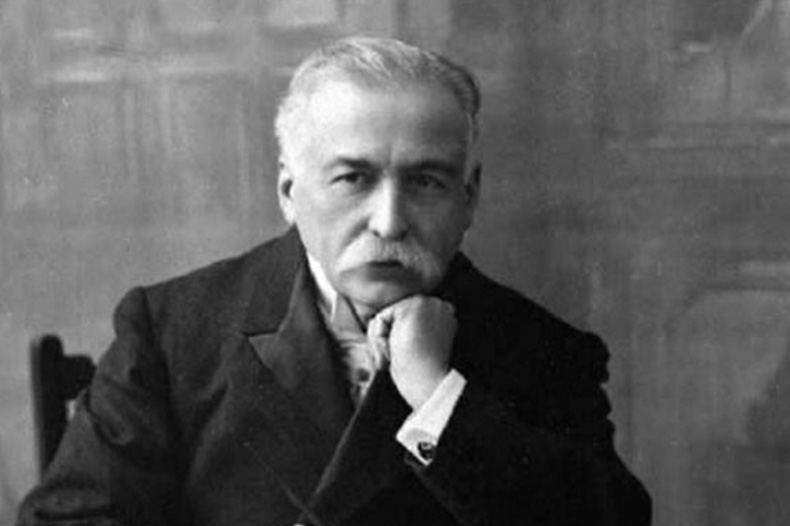
Escoffier’s sheer longevity also contributed to his influence. Hundreds of the chefs who trained under him over the course of five decades went on to run their own kitchens and disseminate his lessons. To feed Henry Clay Frick, for instance, Escoffier dispatched Joseph Donon (1888–1982), who later became private chef to the renowned hostess Florence Vanderbilt Twombly. In 1966 the protégé repaid his master with the foundation of the museum dedicated to his memory.
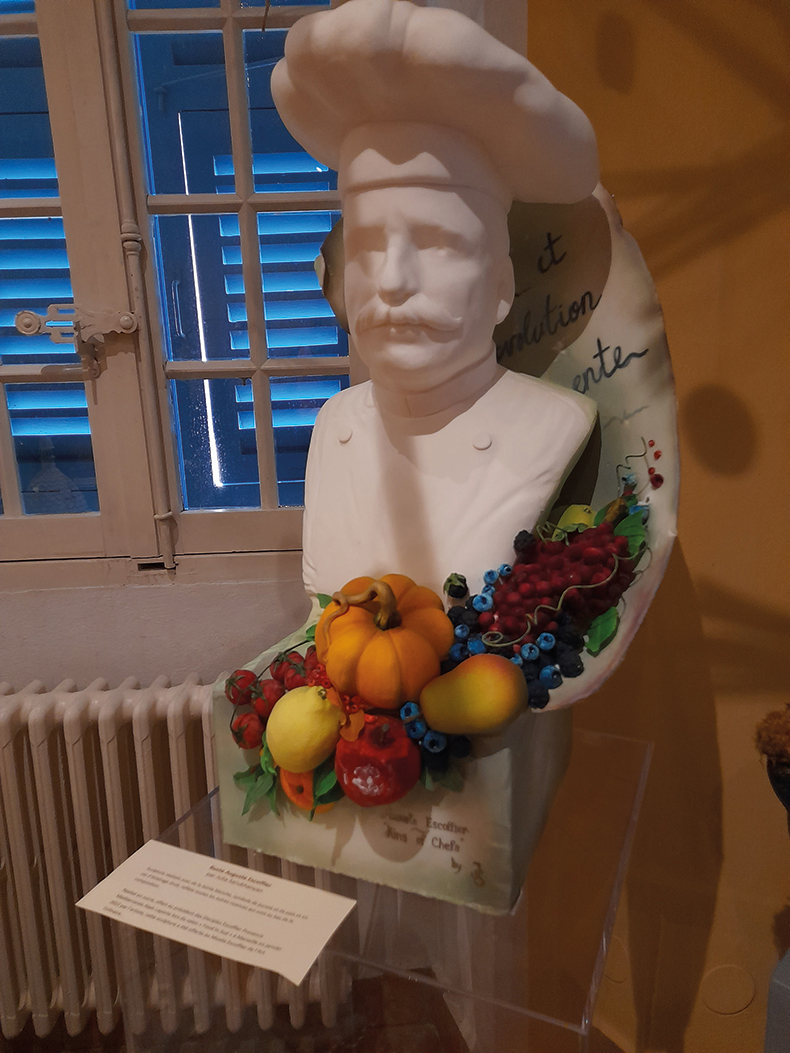
A bust of Auguste Escoffier crafted from sugar, on display at the Musée Escoffier de l’Art Culinaire. Photo: courtesy Musée Escoffier de l’Art Culinaire
House museums are as likely to give the impression that their protagonist is absent as they are to conjure him or her as the presiding spirit of the place. The displays here are not designed to replicate the rooms that Escoffier grew up in, but they do gesture towards types of space that informed his life. There is a feel for his upbringing in the presentation of a Provençal-style kitchen in one gallery (in his posthumously published memoirs, Escoffier recalls his first culinary adventures as a boy, making coffee and ‘cheese toasts’ in secret). Another room evokes the famous hotel kitchens that he ran in partnership with César Ritz: a mannequin kitted out in chef ’s whites oversees a display that includes an imposing 19th-century piano de cuisson, copper kitchenware from the Savoy and contemporaneous machines for slicing potatoes and making breadcrumbs (Escoffier loved a gadget).
Dining and Cooking