
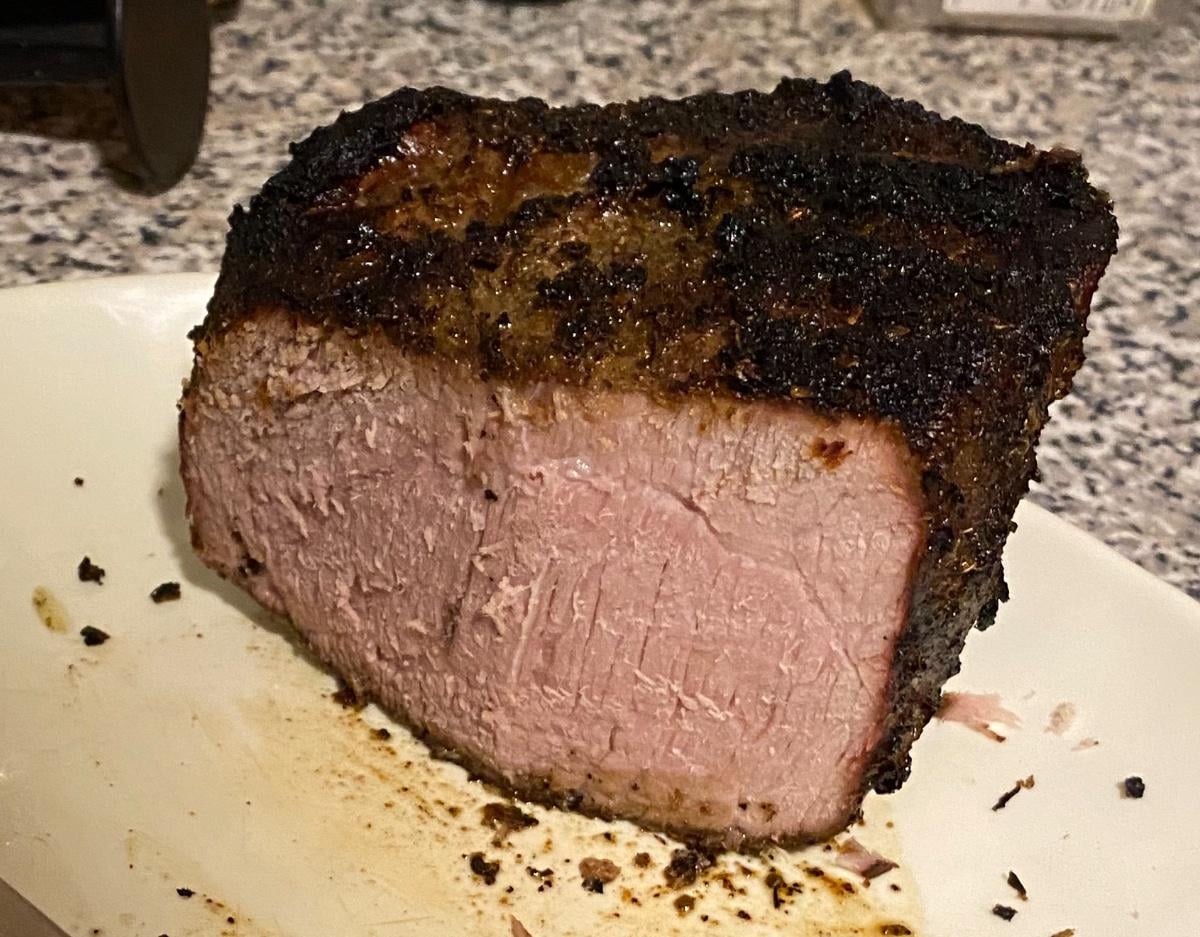
I’ve been using sous vide with different cuts of beef, and it’s been pretty cool.
With that said, when I sous vide 2” thick cuts of beef with marbling/fat like chuck roast, ribeyes, NY strips, etc, the meat comes out reddish/pink (medium rare) like it’s supposed to. I sous vide at 131 for about 30 hours.
On the other hand, if I sous vide a 2” thick brisket (it’s called “carne mechada” here and it has no fat/marbling) at the same temp and time, the meat doesn’t come out medium rare. There’s literally no pink/red in the cut. Needless to say, it came out very soft but it doesn’t feel, look or taste like steak. This is a picture of the cooked brisket: https://imgur.com/a/wrsyAtP
Does it have to do with the cut?
by East_Sentence_4245
8 Comments
Because it’s cooked through, unlike steaks. If you cook a steak until it’s well done, it will also have lost all its color. If you want pink brisket, it has to be either cured or smoked – or both.
This is a brisket I cooked sous vide. 72 hours at 135°. Then smoked at 275° for 3 hours.
https://preview.redd.it/kr09kxgpaxng1.jpeg?width=4000&format=pjpg&auto=webp&s=fcbcd1f72b1abd8c20944568f00b0b95b35bf693
[This](https://www.seriouseats.com/sous-vide-barbecue-smoked-bbq-brisket-texas-recipe) Serious Eats recipe has a picture showing what different temps and times look like.
Your circulator is most definitely broken (could just need a calibration). That looks well done.
Oxygenation at a very long duration, even that temp, will lead to the myoglobin changing
I do brisket at 135, lean stuff at 131. I also put a small amount of pink curing salt in my spice rub. The standard I know is 1/4 of a teaspoon per pound.
it’s just that one piece of beef. they vary in color. next one should be the color you expect. it’s all cow being cooked the same way.
I do mine for 48 hrs at 137. As someone else mentioned, maybe smoking a bit will help with color. I smoke mine for 4hrs 1st.
https://preview.redd.it/bsqfbl1fpzng1.png?width=1080&format=png&auto=webp&s=2b77a6f8aae6cd286f16edc8813e381d4c6da246
Some Possibilities:
**Myoglobin Denaturation**: In beef, the red myoglobin protein begins to break down (denature) around 140°F (60°C), turning the meat from red to pink to a tan/brown shade. So maybe your temp is slightly off or too variable.
**Long-Time Graying**: Even at low temperatures, the extended cooking time (often 24–72 hours) causes myoglobin to leak out of the muscle fibers into the bag juices. This often leaves the exterior of the meat looking gray or tan, even if the center remains slightly pink.
**Previously frozen**: These seem like stronger possibilities….
During frozen storage, myoglobin reacts with trapped oxygen to form metmyoglobin, which has a naturally brownish or grayish-red tint.
Freezing creates ice crystals that rupture muscle cell walls. This damage allows oxygen to move more freely, accelerating the shift toward brown pigments. It also causes more “thaw drip” (juice loss), which carries away some of the myoglobin, potentially leaving the cooked meat looking paler or less vibrant.
Freezing and thawing can reduce the thermal stability of certain proteins. This means the pigments might denature (turn brown) even more easily or quickly when heat is applied compared to fresh meat.