
A menu shaped by comfort and Mediterranean memory
That philosophy becomes clearer once the food arrives at the table.
At Noa, the refreshed menu felt less like a radical overhaul and more like an introduction to how chef Marti thinks about Mediterranean cooking. The chef describes the dishes as a kind of comfort food — the sort of flavours you might expect from a mother’s or grandmother’s kitchen, interpreted through his own Spanish lens.
It’s a sentiment that carries through the new menu via familiar ingredients, generous flavours, and plates designed for sharing, all underpinned by the technical precision that comes from years spent in Michelin-starred kitchens.
One of the first plates to arrive was the hummus salad (S$20), served with a side of pita bread (S$12).
Instead of the usual hummus simply drizzled with olive oil, this version arrives dressed like a mini garden. The dip itself is made with chickpeas and tahini, then topped with a colourful scattering of grapes, cucumber, and cherry tomatoes.
It’s a bright, refreshing interpretation of a familiar staple. Crisp grapes and cucumber lend bursts of sweetness and crunch, while the hummus underneath remains velvety and rich — a satisfying contrast that keeps each bite interesting.
Next came the falafel (S$16 for four pieces), drizzled generously with za’atar yoghurt and tahini. Falafel can sometimes lean dry or crumbly, but these pleasantly defy expectations.
Each bite reveals a pillowy interior of chickpeas and fresh herbs, wrapped in a crisp, golden exterior.
The accompanying yoghurt and tahini add a welcome tang and creaminess — and you’ll want to use the falafel discs to mop up every last drop. It’s the sort of plate that would feel criminal to leave unfinished.
In contrast to the slightly heartier hummus and falafel is the tuna loin with ajo blanco (S$32). The dish arrives with minimalist elegance: Delicate slices of tuna resting in a pale ajo blanco sauce, a chilled Mediterranean preparation made here with garlic and cashew.
On its own, the sauce is quite restrained, almost whisper-soft in flavour. But the finishing touches — grapes and fragrant basil oil — bring the dish into focus. Their gentle acidity cuts through the tuna’s natural fattiness, creating a balanced, refreshing bite.
It’s the kind of dish best enjoyed slowly, allowing its subtleties to unfold — and in doing so, we began to see more clearly chef Marti’s interpretation of southern Spanish cuisine.
That influence continues with the Noa bomba (S$18 for two pieces). Diners who visited Restaurant Gaig during chef Marti’s tenure might recall a familiar inspiration, the bomba de la Barceloneta, a beloved Barcelona tapas dish.
Traditionally, the bomba is a deep-fried mashed potato ball filled with spiced meat. At Noa, the version arrives slightly spicier, filled with seasoned beef and finished with brava sauce — smoky, tangy, and mildly fiery — alongside a dollop of aioli.
It’s every bit as comforting and moreish as the classic. The crisp shell gives way to fluffy potato and savoury meat within, and it would be dangerously easy to polish off both pieces yourself.
Still, a bit of restraint is wise — the proteins that follow deserve attention, too.
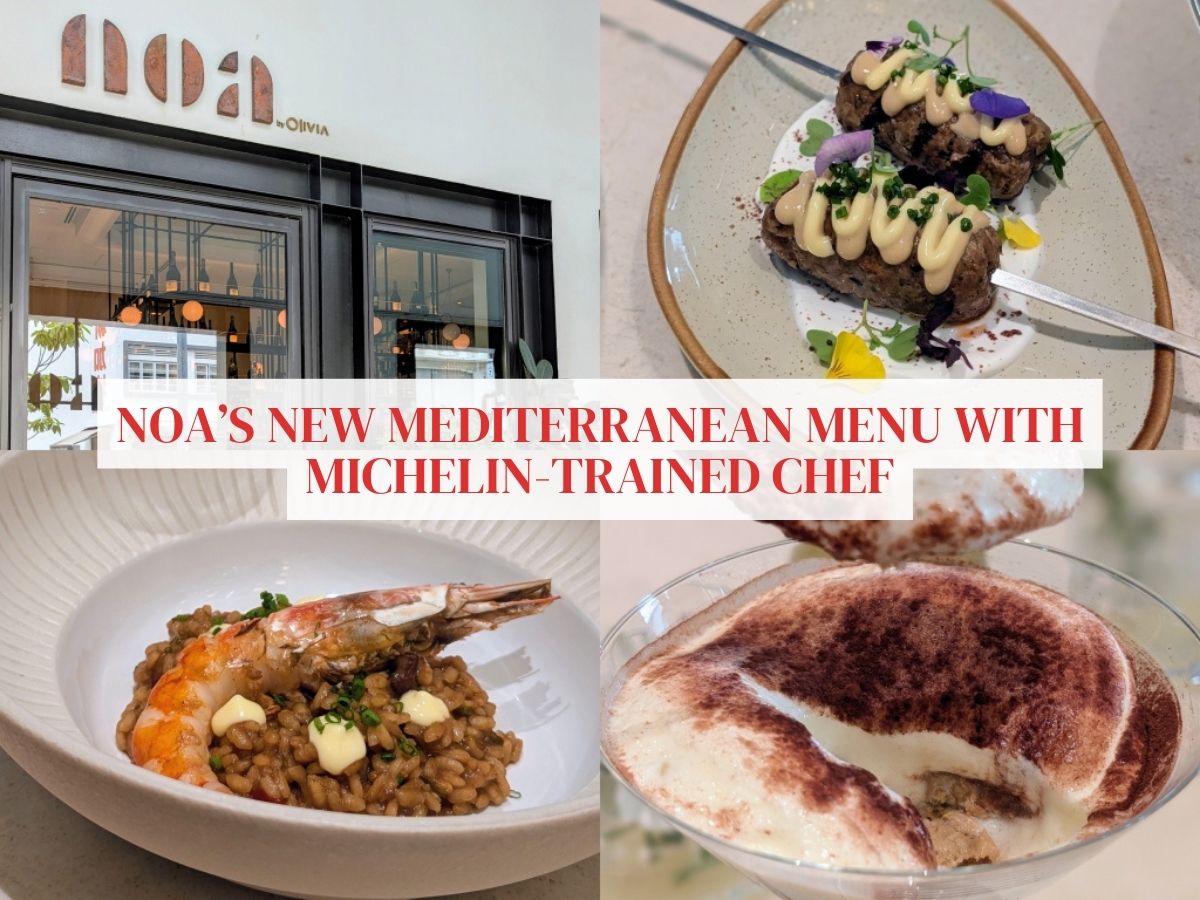
One such example is the beef kebab (S$42), served as two skewers of beef seasoned with Mediterranean spices and finished with yoghurt aioli and tahini mustard. Inspired by Middle Eastern kebabs, this interpretation distinguishes itself through its medium-rare cooking.
Visually, that rosy centre might surprise some diners expecting the more well-done style typical of kebabs. But the payoff lies in the texture — tender, juicy beef whose natural richness takes centre stage.
The spices are present, though intentionally restrained — this dish leans more into the meat’s inherent flavour than its bold seasoning. If you’re the sort who appreciates the pure taste of well-cooked beef, this skewer will likely win you over.
For seafood lovers, there’s the roasted black cod (S$49) — one of Noa’s signatures. Chef Marti’s version features miso-marinated black cod paired with green mojo picon, a sauce made from peppers, garlic, and cumin, alongside artichoke puree, zucchini, and leek.
Previously, the dish featured mojo verde, a herbaceous sauce from the Canary Islands. The updated interpretation brings deeper savoury notes to the plate.
It’s hard to fault the fish itself. The cod is delightfully flaky and succulent, with an unmistakable smokiness running through each bite. The miso marinade adds a gentle saltiness that keeps drawing you back for another forkful — even for those who might not instinctively reach for fish.
If Noa ever decides to serve a larger portion of this dish, it could very well become an instant crowd favourite.
Another seafood highlight arrives in the form of the Argentinian prawn rice (S$42) — another signature on the menu. Here, bomba rice is cooked in a rich seafood stock made from lobster and rockfish, then topped with sweet Argentinian prawns.
It’s not a dish that seeks to dazzle with theatrics. Instead, it leans into comfort and familiarity.
Each spoonful carries deep, savoury flavours absorbed by the rice, while the prawns lend a gentle sweetness. If you’re saving your carb allocation for the end of the meal, this would be a deeply satisfying way to spend it.
Speaking of carbs, we couldn’t end the feast without sneaking in a sweet finish. The tiramisu (S$15) here is served in a martini glass and made with savoiardi biscuits, coffee, and almond liqueur.
The almond comes through strongly on the nose, but we would’ve loved a punchier bitterness from the coffee. It also seemed that the mascarpone foam was made too loose, resulting in a serving that proved too runny to be enjoyable.
But hey, it doesn’t mean it’s not worth a try; we provided feedback on this setback, and are confident that with some tweaking, this dessert will quickly be a hit.
Dining and Cooking