

Credit to Cathrine Skovly on Unsplash
From yacht galleys to European markets, Chef Brent Menke draws on decades of travel and experience to create a “French colonial” menu that celebrates global flavors at The Mick Brasserie + Bar.
Chef Brent Menke’s celebrated Scottsdale restaurant, The Mick Brasserie + Bar, is rooted in an appreciation for how global cultures are expressed through ingredients and technique. He describes the menu as “French colonial,” drawing on food traditions from across Southeast Asia, North Africa and Europe. The goal is to reinterpret classic dishes from around the world, like escargot or pork ribs, often inspired by Menke’s experiences traveling the globe as a chef aboard the world’s finest yachts.
The chef’s journey to becoming a travel and food expert began with a leap of faith. The summer after graduating from the University of Arizona, he found himself rooming with a friend in Newport, R.I., where he discovered a whole new world: the superyacht industry. After cold-calling his way into an interview for a deckhand position, he received a call that would change his life. There was a yacht sitting in the Caribbean, set to depart for Europe the next day. Was he able to get down there on the next flight?

Photo by Brent Menke.
“It was one of those moments in life when, figuratively and literally, your boat is ready to sail, and you can either get on it or not,” Menke recalls.
YOU MAY ALSO LIKE: THIS RESTAURANT SURVIVED COVID—AND CAME OUT WITH A MICHELIN STAR
He said yes and immediately jet set to St. Martin, getting the first stamp in his passport and embarking on the adventure of a lifetime. Menke started as a deckhand on a 175-foot yacht crossing the Atlantic, but when charter season began in Europe, and the onboard chef needed help, he stepped into the galley. When the executive chef went on vacation, he assumed full responsibility for the entire operation. What began as a temporary solution became a new direction in life.
After that, the yacht was sold and Menke went to Florida, connecting with crew agencies and landing a hybrid deckhand/sous chef role on a 180-foot yacht traveling between the Caribbean, the Mediterranean and the U.S. When he wasn’t cooking for billionaires and oligarchs, he explored the port cities where the yachts docked, learning local food cultures in places like the Amalfi Coast and the Côte d’Azur.
Years later, after leaving the yachting world, Menke and his family took a different approach to travel. Before settling back in Scottsdale, they spent a year living abroad, exploring 13 countries, including Bali, Ecuador, Peru, Greece, Turkey, Italy, France, Thailand and Vietnam.

Photo by Todd Podmore.
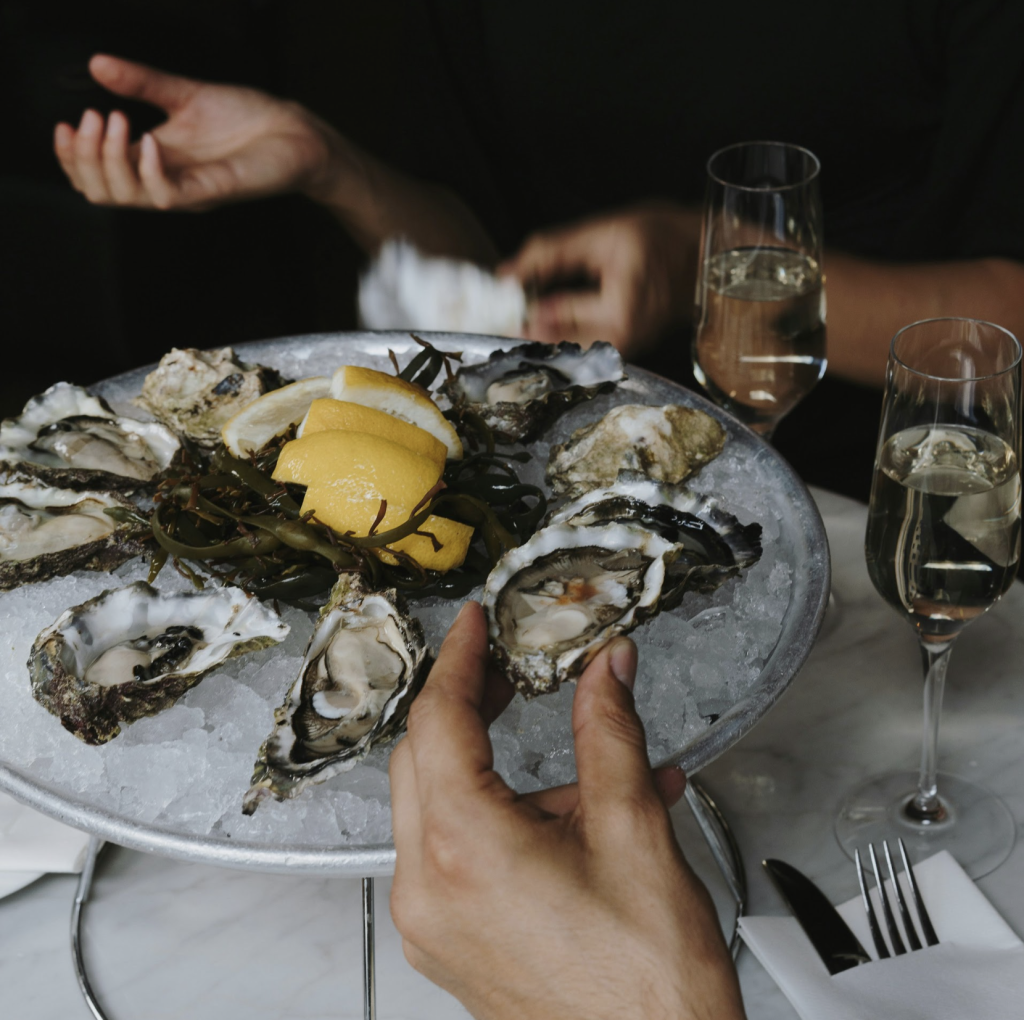
Together, they ate ceviche in Lima, Chuleta beef in San Sebastián, oysters in Cap Ferret and laksa soup in Bangkok—meals that were lessons in culture as much as cuisine. In each country, regional cuisines taught them about local ingredients and the influence of neighboring cultures, as well as the impact of immigration and colonization.
YOU MAY ALSO LIKE: ELEVATED WORLD-CLASS DINING EXPERIENCES WORTH THE JOURNEY
Vietnam left a powerful impression. “Vietnam’s food scene is often a collaboration of Vietnamese and French culture to form something like a Bánh Mì sandwich,” Menke explains. “That sandwich is absolutely ICONIC, but it wouldn’t have happened without those two cultures coming together.” He noticed how cuisine shifted by region: “In the south of Vietnam, the food is spicy and barbecue-y, but to the north, it’s more subdued and includes more braises and stews.”

Photo by Brent Menke.
Turkey offered another lesson in contrast. “Turkish food has a combination of Eastern and Western influences, seen in the breads, kebabs and street vendors,” he notes. And when asked to choose one country to live in for food alone, Menke doesn’t hesitate: “If I had to live in one country, from a food standpoint, I’d have to say France,” citing the dramatic difference in dishes from Paris and Champagne to Provence, Toulouse and Bordeaux.
History plays a role, too. French culinary technique was shaped by figures like Marie-Antoine Carême, who cooked for royalty and developed elaborate pastry and decorative traditions that eventually filtered into everyday cooking.
Menke often points out that many beloved cuisines are made simply from what is most available to a community. Italian food, he explains, is deeply rooted in peasant culture, built around affordable ingredients and resourcefulness. Panzanella transforms leftover bread and vegetables into something new, while pasta dishes, made from simple ingredients—flour and water—change completely depending on where they’re cooked. Along the Amalfi Coast, that might mean the addition of clams, garlic, parsley and white wine. In Emilia-Romagna, a pasta dish might include Parmigiano Reggiano and prosciutto, both staples in the region.
For Menke, learning culture through food also means learning how to cook with new skills, not just new ingredients. Mastering new techniques, he says, can completely change how you experience an ingredient. He points to sous vide—a French method that allows for precise temperature and texture control—followed by a hard sear to create a crust and a perfect medium-rare interior.

Photo by Brent Menke.
No matter what culinary traditions you’re intrigued by, he encourages home cooks to start with fundamentals: brining birds, cooking more whole foods, experimenting with color and texture through fruits, vegetables, grains, lentils, and legumes, and saving bones to make stock. “Once you get your basics, everything else falls into place,” he says.
Today, Menke still leads small, immersive tours through Europe, focusing on food, art and architecture. On trips to Italy, France and Spain, he takes guests to local markets and invites them to choose what to cook. If an ingredient sparks curiosity, they buy it and experiment together. “So much history and culture are based on food,” Menke says. “Through food, you can learn how people live on an everyday basis.”
Tortilla Española (Spanish Omelet) 6 large eggs3–4 medium potatoes (Yukon Gold or similar), peeled1 medium onion (optional but traditional) Olive oil (generous amount for frying)Salt, to taste
Prepare the potatoes and onions. Slice the potatoes into thin, even slices. Thinly slice the onion.
Slowly fry the potatoes and onions.
Drain and mix with the eggs
Cook the tortilla and flip it.
Serve after allowing it to rest for 10 minutes,
From yacht galleys to fine dining restaurants and home kitchens, Menke has learned that food is one of the clearest reflections of how people live and connect with one another. At The Mick, decades of insight into history, geography and technique come together on the plate.
Watermelon Gazpacho 2 cups seedless watermelon, cubed1 cup cucumber, peeled and diced2 cups tomatoes, diced½ red bell pepper, diced1 shallot chopped1 small garlic clove½ cup blanched almonds2 tablespoons sherry vinegar¾ cup extra virgin olive oil¼ teaspoon salt (to taste)black pepper (to taste) 1 teaspoon smoked PaprikaGarnishfinely diced watermelondiced cucumberfresh mint or basil, thinly sliceddrizzle of olive oiltoasted bread crumbs (optional)
Place all ingredients in a blender and blend until smooth. You may want to thin out the Gazpacho with a little water if you want a thinner texture.
Serve in a soup bowl with the garnished scattered around as to catch a bite in each spoonful.
Dining and Cooking