
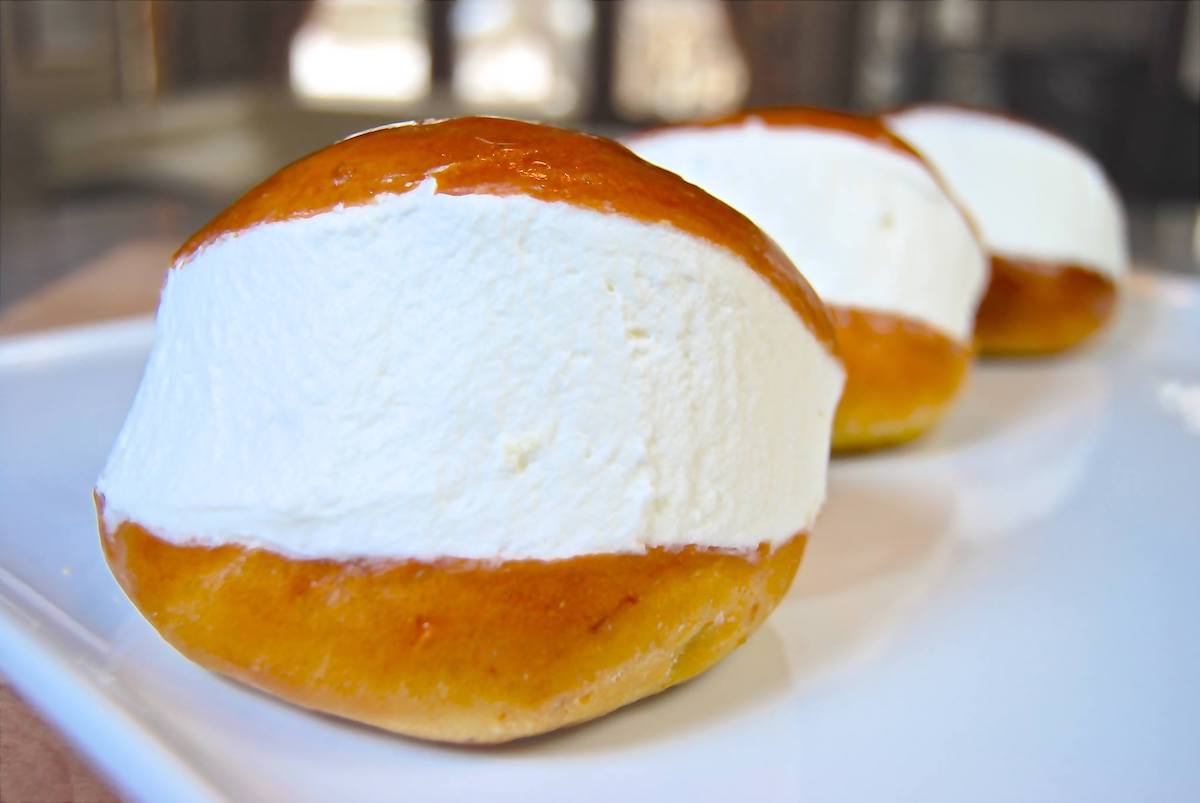
There is nothing better than walking past an Italian bar in the morning and smelling that specific coffee smell outside on the street. And what could be more fun than walking into that bar and having a typical Italian breakfast to start your day? A quick caffè or a firm foamed cappuccino with a nice sweet roll on the side. It can hardly get more Italian in the morning, right?
Yes, you would think so. But there are exceptions to that rule. Because just like every Italian region has its own regional dishes, there are also parts in Italy with their own ingredients for breakfast! One more reason to have a new experience when you are in Genoa, Rome, Naples, Lecce or Sicily!
Liguria and Genoa: focaccia and cappuccino
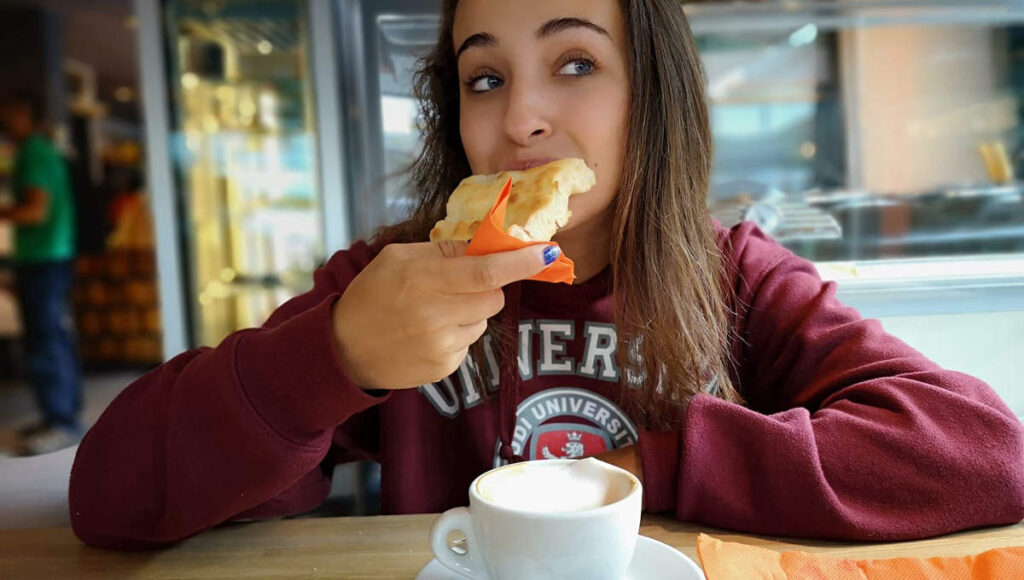 Focaccia and cappuccino (Photo: ilmugugnogenovese.it)
Whoever says ‘focaccia’, says ‘Liguria’. For centuries this bread has been associated with this region and especially with Genoa. In the 16th century it was even eaten in church, especially during wedding ceremonies. To prevent this from becoming too much of a habit, a bishop therefore forbade the consumption of focaccia during funerals.
With so much love for focaccia, it will come as no surprise that it is also on the breakfast menu in Liguria. It is of course a somewhat wonderful combination with cappuccino, but worth a try.
And if it’s just too much for you, the salty with the sweet, you can always replace your cappuccino with a glass of white wine. That doesn’t surprise them in Genoa. And real diehards? They go for a piece of focaccia with onions and a cappuccino.
Lazio and especially Rome: maritozzo con la panna
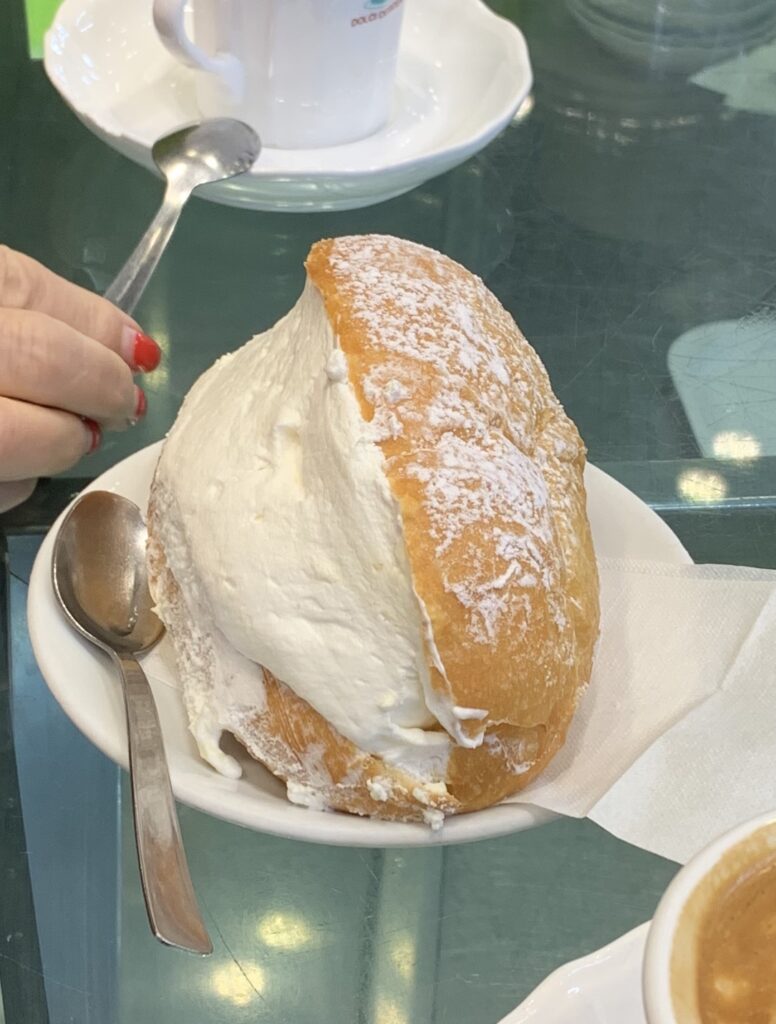 Maritozzo con la panna: don’t mind the calories (Photo: Wikimedia)
It’s not really the lightest way to have breakfast. Also not the most suitable if you want to watch the calories a bit. But when you’re in Rome, you don’t actually come under having breakfast at least once with a ‘husband’ from.
It is a soft bun, made of flour, eggs, honey and butter. It is cut open lengthwise and then filled with whipped cream. Lots of whipped cream. Optionally mixed with pine nuts, raisins and/or pieces of candied orange peel. Or with ice cream under the whipped cream. One thing is certain: after such a breakfast you will have more than enough energy to explore Rome!
The origin of the maritozzo goes back to Roman times. The form in which you can find it today, however, is of a more recent date. And where does the name ‘maritozzo’ come from? It is an affectionate corruption of husbandie husband.
It was once a tradition for a young man to give his future bride this pastry. The pastry could also hide a present, such as a ring or small piece of jewelry. The chances of that happening when you have breakfast in a Roman bar are pretty slim these days.
Campania and Napoli: sfogliatella riccia or frolla?
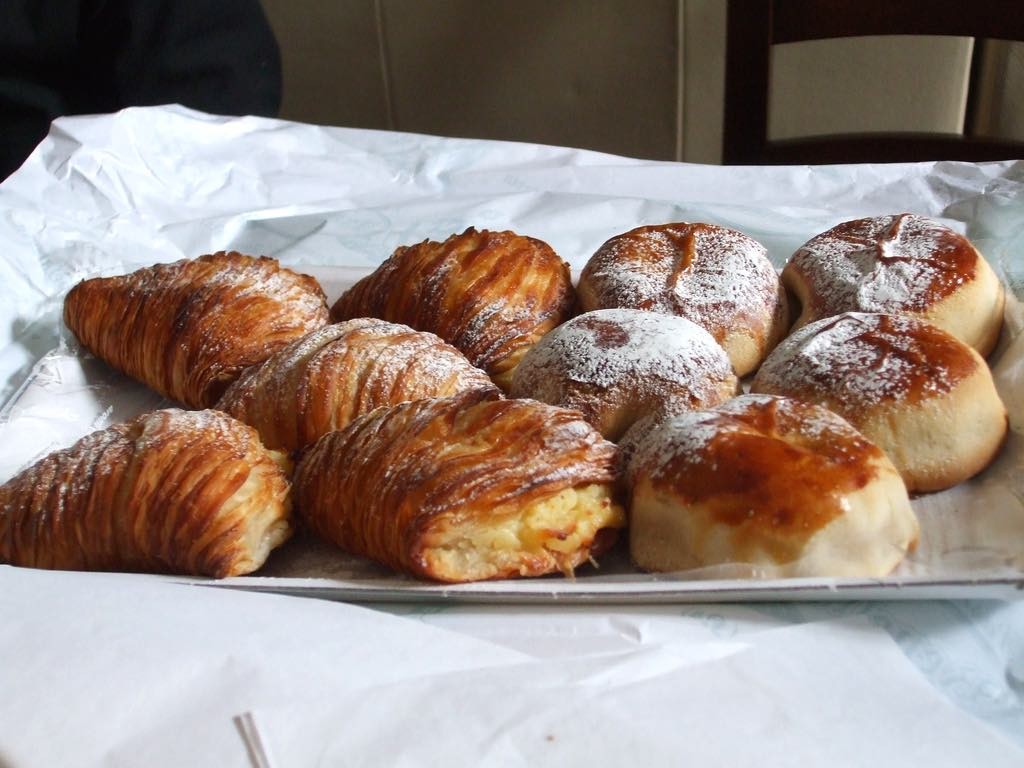 Sfogliatelle Riccia o Frolla
It is quite a dilemma if you want to have breakfast in Naples: do you choose the ‘sfogliatella riccia’ or do you go for the ‘sfogliatella frola’? The filling is the same for both: ricotta cheese mixed with, among other things, semolina, sugar, candied fruit and orange blossom water. The difference lies in their appearance.
The ‘sfogliatella riccia’ has the shape of a shell and is made of several thin layers of puff pastry that become crispy when baked. Biting into it creates a crackling sound and pieces of puff pastry that jump in all directions. The ‘sfogliatella frrolla’ is round in shape and is made from shortcrust pastry. A very different, noiseless and softer experience if you take a bite of it.
Only by trying them both will you discover which one you like best. And if that turns out to be the sfogliatella riccia and you can’t get enough of it, you’re in luck. The ‘coda d’aragosta’ is its XL variant, longer and larger, filled with whipped cream, chocolate cream, chantilly cream or jam. That means a cold cappuccino before you finish it!
Apulia and Lecce: pasticciotto
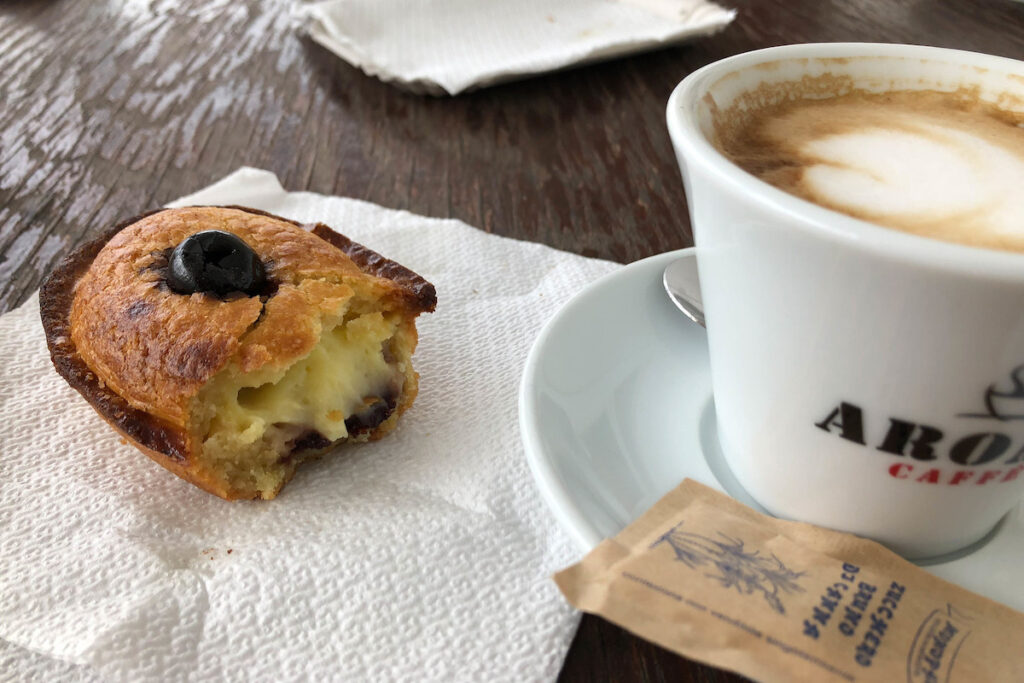 Pasticciotto (photo: Frederique Voisin-Demery)
Of course you can also find cornetti in any bar in Lecce. But it is mainly the ‘pasticciotti’ that fill the display case. These oval-shaped shortcrust pastries filled with pastry cream are the symbol of ‘breakfast in Salento’. And whether it’s summer or winter: you can eat pasticciotto warm, preferably when they haven’t been out of the oven that long!
In recent years, all kinds of variations on the traditional recipe have appeared: a pasticciotto with chocolate cream, or with a layer of amarene jam and pastry cream on top. Dark pasticciotti of cocoa-colored shortcrust pastry with chocolate cream or pastry cream with chocolate pieces in it. Or a ‘fruttone’: a pasticciotto filled with almond cream and quince jam and covered with a layer of chocolate.
The only thing that is immutable is the shape: it remains oval. Although: for the real enthusiasts there is the ‘torta pasticciotto’: a cake made from the same shortcrust pastry and with the same filling as a pasticciotto. But then to take home and cut into pieces in the afternoon. If you manage to resist the temptation that long.
Sicily: granita e brioscia col tuppo
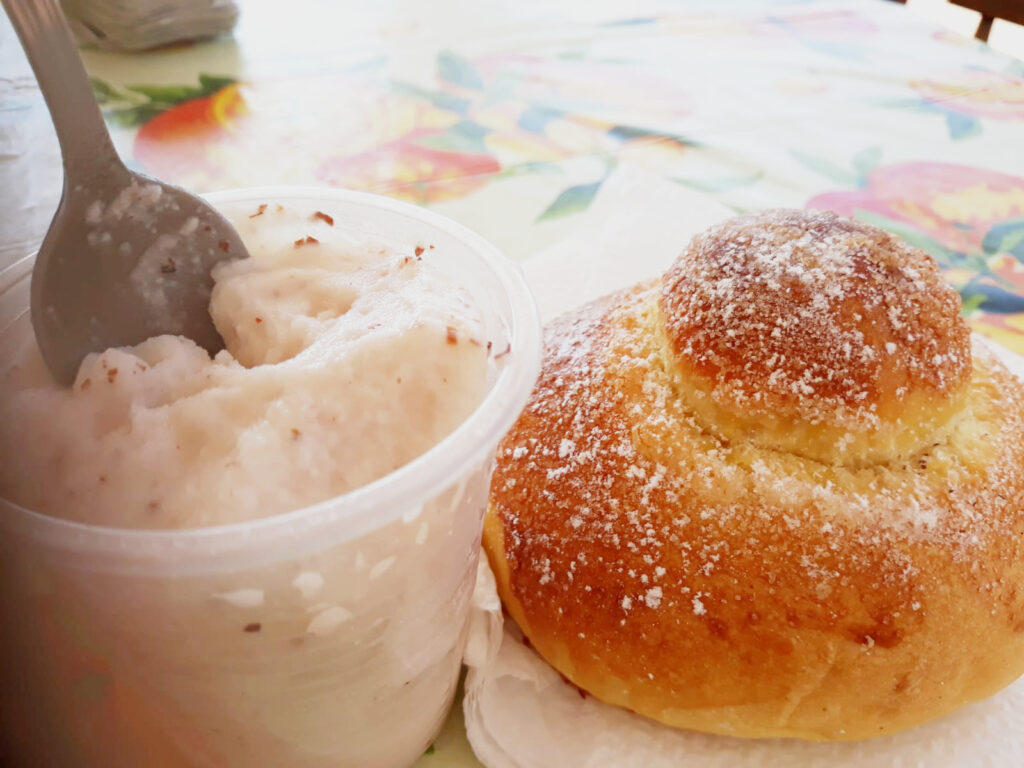 Granita e brioscia col tuppo (photo: Wikimedia)
For lovers of sweets, Sicily is a true paradise. And that means a huge choice for your Sicilian breakfast in a bar. But if you visit the island in the warm summer months, breakfast with a real Sicilian granita with a ‘brioche con il tuppo’ is highly recommended.
The granita is a legacy of the Arab rulers who sherbert ate. It is prepared with a mixture of water, sugar, and fruit that is slowly, but never completely, frozen and constantly stirred. This creates a grainy and creamy, sorbet-like ice cream.
You eat the granita together with a Sicilian brioscia, a brioche with a shape reminiscent of a bun. Then dip the warm brioche in your granita. By the way, there are a lot of granita flavors to choose from, but the almond, pistachio, mulberry or lemon granita is nowhere as delicious as there.
And if you are in Messina, the choice is obvious: a coffee granita. Top with a generous dollop of whipped cream to complete your breakfast.
Dining and Cooking