
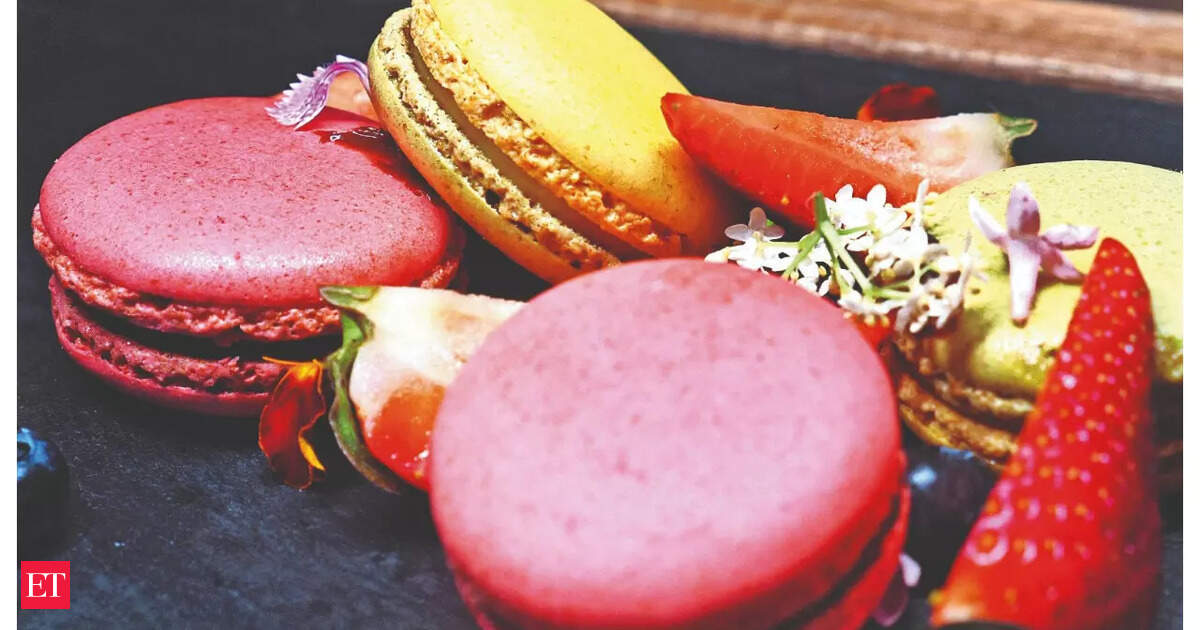
National Macaron Day: Every year on March 20, dessert lovers pause for a moment of pure indulgence. Across cafés and bakeries, colorful little treats begin to take center stage, drawing attention with their delicate look and irresistible charm.
National Macaron Day is more than just a celebration of sweets, it’s a tribute to craftsmanship, flavor, and tradition. For many, it’s the perfect excuse to enjoy something both elegant and comforting. From their rich history to their refined taste, macarons continue to hold a special place in the world of desserts, as per a report by National Day Today. US and Preppy Kitchen.
ALSO READ: Quote of the Day by Denzel Washington: ‘Fall down seven times…’—Top quotes by the two-time Academy Award-winning actor
Where did macarons really come from?
The story of the macaron stretches back several centuries. While many associate it with France today, its earliest roots are believed to lie in Italy. It is widely thought that the dessert made its way into France during the Renaissance, introduced to the royal court by the chef of Catherine de Medici. Live Events
Over time, French pastry chefs refined and reimagined the recipe. What started as a simple almond-based biscuit gradually evolved into the sophisticated sandwich-style dessert now seen in patisseries. The transformation reflects not only culinary innovation but also an increasing focus on presentation and finesse.
Today, the macaron stands as a symbol of how tradition and creativity can blend into something timeless.What makes macarons so unique?
Macarons are instantly recognizable, not just for their appearance but for their texture. Each bite offers a contrast that dessert lovers appreciate, a light crispness on the outside followed by a soft, slightly chewy interior.
There are certain features that define a well-made macaron. The shells should have a smooth, glossy finish, while the base forms delicate ruffled “feet.” Their colors can range from soft pastels to bold, vibrant tones, often hinting at the flavor inside, as per a report by National Day Today. US and Preppy Kitchen.
The fillings also play a major role. Whether it’s ganache, buttercream, or jam, the center brings richness and depth, balancing the lightness of the shells. It’s this harmony that makes macarons feel both luxurious and satisfying.
Which macaron flavors are loved worldwide?
One of the reasons macarons have become so popular is their incredible variety of flavors. There’s something for every taste, whether someone prefers classic or adventurous combinations.
Traditional options like vanilla and chocolate remain favorites, while fruity choices such as raspberry, strawberry, lemon, and passion fruit bring a refreshing twist. Nut-based flavors like pistachio and hazelnut add depth, while salted caramel offers a perfect mix of sweet and savory.
On National Macaron Day, bakeries often experiment with limited-edition flavors, encouraging customers to try something new. This constant reinvention keeps macarons exciting, even for those who enjoy them regularly, as per a report by National Day Today. US and Preppy Kitchen.
ALSO READ: Quote of the Day by George Orwell: ‘War is Peace, Freedom is…’—Inspiring quotes by the author of dystopian novel Nineteen Eighty-Four
Why are macarons so difficult to perfect?
Behind their elegant appearance lies a surprisingly complex process. Baking macarons is often considered one of the most challenging tasks in pastry-making. Precision is key, and even small variations can affect the final result.
The process begins with whipping egg whites into a stable meringue. Almond flour and sugar are then carefully folded in to create the right batter consistency. The mixture must be piped into uniform circles, ensuring consistency in size and shape.
Before baking, the shells are left to rest, an essential step that helps form their signature texture. Temperature control and humidity also play a crucial role, making the process even more delicate.
Once baked, the shells are paired and filled with complementary flavors. The result, when done right, is a dessert that looks simple but requires real skill and patience.
How do macarons fit into culture today?
Macarons are often seen as a symbol of elegance and refined taste. They are commonly featured in luxury gift boxes, wedding displays, and high-end café menus. Their visual appeal makes them just as popular on social media as they are on dessert plates.
Over time, macarons have moved beyond their European roots and found a place in global cuisine. From Asia to North America, they are embraced by bakers and dessert lovers alike. Their ability to adapt to different flavors and styles has helped them cross cultural boundaries, as per a report by National Day Today. US and Preppy Kitchen.
National Macaron Day reflects this global appreciation. It’s not just about enjoying a sweet treat, it’s about recognizing the artistry, tradition, and effort that goes into each one.
What should you know before baking macarons?
For those tempted to try making macarons at home, a few basics can make a difference. Parchment paper is often recommended for piping the batter, as it provides the right surface for the shells to form properly. Silicone mats can be used, but they may feel slightly sticky.
Texture is another important factor. A proper macaron should be crisp and airy on the outside, with a soft and slightly chewy center. Achieving this balance takes practice.
Some bakers use cream of tartar to stabilize egg whites while whipping. While it’s not essential, it can be helpful, especially in humid conditions, as per a report by National Day Today. US and Preppy Kitchen.
And of course, understanding the difference between macarons and macaroons is key. A macaroon is a dense, coconut-based sweet, while a macaron is light, delicate, and filled, similar in name, but very different in experience.
National Macaron Day ultimately celebrates more than just a dessert. It highlights the journey of a simple almond biscuit that transformed into a global icon of flavor and craftsmanship. Whether enjoyed at a café or baked at home, macarons continue to bring a little elegance to everyday moments.
FAQsAre macarons originally from France?
Not exactly. They are believed to have come from Italy before becoming popular in France.
What makes a macaron different from a macaroon?
Macarons are light, filled sandwich cookies, while macaroons are dense coconut-based treats.
Dining and Cooking