
Credit: The Picture Pantry/Getty Images
Key Takeaways
Traditionally, red wines are the way to go with steaks, but as long as you enjoy it, any kind of wine can go with beef—and the sommeliers say that champagne in particular works beautifully.
Your cooking method, and the sides and sauces you serve with your steak can change which red wines to choose.
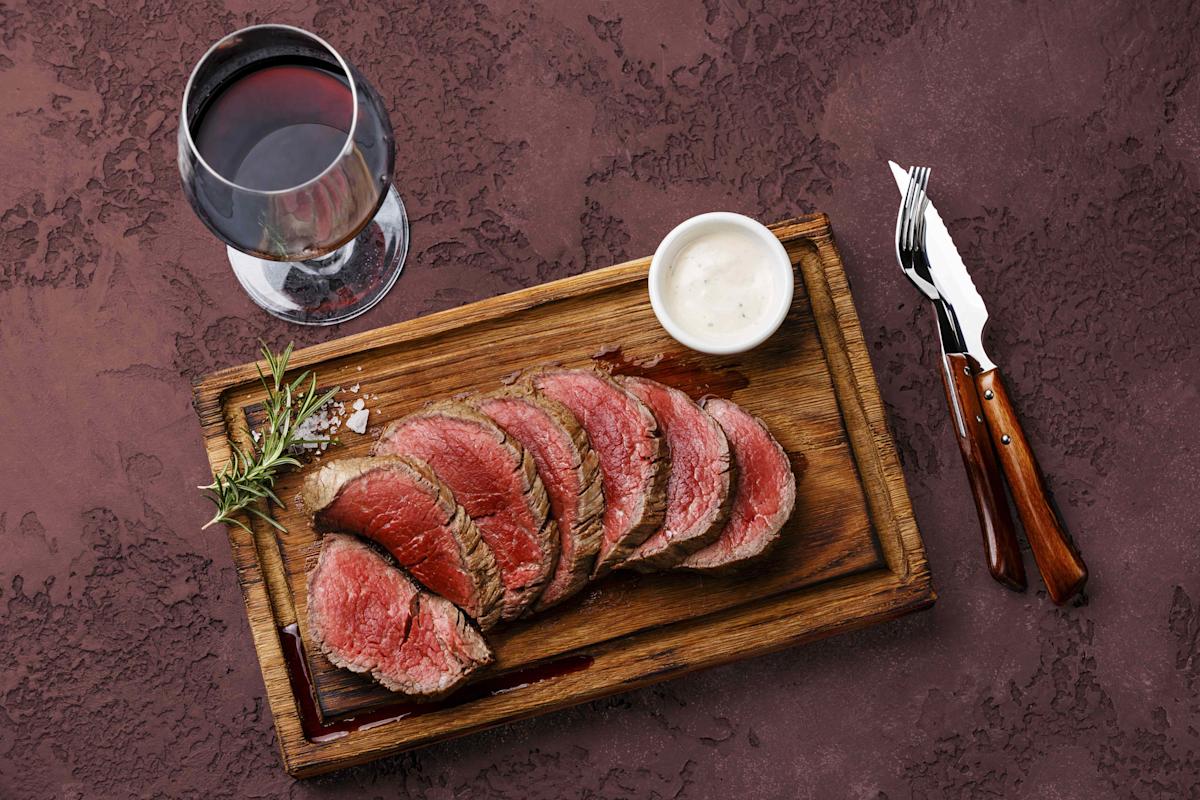
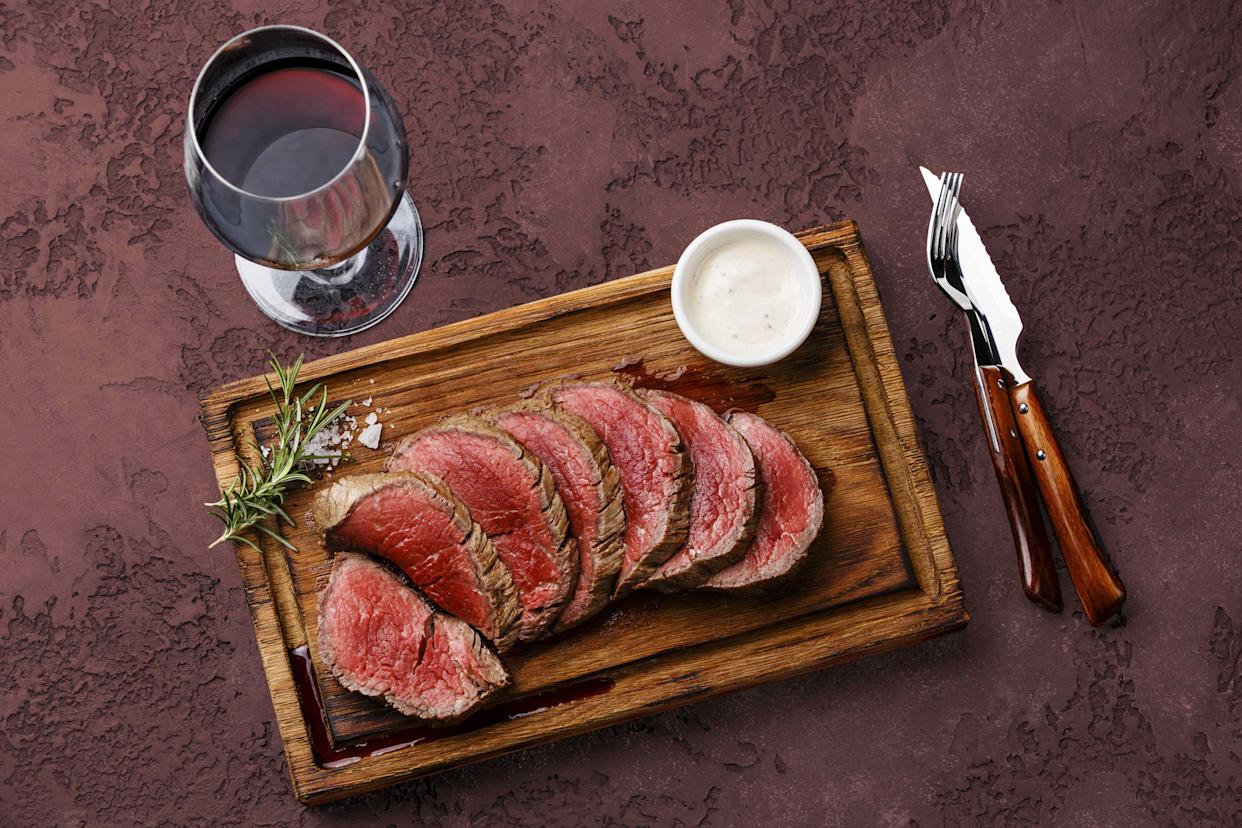
If you’re splurging on a steak for dinner, you’re probably looking to pair it with the perfect wine to wow everyone who gets to enjoy it. And while traditionally, reds were the way to go with steaks, these days, you can be a little freer with your wine choices, according to our sommeliers.
Ready to find your perfect pair? See what sommeliers consider when they make their picks to go with steak and beef dishes.
What to Consider When Pairing Wine and Steak
In general, there are good reasons why red has been the beef pairing go-to. “Red has always been the recommendations for beef,” says Baptiste Beaumard, sommelier at Restaurant Daniel. “That’s because beef—particularly cuts like steak or roast—is rich in protein and fat, which soften the tannins, making the wine taste smoother and the meat seem juicier.”
But there’s more to think about than just beef = red wine. Consider the following when you’re making your pick.
Think about the cut of meat and the cooking method
Some wines pair better with certain cooking methods or cuts. For instance, Beaumard recommends wines with high tannins, like a cabernet sauvignon, to balance out a cut of steak that has rich marbling, like a ribeye. For leaner cuts like filet mignon or a New York strip, go for a lighter-bodied wine, says says John May, wine importer and sommelier at Cellar Distributing and sommelier for Theodosia. That means something like a pinot noir might be a perfect pairing.
For charred or grilled steaks, our sommeliers all agreed that a bolder wine choice works best. Beaumard suggest cabernet sauvignon, malbec, and syrahs as great options for steak that’s been grilled or heavily seasoned.
Consider your sides and sauces
What you’re serving with the steak can also have an impact on the perfect wine pairing. “Lighter vegetable sides—like grilled asparagus or broccolini—typically won’t interfere with your main wine choice,” says Ciprian Nourescu, general manager at Fresco by Scotto. “But richer sides, such as mac and cheese, creamy polenta, or creamed spinach, call for a wine with higher acidity and firmer tannins to cut through the richness and reset the palate.” He suggests a Brunello di Montalcino as a wine with a higher acidity profile.
For creamier side dishes or sauces, Beaumard suggests an oaked chardonnay from Napa or Sonoma. “It has the body to support fat and cream in a dish such as a beef with a rich garlic and parmesan cream sauce,” he says. “With a creamy side, you need a wine with a good acidity to cut through the richness, with enough body to match with the weight of the dish.”
Rethink the reds-only vibe
While reds are the traditional pick, there are plenty of other options to try. “If you like the wine, and you try it with your steak and say that it’s tasty—don’t let anyone tell you differently,” May says. “I’m a firm believer that Champagne goes with everything. If it’s a particularly warm day out, or I just feel like having Champagne, I’m more than happy having bubbles with my steak.”
Nourescu agrees that a departure from the red can be refreshing. “For the adventurous palate, a dry rosé or even a vintage Champagne can offer an exciting, unexpected pairing—especially with chilled or rare preparations. I’ll recommend a white wine with high acidity and strong minerality, such as a vermentino. It’s crisp, balanced, and surprisingly complementary with steak—especially when paired with leaner cuts or grilled preparations.”
Best Wines to Pair With Steak
If you’re ready to start pairing, try these suggestions to get you started. (And don’t be afraid to experiment on your own!)
For leaner cuts like filet mignon and New York strip steaks
Pinot noir is a great choice for a leaner cut of meat. “It’s light to medium-bodied, earthy, with red fruit and bright acidity,” Beaumard says. “It’s lower in tannins, but still complex.” Nourescu suggests a Brunello di Montalcino. “Its high acidity and age-worthy depth bring out the subtle nuances of these refined cuts.”
For highly flavored steak dishes, like a pepper-crusted steak or a barbecue or smoked dish
You’ll need to consider what flavors the rub or sauce brings to the steak when you’re picking. Beaumard recommends a syrah or shiraz. “It’s spicy, meaty, with earthy and smoky notes—ideal for heavily seasoned or pepper-crusted beef.”
For barbecue sauce or smoky flavors, try a zinfandel. “It’s jammy, spicy, and high-alcohol—and it’s best with barbecue ribs and brisket,” Beaumard says.
If you’re looking for something unexpected, he suggests a lesser-known wine varietal: “A Lambrusco, dry or semi-dry red sparkling wine from Italy, will bring acidity and a slight chill complement for a sweet-savory marinade dish, like a Korean bulgogi.”
For fattier steak cuts, like skirt steak and ribeye
For this type of steak, a bold wine is in order. “I recommend a Barolo,” Nourescu says. “Its elegance, structure, and complexity create a perfect balance with the intensity of the meat. When serving a T-bone or porterhouse, I’d go with an Amarone della Valpolicella—a bold, full-bodied wine with powerful tannins that stands up beautifully to these larger cuts.”
Beaumard suggests a cabernet sauvignon or malbec as the perfect, bold pairing for a fattier steak. “A malbec is medium- to full-bodied, with lush fruit and soft tannins—and it’s especially good with grilled meat.”
Read the original article on Real Simple
Dining and Cooking