
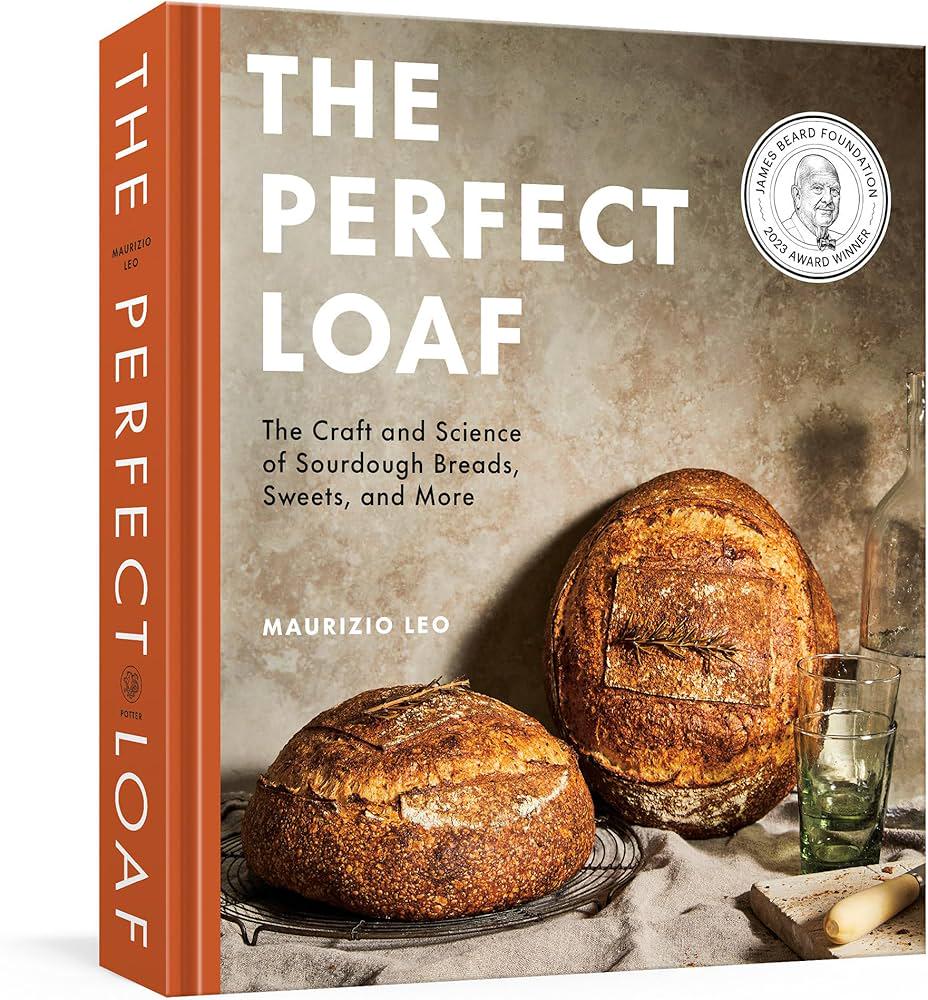
comparing the starter recipe in it to what I have seen here and it seems quite a bit different. wondering if anyone read/tried it and if they were happy with the results.
Day 1-
100 grams whole grain rye flour and 125 grams water
Day 2 & 3-
75 grams of the mixture that rested overnight and add 50 grams rye flour, 50 grams all-purpose flour, and 115 grams water. Stir until well incorporated. Cover the jar and let it rest for 24 hours.
Day 4 5 & 6
Now twice a day feedings
75 grams of the mixture from the jar that fermented overnight, add 50 grams rye flour, 50 grams all-purpose flour, and 115 grams water
Day 7+
Still 2 feedings a day
20 grams of the mixture. To this, add 30 grams rye flour, 70 grams all-purpose flour, and 100 grams water
https://www.theperfectloaf.com/7-easy-steps-making-incredible-sourdough-starter-scratch/
by havocsplay
29 Comments
It’s a great book, and unlike other bread books, all of the recipes are centered around sourdough and using starter/levain.
The instructions are very clear and detailed.
Maurizio knows what he’s talking about. Great book!
I have no idea what I did wrong, as the book is beautiful and obviously well-researched. So my failure was pretty obviously my fault.
But I followed his starter recipe exactly for weeks and weeks, and it never got strong enough to bake with. I finally gave up and started from scratch with King Arthur’s recipe. I was baking great loaves in a couple of weeks after that.
It was such a frustrating experience, especially considering how much more work his technique is than KA’s.
That said, the scone recipe in this book alone makes it worth the price. It’s so good!
This book is a pretty good resource for jumping into sourdough. Much better than tik tok or instagram brain rot content.
Great book, but to be successful I think you might need to alter the recipes slightly to complement your own starter and environment.
Most things I’ve made from the book have turned out pretty decent, but I think the recommended proofing times are way too low. I’m assuming Mario feeds his starter everyday and keeps it on the counter. He also lives in NM. Most people keep their starters in the fridge and my house is pretty cool in the Midwest. I guess what I’m trying to get at is really pay attention to the parts of the book where he tells you what to look for when ending bulk fermentation as that will guide you better than the times recommended. I also found that some of the higher hydration recipes can benefit from more strengthening (slap and folds early on after the levain is added, more sets of stretch and folds, etc.).
Lovely book but it’s the very definition of “I ain’t doing all that.” Very specific flours to use in various combinations (like a mix of high and low protein flour in the same recipe I’m sure there is a good reason), taking the temperature of everything all the time, etc etc etc. It’s just a lot. Nowadays when I bake from it I use it for ratios, ingredients, and general methods rather than feeling like I have to do it all exactly like he does and I like it more that way. I am sure his bread is beautiful but he comes at it all from a more scientific and precise frame of mind than I can manage on any given weekend bake.
I’ve followed recipes from this book to a T and almost all have failed completely. IMO It’s way too over complicated. I got better results from following much more basic and simple recipes
The proofing times are too short. I don’t even know what he was thinking making them so short. Of course, proofing times depend on a lot of factors, and maybe his kitchen is 90°F. After adjusting the proofing times to your environment, it’s a pretty good book. I feel bad for the beginners who will undoubtedly underproof their loaves and become frustrated.
Great book
I started home milling flour a few months back and this was the first book I found that talked about home milling and other types of grain. I actually baked the honey spelt loaf this morning
I love this book!!! The first 100 pages or so are JUST the science of sourdough, which I love bc it allows me to actually learn what I am doing rather than just following steps. I have used his recipes, but make sure to vary them as the environment calls for (eg longer prove due to colder temp in my apartment). Could not recommend it enough if you want to dive in and learn, but if you are looking for recipes to follow exactly it’s not ideal (but to be honest I have yet to follow a sourdough recipe exactly anyways).
Oh I covet my 3 sourdough books – I’ll have to pick this up.
I love his recipes but I do find you have to take the timings he gives you as a guideline and not a hard and fast rule. He makes a point to mention what your dough should look and feel like at a lot of the key intervals (including temperature!) so definitely take note of those.
Though, to be fair I think that’s how we should approach every sourdough recipe as every kitchen and starter are unique.
It’s the best!
This is the book I give to ppl when they come over for a sourdough lesson. Great resources. Lots of ppl are commenting on proofing times, but that is always going to be specific to your baking environment and the author addresses this.
I have it. For information it’s okay. As a
coffee table piece it’s beautiful and I’m happy to have it just for that. For better tutorials, ideas, inspiration, and instruction nothing at all beats YouTube.
I own it. And love it
Some good info, but I find the recipes hit or miss, and I’ve been baking for 20 years.
I haven’t read the entire book, but it seems beginner friendly. He has sections on adjusting how you maintain your starter when it’s cool or warm for example.
I’ve tried his recipes online and he makes it clear you can use another flour that has a similar protein % that may be easier to get in the supermarket.
My kitchen has been cooler so I always expect my dough to take longer to bulk ferment since his dough runs warmer. He’s using a proofer and a very strong starter.
I’ve made quick breads before and I’ve always gone by visual cues instead of time so I don’t fault him for sharing times that is faster than mine. If anything it illustrates how tools can save you some significant time.
I love Maurizio recipes! I don’t have the book but he has so many readily available online. His pancake and dinner roll recipes have consistently earned me praise.
Yes! I have it! My starter worked out great! Tons of recipes and is very easy to follow when first learning about making sourdough
Very good resource for working with various types of flours. His recipes are temperature controlled.
Most of the recipes are fermenting dough at 78°F, so it works well if your environment is that temperature or you use a proofing box.
Some people skip his step of making levain, but that is your first indicator as to whether your starter matches the strength of his starter. If your levain takes longer to peak, then your fermentation time will be longer than his too.
He has a number of his recipes on his website so you can try them out and see if his process suits you.
This is a good book for people that want to learn more about why you do what you do to get a good loaf. And for bakers that want to be introduced to new flours.
I love it and have baked from it a lot, but it being an American book I’ve found I often have to adjust the hydration to suit the flour available in the UK. My proofing times are often very different, too.
I use his starter ratio but there’s no way I’m feeding it every single day, so I keep mine in the fridge.
I don’t have the book, but have cooked several of his recipes off the website. All good. I’ll likely buy it now.
Not a bad book, but my hands down baking book is ‘Evolutions in Bread’ by Kevin Forkish. Straight forward, easy recipes, no BS on ingredients, includes bakers percentages,weight measurements alongside conventional US/Imperial measurements, and emphasizes the wait time is a suggestion but tells you what to look for when dough and bread are ready. Honestly, it all comes down to your experience as a baker. There are a lot of things to learn; heck I’ve been baking for 2-3 years and learning every day.
Mauricio Leo is an excellent baker. I love his writing both in his book and his website. His work has been instrumental in learning how to bake sourdough bread. That said, my advice to anyone learning how to bake would be to focus less on recipes and more on why bread works the way it does. For example, really unpacking baker’s math, learn how ratios of each ingredient works together and especially why certain types of flours behave the way that they do. I know that it sounds like a lot but my baking did not really develop until I invested time on those things.
It’s got a lot of very good information on the science and principles behind sourdough.
The online calculators are helpful.
I have found the recipes to be very time consuming for often mixed but not better results. So, I adapt the recipes that I know to methods that work best for me.
Great book! Great resource. At the start of my SD journey his was a great help. You have to adjust to your environment, timing, flours available, etc. I stay at sea level, he at high altitude, thus proofing and bulk fermentation and hydration will be different. Read more books. Look at thesourdoughjourney.com and culinaryexploration.com : Both are Sourdough Hero’s and one can learn a lot from their websites and YT videos. Good luck with your journey..don’t give up, keep on trying and remember: Do the same recipe and method over and over again, 20, 30 times….and gradually your starter and your fermentation, and your bake will start to make sense. Use grams, not cups and spoons, learn how baker’s percentages work.
This is my go-to book for sourdough. It’s the first book I ended up purchasing when I got into the hobby and it helped me create my starter. It really helped me to understand the building blocks of making and using my starter in practical applications. I love the troubleshooting sections. I ended up buying a second copy for my MIL when she decided she wanted to start baking sourdough.