
The top 100 Italian wines have shown “resilience” amid the declining fine wine market, Liv-ex’s latest data has shown, bolstered by stability in Tuscany’s “heavy hitters”.
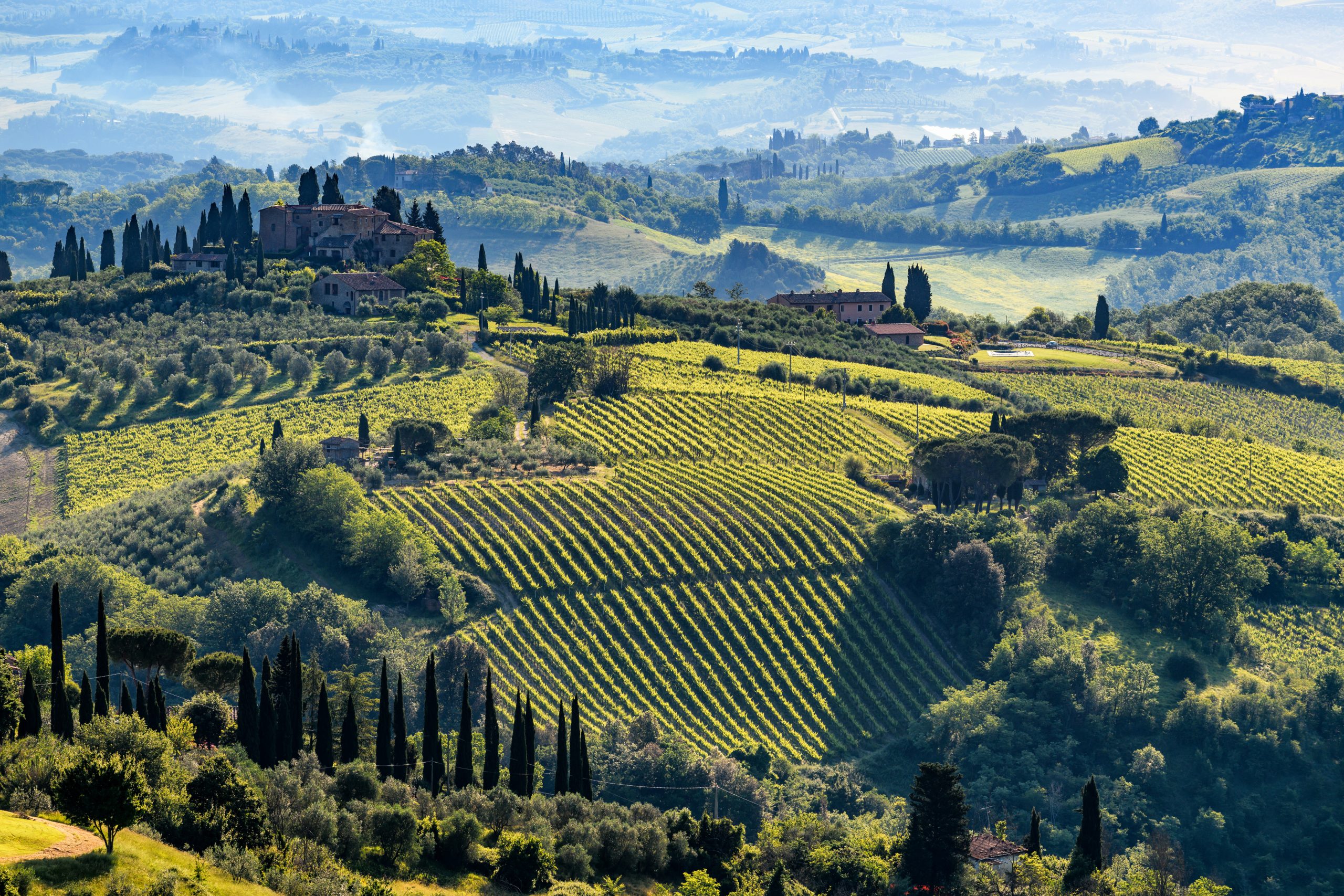
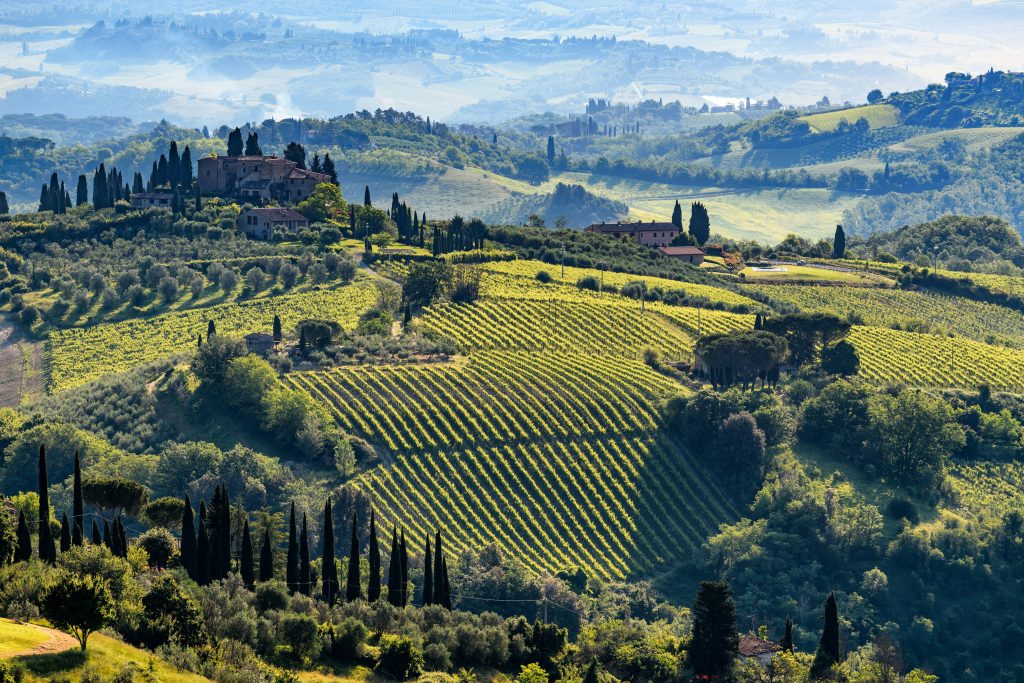 Dawn in Tuscany, Siena Province, Italy
The latest data from Liv-ex showed stability for the Italy 100 index, amidst the three-year decline in the broader market. Tuscany’s share of the market has grown, it noted, with Masseto taking the lead – “the 2020, 2022, 2016 and 2014 all up over 5% year to date”, Liv-ex aid. The mid-point between highest offer and lowest bid on a given wine has risen most sharply for the 2020s, “but the 2016 is better-backed with trade”, it noted.
Even amid just the Tuscan wines in the Italy 100, the Supert-Tuscans dominated, with only nine wines out of total 157 Tuscan wines traded making up more than 80% of the traded value. This is in sharp contrast to the same period last year, which saw 21 wines out of a total of 282 comprise 80% of the value. However, as Liv-ex noted, “In the early 2000s, it was not uncommon for the key Super Tuscans to comprise 100% of Tuscan trade”. Between 2013-2021 however, the share of the top five Super Tuscans on the Italy 100 fell leaving a “wider pool of the region’s wines.”
“Super Tuscans may have succeeded in developing international brand image, and trade levels remained stable through the downturn and US tariffs, but the tail end has suffered more greatly,” Liv-ex said.
Meanwhile pricier and rarer Piedmontese wines have also fallen more sharply among the Italian 100, Liv-ex said.
It came after the Italy 100 was the only Liv-ex index to record a rise in January – up 0.6% following a slight dip in December. Italy 100’s bid:offer ratio was atslo ticking above 0.5 and making it the healthiest of any index during the first month of the year.
Related news
Project Paradise: Inside Sula’s acquisition of Chandon India
Vinarchy UK hit with £8million packaging tax
Bordeaux 2025 vintage profile: Quality over quantity
Dining and Cooking