
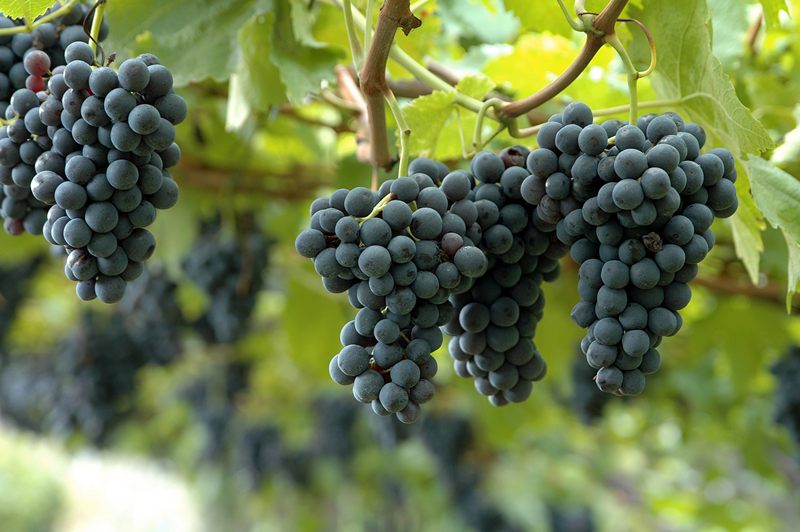
German winegrowers are planting more disease-resistant grape varieties even as the country’s overall vineyard area continues to shrink, according to the German Wine Institute. The institute said the area under cultivation for so-called Piwi grapes rose 10% in 2025 from a year earlier to about 4,000 hectares, or roughly 4% of Germany’s total wine-growing land.
Ernst Büscher, a spokesman for the institute, said in Bodenheim in the Rhineland-Palatinate region that the new Piwi varieties had expanded “despite the generally declining trend in vineyard area.” He said their share of German viticulture had risen from 3.5% in 2024 to 4% in 2025, still a modest level but one that reflects a broader shift in response to disease pressure and changing growing conditions.
The white variety Souvignier Gris remained the leading Piwi grape in Germany and posted the largest increase among all grape varieties for the second year in a row. It gained another 170 hectares in 2025, bringing its total planted area to 766 hectares. Cabernet Blanc followed with 356 hectares after a gain of 21 hectares, while Sauvignac ranked third among the newer resistant whites at about 250 hectares, up 45 hectares.
Büscher said 40 different Piwi varieties were planted last year, though many are still in trial stages. He said newer generations of these grapes have stronger resistance to fungal diseases. The development of Souvignier Gris shows how long that process can take: it was bred in 1983 at the State Wine Institute in Freiburg and was approved for quality wine production in Germany only in 2013.
The institute also said the wines made from newer white Piwi grapes have improved in taste and are now often hard to distinguish from conventional wines. Büscher said resistant red varieties have also advanced, producing fuller and smoother wines similar to those traditionally associated with southern Europe. He cited Cabernet Cortis, which covered 88 hectares in Germany after an increase of 8 hectares, and Satin Noir, which reached about 60 hectares after a gain of 10 hectares.
Many producers still avoid putting unfamiliar grape names on labels because consumers may not recognize them, Büscher said. Some instead sell the wines as blends.
Piwi grapes appear to be especially popular in northern Germany. Since new plantings were allowed there in 2016, more than 200 hectares of vineyards have been established outside the country’s 13 traditional wine regions. A large share of the planting material is also being exported, including to France, though exact figures are not available.
Among conventional white grapes, only Chardonnay and Sauvignon Blanc recorded notable gains in 2025. Chardonnay rose by 102 hectares to 3,152 hectares, while Sauvignon Blanc increased by 40 hectares to 2,094 hectares. On the red side, Merlot grew against the trend by 18 hectares to 981 hectares.
Germany’s total vineyard area fell by 1% in 2025 to about 102,000 hectares, returning to roughly the level seen in 2007. The peak was reached in 1994 at about 106,000 hectares. Red varieties declined by 791 hectares, slightly more than white varieties, which fell by 539 hectares.
Among the country’s wine regions, Württemberg saw the largest drop at minus 485 hectares, followed by Baden at minus 312 hectares. The Mosel lost 158 hectares and the Pfalz lost 147 hectares. Saale-Unstrut was one of the few regions to grow slightly, with its vineyard area rising by 10 hectares to 868 hectares.
Dining and Cooking