
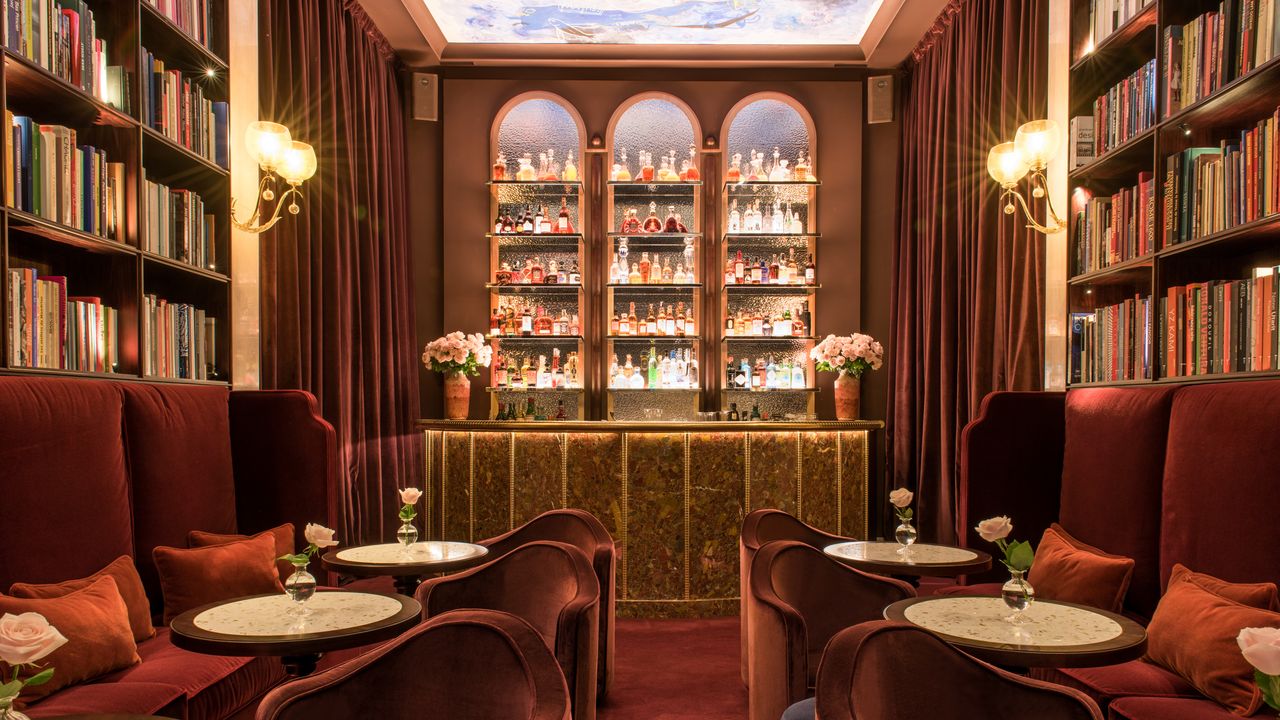
From the moment I stepped off the plane at Marco Polo Airport, it was clear my visit to Venice would be the stuff of fantasy. I was met at the private water taxi berth by an elegant mahogany motoscafo driven by a disarmingly handsome Italian man in dark sunglasses, who whisked us through the lagoon and toward the city’s main cluster of islands. Bleary-eyed from my red-eye from New York, much like Aschenbach, Thomas Mann’s famous Venice visitor, I was shaken awake by the wind in my hair and the sight of sun-dappled churches hanging over the canals. After arriving at a dock, my bag was spirited away by a bellhop as another guided me through a tiny calle to the enormous arched doorway of the new Nolinski Venezia, the first foray of the French EVOK hotel group outside of its native country.
EVOK is known for marrying modern design with classic luxury all with a “carnivalesque spirit”—and the Nolinski is no different. The hotel is housed in the former stock exchange of Venice, a fittingly magisterial building on the Calle Larga XXII Marzo, a prime shopping street just off the Piazza San Marco. The building is enormous by Venetian standards—it was the first reinforced concrete structure in the city—and even with its modern proportions, it retains the ornate craftsmanship characteristic of the Italian city. Its façade is decorated with mythical creatures, while the gate is crafted from Art Nouveau wrought iron; its floors, on the other hand, are swathed in a meticulously restored terrazzo and its walls are made from a beautifully mottled stucco marmorino.
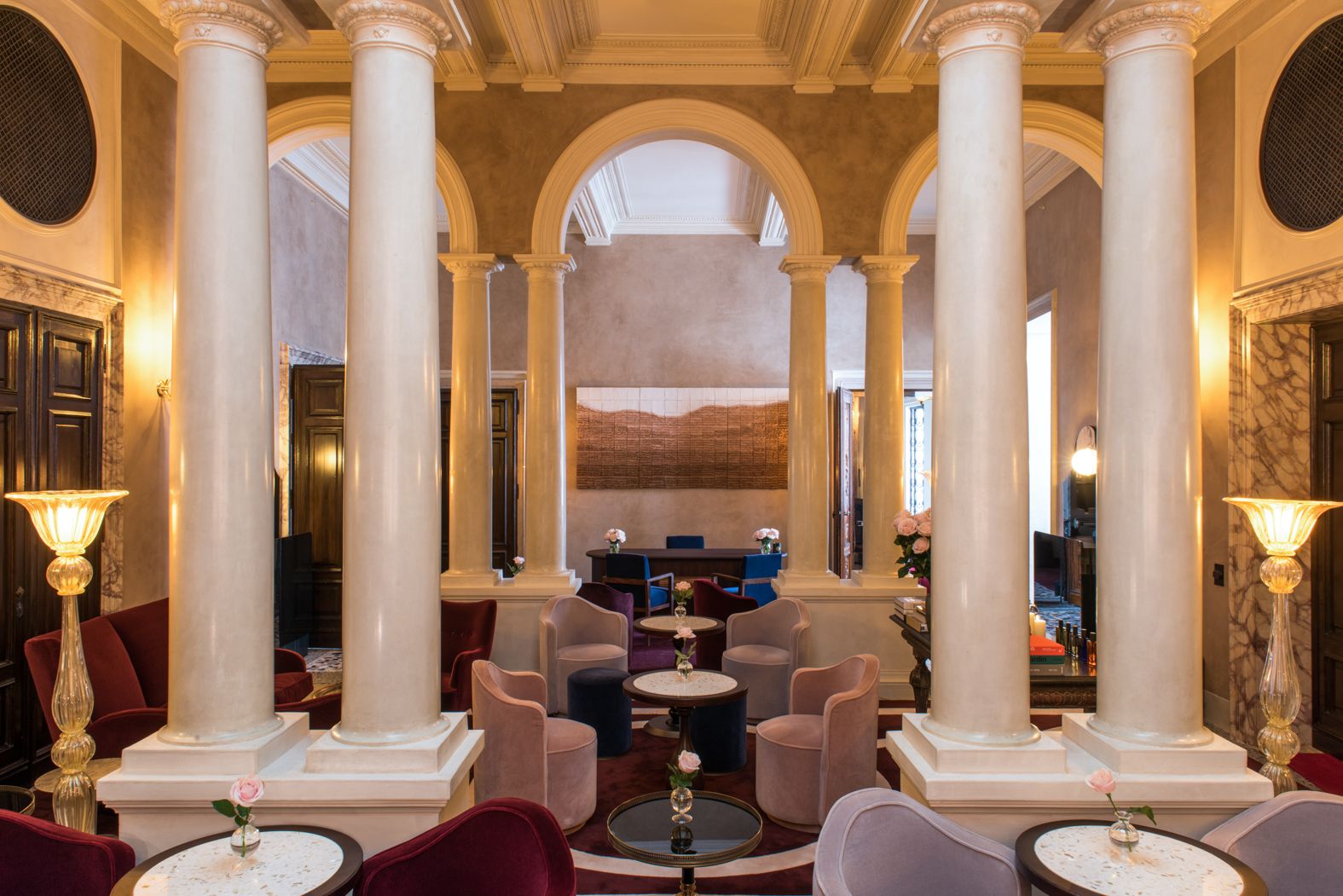
Photo: Guillaume de Laubier
As the building is a landmark, the French Italian designers Yann Le Coadic and Alessandro Scotto made sure to preserve its original features: from the grand staircase banister, to the original Murano chandeliers, down to the bulletin board in the lobby, a vestige of its days as the Chamber of Commerce. Of course, there are plenty of new additions, too. The furniture is modern—Art Deco-inspired baby pink velvet chairs line the colonnaded lobby—and alongside the classic preserved Murano light fixtures sit contemporary pieces, also made in Murano by artist Mariapia Bellis of Avem.
Dining and Cooking