
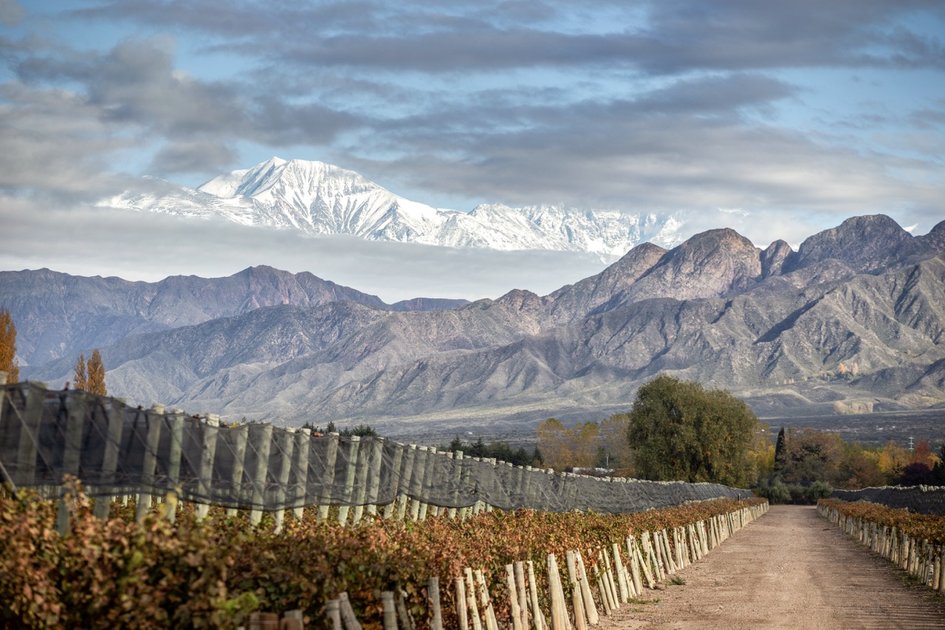
This Friday is the 15th annual Malbec World Day – Wines of Argentina’s global initiative to spotlight its signature grape variety once a year.
Although originally from the south west of France, where it is known as côt, malbec has become synonymous with Argentina’s wine industry much as syrah/shiraz has become synonymous with our own. One could argue Mendoza is the Barossa Valley of Latinoamerica, albeit with Riverland’s scale.
Again similar to our flagship, Argentinian malbec’s global reputation has long been underpinned by its value and consistency. Its generous dark fruit profile and plush, friendly structure is extremely dependable year on year – a tremendous benefit for trade.
However, just as it is true for the Australian shiraz category, malbec has evolved to become so much more over recent decades.
Drinks Trade spoke to Daniela Penno, WoCA imports Business Development Manager and organiser of the recent Malbec World Day tasting at the Consulate General of Argentina in Sydney, to understand what opportunities this presents for trade.
“Basically, we started to talk about the malbec that everyone loved/that matches with the barbecues and was only in restaurant lists in steak houses in the country. But, nowadays, malbec has moved to a more fresh and fruit-forward, terroir driven wine … This gives options to be listed in different categories in the same wine list [as] a [generally] lighter style to the Barossa shiraz/oaky styles that everyone loves in this country as well.”

Daniela (right) next to the Consul General Julieta N. Tabares (centre) and WoCA’s Director Sebastian Munoz (right)
This shift was evident at the tasting, which spanned a few dozen wines and a breadth of styles and pricepoints. Our top personal picks will be posted to the homepage soon, but the overarching takeaway was clear: these are wines that deliver undeniable quality across many price value tiers, along with awesome expression of site and a diversity not commonly associated with the region.
Daniela Penno sums this up nicely: “I think there is the perception of a lighter style and easy to drink, and you can say that it’s a simple wine, but behind that there is a lot of complexity. There is old vine fruit there, there is the work of the winemaker to pick at the correct time, to harvest at the correct time. All that work is what we try to communicate through our imports, our producers, and our wines from Argentina.”
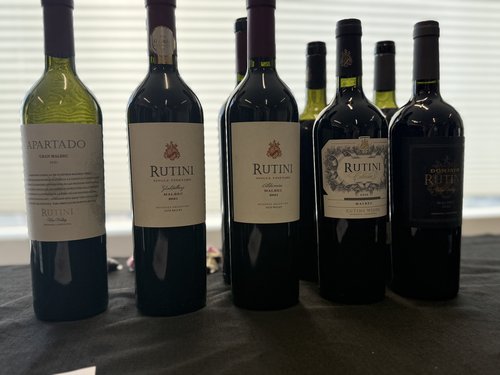
The stylistic diversity between Rutini’s single vineyard expressions, vinified in the same manner, was profound
Australian malbec is booming:
WoCA’s shift in focus is also linked to the global trend towards lighter and fresher wine styles impacting full bodied red wine sales in all major markets, including both Australian and Argentina.
In Argentina, this has prompted a cabernet franc renaissance, with younger consumers gravitating towards the lighter and fresher style. Rutini’s ‘Gualtallay’ 2019 on show at the tasting was a stunning example.
It is perhaps surprising therefore that malbec is continuing to gather momentum in Australia.
This is true both for WoCA’s Argentinian imports and for Australia’s domestic production, which according to Wine Australia’s National Vintage Report has almost tripled over the past five years, rising from $3.3 million in 2020 to a total value just shy of $9 million in 2025. This includes a sizeable $2.2 million increase between 2024 and 2025 alone.
Imports also remain strong:
Reflecting on WoCA’s reach, Daniela Penno, who is also the founder of the Artisan Malbec Wine Club, notes both off- and on-premise growth.
“You can definitely see it in chains more and more,” she said. “You can also see it in independent bottle shops where you can find boutique wineries, family businesses, no commercial brands that are everywhere, and top labels in restaurants. In top restaurants in Australia we put our wines in Firedoor, Margaret, Catalina – top on-premise businesses in this country, and this is something that never happened before.”
Despite this, WoCA is still adapting its portfolio to the global shift in wine consumption. At the Malbec World Day tasting was Patagonian pinot noir and chardonnay, Mendoza cabernet franc and bonarda, and torrontes from Salta.
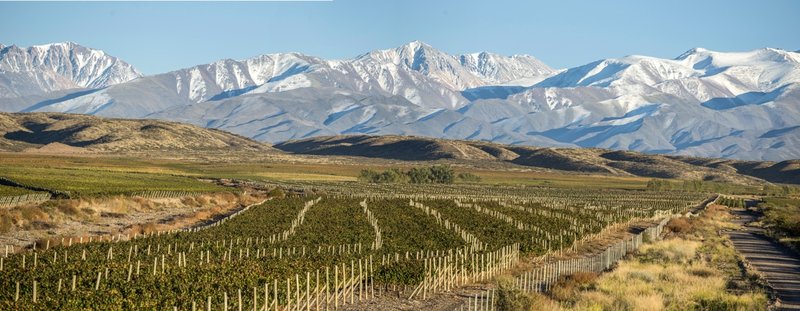
Mendoza’s Valle de Uco
Value remains king:
Daniela concludes by reiterating the importance of Mendoza malbec’s value proposition to Australian trade.
“We can talk about Argentina in many different ways but the prices are always competitive with the market,” she said. “The quality and price of the malbecs that we’ve got in this country are superb, especially compared with European prices nowadays – you can have in your list a red wine that can go from the lighter style to the full oaky malbec.”
//
The Trade’s Take: Chablis’ secret (and why you should let your customers in on it)
Dining and Cooking