
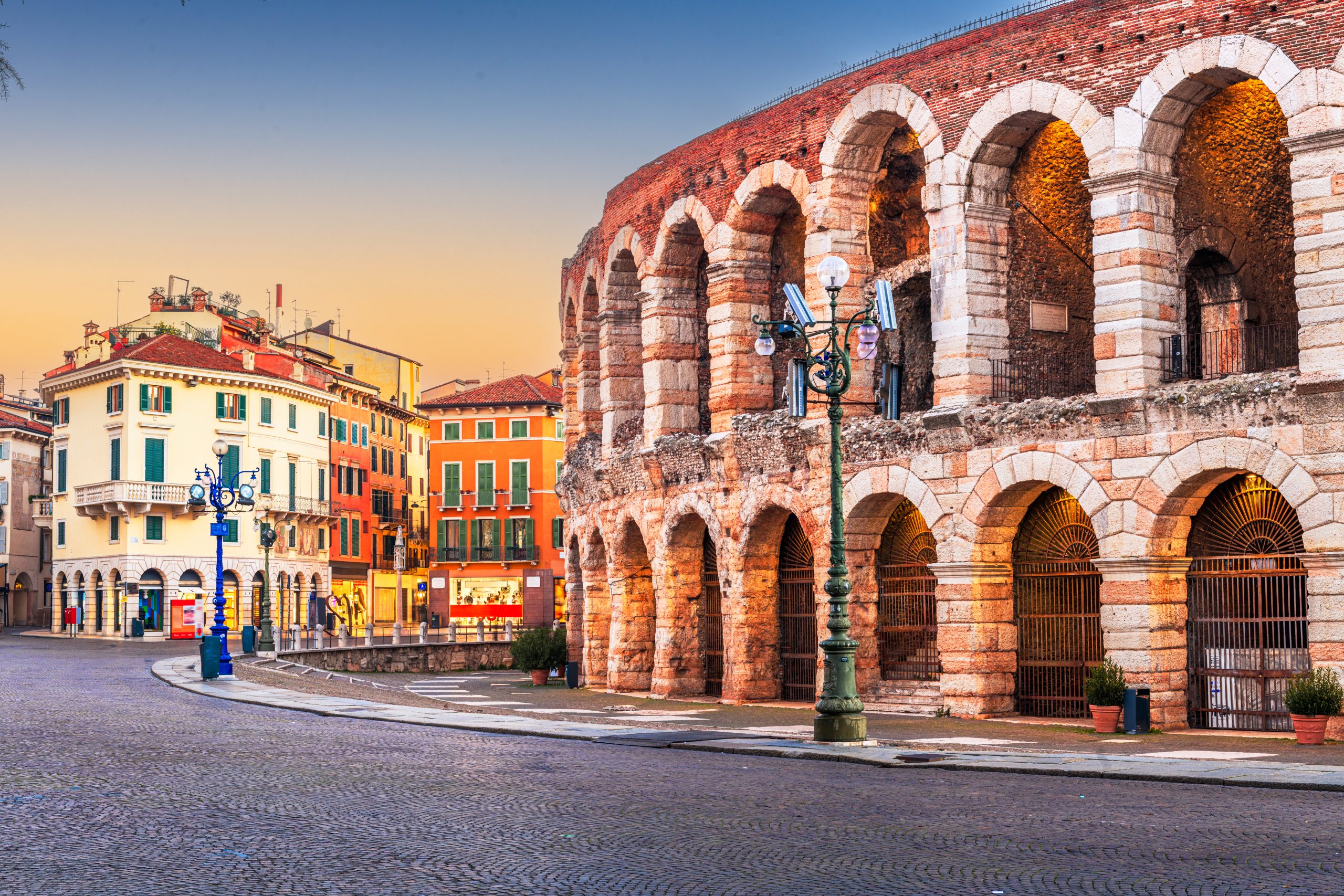
The Verona wine show concluded yesterday with Vinitaly 2026 coming at a pivotal moment for the Italian wine industry. Louis Thomas reports on the biggest trends from the fair.
Approximately 90,000 attendees, 26% of whom were international visitors, flocked to Verona for Vinitaly 2026. With producers, co-operatives and consorzi from every Italian region present, the show presented a wine sector in flux, with many of the old certainties and ways of thinking being replaced with fresh ideas and approaches. Some of the challenges of recent years – tariffs and falling alcohol consumption – have not changed, but possible solutions to these crises are emerging.
“We are satisfied because, in an international context marked by complex geopolitical dynamics, which significantly impact the flow and mobility of operators to major European trade fairs, the result achieved is anything but predictable,” commented Veronafiere president Federico Bricolo at the show’s conclusion.
1.Active lifestyle
Italian wine is learning lessons from the marketing success of the spirits sector and using brand activations as a means of promotion.
One example which takes the idea of this to new heights is the Consorzio Vini Alto Adige’s partnership with the airline SkyAlps. The collaboration involves the wines of 48 producers from Italy’s northernmost region being served on SkyAlps flights, which fly from London Gatwick to Bolzano (the regional capital) three times a week. Through the deal, passengers also have the option to check in six bottles of Alto Adige wine on their return flight at no added cost. Given that Alto Adige is a popular destination for skiers in the winter and hikers and mountain bikers in the summer, this is one way of combining wine with sports tourism.
“We are very open to these partnerships, it’s a great match,” commented consorzio director Eduard Bernhart.
“The airline is local, the producers are local. If people are coming for holiday, they can start to discover the wines on the plane.”
In order to raise brand awareness it is important to understand the target customer for a product, and Italian wine powerhouse Argea has done exactly that with the launch of its new metodo classico from Piemontese sparkling producer Cuvage. Called Cuvage de Cuvage SQ Metodo Classico Brut, this brut blanc de blancs is aimed at a more affluent wine drinker and so the marketing has followed suit with Cuvage-branded golf club bags, towels, yachting cushions and even lip balm for skiers.
Giacomo Tarquini, group marketing director for Argea, said of the new release and its accompanying brand activations: “It is something that is meant to be enjoyed by the glass. It’s perfect for the restaurants and bars at tennis clubs, golf clubs, yacht clubs. It brings a freshness to wine marketing. We have to use some good strategies from spirits for our business, especially for brand activation.”
Born again blanc de noirs
One Italian region which has been going through a remarkable transition in recent years is Oltrepò Pavese, in the west of Lombardy. Although it has a long history of traditional method sparkling, the latter half of the 20th century saw Oltrepò Pavese move towards an approach of mass quantity over quality, and the reputation of its wines suffered as a result. However, thanks to new investment and a new director of the Consorzio Tutela Vini Oltrepò Pavese, Riccardo Binda, who previously worked for the Consorzio Bolgheri DOC, it is turning a corner.
At this year’s Vinitaly the consorzio officially launched a new category for its sparkling wines, Classese. Requirements include a minimum of 85% Pinot Noir in the blend (with the remainder being Chardonnay, Pinot Blanc and/or Meunier) and a minimum period of ageing on the lees of 24 months (36 for vintage wines, 48 for reserve expressions). There are also now four recognised Menzione Geografica Aggiuntiva (MGA) subzones – the V ersa, Scuropasso, Coppa and Staffora valleys.
The term ‘Classese’, a portmanteau of ‘classico’ and ‘Pavese’, is not new, with the Associazione Produttori del Classese being formed in 1984 to promote traditional method blanc de noirs sparkling from the region.
“The issue was that it was too ahead of the curve, as at the time [in the 1980s] the region was focused on bulk production, so no one was interested. But those times are long gone, better late to change than never,” remarked Binda.
“Oltrepò Pavese has such an aptitude for producing blanc de noirs – in Champagne it is only 5% of the production. W e are the only area of the world to focus on this, and by focusing on this we can do great things,” he continued. “For the first time in history, Pinot Noir is the most-planted variety in our region, not Croatina, the grape used to make Bonarda.”
For Binda, the formal introduction of the Classese classification is not about revolution, but restoration: “We’ve been doing this for 160 years, it’s not something that we just came up with. 1865 was the first Italian metodo classico from Carlo Gancia. We have a long heritage of this.”
Asti’s new colour
Just over the border from Oltrepò Pavese there are also new developments for sparkling wine in Piemonte as the Consorzio Asti DOCG has confirmed that a rosé category has been officially added to its production regulations, with approval coming after three years of bureaucracy.In order to achieve the pink hue, Asti Rosé is composed of a blend of 70-90% Moscato and 10-30% Brachetto (which would otherwise be used in the production of Brachetto d’ Acqui DOCG).
“There’s a long tradition of pairing Moscato vineyards with Brachetto vineyards, so it has always been in the history and heritage of Piemonte, but this is about going forward towards new consumers that will appreciate aromatic, easy-to-drink wines,” shared consorzio director Giacomo Pondini.
There is also a degree of flexibility when it comes to the level of sweetness, with extra brut expressions permissible alongside the sweeter styles that are perhaps best-known to consumers. As bottling will begin 30 days after the publication of the new production guidelines, which was in late March, Asti Rosé will start arriving on the market later this month.
“We know that the British market is already very interested, but also East Asian countries too,” Pondini noted.
The low- and no-alcohol wine debate continues
One of the most contentious topics in the Italian wine industry concerns lower-alcohol expressions. There are those who consider it a good way to appeal to health-conscious consumers and offer more affordable wines for the UK market as there is less duty to pay.
The trailblazer in this area is Garda DOC which introduced 9% ABV wines from last year’s harvest. These expressions are not de-alcoholised but instead are achieved thanks to certain varieties such as Garganega having long ripening cycles, allowing early harvesting, as well as careful vinification in the winery. The resulting wines are undeniably lighter than the more alcoholic alternatives, but don’t compromise on flavour.
Northern Italy does have a geographical advantage when it comes to producing lower-alcohol wines as it has a generally cooler climate than the South. Cantina Rauscedo is the biggest co-operative in Friuli-Venezia Giulia, the Italian region which borders Sloveniato the east. Speaking at Vinitaly 2026, newly-appointed general manager Flavio Geretto argued: “The Italian wine export market is very crowded with whites and sparklings, but we see interesting new opportunities.”
Garganega isn’t the only grape variety that could be suited to the job of producing lower-alcohol wines. “Ribolla Gialla can be king as it can be sparkling and still, it is the soul of Friuli,” said Geretto. “It follows the trend of being a very drinkable white wine with a lower alcohol content. There is an opportunity in the future to change the denomination rules to open the gate for lower-alcohol wines, perhaps 8% ABV. We have to consider this as an opportunity.
The new generation is for lower alcohol, but not zero. But there are those who aren’t as keen on the idea, considering it more of a fad than a long-term market opportunity. “We are not following trends on no-alcohol etc., but we are focusing on the communication of our terroir and our wines,” commented Casa Paladin’s Francesca Paladin. “Following all of these trends will lead to every winery doing the same thing, we prefer to focus on unique identity to explain the typical characteristics of our wines and our values to consumers. Following a different trend every year will not add value in the long term.”
The US is awkward, but not yet a pariah
The US remains by far the most valuable export market for Italian wine, worth around €1.76 billion in 2025, according to data from the Unione Italiana Vini, around 23% of the total global export value, though there was a 9.2% year-on-year value drop for Italian wine in the US between 2024 and 2025. What may surprise is that US President Donald Trump’s tariffs have not destroyed Italian faith in the US market. Producers have remained resilient so far.
“There is good demand in the US market,” claimed Marica Bonomo of Monte del Frà, a winery located very close to Verona. “Gourmet restaurants and Italian restaurants help that, though duties, shipping costs, are causing trouble. But the passion for Italian wines means that we are not losing too much. People are always looking for culture.”
In fact, taking the temperature at Vinitaly 2026 there has reportedly been a degree of recovery as producers learn how to manage the costs of the tariffs. “We suffered a lot in the US in the second half of 2024 and first half of 2025, but in the last six months we have had good numbers and regained market share,” shared Harald Cronst, export manager for Alto Adige producer Kellerei Kurtatsch.
“It is tougher because prices went up, there may be some difficulties in the long term. Right now we have to assume that the tariffs will remain while this government is in charge. After that, who knows?”
A representative from one producer, who wished to stay anonymous, shared that it is currently swallowing the cost of the 15% import tariff, but that there is an understanding that the importer will eventually reimburse the company once the tariffs are lifted.
“Trump will go, but the US is the US and you have to have business there,” they commented.
Gino Colangelo, founder of US-based wine PR agency Colangelo & Partners, suggested that opportunities are still to be found across the Atlantic: “Italian wines over deliver in quality relative to cost so there is some flexibility on pricing. Americans are still traveling to Italy, experiencing the Italian lifestyle – of which wine is integral– and wanting to bring that experience home. There are also new DTC models for imported wines, creating new ways to both build brands and sell wine. And, despite the macroeconomics of the wine business, wines from US$15-25 are holding up well, and many Italian wines fit in that price window.”
One symbol of cooperation between the two countries is QuattroMani, a multi-vintage Pinot Noir created in collaboration between Valpolicella-based producer Pasqua and Washington State winemaker Charles Smith and launched during Vinitaly. Made from grapes grown in Valpolicella, it is intended to serve as a symbolic combination of Old World viticulture and New World winemaking. Where political diplomacy finds difficulties, perhaps wine, that most gregarious of industries, might help the US and Italy to reach across the aisle.
“Wine is culture, wine is social, wine belongs on the dinner table,” remarked Colangelo. “Most importantly, wine has a unique ability to bring people together.”
However, there is another crisis looming into view, one which could be far worse than a 15% import tariff. The global economic disruption of the US and Israel’s war against Iran will undoubtedly have severe ramifications for Italy if it is prolonged. During her visit to Vinitaly on Tuesday, Prime Minister Giorgia Meloni stressed that she was “trying to find solutions” for the agricultural sector, especially with regards to the oil crisis: “We must make every possible effort to stabilise the situation and reopen the Strait of Hormuz, which is essential for us not only for fuel but also for fertilisers, another key element of the sector we are discussing today.”
If the key issue at Vinitaly 2025 and 2026 was tariffs, then it could well be the case that exhibitors at next year’s show will be chiefly concerned with navigating the fallout of today’s geopolitical challenges.
Andrea Cecchi of Tuscany-based Famiglia Cecchi remained bullish about the fortunes for the Italian wine sector: “We don’t know what will happen in the next few years, but we will continue doing what we’re doing, producing great wines”.
Related news
Vinitaly becomes stage for Meloni’s defence of Pope Leo after Trump criticism
Italy minister vows to invest in Sicily’s wine tourism
Friuli Venezia Giulia opens registrations for Vinitaly 2026
Dining and Cooking