
 3 min read
As trends cycle through the interior design world, they inevitably influence everything from furniture to decor. And right now, with formal dining rooms enjoying a renaissance and character-rich homes in high demand, it’s no surprise that stone dining tables are taking over our social feeds. Sure, stone dining tables aren’t exactly new, but they’re experiencing a major moment in the spotlight.
“There seems to be more of a collective acceptance now that stone really reads as both contemporary and timeless, and can equally elevate modern and traditional rooms into something unexpected and luxurious,” designer Elisabeth McCabe of Ecco Interior Design tells House Beautiful. She and her business partner, Caroline Finkelstein, have incorporated stone tables into their projects for years, but McCabe notes a clear shift: more clients are choosing stone over traditional wood.
Below, we break down why stone dining tables are having such a moment, and which materials work best for different lifestyles and aesthetics.
Why Stone Dining Tables Are Having a Moment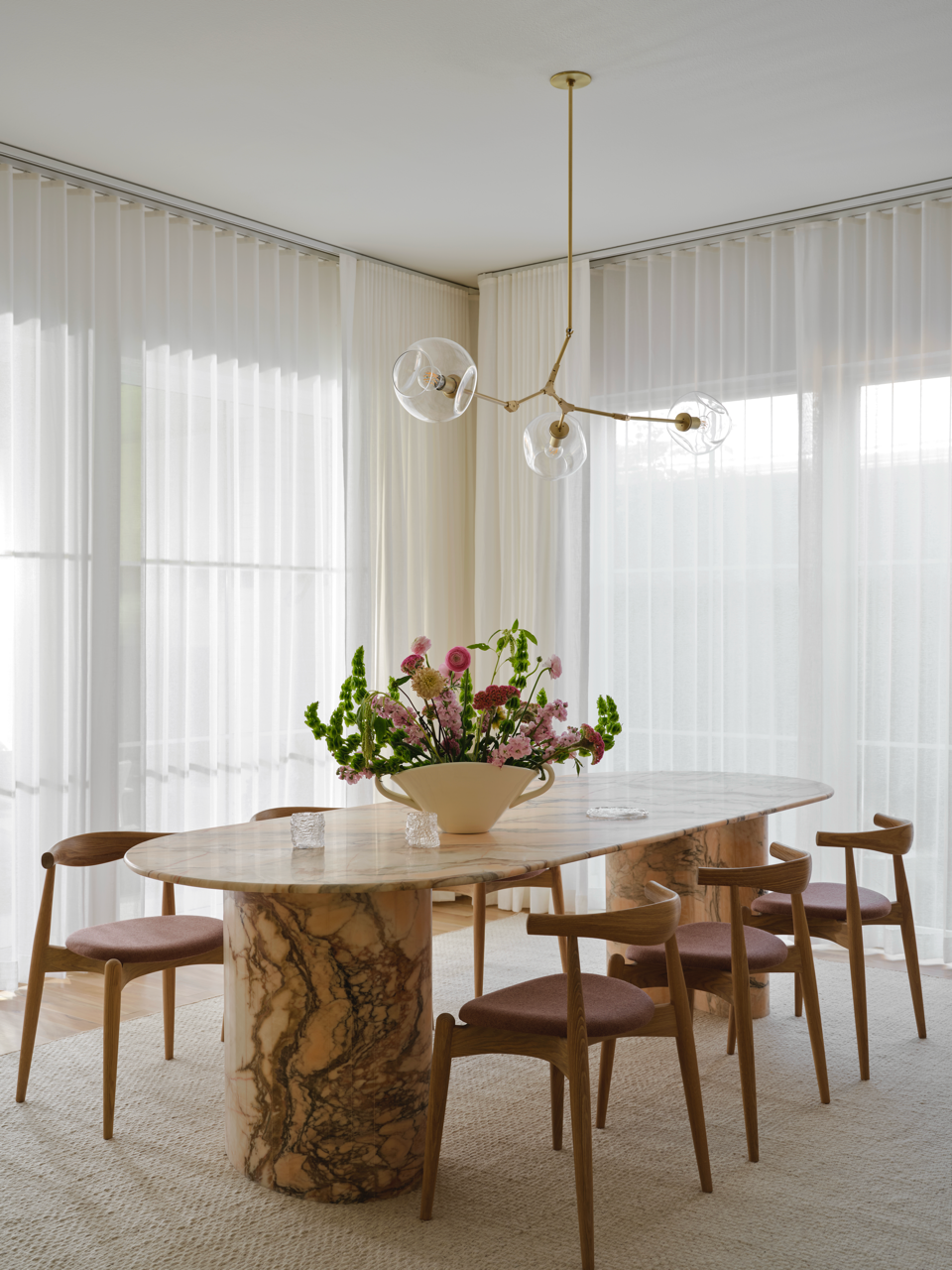 Lacey LandIn this gorgeous home designed by Cynthia Rojas of Minty Synth Interiors, the surface of the stone dining table is made from one single slab of marble.
Layering different textures and materials is a designer-favorite way of adding more character and depth to a room, and stone works so well in a dining room because there’s usually already a heavy wooden presence in that space. Designer Isy Runsewe explains that with the flooring, chairs, and millwork, a formal dining area typically contains a lot of wood; adding a stone dining table is a beautiful way to break up this material and bring in a different natural element.
“We’re seeing clients gravitate toward earthier, natural textures as a way to feel more grounded,” Runsewe says. “Even if our clients aren’t verbalizing this sentiment, we’re picking up on the fact that our built spaces need to create calm more than ever.”
Even with a simple table design, stone tables make a statement. Beautiful veining, bold sculptural silhouettes, unique textures—these elements help to make your dining table the focal point of the room.
“A stone dining table gives it a sense of permanence and intention,” designer Cynthia Rojas of Minty Synth Interiors says. “It has the same impact as a strong piece of art or a standout light fixture; it anchors everything around it.”
Besides bringing a statement, a stone dining table injects a sense of history and timelessness. “A single slab can feel like a work of art: visually rich and inherently unique, never the same pattern or color exactly,” McCabe says. “It lends weight and permanence, kind of turning everyday rituals into special moments.” It’s also simply a cool, stylish piece to showcase in your home.
What Stones to Use—and Which to Avoid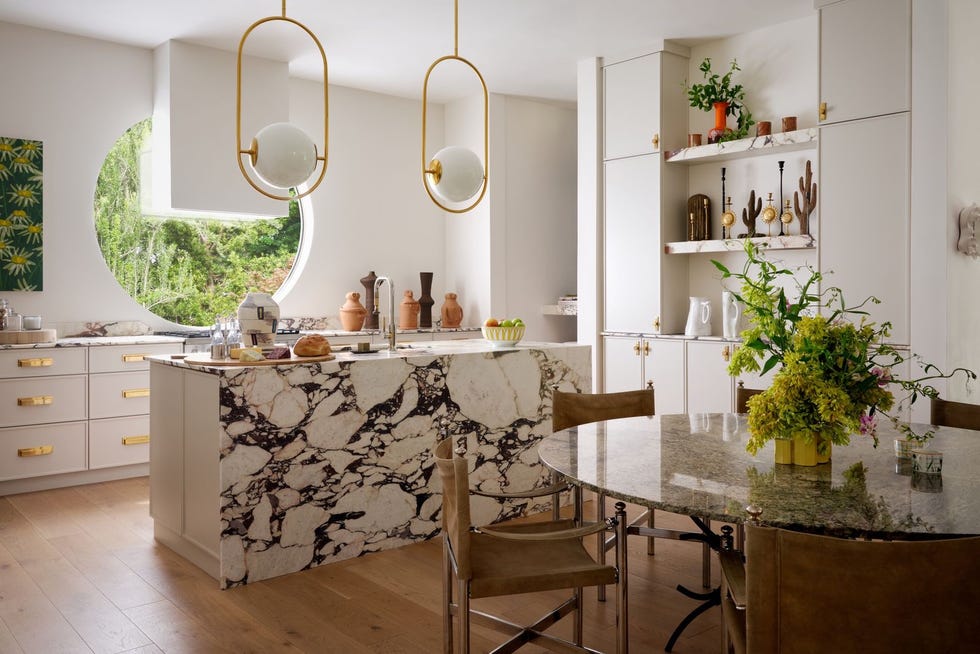 Lindsay Brown“The dining table seen here in my lake house is a grainy swirl of white, gray, and black quartzite and mixes in nicely with the clean Calacatta Viola marble and the wood accents surrounding it,” Elisabeth McCabe says.
Certain types of stones are ideal to use as table surfaces. Marble is a favorite for Rojas and McCabe, as it brings a certain softness without sacrificing the drama, if that’s what you’re going for. Another stunning option is quartzite, beloved for its durability. McCabe likes to use quartzite or even travertine dining tables in homes with small children because they won’t chip or stain as easily.
Speaking of staining, designers say you should avoid any porous stones as they’ll essentially soak in any moisture that spills on them. McCabe doesn’t like honed black granite for dining room tables either, as it tends to show streaks. Rojas doesn’t like to use man-made quartz because it doesn’t provide the same depth and variation as natural stone.
“Onyx can also be tricky; it’s beautiful but often too delicate and dramatic for everyday dining,” Rojas adds.
The Best Design Styles for a Stone Dining Table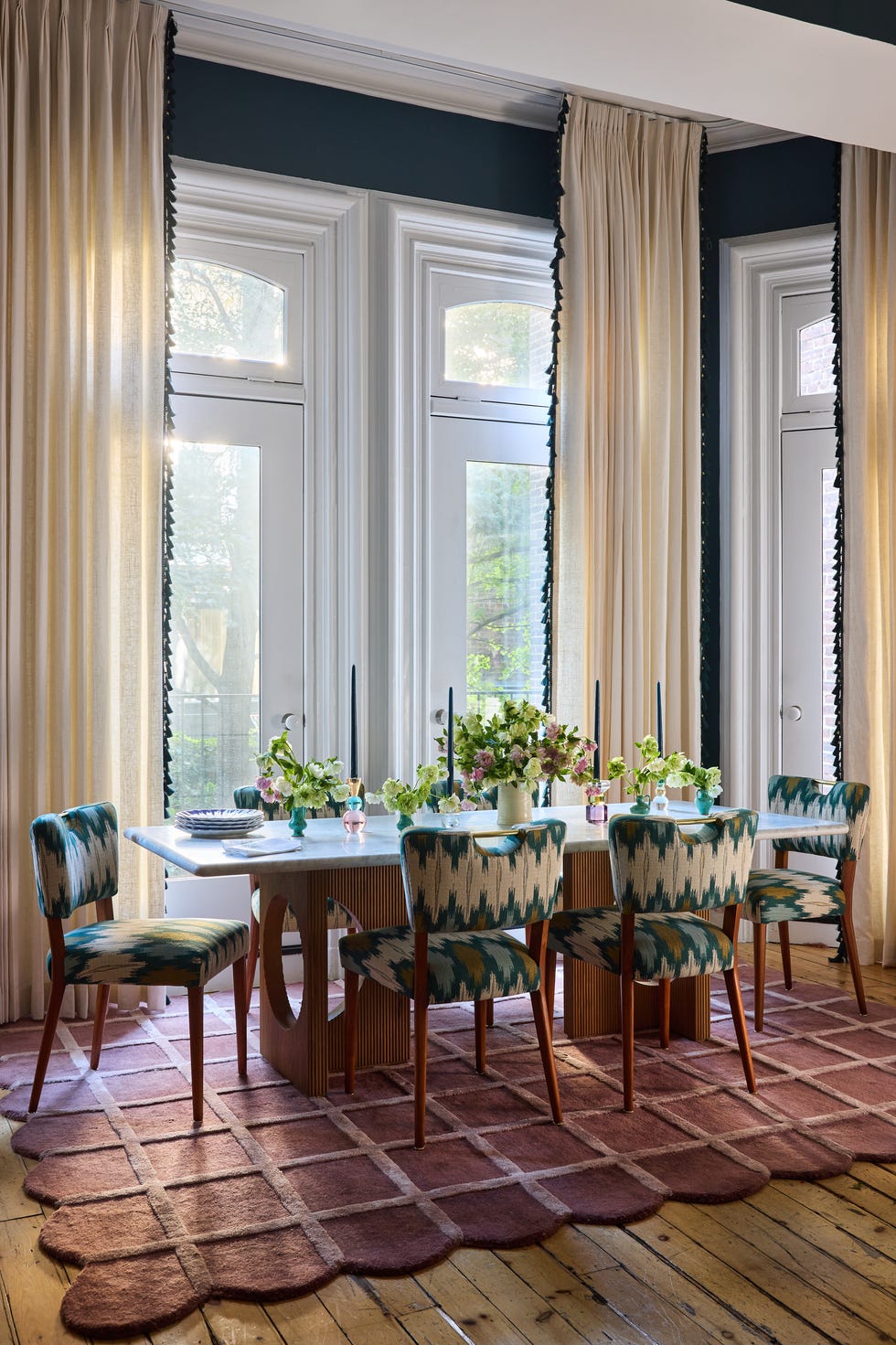
Because they come in so many options, a stone dining table can really work with any aesthetic or design style. The variation in colors and textures can read differently in certain rooms; for instance, Runsewe explains that “a honed, tumbled, or leathered finish reads differently than a super-polished one, which might feel more luxurious.”
They can change the feel of any room, acting as a cool counterpart in a warm interior and taking center stage through interesting veining or sculptural aspects in a modern or contemporary room.
“In more restrained spaces, like a refined old-world modern aesthetic, I love using quieter stones like travertine or a muted green marble for a more understated, collected feel,” Rojas says. No matter your personal style, you’ll be able to find a stone table that resonates with you.
Follow House Beautiful on Instagram and TikTok.
Dining and Cooking