
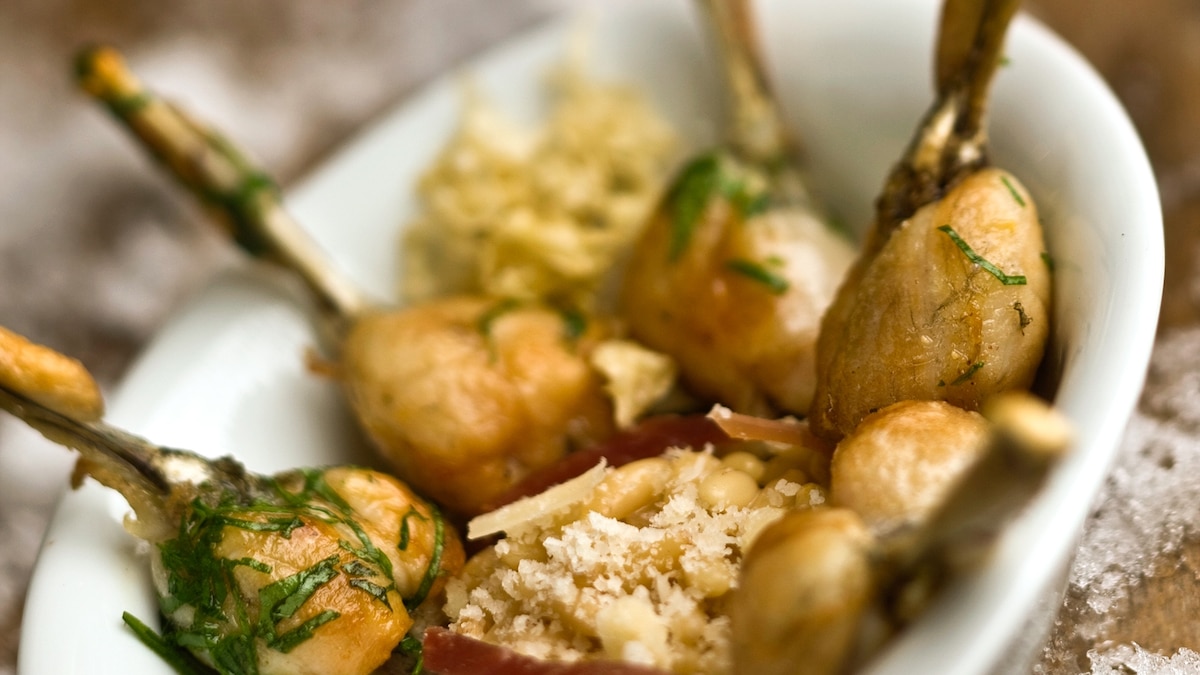
The history of the frog as human food is murky at best. But Jacques says it’s not surprising that hunter-gatherers would have eaten small animals like frogs and toads. “It may well be that they were a source of useful protein then and a convenient ‘fast food’ to cook.”
So how did such humble fare end up on the most refined menus? Cookbook recipes indicate that frog legs were a part of haute cuisine as far back as the 18th century in France, says French food writer Benedict Beauge. But how they got there is hard to decipher, in part because few cookbooks were written in centuries past about food for the masses.
What is better understood is England’s reputation for not liking frog. In the Oxford Companion to Food, author Alan Davidson (a Brit) writes that frog is “perceived by the English as a staple of the French diet.” He adds: “Why the idea of eating frog should be repellent to the English in particular is mildly puzzling. It may have something to do with the ugly (to human beings) appearance of the creatures, or the thought that they emerge all slimy from evil-smelling ponds.”
This notion is echoed in Larousse Gastronomique, which says frog legs have “usually filled the British with disgust.”
Still, some culinary records do offer proof of frog being enjoyed in Britain.
Dining and Cooking