
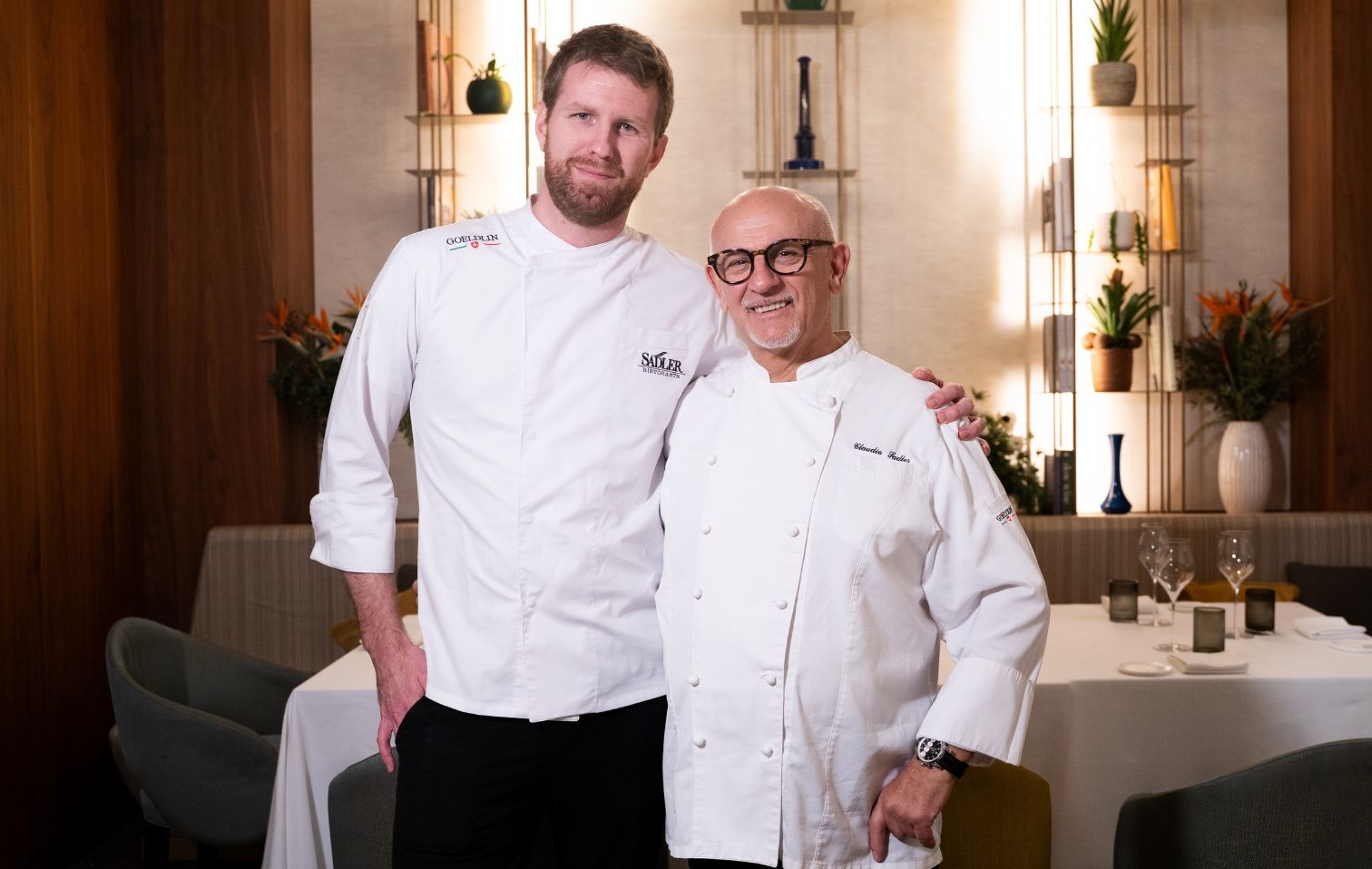
The Master and the Apprentice: A Conversation About the New Era at Casa Baglioni. A Joint Interview with Claudio Sadler and Giacomo Lovato
The Protagonists
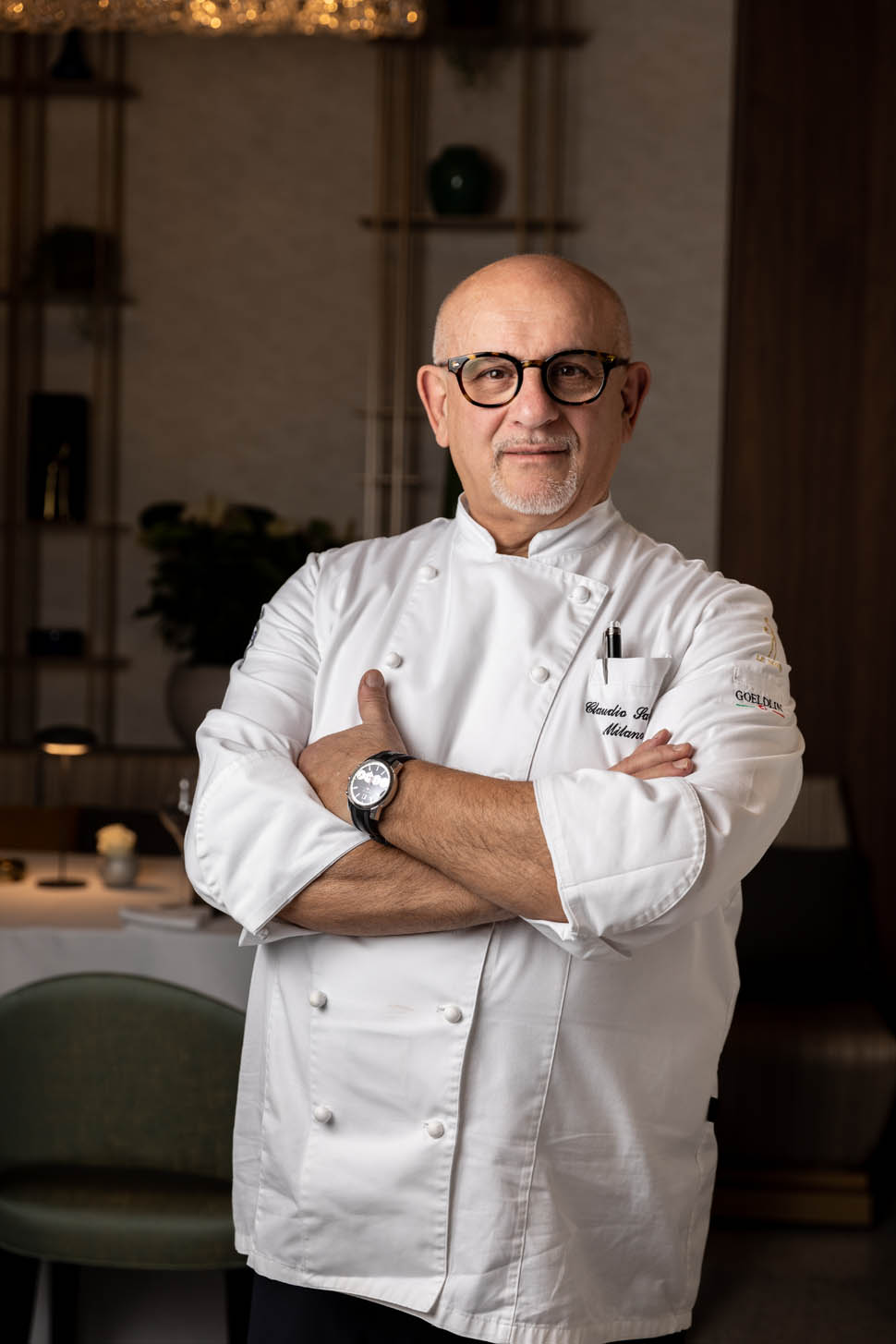
Claudio Sadler, born in 1956, is one of the pillars of contemporary Italian cuisine. A true Milanese, he has successfully bridged regional tradition with modernity through a pragmatic and creative approach. As the founder of the Le Soste association, he earned his first Michelin star in 1991, becoming a benchmark for technique, precision, and entrepreneurial skill in the international fine dining scene.
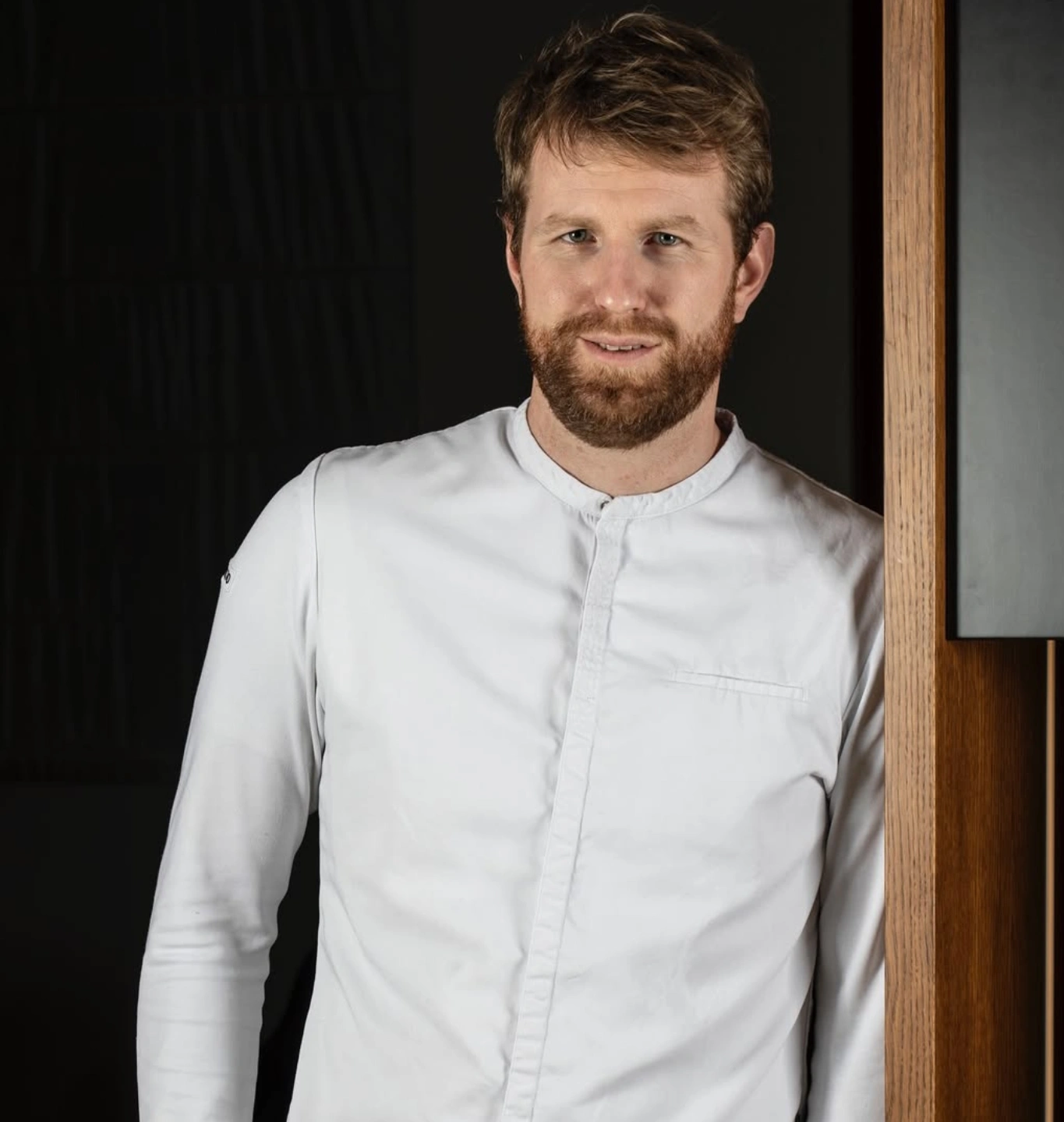
Giacomo Lovato, born in Varese in 1990, is the new Resident Chef at Ristorante Sadler. He honed his technical skills in some of Italy’s top kitchens: from the basics under Sadler himself to stints with Carlo Cracco and Federico Zanasi at Snowflake, and his tenure as head chef at Ristorante Borgia. His cuisine is described as “clean and minimalist,” with a strong focus on sustainability and the highlighting of plant-based ingredients.
 The Interview
Chef Sadler, you’ve been part of Milanese haute cuisine for decades. Your move to Casa Baglioni seems to have accelerated a shift toward simplicity. How has Giacomo Lovato’s arrival as Resident Chef influenced your historically rich culinary “grammar” toward this new aesthetic purity? What is the challenge of entrusting your signature style to a younger hand?
Cuisine is evolutionary by nature. Giacomo came to me in 2010 for a post-ALMA internship: we immediately hit it off and found professional synergy. Even then, he was extremely perceptive. He had a solid foundation built up in hotels, where he had learned the iron discipline of all-around management: from breakfasts to lunches, through to dinners and grill management. That “front-line” experience has equipped him to handle the complexity of a venue like Casa Baglioni today. Bringing him back was a natural choice: my experience provides the direction, his touch provides the wonder. Iconic dishes are essential, but if a young chef limits himself to replicating them, he eventually grows tired of it; Giacomo is here to breathe new life into that approach, making it contemporary.
Let’s talk about the yellowtail ceviche with citrus, ginger, and yuzu. It’s a dish that breaks with regional tradition to embrace bold acidity. Why choose it as the opening course of the “Tradition and Innovation Menu”? Is it a provocation or a culinary necessity to reset the guest’s palate?
Sadler: Milan doesn’t have a coastline, but it’s Italy’s largest fish market. Milanese diners are therefore accustomed to eating excellent fish. Ceviche is modern, enjoyable, and satisfies this desire for freshness.
Lovato: It’s a palate necessity. The acidity of the yuzu and ginger serves to reset the palate, preparing the guest for a long culinary journey. It’s a bridge between Milan’s fish tradition and a more international approach.
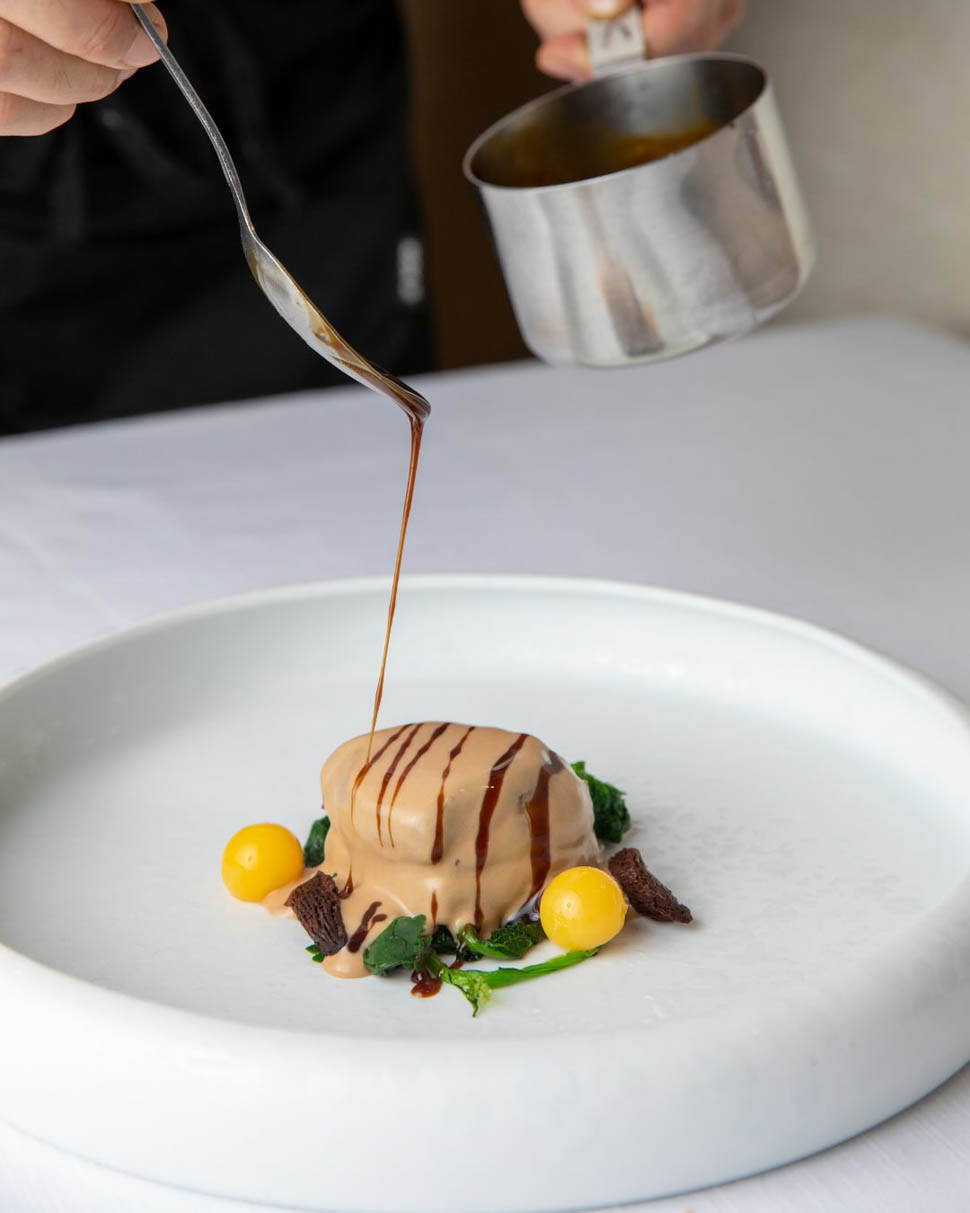
On the “Creative Menu,” veal sweetbreads meet almonds and passion fruit. The interplay of contrasts is extreme: richness, nuttiness, and tropical acidity. Giacomo, how did you balance these elements?
Veal sweetbreads need bold contrasts. The almond cream complements their natural sweetness, while the chive jus and the acidic kick of the passion fruit serve to cleanse the palate after every bite. It’s a game of checks and balances that makes the dish dynamic.
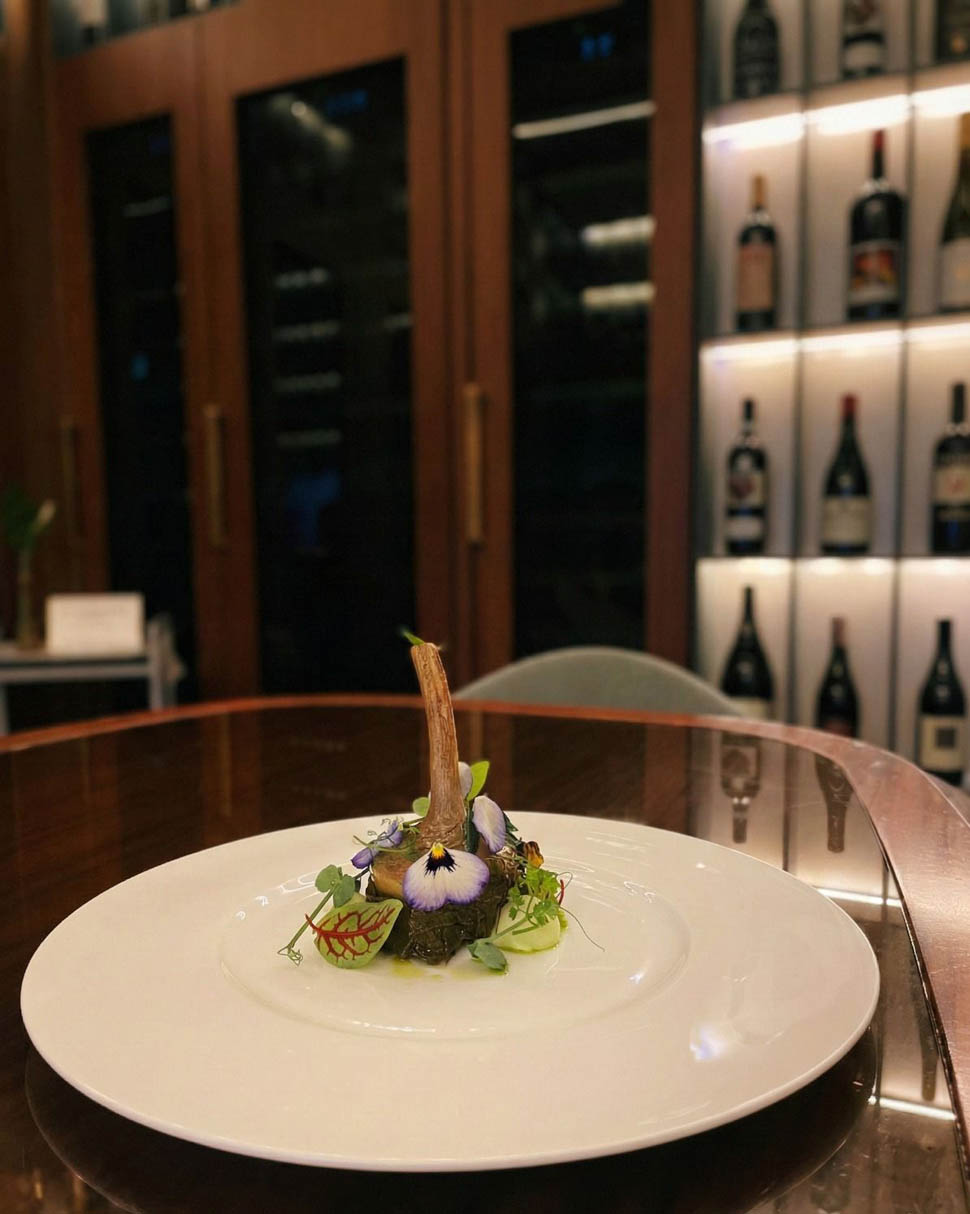
We notice a very strong presence of vegetables prepared using complex techniques (such as artichokes braised in Lapsang tea). Is this the “keystone” for guiding Sadler’s regional tradition toward a more sustainable contemporary approach?
Lovato: We use every part of the artichoke. It’s stewed with smoked black tea and rosemary, then grilled and glazed in a pan. We wrap it in a sautéed artichoke leaf that adds a note somewhere between tart and sweet. Smoking with tea is more elegant than direct grilling; it enhances without overpowering. It’sa dish that works because it “lightens” the meal. In a 7-course menu, the vegetable serves to break up the rhythm and provide a breather.
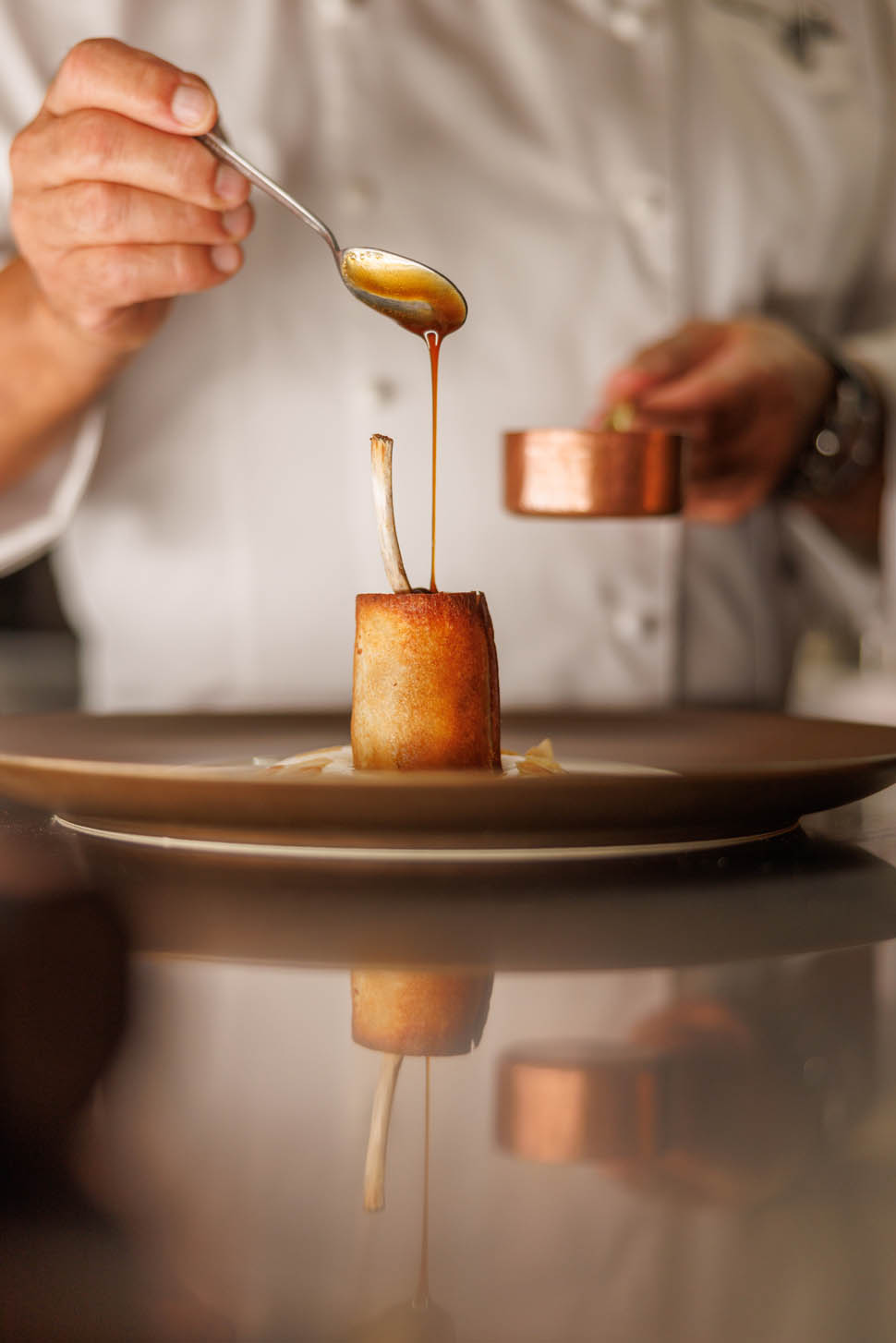
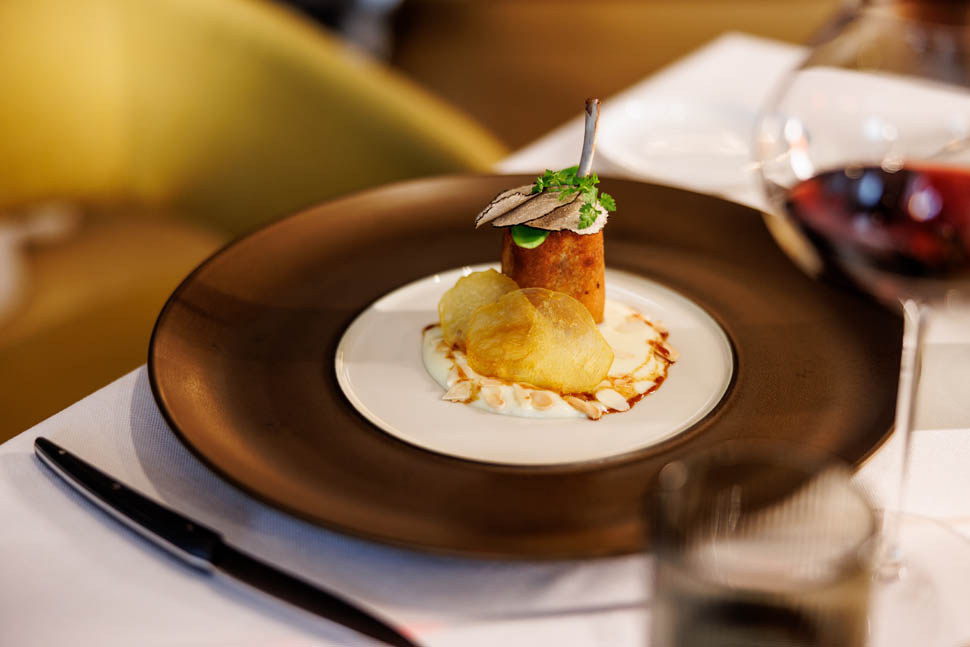
The lamb chop stuffed with foie gras in an almond crust pays homage to “Grand Cuisine.” How important is it, in 2026, to bring the technique of stuffing and the classic crust back to the center of the Michelin-starred table?
Sadler: It was born almost by accident on January 1st, at my lake house. We were a group of friends; I wanted to cook cutlets but realized I didn’t have breadcrumbs. I only had some sandwich bread: I rolled it out with a rolling pin, stuffed it, and wrapped it up like a “carrozza.” The result was thrilling. It’s a dish that’s 30 years old, a concentration of concepts in just a few grams that champions the great technique of classic stuffing—the Grand Cuisine that must never die.
If you had to define today’s “Gastronomic Milan” through a single dish on this menu, which one would you choose and why?
Sadler: I’d say my Cappellacci with turnip greens, ricotta cream, and pecorino—a dish created years ago but still very much in vogue. Or the pan-seared shellfish: technically it seems simple, but it’s incredibly difficult to cook well. It’s among the most expensive dishes, but also among the most popular.
Lovato: For me, the Ceviche. It represents a Milan that embraces the international scene while remaining faithful to the quality of Italian produce.
The meal concludes with milk, sbrisolona, and red berries in Port wine. A comforting dessert after so much experimentation. Is this the final message: a homecoming after a journey into innovation?
Lovato: The idea is that of an evolved black cherry ice cream sundae, with notes of elderflower and cassis for acidity. After so much technical complexity, the guest needs to come home. It’s a comfort that never gets old.
 The Future of the “Sadler Method”
What emerges from the meeting between Claudio Sadler and Giacomo Lovato at Casa Baglioni is not merely a handover, but a seamless fusion of two eras of Italian cuisine. On one hand, there is the solidity of a Master who has codified the taste of Milan, turning it into an institution; on the other, there is the energy of a thirty-year-old chef who has “cut his teeth” in the country’s most avant-garde kitchens and who today brings that technical expertise back to the place where it all began.
The real news lies not only in the menu—which shines with contrasts between tropical acidity and classic crust-baked dishes—but in the atmosphere of “quiet confidence” that permeates the kitchen. Seeing an icon like Sadler grant “full creative freedom” to a Resident Chef means recognizing that innovation stems above all from the ability to value people. Proving that, in the haute cuisine of 2026, the only way to remain true to one’s roots is to have the courage to let them grow in new hands.If there were only one dish on this menu, which would you choose and why?Sadler: I’d say my Cappellacci with turnip greens, ricotta cream, and pecorino—created years ago but still very much in vogue. Or the Pan-seared Shellfish: technically it seems simple, but it’s incredibly difficult to cook well. It’s among the most expensive dishes, but also among the most requested.Lovato: For me, the Ceviche. It represents Milan embracing the international scene while remaining faithful to the quality of Italian produce.The meal concludes with Milk, Sbrisolona, and red berries in Port wine. A comforting dessert after so much experimentation. Is this the final message: a homecoming after a journey into innovation?
Dining and Cooking