
How a new generation of Japanese chefs is redefining the world capital of taste
For decades, French cuisine was the undisputed “Holy Grail” of global gastronomy, associated with rich sauces, complex techniques, and an air of maximalism. However, in 2026, a walk through the emblematic neighborhoods of Paris, from the alternative 11th arrondissement to the aristocratic Avenue Montaigne, reveals a silent yet total revolution.
While in the past legends such as Paul Bocuse traveled to the East to borrow the aesthetics of kaiseki (the Japanese tasting menu), today we are witnessing the opposite phenomenon. A wave of Japanese creators, trained in the toughest French brigades, now holds the reins of Parisian kitchens. The result is a gastronomic experience that experts describe as the ultimate “Franco-Japanese alliance,” a meeting where Western tradition is filtered through Eastern discipline.
The school that gave birth to “destiny”
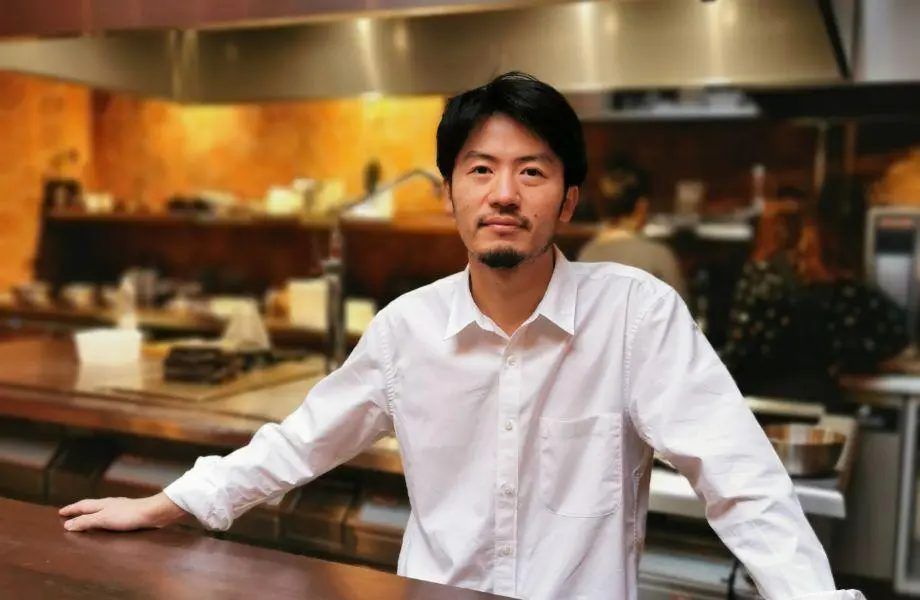
This calling of destiny has a specific starting point: the Tsuji Culinary Institute. The school, founded in Osaka in 1960, served as the ideal nursery where the first memories of classic French dishes were formed, prepared by teachers who admired European heritage. There, chefs such as Sota Atsumi first came into contact with Western techniques, building the bridge that would eventually lead them to the “City of Light.”
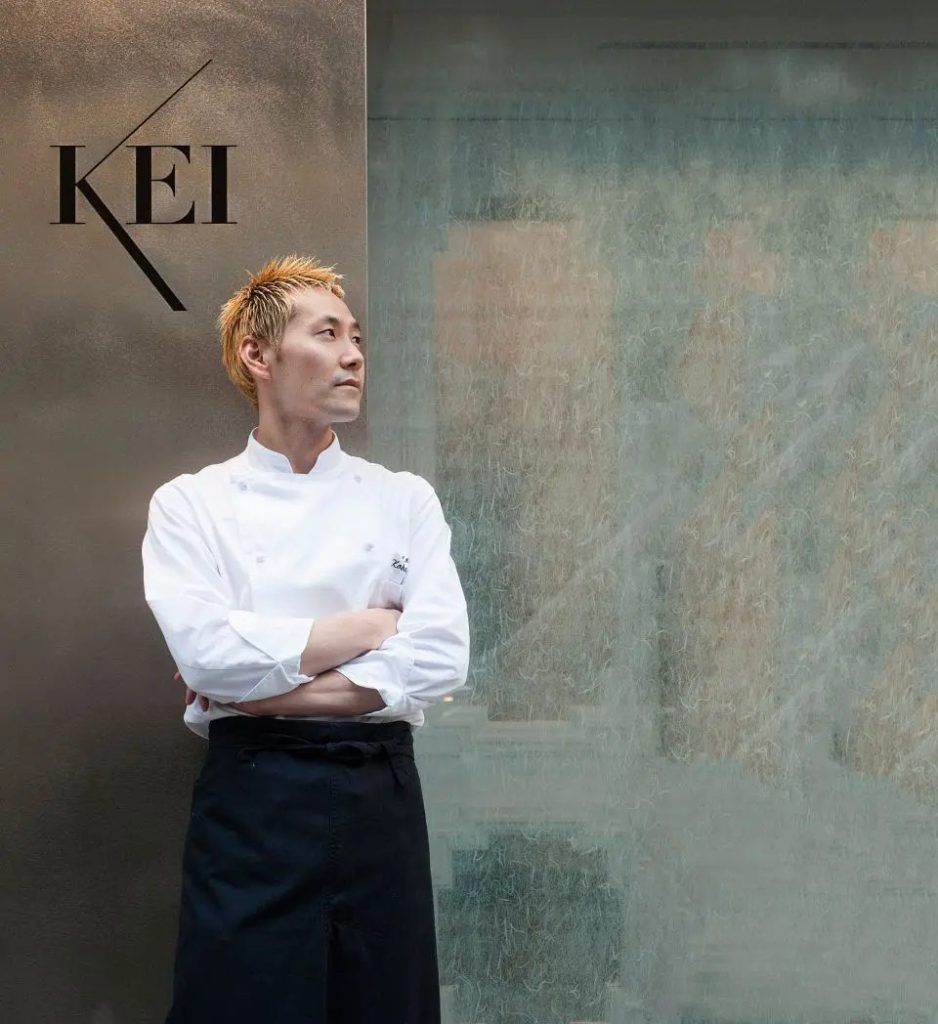
Today, this generation forms the backbone of the Parisian scene, with Kei Kobayashi remaining the spearhead. As the first Japanese chef to achieve the unthinkable—three Michelin stars on French soil—Kobayashi strips French cuisine of unnecessary butter and visual excess, allowing the essence of the raw ingredients to shine.
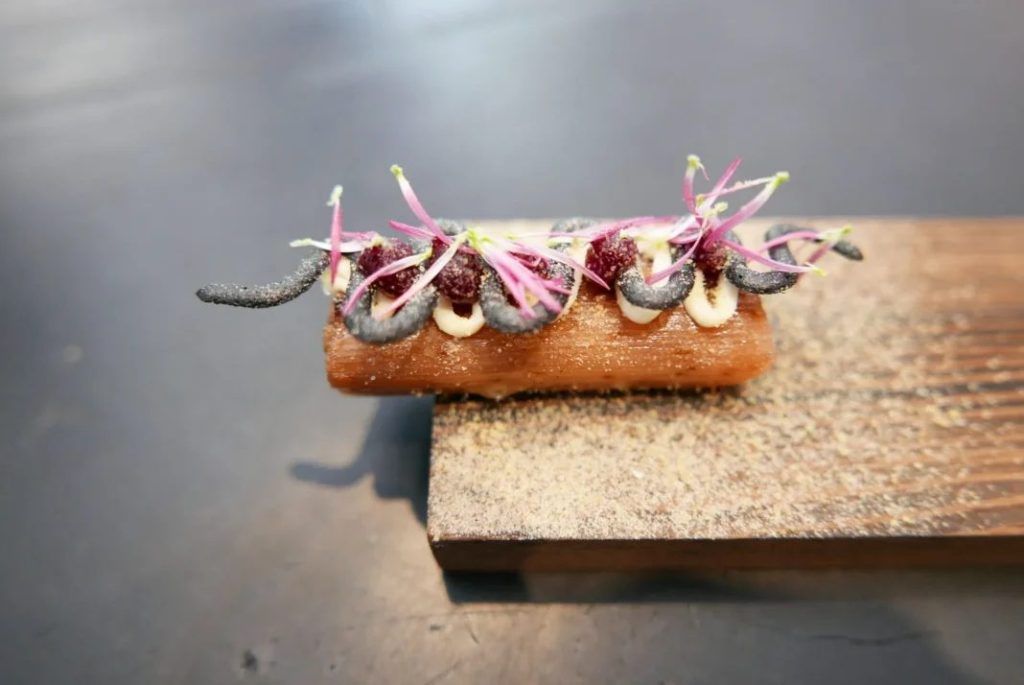
Alongside him, a series of outstanding creators serve different narratives. Atsushi Tanaka of the restaurant “A.T” approaches the plate as an “architect of colors,” combining French technique, as well as Japanese and Scandinavian influences.
Shunta Suzuki at “Les Enfants du Marché” dares to serve haute cuisine in the heart of a traditional market, shattering the myth of white tablecloths.
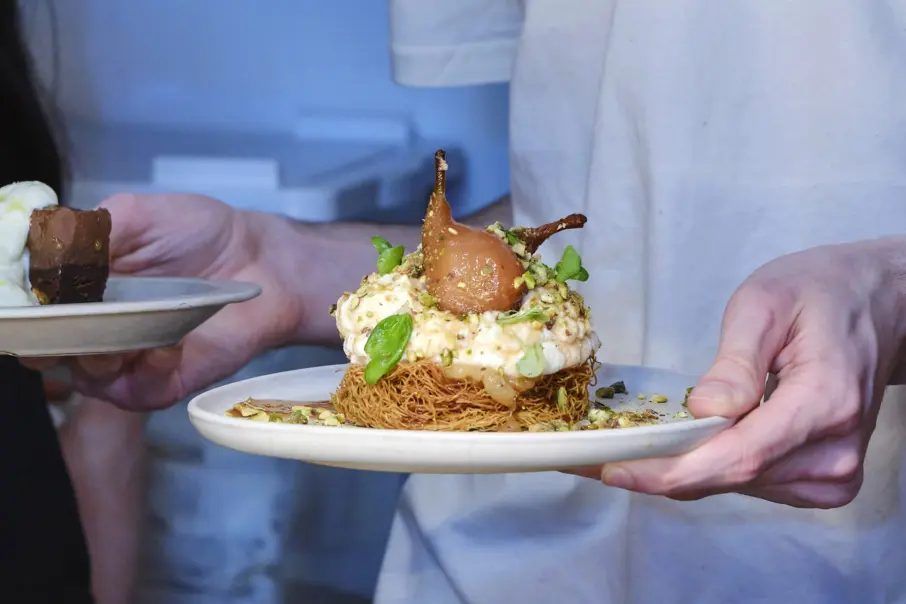
This trend does not concern only food, but an entire philosophy of “architecting” the plate. Just as an architect studies the structure of a building, chefs such as Ryuya Ono of the restaurant “Magma” or Sota Atsumi of “Maison” study the geometry of ingredients. If French cuisine is a process of construction, Japanese cuisine is an art of subtraction. This creative tension gives birth to dishes such as beef tartare with fermented daikon radish or scallops with rosemary oil and Japanese kabocha pumpkin, where complexity bows to restraint.
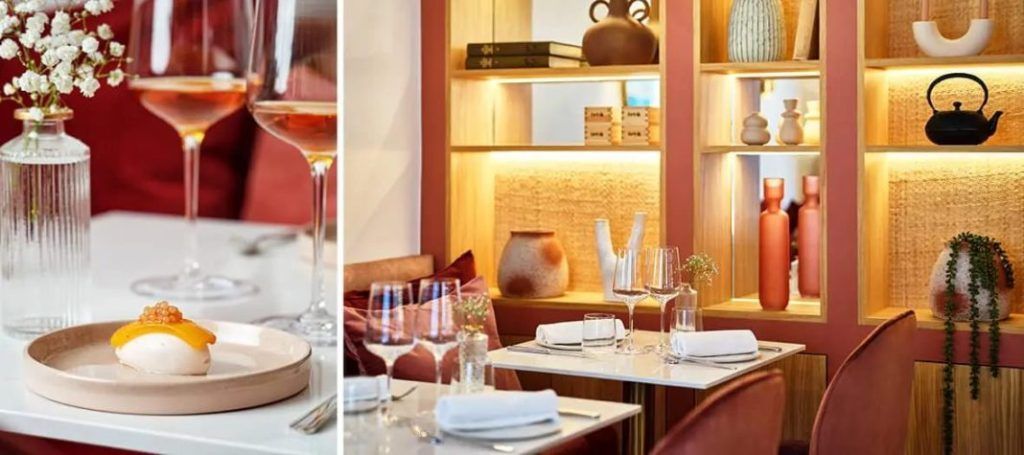
From Omakase to the Nikkei revolution
For the 2026 traveler, Paris now offers concepts that redefine authenticity. The Omakase experience, where the guest blindly entrusts themselves to the chef, moves from sushi bars into French fine dining.
At the much-discussed “Akabeko” by Yasuo Nanaumi, visitors enjoy a journey with stops such as foie gras tempura or Wagyu beef with Bordeaux sauce. At the same time, the return to fire through Japanese binchotan charcoal has become the new standard, offering a form of grilling that seals in juices without altering aromas.
The city’s palette is further enriched by hybrid flavors that turn it into a global food hub. “Manko Paris” on Avenue Montaigne remains the “temple” of the Nikkei scene, blending the vibrancy of the Andes with surgical Japanese precision in fish cutting. In the Marais, the new restaurant “ISHIN” experiments with Afro-Japanese fusion, using cassava and African spices.
Japanese chefs do not “alter” French cuisine; they free it from its historical rigidity. And thus, French gastronomy is reborn, lighter and more aristocratic than ever.
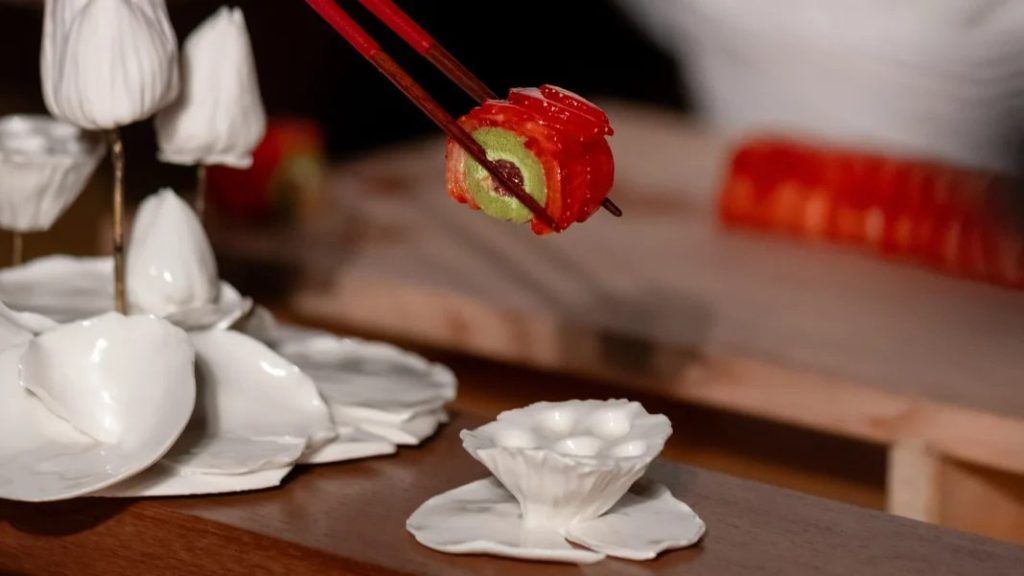
Last tip: Don’t leave Paris without trying:
The “Vegetable Garden” salad at the restaurant “Kei”.
The grilled fish at “Magma”, cooked exclusively over binchotan.
The Omakase experience at “Hakuba” at Cheval Blanc.
Dining and Cooking