
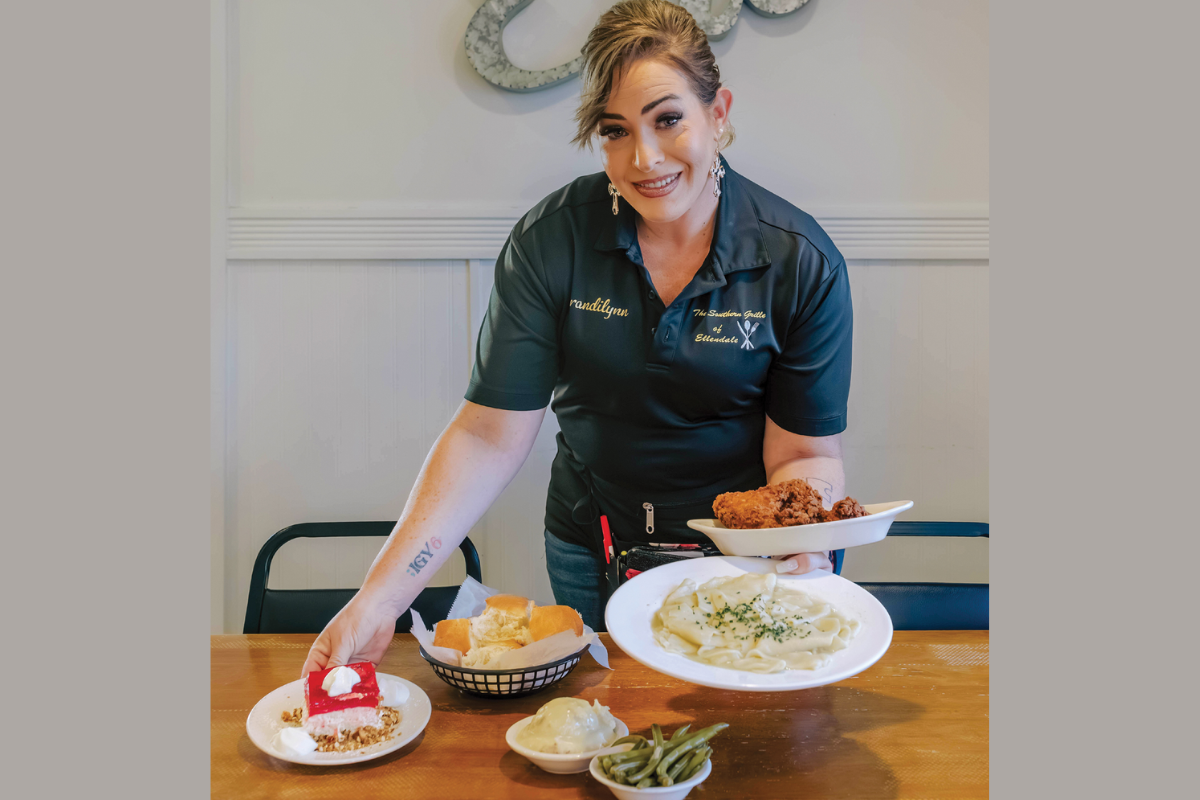
Delaware’s culinary identity doesn’t announce itself with swagger. No single dish neatly defines the state the way gumbo defines Louisiana or cheese is associated with Wisconsin. Instead, this small state’s cuisine reflects Delaware’s geography, shaped by our neighbors: Maryland, Virginia, Pennsylvania, and New Jersey. The coastal scene and waterways also affect the culinary scene. The result is a table that blends familiar mid-Atlantic staples with Southern comfort.
Here are the First State’s first-rate examples:
Slippery Dumplings
Slippery dumplings are flat, not round. They’re traditionally made with lard and coated in chicken gravy. Smyrna Diner serves chicken and dumplings on Tuesdays and Fridays. 99 S. Cory Lane, Smyrna; 653-9980.
Southern Grille of Ellendale offers chicken and dumplings on Tuesdays, Thursdays, and Sundays. Beef and dumplings are served on Mondays. 711 Main St., Ellendale; 422-9090.
Muskrat
Southern Grille is also one of the few Delaware restaurants to serve muskrat, broiled or flash fried. Get it plain, with barbecue sauce, or smothered in gravy. Sometimes called “marsh rabbit,” it can be ordered with the head on or off. (Some diners favor the brains andjaw meat.) Once a typical family meal near marshlands, muskrat was trapped for fur. The meat was a bonus.
Strawberry Pretzel Salad
To eat like a Sussex County native, finish your meal with a strawberry pretzel salad, a fixture at church suppers and potlucks. Admittedly, it’s hard to find in restaurants. Southern Grille offers a cheesecake version—a layer of crushed pretzels with strawberries set in gelatin. At Dewey Beer Co., you might discover strawberry pretzel salad fruit beer. 21241 Iron Throne Drive, Milton; 329-9759; 2100 Coastal Highway, Dewey Beach; 227-1182.
Dogfish Head Brews
Few scrapple variations have earned as much attention as Dogfish Head’s limited-release Beer for Breakfast, a twist on Chicory Stout brewed with 25 pounds of custom-made lean RAPA Scrapple. It periodically returns to the Rehoboth Beach brewpub, which opened on Rehoboth Avenue in 1995.
Delaware’s first brewpub remains a flagship destination for craft beer and coastal dining, offering an extensive rotating tap list of Dogfish Head beers, elevated pub fare, wood-grilled entrees, and seafood. Just a short drive inland, the main brewery is in a converted cannery in Milton—the campus is also the home of Dogfish Head’s spirits program. 320 Rehoboth Ave., Rehoboth Beach; 2262739; 6 Cannery Village Center, Milton; 684-1000.
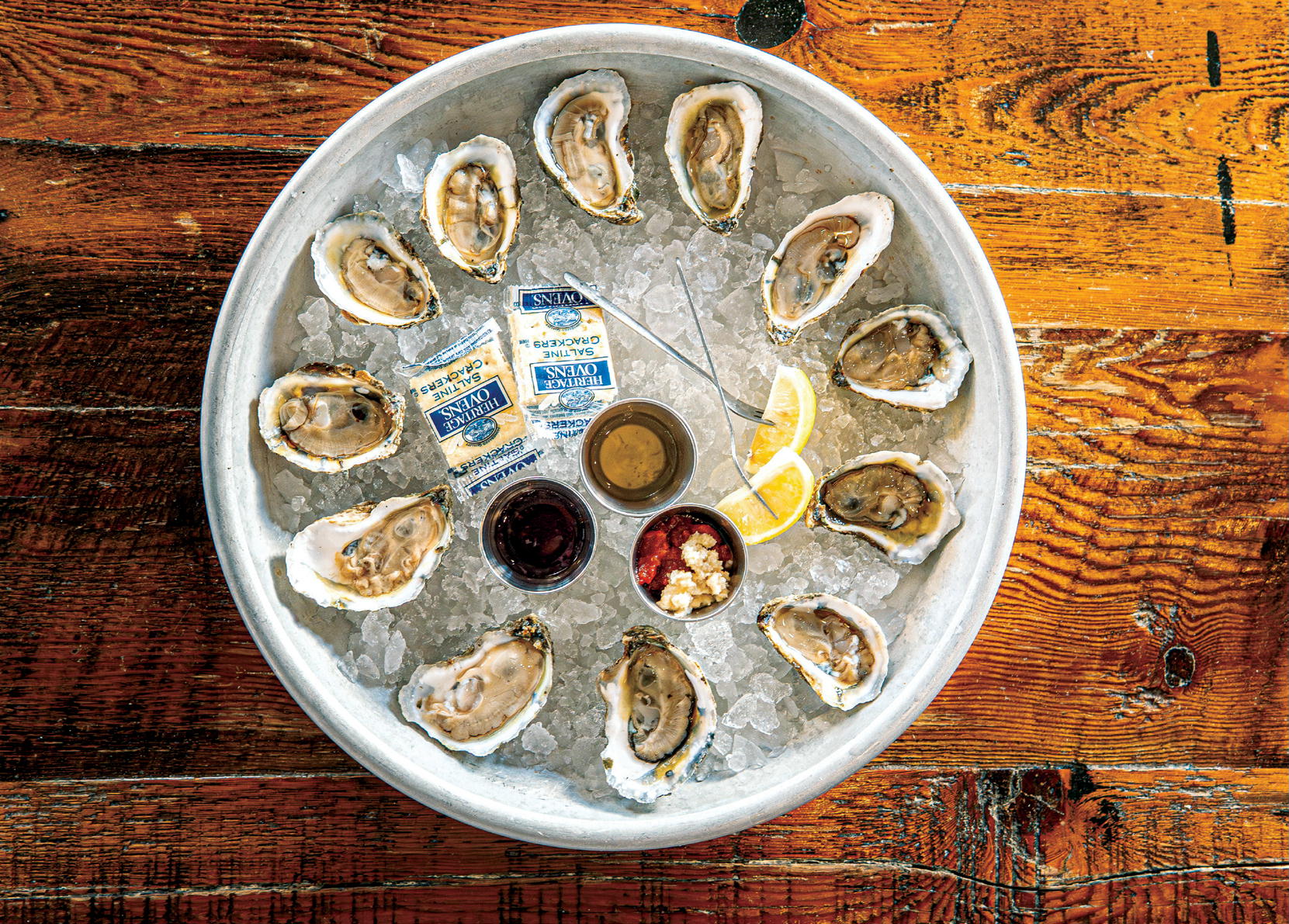 Oysters on a half shell is a specialty at Fins Hospitality Group. Photo by Jim Roblero.
Oysters on the Half Shell
To curb overfishing, Delaware banned oyster harvesting from May 1 to August 10, beginning in 1852. When the ban was lifted on a Thursday, locals celebrated Big Thursday with oyster feasts, a tradition that continued even after the law was rescinded in 1877. In the late 20th century, disease and pollution devastated oyster populations and dampened demand. Today, conditions have improved, and aquaculture has expanded—there are oyster farms once again on Rehoboth Bay.
In 2005, Jeff Hamer opened Fins Fish House & Raw Bar in Rehoboth Beach. The oyster-forward Fins Hospitality Group now includes five Fins locations and two Big Oyster Brewery sites, as well as Claws Seafood House and JR’s Seafood Shack.
In Wilmington, residents head to Trolley Square Oyster House. Many restaurants also feature oysters on the half shell. 1707 Delaware Ave., Wilmington; 384-7310.
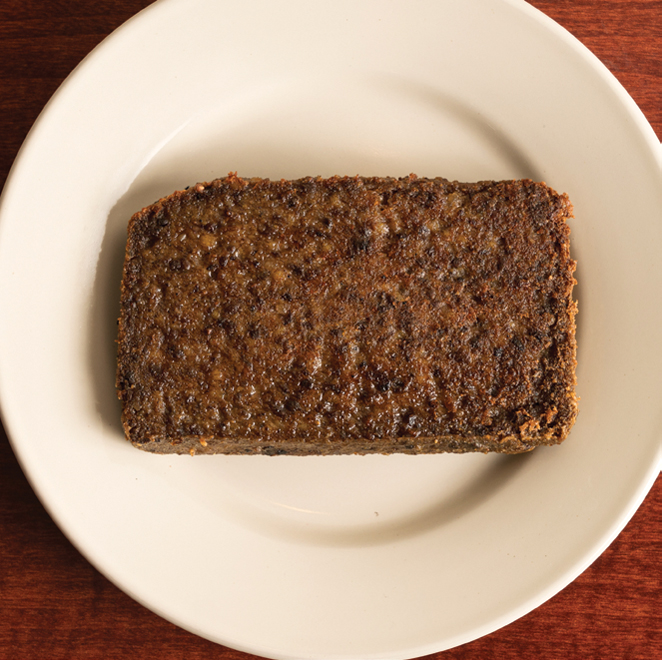 Scrapple is a breakfast meat that stirs passion in those who love it and those who could do without it. stock.adobe.com/Miss.
Scrapple
Few foods inspire as much devotion—or division—as a breakfast eater’s taste for scrapple. Like white pudding in Ireland or hog’s pudding in England, scrapple was born of thrift and, initially, made from leftover pork scraps, which may explain the name. (Turkey and beef scrapple are also available.) The Pennsylvania Dutch and Amish brought the concept to the mid-Atlantic, and in agriculturally rich Sussex County, where resourceful farmers prevailed, scrapple became standard fare.
Brand loyalty runs deep. Among the best-known brands are Hughes Delaware Maid Scrapple, Harrington-based Kirby and Holloway, and RAPA Scrapple of Bridgeville (home of the annual Apple-Scrapple Festival). At the original Helen’s Sausage House in Smyrna, scrapple arrives with eggs and toast for a hearty, no-frills breakfast. There is also a Newark location. 4866 N. DuPont Highway, Smyrna; 653-4200; 145 E. Main St., Newark; 861-9001.
More recently, chefs have embraced scrapple in unconventional ways, including the scrapple fries at Fish On in Lewes. 17300 N. Village Main Blvd., Lewes; 645-9790.
Cheesesteaks
Philadelphia may claim the cheesesteak, but many Delawareans argue that one of the best is at Claymont Steak Shop on Philadelphia Pike. Bob Hionis and Sam Demtratos opened the landmark in 1966. Bob’s niece, Demi Kollias, purchased the business in 2005 and expanded it—and remains committed to fresh, well-marbled rib eye. Former President Joe Biden is a fan. 3526 Philadelphia Pike, Claymont; 798-0013;57 S. Main St., Newark; 4.53-9.500; 2720 Concord Pike, Wilmington; 478-1500.
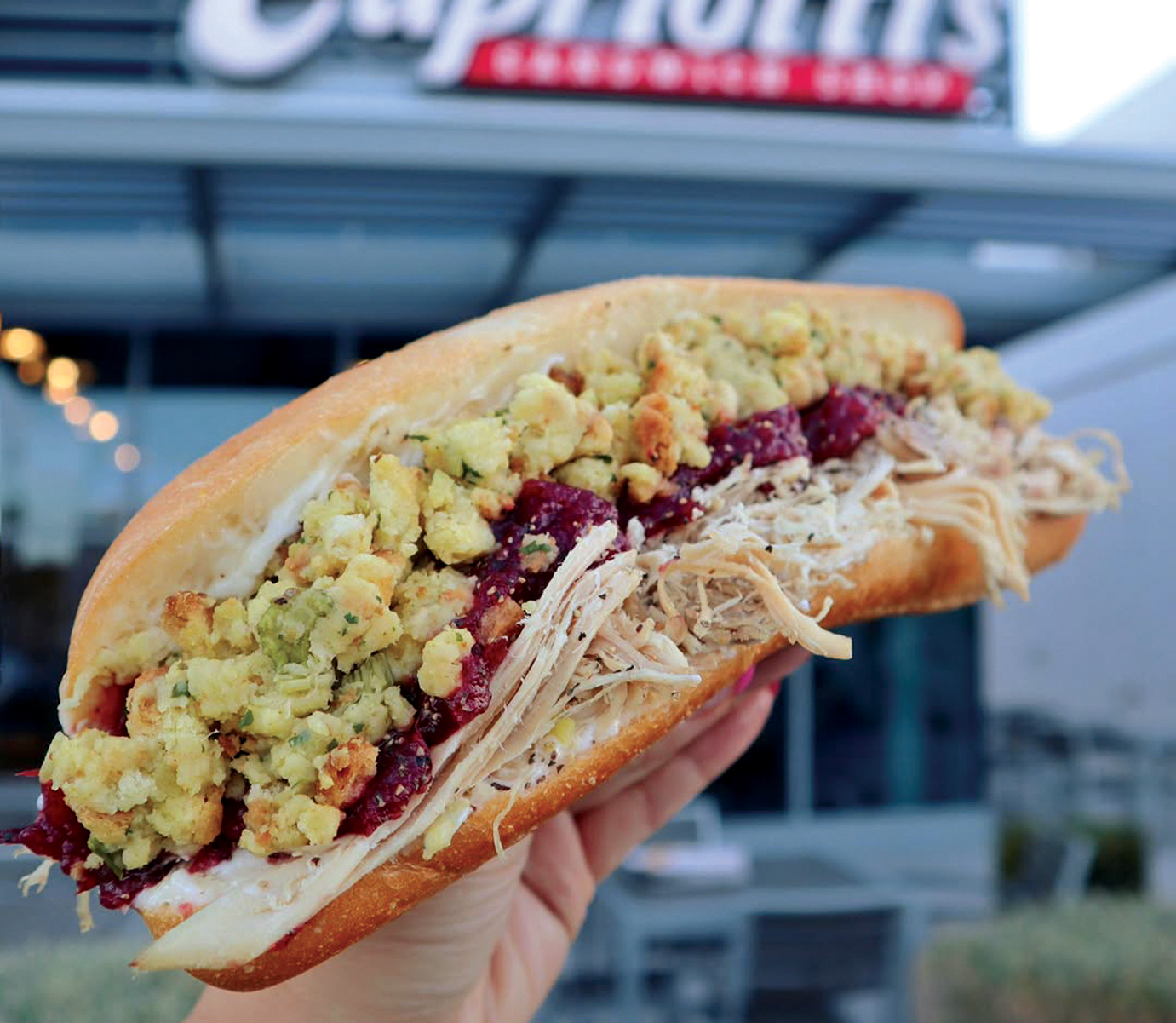 Capriotti’s Sandwich Shop’s Bobbie combines Thanksgiving dinner on a roll. Photo courtesy of Capriotti’s Sandwich Shop.
Roast Turkey Subs
Capriotti’s began in Wilmington’s Little Italy, an area crowded with sandwich shops. To stand out, founders (and siblings) Lois and Alan Margolet focused on roasted, hand-pulled turkey. The signature Bobbie, named for their aunt, layers Thanksgiving leftovers—turkey, stuffing, and cranberry sauce—onto a roll. Capriotti’s has since gone national, but Delaware still claims it. The original shop remains on North Union Street. 510 N. Union St., Wilmington; 571-8929.
Italian Bread
In northern Delaware, the bread is the difference between a mediocre and an outstanding sandwich. Founded in 1952, Serpe & Sons Bakery in Elsmere is known for its Italian bread and hard rolls—crusty on the outside, soft within—that underpin everything from cheesesteaks and hoagies to roast beef and turkey subs. The bakery also has pastries and other baked goods. 1411 Kirkwood Highway, Elsmere; 994-1868.
Broiler Chicken
In 1923, chickens were raised for eggs, not entrees. That changed when Cecile Steele of Ocean View received 500 chicks instead of the 50 she ordered from a Dagsboro hatchery. She raised them for meat, inadvertently launching the modern broiler industry—and transforming Sussex County. Today, chicken appears on nearly every Delaware menu. For fried versions, including a gluten-free option, try Kick n’ Chicken. 1551 Savannah Road, Lewes; 644-4151; 907 N. DuPont Blvd., No. 101, Milford; 424-1110.
In lower Delaware, chicken salad is often paired with fried oysters. Big Fish Grill in Rehoboth Beach features the combination on its lunch menu as a “Delmarvalous specialty.” 20298 Coastal Highway, Rehoboth Beach; 227-3474.
Sweet Corn
While most corn grown in Delaware feeds the state’s broiler industry, sweet corn occupies a significant role. According to the University of Delaware Cooperative Extension, sweet corn ranks among Delaware’s most widely planted vegetable crops, with thousands of acres dedicated to fresh-market production each year. You can find it at farm stands and farmers markets across the state.
Steamed Crabs
Maryland has turned blue crabs into mascots, but Delaware has its share of crab houses, most south of the Chesapeake & Delaware Canal. Among the most famous is Sambo’s, a seasonal tavern on the Leipsic River. Because it is a tavern, children are not permitted. 283 Front St., Leipsic; 674-9724.
For families, The Surfing Crab offers a more inclusive option, where diners can pound and pick steamed crabs together. 16723 Coastal Highway, Lewes; 644-4448.
Crabcakes
Crabcakes appear on nearly every Delaware menu, from fine dining to fast casual. Many locals swear by Woody’s Dewey Beach, where snowy white lumps dominate, and filler is so minimal that the cakes easily separate with a fork. 1904 Coastal Highway, Dewey Beach; 260-9945.
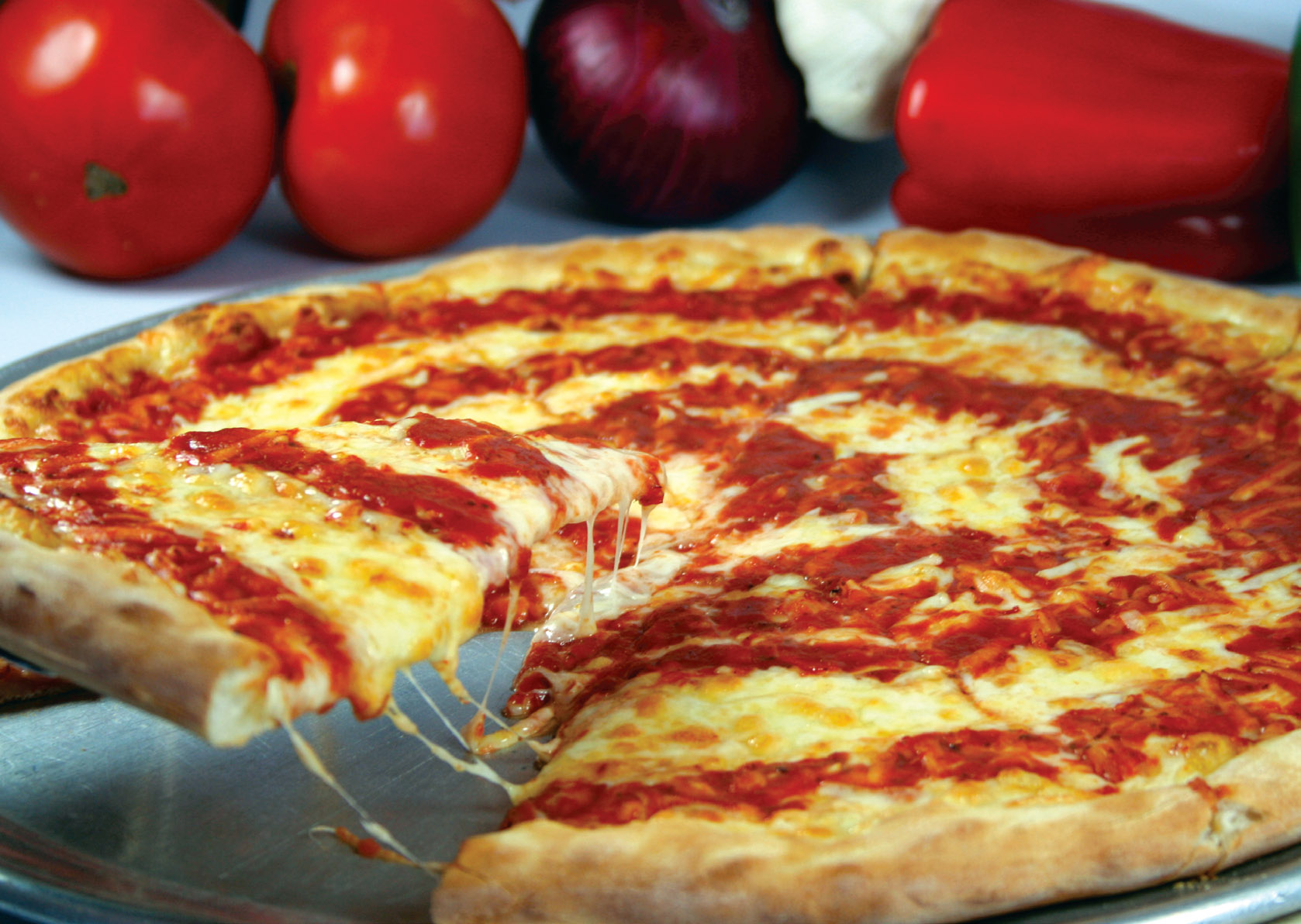 Grotto Pizza serves up that signature swirl. Photo courtesy of Grotto Pizza.
Grotto Pizza
In 1960, 17-year-old Dominick Pulieri opened Grotto Pizza in downtown Rehoboth. Pizza was unfamiliar at the time, and early samples went untouched. Pulieri persisted. Soon, locals and tourists alike craved the thin crust topped with a signature swirl of sauce and a blend of cheeses. With locations across the state, Grotto remains a coastal icon.
Charcoal Pit Burger and Shakes
In 1953, brothers Lou, Samuel, Martin, and Aaron Sloan opened The Dog House in New Castle, which is still in business. A few years later, they debuted the Charcoal Pit in Brandywine Hundred, which looks like a set from “Back to the Future” or “Happy Days.”
Order the Pit Special: a grilled patty with cheese and house-made relish, served with fries. Save room for an ice cream sundae, including the must-share Kitchen Sink. As with Claymont Steak Shop, President Biden is a frequent customer. 2600 Concord Pike, Wilmington; 478-2165.
Nic-O-Boli
The Nic-o-Boli is a beloved Delaware beach specialty created at Nicola Pizza, a family-run Italian restaurant since the early 1970s. The dish—a take on the stromboli—combines seasoned ground beef, pizza sauce, and a blend of cheeses rolled inside dough and baked until golden. 17323 Ocean One Plaza, Lewes; 227-6211.
Woodside Farm Creamery Ice Cream
The Mitchell family turned a working dairy farm into a Hockessin landmark. Woodside Farm Creamery’s secret? Jersey cows that produce milk with a high butterfat content and a naturally rich flavor. Woodside also supplies its fantastical ice cream flavors to The Ice Cream Store in Rehoboth Beach, owned by coastal native Chip Hearn. 1310 Little Baltimore Road, Hockessin; 239-9847.
Peaches
In the 19th century, Delaware was among the nation’s leading peach producers, with orchards fueling canneries, rail lines, and coastal commerce. While the industry is far smaller today, peaches remain a summer staple, prized for sweetness. At Fifer Orchards, a multigenerational family farm, Delaware-grown peaches are sold fresh at peak ripeness and used in baked goods and seasonal treats, continuing a tradition that links the state’s past to its present. 1919 Allabands Mill Road, Camden-Wyoming; 697-2141.
Lima Beans
Lima beans may not inspire the devotion of scrapple or crabcakes. Still, they’re rooted in Delaware’s agricultural history, particularly in Sussex County, where they were once grown commercially and processed locally. Today, fresh lima beans are still a seasonal find at farm stands, including Evans Farms, where they’re sold alongside other local produce during peak summer months. Fans wait patiently for pole lima beans, which thrive in sandy soil. 9843 Seashore Highway, Bridgeville; 337-9843.
Tomatoes
By the late 19th and early 20th centuries, Delaware was a major tomato grower and processor, with canneries clustered along rail lines and near ports. While the canning industry has largely vanished, tomatoes remain central to Delaware’s summer foodways. The Historic Lewes Farmers Market underscores that legacy each season with the annual Tomato Festival, where local growers showcase heirloom and hybrid varieties prized for flavor. George H.P. Smith Park (summer location), Johnson and DuPont avenues, Lewes; 644-1436.
Delaware’s beloved foods persist because they’re woven into daily life—breakfast counters, beach days, family dinners, and community gatherings. Neighboring states may have shaped them, but they’re grounded in local culture.
Related: Garden Dining Is an Ideal Way to Welcome Spring in Delaware
Dining and Cooking