
The general consensus holds that Californian Chardonnay is at its best in those areas where cooler climes and Pacific Ocean breezes temper hot days.
And there’s no shortage of winemakers who baulk at the idea of Napa-grown Chardonnay, seeing it as too warm.
Grown in the right sites in Napa Valley, and in the right hands, the results can be as riveting as top white Burgundy – as pleasure-packed, as contemplative, and as potentially ageworthy.
Looking back over the 8,000+ wines I’ve reviewed for Decanter in the last five years, I’ve given some pretty high scores to a handful of Chardonnays that defy expectations.
And here’s their little secret: Location, location, location.
A reliable source
(Image credit: iStock/Getty Images Plus/Baiterek Media)
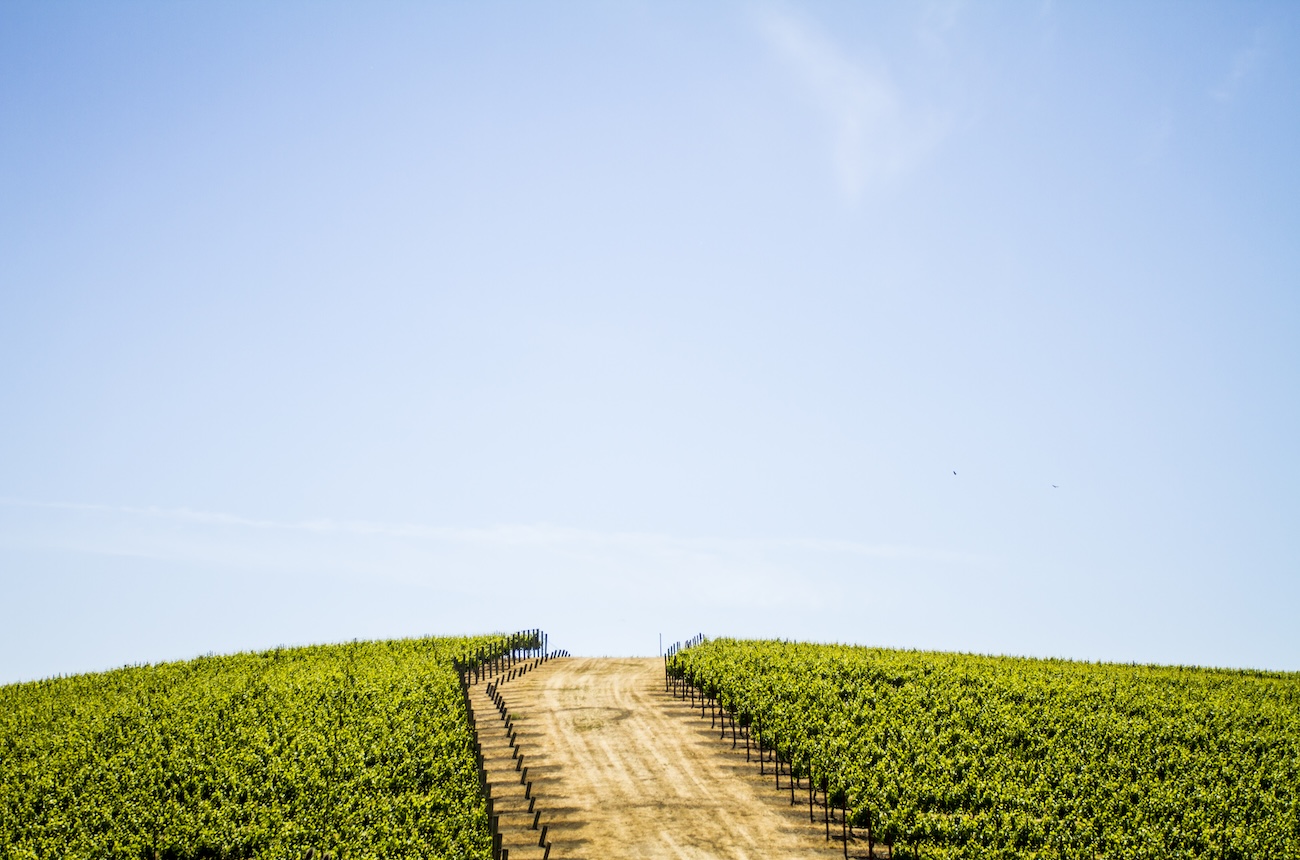
Los Carneros, a sub-appellation spanning Napa and Sonoma counties, south-west of the city of Napa, remains the most reliable source of world-class Chardonnay in Napa Valley.
Here, the cooling influence of San Pablo Bay draws fog and wind deep into the southern reaches of the valley, slowing ripening and preserving natural acidity.
It is no coincidence that some of my top scorers below originate from the Hyde and Hudson vineyards, sites that have proven capable of producing Chardonnay with both richness and tension.
David Ramey’s Hyde Vineyard Chardonnay shows the site’s classic profile: layered orchard fruit, citrus oil, and a firm acid spine shaped as much by picking decisions as by place.
David Ramey has long championed acid balance over opulence in his Chardonnays, and so many of his Chardonnays are still bright and lively a decade after bottling because of it.
Back in 2019, during a tasting of his Chardonnays, he felt compelled to remind me of something I imagine he has had to repeat often.
‘It’s a dream that Old World is somehow better or more natural. Do the lab analysis. Stop romanticising things you don’t understand – great producers are great no matter where they are, just as with film and art. Why do we value Château Latour? Experience.’
Ramey has been making wine for more than five decades. In the grand scheme of California winemaking, that’s experience.
Tor Kenward, who works with winemaker Jeff Ames, also makes a stunning Chardonnay from Hyde called Cuvée Susan, which is more textural with extended élevage bringing a deeper mid-palate weight, yet still anchored by Carneros freshness.
A Hyde Vineyard Chardonnay from Nid Tissé, produced by Marie-Laure Ammons, offers another interpretation – more tightly coiled, mineral-driven, and inspired by her upbringing in rural Limousin and by her own winemaking approach, shaped by work for the likes of Philippe Melka, Julien Fayard, and Pierre Seillan.
Do the right thing
And then there is Hyde’s neighbour, Hudson Vineyards, established by Lee Hudson in 1981.
Lee decided to start making wine in 2004, and he asked Chardonnay legend John Konsgaard (who I have yet to taste with, and hence, none of his wines make this list), to make sure, ‘I didn’t do anything stupid,’ Hudson told me while riding a four-wheeler around his nearly 2,000-acre ranch.
‘I wanted to make Chablis. And John said: “Well, move to France. We don’t make that here. We make wine that represents the sun.”‘
Hudson’s site, with its shallow Hair Clay Loam soils, with a mix of volcanic and marine sediments, and exposure to the Bay’s marine influence, consistently produces fruit with ample concentration and structure – with the style idling between power and finesse, largely determined by picking decisions.
Heading further in

(Image credit: Mathiasson Wines)
But Carneros is only part of the story. In Coombsville, just east and south of the city of Napa, cooler temperatures and volcanic soils create a markedly different expression of Chardonnay.
Coombsville’s persistent morning fog and afternoon breezes delay ripening, allowing for extended hang time without sugar accumulation racing ahead of phenolic development.
The result here is a wine of remarkable detail – citrus, stone fruit, saline mineral tones – held together by a natural acidity that is so bracing it’ll take the paint off the deck of your boat.
Nearby, in the western Oak Knoll District, the Linda Vista Vineyard Chardonnay from Matthiasson Wines illustrates another model for success.
Steve Matthiasson has built his reputation on restraint – earlier picking, moderate alcohol, minimal intervention – and the Linda Vista bottling reflects that philosophy.
Oak Knoll’s slightly cooler temperatures compared to mid-valley sites allow for freshness, but it is Matthiasson’s farming and timing that define the clarity and lift of his Chardonnay.
Then there are the wines that challenge the assumption that Chardonnay belongs only in Napa’s cooler southern or low-lying zones.
On stony ground
Stony Hill, established by the McCrea family in 1943 on the eastern slopes of Spring Mountain above St. Helena, remains one of Napa Valley’s defining Chardonnay estates.
The 2023 Chardonnay, drawn from vines planted in 1988 using massal selections from the estate’s original Old Wente plantings, shows classic Stony Hill restraint underpinned by a firm, saline acid structure that signals long ageing potential.
Similarly, winemaker Chris Carpenter’s W.S. Keyes Vineyard Chardonnay from La Jota demonstrates what is possible across the valley, on Howell Mountain.
Mountain fruit tends to ripen more slowly, with smaller berries and thicker skins, resulting in wines with greater concentration and grip.
Back on the valley floor, but pushing ripeness boundaries, Pahlmeyer’s Savoir Faire Chardonnay from Hyde Vineyard shows how clonal selections matter too – the 2024 release is entirely Calera clone.
The Calera selection is a low-yielding clone, producing small clusters and berries that deliver naturally high acidity and taut minerality.
And then, there’s Old Wente selections – a heritage clone marked by millerandage (‘hens and chicks’) that produces large and smaller berries (the small are typically seedless), contributing to richness, textural depth, and a broad, creamy mid-palate with ripe orchard fruit.
Putting it all together
(Image credit: Getty Images/iStock/Getty Images Plus/Konoplytska)
Above all, what unites these exceptional Chardonnay wines is not style, certainly not typicity, which is something I don’t believe in, but a combination of factors: slightly cooler climes, water-retaining, yet well-draining soils, good aspect with protected pockets that can mitigate afternoon heat, and farming to ensure canopy management, yields, and soil health all influencing how those Chardonnay berries develop.
Get these elements right, and Napa Chardonnay can result in one of the best wines you’ve ever tasted in your life.
Oh, I didn’t do the obligatory Rombauer ‘cougar juice’ mention, so here it is: I’d happily drink a glass of Rombauer’s Carneros Chardonnay any day.
Listen: If you haven’t tasted it in recent years, you won’t believe how that wine is now built on – wait for it! – balanced ripeness and more nuanced oak.
My goodness, it’s delicious.
Below are 12 brilliant Chardonnays from Napa that you’ll want to stuff in your cellar or wine fridge.
My 12 all-time Napa ChardonnaysRelated articles
Explore More
Chardonnay
Grape Varieties
Dining and Cooking