
What constitutes “fancy” or “luxury” can be a bit fickle when it comes to food. Back in the ‘80s, the farther away from which something was imported, the greater its aura of luxury.
We’ve largely moved away from that in recent years – thanks to all sorts of newer, hopefully improved ideas about seasonality, local produce, carbon footprints, and “farm-to-table” – and these days, for the most part, hyperlocality is king.
Yet here in the Central Valley, it seems we still have a bit of an inferiority complex as it relates to local products.
What this olive oil blind taste test presupposes is: maybe it’s time to stop?
One thing that’s hard to miss when driving around the Valley, beyond the grape, nut, and citrus orchards, are olives. And if you think about most of the places olives are traditionally grown in the world – Greece, Italy, Spain, the Balkans, Argentina, parts of the Middle East and North Africa – chances are, they have a reasonably similar climate to ours.
Passing all of those olive rows on your daily commute, the question naturally becomes: How good is that olive oil? Does it stack up to the more acclaimed regions and the national brands?
This also raises a number of related questions, about testing criteria and what makes a “good” olive oil.
Obviously, olive oil is a staple. A kitchen without olive oil is almost as rare as one without salt, and for good reason: Oolive oil is versatile, delicious, and healthy (full of good fats; not a “seed oil,” whatever that means). With that ubiquity comes a wealth of options. So the question of “does Fresno olive oil rate” is part of a larger one: Iis it worth buying “nice” olive oil or are they all more or less the same?
Certainly, a rancid olive will spoil just about anything you use it for (and olive oil can “skunk” the same way beer can – through exposure to oxygen and light – only even faster). But as to whether the fancy stuff is better than the cheap stuff, if you’re only using it for frying or sauteeing, the answer is probably no (as long as that oil isn’t rancid or actively skunky). Most of the more nuanced and delicate flavors in extra virgin olive oils will evaporate, break down, and otherwise be rendered undetectable at temperatures above 375°F.
But for room- temperature uses like salads, bruschetta, pesto, pan con tomate, gazpacho, or just dunking bread (and definitely don’t add balsamic to it, the foodies are very specific on this point lately!), a nice olive oil is a must. Once you’ve recognized the value of olive oil as a major flavor component, you’ll want to have at least one bottle of the good stuff lying around.
As for what to look for, a spokesperson for local producer Verni Gold suggests, “Something that tastes smooth going down, with a little bite at the end.”
That “bite” comes from the polyphenols, the presence of which are said to be a sign of a quality product. By contrast, a rancid olive is often described as smelling and tasting musty, or “waxy.” If your olive oil smells anything like a crayon, it’s time to throw it out.
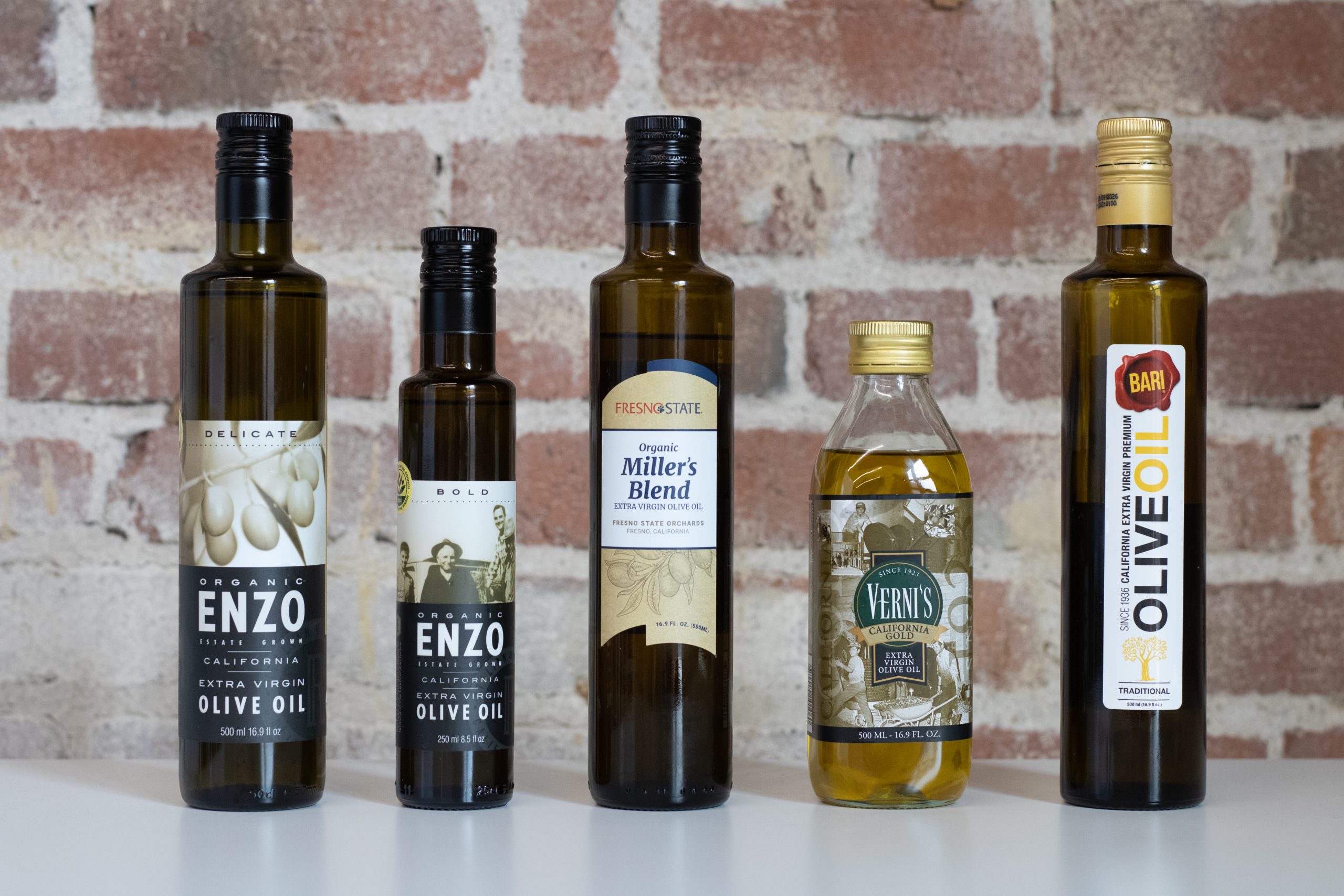
For our taste test, we tasted blind, pitting all the local product we could find against some mid-shelf and fancier Middle Eastern oils, plus some even higher end stuff straight from Lucca, Italy. We sipped plain, and dunked, with some small pieces of French bread.
Some overall conclusions
Possibly the main conclusion we came to is that yes, our local olive oils do stack up to the fancy imported stuff.
Every taster had one or two locals in their top three. Which means that you can feel good buying local not just out of a sense of altruism or homerism, but because it actually tastes the best too. As the old foodie adage goes, “what grows together goes together.”
The Competitors
Bari, Dinuba
Fresno State Olive Oil, Fresno
Enzo’s Table, Clovis (we tested the “bold” and the “delicate” labels)
Verni Gold, Clovis
Rankings
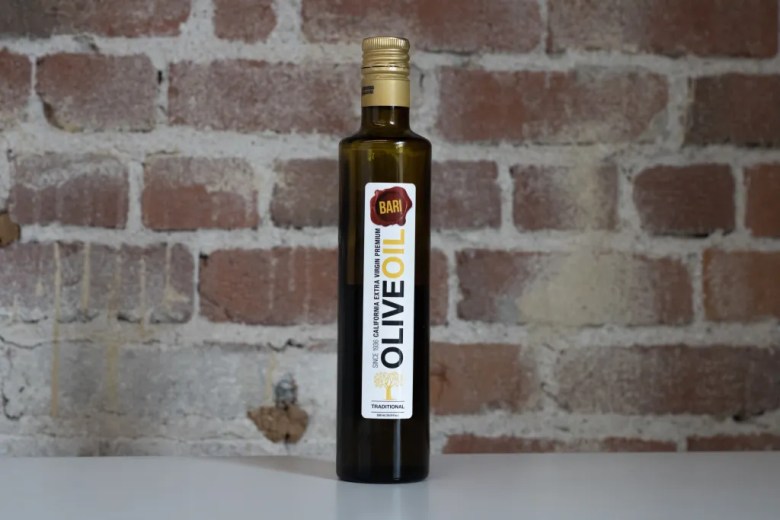
1. Bari Traditional Extra Virgin Olive Oil
Tasting Notes
According to their website, Bari, have been growing and producing olive oil in the Central Valley since 1936. Brothers Kyle and Ryan Sawatzky took it over in 2007, adding new machinery and expanding the operation. They offer a few different labels –Traditional, Organic, Arbequina, Arbosana, and Koroneiki. The traditional was the only one we could get our hands on as of press time, sadly, but it was certainly a damn fine olive oil, easily a match for high-end olives from elsewhere in the world.
Final Thoughts
Not super pungent on the nose, but leans toward grassy and nutty. On the palate, the grassy nuttiness of the nose gives way to a much more buttery, fruity taste. Pinches the back of the throat a little on the finish. Especially good on bread, with a buttery and pleasant mouthfeel.
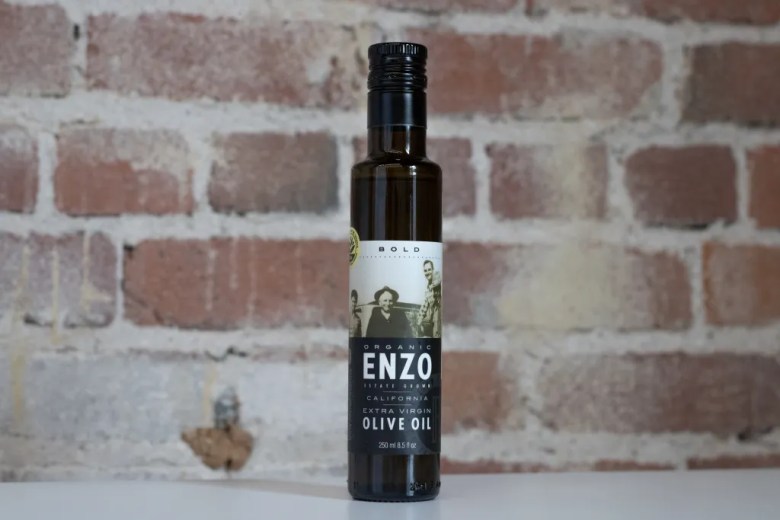
2. Enzo’s Table Bold
Tasting Notes
Rich gold-green in color, and very grassy on the nose. Butteriness rounds out the grassiness on the palate, with a distinct pinch in the throat going down. Very nice.
Final Thoughts
Enzo’s Table, with a grand new retail store just opened on the southeast corner of Willow and Shepard in Clovis, certainly carries itself the most like an artisanal label, relative to other Central Valley olive oils (not an especially high bar). The retail store is spotless and immaculate, looking almost more like an event space than a place to buy olive oil and fancy nuts. It’s nice to see that, even stripped of all the professional trappings in a blind taste test, the olive oil itself lives up to the branding.
Owned by the Ricchuiti family, Enzo’s offers three main labels – Bold, Delicate, and Medium — along with a bunch of flavor-infused options that we don’t really mess with. We tested the Bold and the Delicate, and the Bold won out this time, though your mileage may vary. They also offer tastings at their retail location so you can try before you buy. For what it’s worth, their tasting notes from the Bold label read “Robust and well-balanced with notes of grass and green tea.”
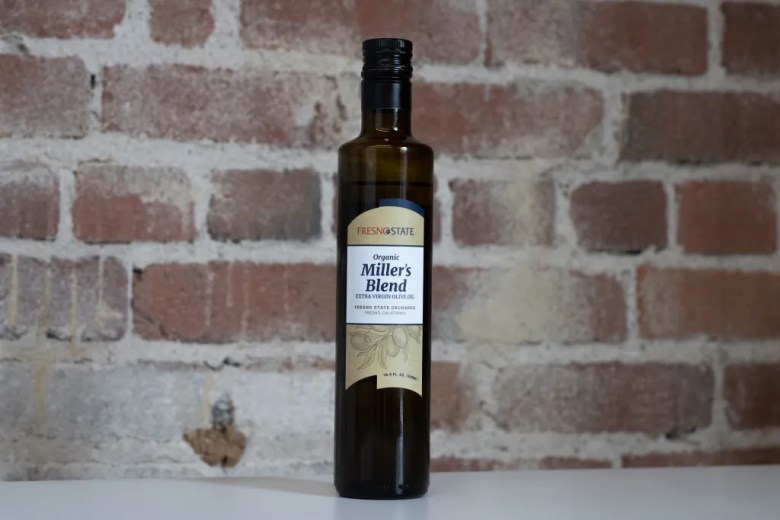
3. Fresno State Miller’s Blend
Tasting Notes
Big, round grassy notes on the nose. Sort of what you imagine when you imagine what olive oil smells like – green and piney and a little nutty. Those same notes come through on the palate, but in a way that’s sort of light and not too astringent.
Final Thoughts
The Gibson Market on the Fresno State campus offers a variety of products produced with Fresno State ag students, from wine and nuts to meat and ice cream. As for their olive oil, their website notes: “Fresno State began raising olives on a high density 19 acre block of land on the school farm. The school currently partners with Bari Olive Oil Company to offer three olive oil blends: Koroneiki and Miller’s Blend.”
Wait, that’s only two blends! And as of press time, the Miller’s Blend was the only one available, though it was a favorite of all our tasters. Apparently Fresno State was partnering with Bari to press and bottle Fresno State-grown olives, but they have since begun shopping for a new partner. In the meantime, supplies might be running low.
Per their website, the Miller’s Blend is “a blend of the Arbequina and Arbosana oils, which creates a fruity with mild pungency and a taste reminiscent of green herbs, tomatoes and banana.”
We’ll add the other labels to our next blind taste test as soon as we can get our hands on it.
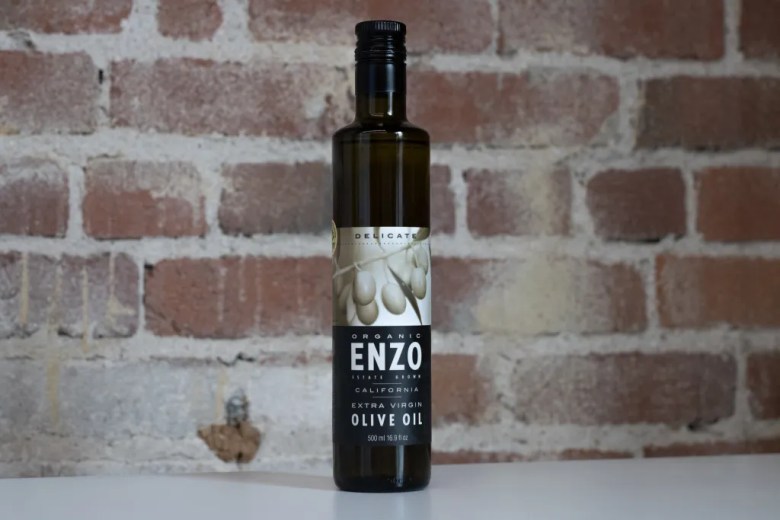
4. Enzo’s Table Delicate
Tasting Notes
A little lighter and thinner looking than the others at first glance. Very grassy on the nose, with a noticeable acidity that adds some brightness, which seems to distinguish it from some of the others. It’s similar on the palate – lightly grassy, with a bright acidic edge. Very nice, but maybe not as memorable?
Final Thoughts
Enzo’s “Delicate” offering is as advertised: a lot like the Bold, only milder. This one seems like a great choice for any dishes in which you don’t want the olive oil to assert as much of a flavor component – like in a bruschetta or a caprese salad where you really want to highlight the ripe sweetness of the tomatoes without the grassiness of the olive oil competing as much. According to their own tasting guide, Enzo’s Delicate offers “Subtle pungency, notes of cinnamon and herbs with a mild peppery finish.”
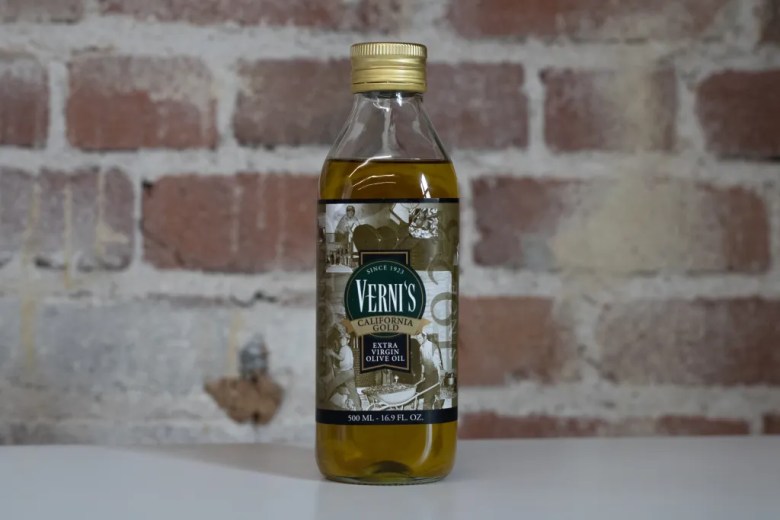
5. Verni’s California Gold Extra Virgin Olive Oil
Tasting Notes
Medium color, medium body to the eye. On the nose, it… doesn’t smell like what I’m used to from olive oil. It smells… almost like grapes? I keep going back to try to work out whether I’m just imagining things, but nope, this one has an unusual, ripe and floral quality. It’s definitely fruity on the palate too, with sort of a ripe berry flavor. (Other tasters said pear or cantaloupe). Not really bitter at all.
Final Thoughts
Whatever the opposite of Enzo’s Table’s fancy retail store is, that’s Verni, an unassuming farm house on Auberry Road on the way to Friant with an olive oil room at the back you enter through a sliding glass door, advertised by a paper sign out front. They sell at farmer’s markets all over Southern California, but if you’re a local, bring cash or check. It’s hard not to be charmed by the near-total lack of branding (or maybe that IS the branding – whoaaa…), and as for the olive oil, the low ranking might be deceiving. None of our tasters disliked Verni Gold, it was just so clearly offering something different that it was a little like sticking a gin in a whiskey tasting. If you want an olive oil that tastes bright and fruity rather than grassy and nutty, Verni is definitely it.
Do you agree with our choices? Did we miss one of your favorite local olive oils? Send your feedback to vince@fresnoland.org.
Related
Dining and Cooking