
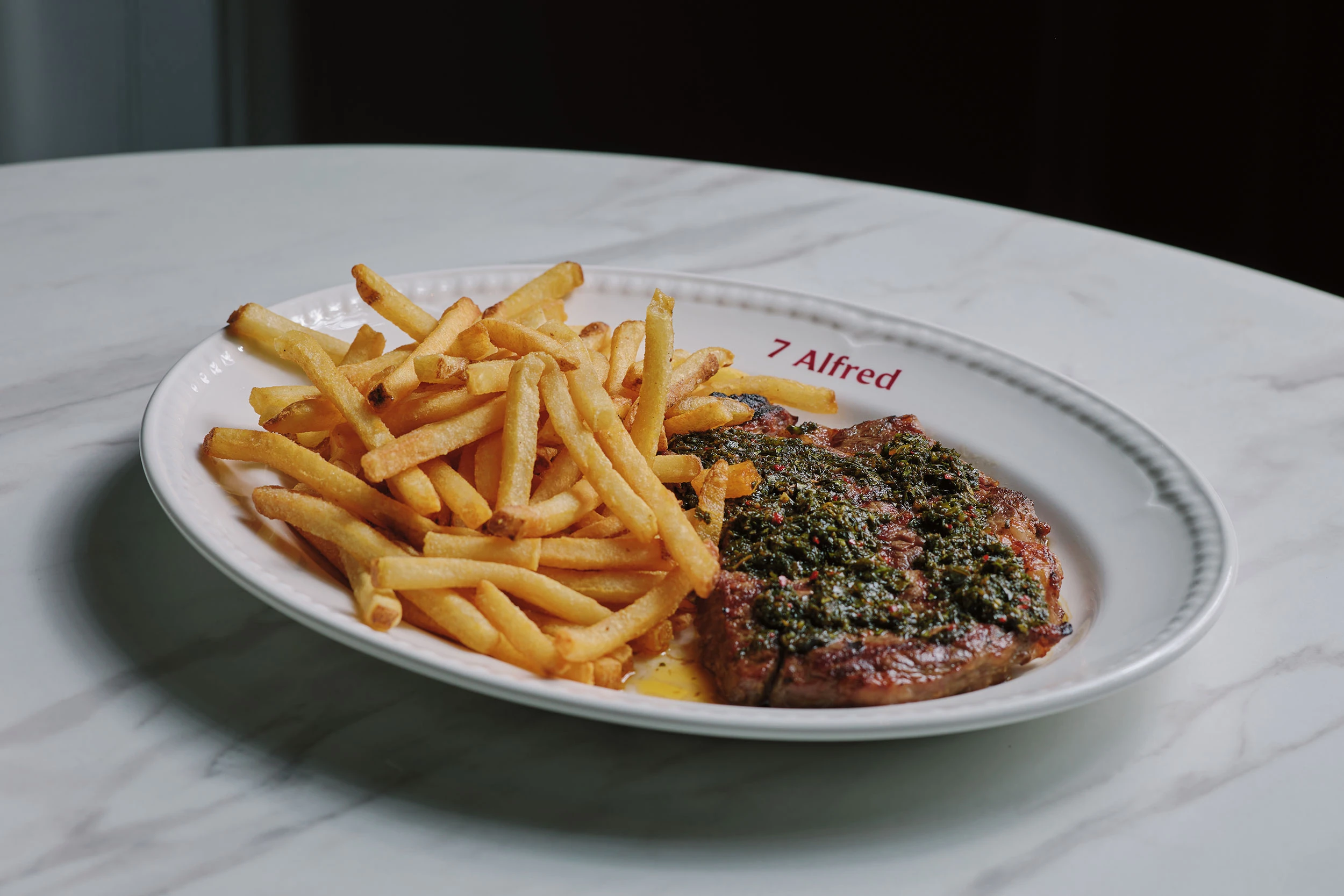
When Entrecote first opened in Melbourne in 2014, it built its identity around one dish: steak frites, served in the classic French style with bottomless fries and entrecote sauce, a vibrant green herb butter. Inspired by Parisian institutions like L’Entrecote Porte-Maillot and L’Entrecote Saint-Germain, the team made a decision to focus on doing one thing exceptionally well. The reputation quickly followed.
In the years since, the restaurant has broadened its offering to include a wider range of bistro staples. But its signature dish remains central, evolving into variations like the mitraillette, a steak frites-filled baguette popularised in Belgium, and a line of retail-ready entrecote sauce designed for home use.
Like the burger and the hotdog, steak frites has moved beyond its European origins into more neutral territory; these days you’re just as likely to find it at a pub as at a French restaurant. More recently, it has renewed momentum, with a wave of venues building entire concepts around the dish.
Part of the appeal lies in its duality. “Steak frites is a staple, from steak night at your local pub to the entrecote at France-Soir,” says Audrey Shaw, chef-owner of Bar Carnation and Carnation Canteen. “It’s one of those dishes that feels both everyday and celebratory.”
That sense of occasion is tied, in part, to cost. For many diners, steak falls into the category of higher-spend, lower-frequency meals – something you’re less likely to cook at home, but more inclined to order out. In a city where high-quality beef is widely accessible, that proposition becomes even more persuasive.
“In Australia, we have access to incredible beef, so building a restaurant around a great cut felt like a natural starting point,” says Santiago Aristizabal, culinary director at Hunter St Hospitality, which operates 7 Alfred, a venue centred entirely on steak frites.
In a city home to thousands of restaurants spanning countless cuisines, there is also appeal in simplicity. At 7 Alfred, the kitchen cooks around 1000 steaks a week. “It shows you don’t necessarily need a big menu when the one thing you do is done well,” Aristizabal says.
Steak frites also aligns with a broader shift in how people choose to eat in 2026, sitting at the intersection of comfort and value. It’s luxurious enough to feel like a treat, but still accessible, with all items on this list coming in under $50.
“In this current economy, many people are looking for good value or deals,” says Randy Dhamanhuri, co-owner of Operator Diner and its nightly steak frites pop-up, No Biggie, where the steaks are $30. In this case, the price eases pressure for both customers and the venue itself. “It’s also good for us to manage stock and wastage, as there are minimal items on the menu,” he says.
With that in mind, here are a few spots to get around.
7 Alfred, $48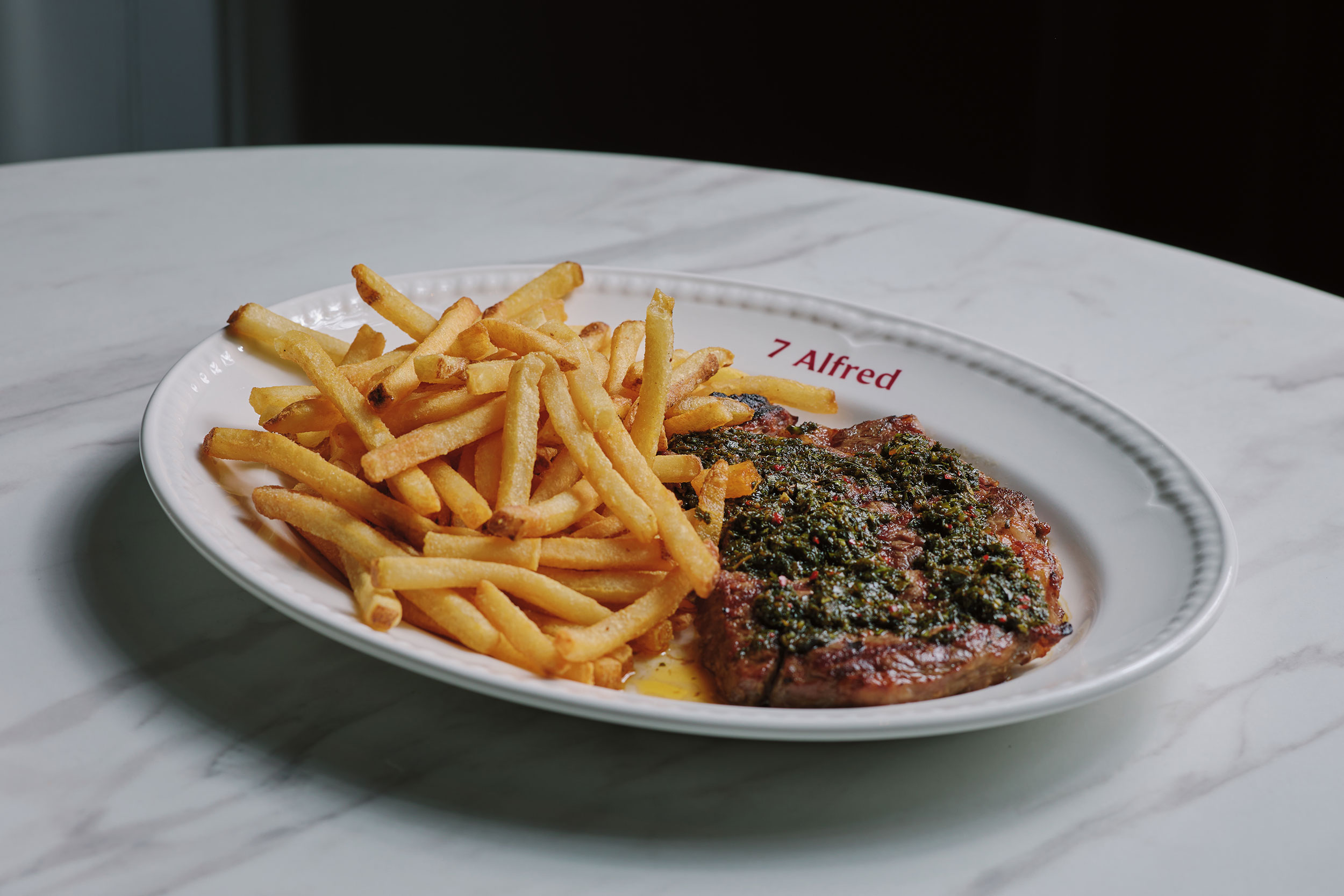
Photo: Harvard Wang
This offshoot of Rockpool Bar & Grill made waves when it opened late last year with an intentionally minimal menu built around a single main: a 220-gram grass-fed Scotch fillet from O’Connor Beef in Gippsland, served with shoestring fries cooked in beef tallow.
It may be a splurge for a single dish, but within Melbourne’s broader steak landscape, it sits at a relatively accessible pricepoint, particularly given the quality.
“When you’re only serving one dish, there’s nowhere to hide,” says Aristizabal. “Every element has to be right, every day – the cut, the grill, the fries, the sauces.”
Those sauces – peppercorn, chimichurri, umami butter and veal jus – along with your preferred doneness, are the only points of variation. Otherwise, the format is fixed. Desserts follow suit, with a choice between New York cheesecake and ice-cream with chocolate sauce.
Common Cuts, from $28.50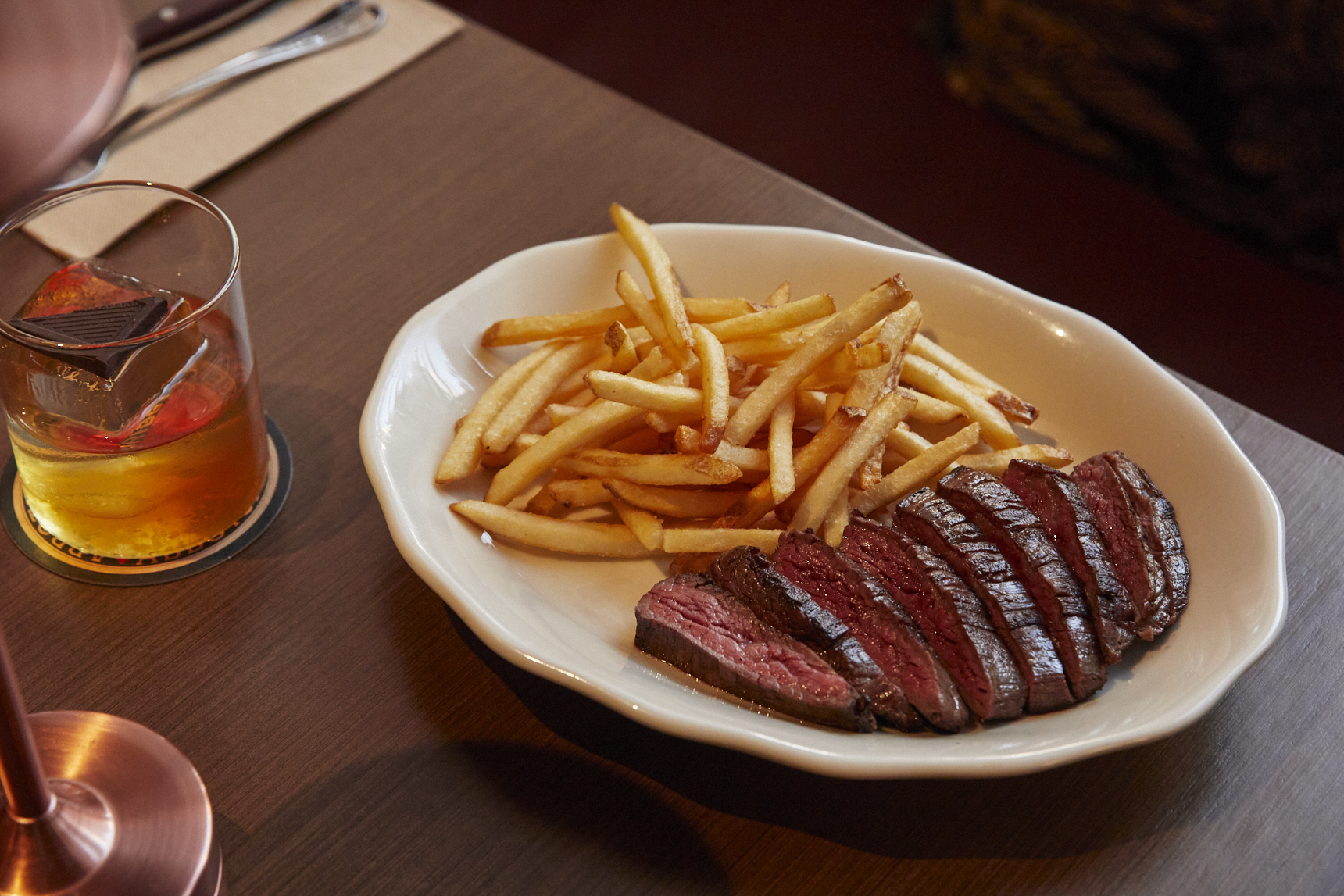
Photo: Casey Horsfield
At Common Cuts, chef Reki Rei (also behind Sachi and Atsu) takes a more expansive approach, offering a spectrum of steak frites options. Prices start at $28.50 for a Margaret River Wagyu flank with a marbling score of 4–5, and climb to $395 for a two-kilogram Margaret River tomahawk designed to share.
“I wanted to create a well-priced steak frites in an affordable luxury setting,” Rei says. “Our range of cuts allows people to choose their own adventure and caters to different budgets.”
The team works closely with local farms and does the butchering in-house, maintaining control over quality while keeping costs in check. “It’s about respecting the produce and providing great value to our guests,” Rei says.
No Biggie, $30
By day, Operator Diner serves pancakes and breakfast sandwiches. From Wednesday to Sunday nights, it shifts into No Biggie, a steak frites pop-up launched in October last year.
Aware of the broader shift towards steak frites-focused offerings, the team wanted to bring a version that reflects its diner roots. The result is a $30 steak with bottomless fries and diner’s choice of chimichurri, green butter, red wine or peppercorn sauce, set to a soundtrack of old-school hip-hop and R’n’B.
The format is casual and interactive – guests flip a small sign on the table to signal when they want their fries refilled – offering an accessible counterpoint to more traditional steakhouses.
Bar Carnation, $42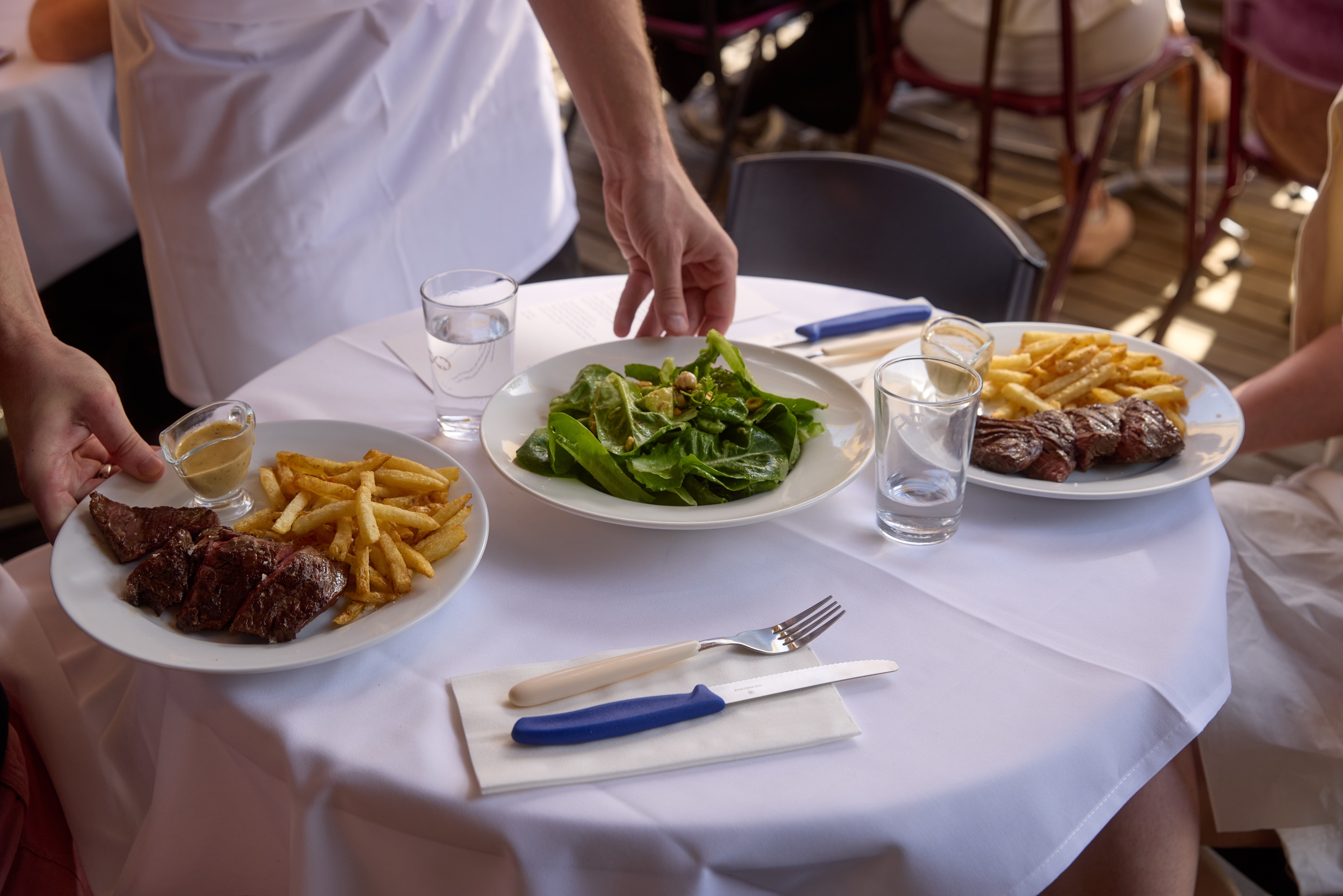
Photo: Harrison Moss
Bar Carnation, the sibling to Carnation Canteen in the former Geralds Bar space, has a broader menu than others on this list, but steak frites remains a focal point.
Here it’s paired with a classic Diane sauce – a creamy pan gravy layered with white, black and green peppercorns. The steak is Cape Grim bavette, a grass-fed Tasmanian cut sourced via G McBean Family Butcher.
“It has a distinctly beefy, mineral depth that works beautifully over charcoal,” says Shaw. “We grill it hard, then rest it on rosemary branches so the aromatics subtly perfume the meat.”
The fries receive equal attention. They are hand cut daily from Spud Sisters potatoes, then blanched and double-fried for a crisp exterior and fluffy centre.
Coupette, $42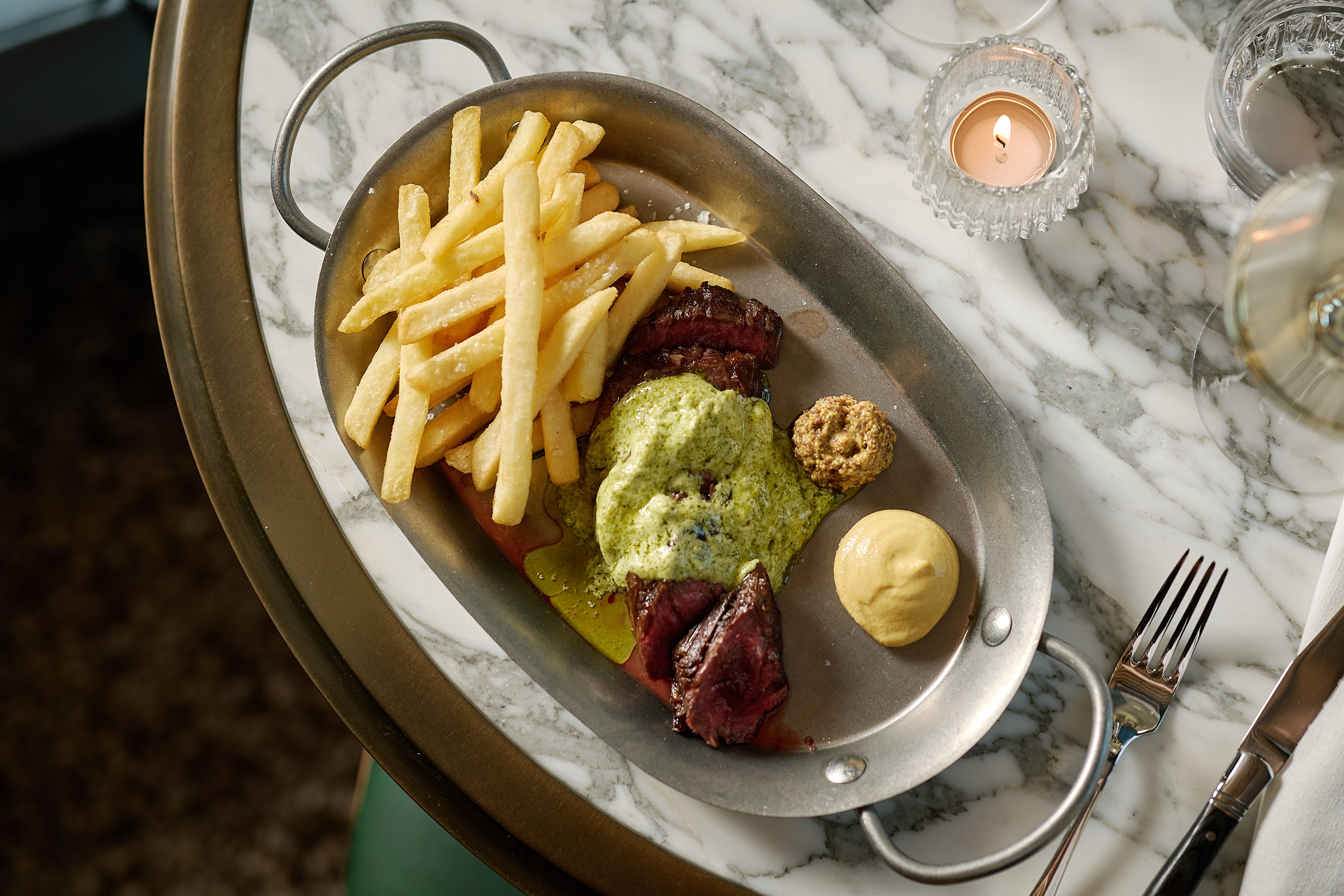
Photo: Courtesy Of The Mulberry Group / Kristoffer Paulsen
Hidden inside the recently opened Hannah St Hotel, this Euro-leaning bistro from Mulberry Group serves Italian and French-inspired fare, but chef Andy Beddoes says steak frites is the signature.
What appears to be a classic entrecote sauce is, in fact, Montpellier butter, a herb-packed compound made with tarragon, chervil, spinach, watercress, eschalots, garlic and anchovies, giving the dish a bright, piquant edge.
Dijon and wholegrain mustard cut through the richness of the Southern Ranges porterhouse, which is salt-brined and finished on the grill, with a pile of shoestring fries on the side.
Dining and Cooking